





2007 IS250 Solid front disc?

Thread Starter
Driver
Joined: Nov 2006
Posts: 120
Likes: 0
From: CA
 2007 IS250 Solid front disc?
I recently got my IS250 and didnt' realize it until now that my front disc is not ventilated. I've checked on www.edmunds.com and it should be ventilated front disc / solid rear disc brakes. Can anyone with a 2007 IS250 confirm that their front disc is ventilated or solid. I assume ventilated front disc means there should be holes drilled. Sorry for my ignorance as I don't know much about cars.
If the dealer or the manufacture made this mistake, can I take it back to them and have them change it?
If the dealer or the manufacture made this mistake, can I take it back to them and have them change it?
A ventilated disc is one where there are slots that run along the edge of the the disc that uses ambient wind to dissipate gasses created when braking.
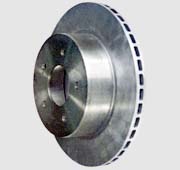
What you're thinking about is a drilled disc, like this:
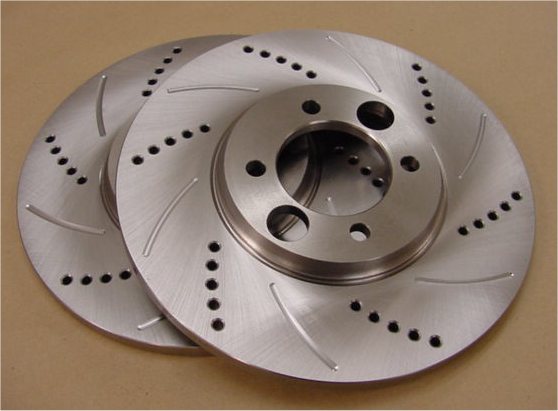
Notice the lack of holes along the edge of the discs in the second picture. These discs are non-ventilated, cross-drilled, and slotted. The IS comes with the type of disc shown in the first picture. Hope this helps.
Javier
What you're thinking about is a drilled disc, like this:
Notice the lack of holes along the edge of the discs in the second picture. These discs are non-ventilated, cross-drilled, and slotted. The IS comes with the type of disc shown in the first picture. Hope this helps.
Javier

Lexus Champion
Joined: May 2006
Posts: 1,600
Likes: 0
From: FL
You'd see holes drilled in the rotor if they were "cross drilled". Ventilated just means that there's a space running down in between the outer sections of the rotor (look at the spaces that appear around the circumference of the rotor).
Ventilated:

Cross-drilled:

Ventilated:
Cross-drilled:
Thread Starter
Driver
Joined: Nov 2006
Posts: 120
Likes: 0
From: CA
Thanks for the quick reply. This makes a whole lot of sense now. Learn something new every day. Since most high performace cars have the disc with drill holes. I assume these are much better right? Common sense tells me that if it's not ventilated or drill.. then if it get really hot and the pads and roters may not grip as good.
Last edited by kqt2ktval; Dec 21, 2006 at 09:12 AM.
Cross drilled rotors do perform a little better, but are much worse when in comes to durability and reliability of the disc. The holes created in the disc make the surface more prone to cracking. For a street car, this is a big issue. You can create a similar level of performance by creating "dimpled" rotors, where instead of actual holes through the surface area of the disc, there are dimples, like a golf ball. The two discs on the right side of the picture below are dimpled:

This works toward the same goal as the cross-drilled discs, but helps maintain more of the structural integrity of the disc.
Javier
This works toward the same goal as the cross-drilled discs, but helps maintain more of the structural integrity of the disc.
Javier

Pole Position
Joined: Mar 2006
Posts: 200
Likes: 0
From: CT
Thanks for the quick reply. This makes a whole lot of sense now. Learn something new every day. Since most high performace cars have the disc with drill holes. I assume these are much better right? Common sense tells me that if it's not ventilated or drill.. then if it get really hot and the pads and roters may not grip as good.
For daily driving, even of the spirited kind, they don't offer much advantage IMO.
Ventilated disks do have an advantage even in daily driving, as keeping the rotor cool(er) helps avoid fade and rotor warping.
Trending Topics

Lexus Test Driver
Joined: Aug 2006
Posts: 950
Likes: 0
From: Washington D.C.
EDIT: I could not find the pictures from our Team Lexus meet on the NELOC secion.
Last edited by NovaIS350; Dec 22, 2006 at 07:59 AM.
ClubLexus Stories
Celebrating Lexus & Toyota from Around the Globe

Lexus NX 350h: A Fuel-Sipping Secret Hot Hatch???
Michael S. Palmer
5 Best & 5 Worst Lexus Daily Drivers
Joe Kucinski
Top 5 Hottest Lexus & Toyotas in 2026 (Hardest To Buy)
Brett Foote
2026 Lexus IS 350 F Sport Review: The Last of Its Kind Still Rocks
Michael S. Palmer
Top 10 Most Confusing Things Lexus Has Ever Done!
Joe Kucinski
2026 Lexus ES Review: Lexus Re-Embraces Founding Principles
Michael S. Palmer
10 Lexus Bargains That are Cheaper Than a New Toyota RAV4
Joe Kucinski
8 Weirdest Things Lexus Has Ever Built
Verdad Gallardo
10 Lexus Designs That Have Aged Like Fine Wine
Verdad Gallardo


From here. Should be mandatory reading for anyone considering a brake upgrade from any manufacturer.
DRILLED VS SLOTTED ROTORS
For many years most racing rotors were drilled. There were two reasons - the holes gave the "fireband" boundary layer of gasses and particulate matter someplace to go and the edges of the holes gave the pad a better "bite".
Unfortunately the drilled holes also reduced the thermal capacity of the discs and served as very effective "stress raisers" significantly decreasing disc life. Improvements in friction materials have pretty much made the drilled rotor a thing of the past in racing. Most racing rotors currently feature a series of tangential slots or channels that serve the same purpose without the attendant disadvantages.
For many years most racing rotors were drilled. There were two reasons - the holes gave the "fireband" boundary layer of gasses and particulate matter someplace to go and the edges of the holes gave the pad a better "bite".
Unfortunately the drilled holes also reduced the thermal capacity of the discs and served as very effective "stress raisers" significantly decreasing disc life. Improvements in friction materials have pretty much made the drilled rotor a thing of the past in racing. Most racing rotors currently feature a series of tangential slots or channels that serve the same purpose without the attendant disadvantages.

Thread
Thread Starter
Forum
Replies
Last Post


