



BUICK 3800: The best engine EVER!

Lexus Test Driver


Joined: Apr 2012
Posts: 6,284
Likes: 488
From: Long Island

That may be one reason why they are long-lasting. Lower power often means less stress on the engine's internals, unless people floor the pedal all the time trying to make up for that lack of power....and something tells me, from watching how you posted for the last 9-10 years, that you usually don't drive that way. 
you'll never pull a muscle if you never get off the couch, there's nothing impressive about an engine that lasts awhile simply by being heavily de-tuned... the updated 1UZ in 1997 made 300 hp, over 300 ft lbs across a very wide rpm range, and is basically indestructible while also getting great fuel efficiency from not even 4 liters

Lexus Fanatic


Joined: Oct 2003
Posts: 94,521
Likes: 261
From: Virginia/D.C. suburbs
Actually, a special kind of mid-engine-RWD/AWD. Like the old Chrysler Slant-Sixes, the Previa's in-line engine was tilted over at an an angle to lower its height in the engine compartment...but even more so than with the Chrysler straight-sixes.
1990s Chrysler vans lit the front tires up. It’s the mass of the van and the low traction of the FWD. Other minivans were RWD.
Lexus Test Driver
Joined: Apr 2012
Posts: 6,284
Likes: 488
From: Long Island
Thanks for checking exactly. Still more than the 235hp the 4.7 was making in 1999. There was also 5.3 and 6.0 that Toyota never had an answer for. Also, LS400 in the mid 90s was around 260hp, Cadillac debuted their 295hp Northsrar at some point. I can’t remember the Aurora V8 but that was pretty good. Also, the 3800 was supercharged at some point, Toyota really did not compete in that space for their sedans. That is why I said they were not quite at the level of GM. They are today.
this guy is great btw, i wish i lived closer to him lol
Lexus Test Driver
Joined: Apr 2012
Posts: 6,284
Likes: 488
From: Long Island
not to mention an open differential makes it very easy to get one of the wheels spinning, if any of those vans had some kind of competent LSD i guarantee there'd be no tire spinning
That may be one reason why they are long-lasting. Lower power often means less stress on the engine's internals, unless people floor the pedal all the time trying to make up for that lack of power....and something tells me, from watching how you posted for the last 9-10 years, that you usually don't drive that way.


Thread Starter
Lexus Fanatic
Joined: Nov 2011
Posts: 35,489
Likes: 386
From: ON/NY
well since you bring up the northstar, allow me to bring this thread full circle and post a northstar video courtesy of mr. car wizard himself!
https://www.youtube.com/watch?v=-nf0bp4dmZU
this guy is great btw, i wish i lived closer to him lol
https://www.youtube.com/watch?v=-nf0bp4dmZU
this guy is great btw, i wish i lived closer to him lol
 So the longevity of the Northstar is a irrelevant for some.
Lexus Fanatic
Joined: Oct 2003
Posts: 94,521
Likes: 261
From: Virginia/D.C. suburbs
I mentioned that....people flooring it to make up for a wimpy power-level. But, most people, even with low-powered engines, don't drive like that, and the engines last longer, assuming they keep the oil and other fluids changed.
Lexus Test Driver
Joined: Apr 2012
Posts: 6,284
Likes: 488
From: Long Island
well an engine that can only make good power by eventually blowing itself up is no more impressive than an engine that can only be reliable by making no power at all lol
ClubLexus Stories
Celebrating Lexus & Toyota from Around the Globe

10 Lexus Bargains That are Cheaper Than a New Toyota RAV4
Joe Kucinski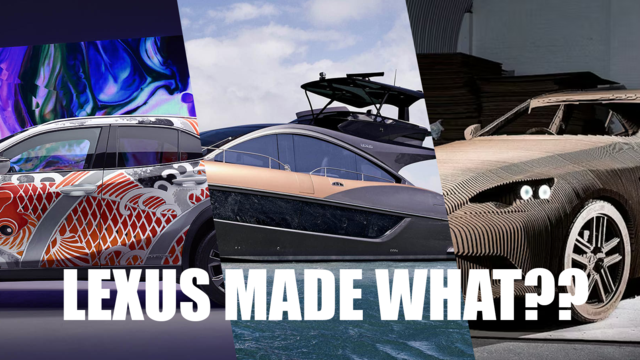
8 Weirdest Things Lexus Has Ever Built
Verdad Gallardo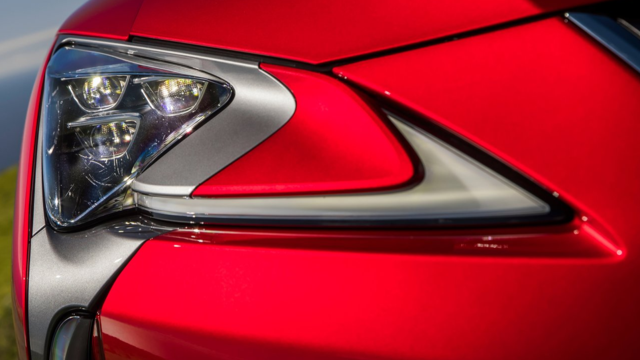
10 Lexus Designs That Have Aged Like Fine Wine
Verdad Gallardo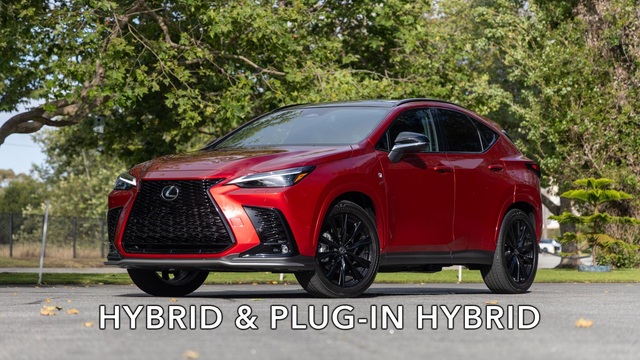
8 Tips for Improving Your Hybrid or Plug-in Hybrid's Efficiency!
Michael S. Palmer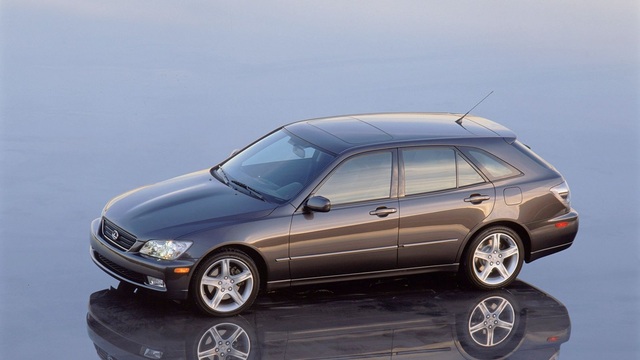
10 Best Lexus Models No One Remembers
Joe Kucinski
TRD Off-Road Premium: Best 2026 4Runner, Except This One Thing
Michael S. Palmer
Top 10 Lexus & Toyotas to Drive Before You Die!
Joe Kucinski
Top 10 Lexus/Toyotas With The LEAST 5-Year Depreciation
Joe Kucinski
Lexus LC500 Convertible Auction: A Preview of Rising Values?
Brett Foote
Lexus Fanatic
Joined: Oct 2003
Posts: 94,521
Likes: 261
From: Virginia/D.C. suburbs
Leasing wasn't as popular back then as it is now. And, back then, many did it primarily for business/tax-deductions rather than for typical daily driving. Today, more people lease because they want a new vehicle every couple of years, don't want the hassles of private ownership, and don't want to face the inevitable repairs as a car ages.


One could argue that engines like the 3800 actually spelled the demise of GM. When Japanese automakers first started in the US market they were selling small engines that were down on power compared to the big 3800, so GM did not bother updating it with new tech. It's primitive design dated back to the 60ies, with not much room for improvement by mid 90ies. In the meantime the Japanese and European makers were introducing new tech - overhead cams, aluminum blocks, variable valve timing. Keep in mind, the 3800 was positioned as GM's top of the line V6 - they also had the 3.1 and 3.4 that were truly awful. It was positioned as their top of the line V6 engine through the 90ies and into mid 2000's when it was no longer competitive even with most basic Japanese V6 engines and was absolutely laughable compared to their premium V6 engines. At that point GM had to scramble and come up with a modern V6 engine, and from what I gather their 3.6 has been less than stellar.
Of course pretty much everything else about GM vehicles was even worse than their engines. Much worse. Eventually they had to be saved by the government bailout, but their future is still unclear. I think their Cadillac brand might soon fold.
Of course pretty much everything else about GM vehicles was even worse than their engines. Much worse. Eventually they had to be saved by the government bailout, but their future is still unclear. I think their Cadillac brand might soon fold.

Lexus Fanatic


Joined: May 2012
Posts: 68,834
Likes: 4,107
From: Maryland
Leasing has actually been very popular for several decades. My dad leased cars in the 80s, and luxury car ads were full of leases, etc in the 90s.
Northstar was a great engine at the time. Obviously...nobody new what a horror show they would be as they aged.
Northstar was a great engine at the time. Obviously...nobody new what a horror show they would be as they aged.
Lexus Fanatic
Joined: Oct 2003
Posts: 94,521
Likes: 261
From: Virginia/D.C. suburbs
They weren't that much in the dark. The public knew, even back then, that Cadillac reliability had been declining for years (just ask the people that bought Cimarrons, Cateras, models with the variable V8/6/4 engine, the horrendous diesel V8s, and many other unreliable Cadillac/GM components). The problem was that the auto press (which often has little regard for long-term reliability), even before the engine was introduced, was hyping the Northstar for its new OHC design, comparing it to the existing Cadillac push-rod 200 HP V8s.
They weren't that much in the dark. The public knew, even back then, that Cadillac reliability had been declining for years (just ask the people that bought Cimarrons, Cateras, models with the variable V8/6/4 engine, the horrendous diesel V8s, and many other unreliable Cadillac/GM components). The problem was that the auto press (which often has little regard for long-term reliability), even before the engine was introduced, was hyping the Northstar for its new OHC design, comparing it to the existing Cadillac push-rod 200 HP V8s.
Lexus Fanatic
Joined: May 2012
Posts: 68,834
Likes: 4,107
From: Maryland
I think people’s expectations were a lot lower, and most of them sold were leases and it was the second and third owners who had issues and they had a lot weaker case for that sort of thing.
Thread Starter
Lexus Fanatic
Joined: Nov 2011
Posts: 35,489
Likes: 386
From: ON/NY
I don’t agree. People didn’t buy American cars because they last longer than Japanese cars. They bought them at the time because of features, design, power and performance. American cars were always larger than Japan designs at the time. Better priced too.