When you click on links to various merchants on this site and make a purchase, this can result in this site earning a commission. Affiliate programs and affiliations include, but are not limited to, the eBay Partner Network.
If you switched to LED lights you will most likely also need to install an in-line wire device ("Load equalizer" $15 at O'Reily's).
In my case I am switching to LED after upgrading my lights from 2000 RX to the 2002 style. Which means I needed to replace the wiring harness also. ....and I got the rear light assembly from Pick-A-Part so the bulbs needed to be replaced. After replacing the bulbs (just four brake/tail light bulbs (type 7443) I noticed my brake light indicator light came on - Hmmmm.... I can't get that thing to turn off now. I have not yet switched to LED. I wanted to get it corrected before switching to LED so that when the light comes on after switching I will know that it is because of the LED light and not something else.
I will trying replacing the top mounted third brake light and see if that fixes it; otherwise I might just forget about the fix and just switch to the LED light. But see I DID buy the load equalizer so that the brake indicator light will go out.
But if it's not ON because of the LED then the load equalizer will probably not help.
I'll update later....
All my brake lights were out so I figured it was my turn to do this repair. It's an easy fix.
Biggest hassle (for me anyway) is getting that stupid power outlet out. I must have damaged the claws because now it doesn't want to stay back in. Problem for another day.
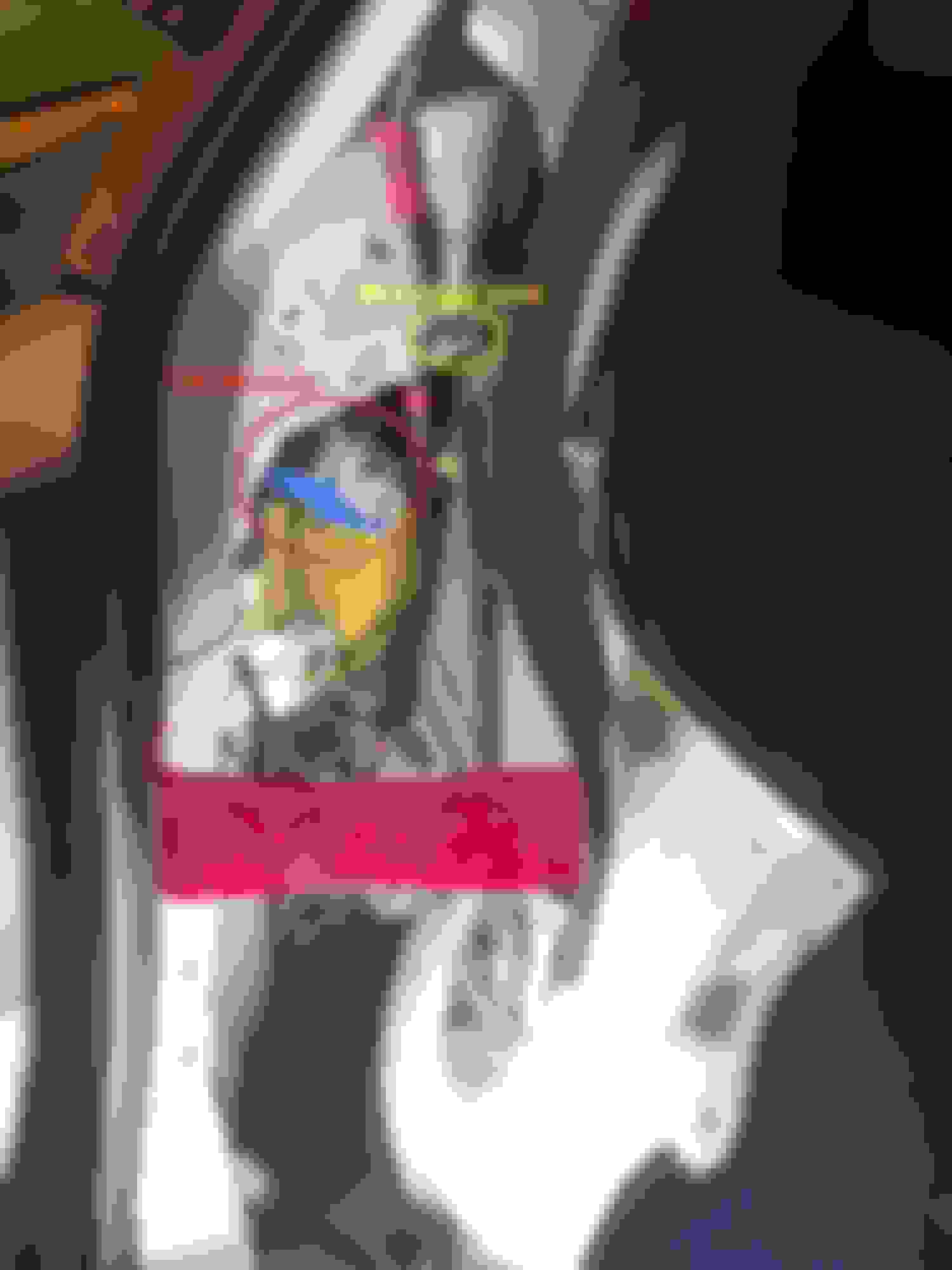
I really hate taking off the interior panels because something always breaks. In addition to the power outlet one of the wings holding the module in place broke off when I was removing it. I duck taped it to that foam block to keep it from moving around.
The cracked solder joint
Where the module lives behind the left rear panels
Last edited by maxSteel; Sep 16, 2022 at 09:53 AM.
Haynes repair for Lexux RX 300 does not mention this sensor module much less a work around fix
The Haynes repair manual is usually quite limited. You can get the service manual on CD for ~$20: https://www.clublexus.com/forums/rx-...rock-auto.html
That said, even the service manual doesn't tell you how to diagnose and repair a module. The "Body Electrical" manual does tell you where the stop light module is and how to determine if it needs to be replaced. Many thanks to member M45owner for providing a repair procedure for it.
Didn't see this posted anywhere so I figured I would take it upon myself to do so. Like many people before me, I ran into an issue with the brake lights on my 99 RX300. When I pushed the brakes, no lights would come on at all.
*First thing to do is obviously check the fuse. It was fine.
*Second, check power at the brake sensor at the brake pedal. These DO go out, but often times are NOT the issue. The two wires connected to the sensor are Green/Black and Green/White. The Green/Black comes from the battery and should have 12v. When the brake pedal is depressed, power flows through the switch and out of the Green/White wire. There isn't much room down there to fiddle around with testing those wires, so here is an easier way to test that below:
-The BRAKE LIGHT FAILURE SENSOR MODULE is located on the cargo area underneath the fabric lining. Once removed, it is a tan colored box clipped to the back side of the sheet metal. From HERE, we can test if the BRAKE SENSOR at the pedal is bad. As I mentioned above, once the pedal is depressed, it sends 12v through the green/white wire. This wire leads back to the BRAKE LIGHT FAILURE SENSOR MODULE in the cargo area. So here, take your voltmeter and test the GREEN/WHITE wire on the module harness while the KEY IS ON and the BRAKE PEDAL IS DEPRESSED. If your BRAKE SENSOR is working, you will get 12v. If you get no power, your brake sensor is bad.
*NOW...if you DO get power at the GREEN/WHITE wire, but you DO NOT have brake lights still, you will now test PIN #1 on the same harness. This is the GREEN/YELLOW wire. CHANCES ARE, you WILL NOT get 12v at this wire. Again, test with the KEY ON and BRAKE PEDAL DEPRESSED. If you DO NOT get 12v at the GREEN/YELLOW wire, then your BRAKE LIGHT FAILURE SENSOR MODULE is bad. This seems to be the most common issue when the brake lights don't work all of a sudden.
*****A NEW MODULE WILL RUN YOU UPWARDS OF $300 FROM THE DEALER!!!!*****
*We don't want to pay this ridiculous amount of money for a small plastic box. And with a couple minutes, you can fix the sensor YOURSELF and be back to working in no time.
These sensors are just like the main relays on Honda's...one pin in general ends up getting a broken solder joint. This is caused by many heat cycles on/off. The solder heats up when power goes through (BRAKES APPLIED) and cools when there's no power (BRAKES RELEASED). With the Honda relays, it is usually the starter solder joint that ends up cracking. Anyway, back to our modules. With the constant heat cycles and the robotic welds on the board itself, the design is prone to failure from the factory...AS WE KNOW.
*Once your module is out, take the blue cover off of the back, you will see the circuit board. You will see the pins for the connector along the top. PIN #1 is the one that we are working with here. It is where the GREEN/YELLOW wire will be when the plug is connected. If you check it out, chances are you will see that the solder has cracked and broken away from the pin. You will see all of the other solder joints are solid but the solder on PIN #1 looks like THIS:
As you can see, there is a clear difference in the way the solder flows. The pictures don't do justice to what you see in person, but it is definitely noticeable in my pictures.
*You can two one of two things here. First would be to use solder braid and remove all of the old solder, then resolder the pin afterward. OR apply a tad bit more solder to the already existing solder. The existing solder has become a cold solder joint due to cracking, as you can see. Reheat the old solder and flow new solder onto the pin. After you are done, you will get something similar to THIS:
After you flow new solder, you can clean up the surrounding area with your solder braid and alcohol. Put the blue cover back on the module box and plug it in. Step on the brakes and ENJOY the fact that you didn't have to spend $300.
My car is a 99, it took 14 years for the solder joint to fail like it did. Resoldering this with a GOOD solder joint should last the rest of the life of the car. I've repaired multiple Honda main relays like this and even years later, there hasn't been an issue again. My brakes are working perfect in the RX now. Time will ultimately tell how long this fix lasts, but just remember that the natural design of the module is prone to failure to begin with...so even if you were to buy a brand new module, it will fail again at some point. Maybe not before your car dies, but you get the point.
If the resoldering does not fix the problem, I would just jumper around the Lamp Failure Sensor by directly connecting the Grn/Wht wire to the Grn/Yel wire using a length of bell wire and those 3M Quick Connect crimp type connectors.
Have you actually done this? Computers and sensor systems generally don't like bypassing circuit modules.
Yes, my 2001 Lexus ES300 brake lights were out for unknown reason and swapping the module with two others that I pulled from ES300 donor vehicles did not solve the problem so I just got rid of the module altogetrher and did this bypass for both the brake lights and the park /running lights which are on separate circuits from the fuse box and everything works perfectly and the module is now gone and the light out indicator on the dash is not illuminated.