



D2S, D4S, D2R, are they all the same???
 D2S, D4S, D2R, are they all the same???
I know alot of bulb mfr. use different numbers but they reference the same size bulb, dunno why they do it?
Anyways, are there any differences between D2S, D4S, D2R?
My old e46 m3, s2000 and nsx all use D2S bulbs for the xenon bulb. I upgraded each of them to 6000k.
Now I find out the IS-F uses D4S, what's the difference?
thanks!
Anyways, are there any differences between D2S, D4S, D2R?
My old e46 m3, s2000 and nsx all use D2S bulbs for the xenon bulb. I upgraded each of them to 6000k.
Now I find out the IS-F uses D4S, what's the difference?
thanks!

between d2s and d4s... i know you cant swap them back and forth, the non matching ballast will blow the bulbs. d2r is for reflector headlights, hence the "R"
my guess is power draw for the ballast for a d2s and d4s bulb. im guessing d4s draws more power, but this is just my guess.
my guess is power draw for the ballast for a d2s and d4s bulb. im guessing d4s draws more power, but this is just my guess.
Being the techy nerdy guy I am I had to find out the differences first hand and here's why we CANNOT use D2S in a D4S environment (direct from wikepedia):
[edit] Mercury content
HID headlamp bulb types D1R, D1S, D2R, D2S and 9500 contain the toxic heavy metal mercury. The disposal of mercury-containing vehicle parts is increasingly regulated throughout the world, for example under US EPA regulations. Newer HID bulb designs D3R, D3S, D4R, and D4S which are in production since 2004 contain no mercury,[30][31] but are not electrically or physically compatible with headlamps designed for previous bulb types.
I've always been curious just exactly how HID works and I think this explanation is really good reading just FYI
[edit] Burner and ballast operation
HID headlamp bulbs do not run on low-voltage DC current, so they require a ballast with either an internal or external ignitor. The ignitor is integrated into the bulb in D1 and D3 systems, and is either a separate unit or integral with the electronic ballast in D2 and D4 systems. The ballast controls the current to the bulb. The ignition and ballast operation proceeds in three stages:
1) Ignition: a high voltage pulse is used to produce a spark — in a manner similar to a spark plug – which ionises the Xenon gas, creating a conducting tunnel between the tungsten electrodes. In this tunnel, the electrical resistance is reduced and current flows between the electrodes.
2) Initial phase: the bulb is driven with controlled overload. Because the arc is operated at high power, the temperature in the capsule rises quickly. The metallic salts vapourise, and the arc is intensified and made spectrally more complete. The resistance between the electrodes also falls; the electronic ballast control gear registers this and automatically switches to continuous operation.
3) Continuous operation: all metal salts are in the vapour phase, the arc has attained its stable shape, and the luminous efficacy has attained its nominal value. The ballast now supplies stable electrical power so the arc will not flicker.
hope you guys enjoy as much as I did
rick
[edit] Mercury content
HID headlamp bulb types D1R, D1S, D2R, D2S and 9500 contain the toxic heavy metal mercury. The disposal of mercury-containing vehicle parts is increasingly regulated throughout the world, for example under US EPA regulations. Newer HID bulb designs D3R, D3S, D4R, and D4S which are in production since 2004 contain no mercury,[30][31] but are not electrically or physically compatible with headlamps designed for previous bulb types.
I've always been curious just exactly how HID works and I think this explanation is really good reading just FYI
[edit] Burner and ballast operation
HID headlamp bulbs do not run on low-voltage DC current, so they require a ballast with either an internal or external ignitor. The ignitor is integrated into the bulb in D1 and D3 systems, and is either a separate unit or integral with the electronic ballast in D2 and D4 systems. The ballast controls the current to the bulb. The ignition and ballast operation proceeds in three stages:
1) Ignition: a high voltage pulse is used to produce a spark — in a manner similar to a spark plug – which ionises the Xenon gas, creating a conducting tunnel between the tungsten electrodes. In this tunnel, the electrical resistance is reduced and current flows between the electrodes.
2) Initial phase: the bulb is driven with controlled overload. Because the arc is operated at high power, the temperature in the capsule rises quickly. The metallic salts vapourise, and the arc is intensified and made spectrally more complete. The resistance between the electrodes also falls; the electronic ballast control gear registers this and automatically switches to continuous operation.
3) Continuous operation: all metal salts are in the vapour phase, the arc has attained its stable shape, and the luminous efficacy has attained its nominal value. The ballast now supplies stable electrical power so the arc will not flicker.
hope you guys enjoy as much as I did
rick
I'm so happy to see someone who actually took the time to find this out!! 
Now that you've come this far, let me fill you in on some details.
Just as Coca-Cola has a proprietary blend of flavors that makes it unique, HID bulbs do as well.
"What do you mean, I thought all bulbs were created equal, I mean they all look the same."
All bulbs are not created equal as not all aftermarket bulbs are held to the highest standards that OE bulbs such as Philips and Osram Xenarc are.
The blend of salts in in the bulb that create the precise formulation to achieve the industry standard 4300k is what sets them apart. I've seen it all too many times, where someone buys an aftermarket 6000k bulb, and it is closer to 8000k, due to the simple fact that ALL aftermarket bulbs cannot achieve consistent kelvin ratings as their production processes are lax of industry standards and quality control.
There is also a UV coating on the chamber that protects the immediate environment from being exposed to radiation. This coating also prevents the chrome in your projector/reflector from bubbling up/flaking off. Once this happens, there is no going back, especially those of you wanting to run 55watt kits in your halogen based applications.
In conjunction with the UV, the OE bulbs run cooler than aftermarket bulbs, and this has been tested by multiple members on HiD Planet. Because of running hotter, these kit bulbs especially when paired with a halogen application can be very dangerous, as you run the risk of a car fire.
This is just a taste of what goes into the production of OE HID bulbs.
If you care to find out more, and expand your knowledge of HID till your brain hurts, check out HiD Planet's University section, and enjoy!
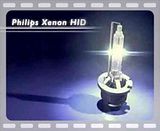
Now that you've come this far, let me fill you in on some details.
Just as Coca-Cola has a proprietary blend of flavors that makes it unique, HID bulbs do as well.
"What do you mean, I thought all bulbs were created equal, I mean they all look the same."
All bulbs are not created equal as not all aftermarket bulbs are held to the highest standards that OE bulbs such as Philips and Osram Xenarc are.
The blend of salts in in the bulb that create the precise formulation to achieve the industry standard 4300k is what sets them apart. I've seen it all too many times, where someone buys an aftermarket 6000k bulb, and it is closer to 8000k, due to the simple fact that ALL aftermarket bulbs cannot achieve consistent kelvin ratings as their production processes are lax of industry standards and quality control.
There is also a UV coating on the chamber that protects the immediate environment from being exposed to radiation. This coating also prevents the chrome in your projector/reflector from bubbling up/flaking off. Once this happens, there is no going back, especially those of you wanting to run 55watt kits in your halogen based applications.
In conjunction with the UV, the OE bulbs run cooler than aftermarket bulbs, and this has been tested by multiple members on HiD Planet. Because of running hotter, these kit bulbs especially when paired with a halogen application can be very dangerous, as you run the risk of a car fire.
This is just a taste of what goes into the production of OE HID bulbs.
If you care to find out more, and expand your knowledge of HID till your brain hurts, check out HiD Planet's University section, and enjoy!
Last edited by emoshun; Jun 25, 2009 at 02:35 PM. Reason: Added the Philips Video Clip
Wow that is some really cool info to know, so not all 6000k aftermarket bulbs are created equal which leads me to a most important question:
Who makes the highest quality coolest running aftermarket bulbs in 6k and 8k? I certainly do not want the UV cooking off my chrome finish or worst blow up!!!! eeek
rick
Who makes the highest quality coolest running aftermarket bulbs in 6k and 8k? I certainly do not want the UV cooking off my chrome finish or worst blow up!!!! eeek
rick
Philips Ultinon 5000k & 6000k applications for both D2S & D2R setups.
I actually have a pair of Philips Ultinon 5000k D4S bulbs that will fit your IS-F perfectly!
Just PM me if interested.
I actually have a pair of Philips Ultinon 5000k D4S bulbs that will fit your IS-F perfectly!
Just PM me if interested.
Trending Topics
ClubLexus Stories
Celebrating Lexus & Toyota from Around the Globe
Top 10 Most Confusing Things Lexus Has Ever Done!
Joe Kucinski
2026 Lexus ES Review: Lexus Re-Embraces Founding Principles
Michael S. Palmer
10 Lexus Bargains That are Cheaper Than a New Toyota RAV4
Joe Kucinski
8 Weirdest Things Lexus Has Ever Built
Verdad Gallardo
10 Lexus Designs That Have Aged Like Fine Wine
Verdad Gallardo
8 Tips for Improving Your Hybrid or Plug-in Hybrid's Efficiency!
Michael S. Palmer
10 Best Lexus Models No One Remembers
Joe Kucinski
TRD Off-Road Premium: Best 2026 4Runner, Except This One Thing
Michael S. Palmer
Top 10 Lexus & Toyotas to Drive Before You Die!
Joe Kucinski
Driver School Candidate
Joined: Nov 2017
Posts: 7
Likes: 2
From: London
Thank you, that is really informative. I have just acquired Lexus LS 460 2007 and one of the dipped beam lights started going off after flickering for sometime. If i turn it off and on again, it comes on but then the same may happen after a while. It is slightly different colour too. Hence i have taken the decision to replace both dipped beam bulbs and wanted to buy osram night breaker. It does say however that the connection is either D4S or D2R, not sure which to go for...
I have read the thread, but not sure i understood correctly
I have read the thread, but not sure i understood correctly
Thank you, that is really informative. I have just acquired Lexus LS 460 2007 and one of the dipped beam lights started going off after flickering for sometime. If i turn it off and on again, it comes on but then the same may happen after a while. It is slightly different colour too. Hence i have taken the decision to replace both dipped beam bulbs and wanted to buy osram night breaker. It does say however that the connection is either D4S or D2R, not sure which to go for...
I have read the thread, but not sure i understood correctly
I have read the thread, but not sure i understood correctly
Danny
Driver School Candidate
Joined: Nov 2017
Posts: 7
Likes: 2
From: London
According to our lighting guide for the 2007 Lexus LS460 it uses D4S bulbs. Here is the link to the D4S Osram Xenarc CBI Bulbs you are looking for.
Danny
Danny
Yev
Driver School Candidate
Joined: Nov 2017
Posts: 7
Likes: 2
From: London


Anyone notice that most aftermarket ballasts are marketed to work on all bulbs? Read up the DDLT003 or KDLT003 units as they list both D2 and D4 bulbs with a startup max voltage of 25kv.
As for the D2 to D4 I noticed my old car the D2 bulbs lasted 11 years 140,000 miles and still going. The D4 with no evil metal in them just 4 years and 50,000 miles.
When they start to flicker or drop out, get a new bulb in there. Im running Morimoto XB 5500K D4S for last 3mo and so far so good for $60 a pair.
As for the D2 to D4 I noticed my old car the D2 bulbs lasted 11 years 140,000 miles and still going. The D4 with no evil metal in them just 4 years and 50,000 miles.
When they start to flicker or drop out, get a new bulb in there. Im running Morimoto XB 5500K D4S for last 3mo and so far so good for $60 a pair.

Thread
Thread Starter
Forum
Replies
Last Post
