


Blown Sub
 Blown Sub
Hey guys I'm running a Rockford Fosgate amp P500-2 channel bridged to a JL8W7. No bass boost is being used and my gains only at 6 with the factory bass on the head unit at 0.. I made a custom box which turned out to not have enough air space for this sub but it's kinda close to spec for a sealed enclosure.. My question is will not having enough air space blow my sub?? The cone is not blown or anything but it sounds like the voice coil took a crap or something? I ran the sub for a week which was superb. I get in my car to go home from work and then it sounded like crap. Just after one week! any ideas??

Rookie
Joined: Jul 2011
Posts: 74
Likes: 0
From: PA
Yes, wrong size specs can do this. More importantly too small of a sealed box will do this.
Distortion that you likely didnt hear too well because it was being muffled in the trunk likely caused the coil to fry or you over extended the sub.
Distortion that you likely didnt hear too well because it was being muffled in the trunk likely caused the coil to fry or you over extended the sub.

Lead Lap
Joined: Jan 2007
Posts: 799
Likes: 0
From: MS
My question is will not having enough air space blow my sub??
2. Over excursion. This is when you push it past the mechanical limits. Spiders tear. Voice coils slam into the back plate. Stuff like that.
Both happen almost instantly while playing. If it sounded OK when you shut your car off, then it should sound OK when you turn your car back on. Unless it was already blown and you had fatigued your ears to the point you couldn't hear it.
The box being too small actually keeps excursion under control better than a large box. Distortion doesn't kill subs. It can easily kill tweeters and to a lesser extent mids but not subs. Rane covers it here in a white paper - http://www.audiovisualdevices.com.au...ne/note128.pdf
heres a sound clip before i took it out.. horriblee....
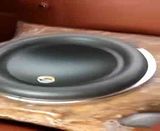
when i think back on it though.. my friend wanted to check out the car while we were at work and i wanted to see how my car looked rolling. he blasted the music.. sounded good outside and in the sc430 theres no volume number on the digital display (which sucks *****) and perhaps he turned it up a tad too loud.. but i drove it after him and i must have not heard it blown cause i left the music playing. I normally don't turn it soo loud and it all sounded fine to me. I get in the car and turn some music on and that's it. done deal. sounds like the video. I bought the sub back in may. hopefully JL covers it under there 1 year manufacture warranty
when i think back on it though.. my friend wanted to check out the car while we were at work and i wanted to see how my car looked rolling. he blasted the music.. sounded good outside and in the sc430 theres no volume number on the digital display (which sucks *****) and perhaps he turned it up a tad too loud.. but i drove it after him and i must have not heard it blown cause i left the music playing. I normally don't turn it soo loud and it all sounded fine to me. I get in the car and turn some music on and that's it. done deal. sounds like the video. I bought the sub back in may. hopefully JL covers it under there 1 year manufacture warranty
Last edited by Pnuge88; Aug 15, 2011 at 07:06 PM.
Lead Lap
Joined: Jan 2007
Posts: 799
Likes: 0
From: MS
Sounds like an air leak. Have you tightened the mounting screws holding the sub to the box? Is there any type of gasket material to make sure you are getting an air tight seal? Finally, be very careful and push the cone of the sub in. Use even pressure so it goes straight down. Is there any scraping or other noise. And make sure the stereo is turned off when you do this.
it was completely sealed. turns out it probably clipped and blew the voice coil when my friend turned it up a tad too much. turns out my amp is not powerful enough to even push the sub. even though its rated at 500 watts it really has like 300. The reputable audio shop says even RF and JL amps are overrated. Anyhow the box doesn't effect nothing. just the fact that the bass doesn't sound as deep as it should be. The guy also mentioned something about having the system hooked up the the factory head unit makes the sub run at half the OHMs. So instead of the 3OHMs the sub runs at, it's running about 1.5 and thats obviously no good making it work harder then it needs to.
Lead Lap
Joined: Jan 2007
Posts: 799
Likes: 0
From: MS
turns out it probably clipped and blew the voice coil
turns out my amp is not powerful enough to even push the sub
The reputable audio shop says even RF and JL amps are overrated.
Anyhow the box doesn't effect nothing. just the fact that the bass doesn't sound as deep as it should be.
The guy also mentioned something about having the system hooked up the the factory head unit makes the sub run at half the OHMs.
So instead of the 3OHMs the sub runs at, it's running about 1.5 and thats obviously no good making it work harder then it needs to.
Trending Topics

Zombie Slayer


Joined: May 2004
Posts: 6,053
Likes: 3
From: East Bumble F, NJ
Sealed enclosures are very forgiving to design error. For example: a driver with T/S specs that call for a sealed enclosure to be 1.25 cubic feet will work just fine in one that is .75 cubic feet. The only factor that changes is the QTC.
ClubLexus Stories
Celebrating Lexus & Toyota from Around the Globe

Top 10 Lexus & Toyotas to Drive Before You Die!
Joe Kucinski
Top 10 Lexus/Toyotas With The LEAST 5-Year Depreciation
Joe Kucinski
Lexus LC500 Convertible Auction: A Preview of Rising Values?
Brett Foote
GX 550 vs TX 550: Best 3-Row Luxury Lexus Family Hauler
Michael S. Palmer
9 Best Lexus Models You Can Buy for Half Price (And 1 You Shouldn't!)
Joe Kucinski
2026 Lexus NX Buyer's Guide: Models, Features, Prices & More!
Brett Foote
Top 10 Reasons to Buy a Lexus TX 550h+ (& 3 Reasons to AVOID!)
Michael S. Palmer
Top 10 Lexus & Toyota Models of the 1990s RANKED!
Joe Kucinski
10 Great Toyotas That Could Have Been Lexus Models
Joe Kucinski
I'm totally lost now. Perhaps I should find a better Audio guy. Just thought about it, If my amp were not powerful enough.. how would it possibly blow the sub which rates at a higher wattage? IDK what "Dual" 3 ohm is but JL subs are 3ohm's.. well this one is for sure. How do I bridge the sub so it pushes out more then 1.5 ohm's??? I knew the box couldn't have been the culprit. I guess it was working too hard and took a crap on me? JL charges $155 to repair it.. so I had to pay that plus shipping to JL. hopefully I will get my sub back in two weeks.

Driver
Joined: Jan 2011
Posts: 138
Likes: 2
From: KY
I agree that you need to find a new audio shop. You have received some good advice thus far. Actually the easiest way to blow a speaker is to under power it and send it a clipped signal which will fry a voice coil very quickly. A speaker also has a thermal and mechanical limit. Too much power can quickly cause it to reach both of these in a hurry as well. You should operate a speaker within the intended rms rating if you want it to last for a long time.
Also, the nominal impedance, (ohms) is what a voice coil in good condition will read. impedance will change and typically drop with music playing because music is dynamic. If you have a speaker with dual 3 ohm voice coils wiring them in paralell will yield a 1.5 ohm load and wiring them in series will yield a 6 ohm load.
Lastly, JL audio amps always make rated power and are some of the best engineered and well built on the market. Lots of JL haters out there because they get a premium for their product, but they flat out perform. Unfortunately there are a lot of methods/terminology for advertising an amplifiers power and distortion ratings so you need to understand the basics of voltage, power supplies and distortion to really determine how a particular amplifier performs.
Hope this helps.
Also, the nominal impedance, (ohms) is what a voice coil in good condition will read. impedance will change and typically drop with music playing because music is dynamic. If you have a speaker with dual 3 ohm voice coils wiring them in paralell will yield a 1.5 ohm load and wiring them in series will yield a 6 ohm load.
Lastly, JL audio amps always make rated power and are some of the best engineered and well built on the market. Lots of JL haters out there because they get a premium for their product, but they flat out perform. Unfortunately there are a lot of methods/terminology for advertising an amplifiers power and distortion ratings so you need to understand the basics of voltage, power supplies and distortion to really determine how a particular amplifier performs.
Hope this helps.
superb info audiobob! really appreciate it! I think I will invest in a new JL Amp.. I got the lovely w7 already so why not match it with the same brand and quality right?
Will this one do?
http://www.amazon.com/JL-AUDIO-500-A.../dp/B000XUDQ1M
Confused Still.
"If you have a speaker with dual 3 ohm voice coils wiring them in paralell will yield a 1.5 ohm load and wiring them in series will yield a 6 ohm load."
how would i go about wiring them to run at 3ohms then? what do you mean by wiring them in a series?
here's my Amp
http://www.rockfordfosgate.com/produ...9&locale=en_US
here's my Sub
http://mobile.jlaudio.com/products_s...p?series_id=37
the amp is totally in spec to run the sub right?
Will this one do?
http://www.amazon.com/JL-AUDIO-500-A.../dp/B000XUDQ1M
Confused Still.
"If you have a speaker with dual 3 ohm voice coils wiring them in paralell will yield a 1.5 ohm load and wiring them in series will yield a 6 ohm load."
how would i go about wiring them to run at 3ohms then? what do you mean by wiring them in a series?
here's my Amp
http://www.rockfordfosgate.com/produ...9&locale=en_US
here's my Sub
http://mobile.jlaudio.com/products_s...p?series_id=37
the amp is totally in spec to run the sub right?
Last edited by Pnuge88; Aug 18, 2011 at 07:29 PM.

Driver
Joined: Jan 2011
Posts: 138
Likes: 2
From: KY
The 500/1 is a great choice for that sub. The 500/1 will output a full 500 watts rms from 1.5-4ohms because it has a very tightly regulated power supply and it is designed to operate that way. Just wire your subs voice coils in paralell + to + and - to - and connect to the amplifier. Series is wired + on one voice coil to the amplifier and - and + on opposite voice coils together and - of the other voice coil to the amplifer -. Do you have the wiring diagram for your sub or go to JL's web-site and it has a good explanation of it along with a diagram.
In order to get a 3 ohm load you need two subwoofers wired together properly to get that load.
In order to get a 3 ohm load you need two subwoofers wired together properly to get that load.

Driver
Joined: Mar 2011
Posts: 103
Likes: 0
From: Fl
less OHMs = competition wiring status ..... like your about to go to a bass show
more OHMs = your trying not to blow subs
if your the type of person that likes to try and beat down the block, then you probably DO NOT want to run with less OHMs. you might want to invest in a voltage meter if you do not have one to save you the hassle. once you go under improper voltage, it will cause your amp to clip, therefore send your subs bad feed and cause them to go. if you have a ported enclosure with port facing towards the rear of the vehicle with trunk open can cause the woofers to go as well. if you think you have blown the subs use your hand to gently push the subs downwards to hear if there's any rubbing of some sort or you could simply go to home depot and buy yourself a Volt/ohm meter and check yourself.
also have to take it back to the basics as well... if your power the amp by a 4gauge make sure your grounding it with a 4gauge as well. also when ground the amp make sure that its a good ground .... you always want to use a chissel, sand paper, scissors, something that will scratch the paint or dirt of the surface before using the self tapping screw to ground the wire cause that too could cause issues later if not done right.
Last edited by Banda798; Aug 19, 2011 at 01:42 AM.
Lead Lap
Joined: Jan 2007
Posts: 799
Likes: 0
From: MS
Lastly, JL audio amps always make rated power and are some of the best engineered and well built on the market. Lots of JL haters out there because they get a premium for their product, but they flat out perform. Unfortunately there are a lot of methods/terminology for advertising an amplifiers power and distortion ratings so you need to understand the basics of voltage, power supplies and distortion to really determine how a particular amplifier performs.

