When you click on links to various merchants on this site and make a purchase, this can result in this site earning a commission. Affiliate programs and affiliations include, but are not limited to, the eBay Partner Network.
A generally good article, IMO, on the Camaro's weaknesses and what led to its downfall. One of those arguments (as you will note in the write-up) was that GM turned it into too much of a sports-car as opposed to a traditional muscle-car.
Personally, I don't think the sales are actually that bad...a number of vehicles have been kept in production with the same or lower sales-figures as the Camaro had last year...15K+/- . But then, I don't run a corporation or answer to stockholders.
Six Things That Went Wrong With The Sixth-Gen Chevy Camaro: Opinion
We are currently looking for experienced automotive journalists and editors to join our team. Make $60k-$80k per year doing what you love. We are also looking for an experienced web developer. See details here.
We’ll just come right out and say it: the situation with the Chevy Camaro isn’t pretty. In fact, it’s downright ugly.
During its first model year back on the market, the fifth-generation, Chevy Camarorecorded over 81,000 deliveries in 2010. Comparatively, the sixth-generation Camaro saw only 29,775 deliveries in 2020. That was during a year riddled with COVID-related production issues, so let’s wind the clock back a year to 2019, when the muscle car sold only 48,265 units. But those figures were also impacted by the UAW’s infamous strike that sapped roughly 40 days of production, not to mention development of vehicle programs. In 2018, a year not impacted by any issues, the Camaro recorded a measly 50,963 deliveries. No matter which way you slice it, Camaro sales have been on a downward trajectory ever since 2014 – the high point of fifth- and sixth-gen sales volume.
*** This manufacturer is now publishing only quarterly numbers for this market. Monthly figures may be averages.
With the Camaro set to be discontinued after the 2024 model year, let’s take a step back and explore what led to the legendary nameplate’s second demise.
GM’s Strategic Pivot
Arguably the biggest reason for the Camaro’s upcoming demise was not the car itself, but rather the monumental change in business strategy by Chevy parent, General Motors. The Detroit-based automaker made a very conscious and strategic decision to go all-in electric vehicles (EVs), autonomous vehicles (AVs), and other new business ventures such as BrightDrop, GM Defense, HydroTec, Cruise, and the now-discontinued Maven, Book by Cadillac and Ariv.
All of those areas required massive financial outlays in the billions, absorbing capital from low-volume, low-margin products like the Camaro. The newfound direction also meant redirecting planning, design, and engineering staff to those new projects, with the most famous example being the assignment of Camaro chief engineer, Al Oppenheiser, to the GMC Hummer EV program. All that resulted in less important yet fun products like the Camaro being put out to pasture.
However, the problems with the Camaro started way before GM’s major strategic pivot. Let’s now explore the product-related issues that plagued the sixth-gen Camaro.
Issue 1: More Expensive Entry-Level Models
When the sixth-gen Camaro launched for the 2016 model year, its starting price was $1,995 higher than that of the previous-generation 2015 model. The difference grew to $3,490 for models equipped with the 3.6L LGX V6 engine, since the base 2016 Camaro was equipped with a turbo four-cylinder – the 2.0L LTG I4 – a first for the nameplate. Then, SS models with the 6.2L LT1 V8 engine started $2,795 more than their fifth-gen equivalents. The increase in price appeared to create a scenario that pushed price-conscious buyers to more affordable offerings from Ford and Dodge.
GM reacted by introducing the 3LT trim level for the 2019 model year, which enabled Chevy to offer the Camaro 1LT and 2LT trim levels with less equipment and at lower price points than the 2016-2018 Camaro models. By this time, though, the downward spiral in Camaro sales figures had already taken hold.
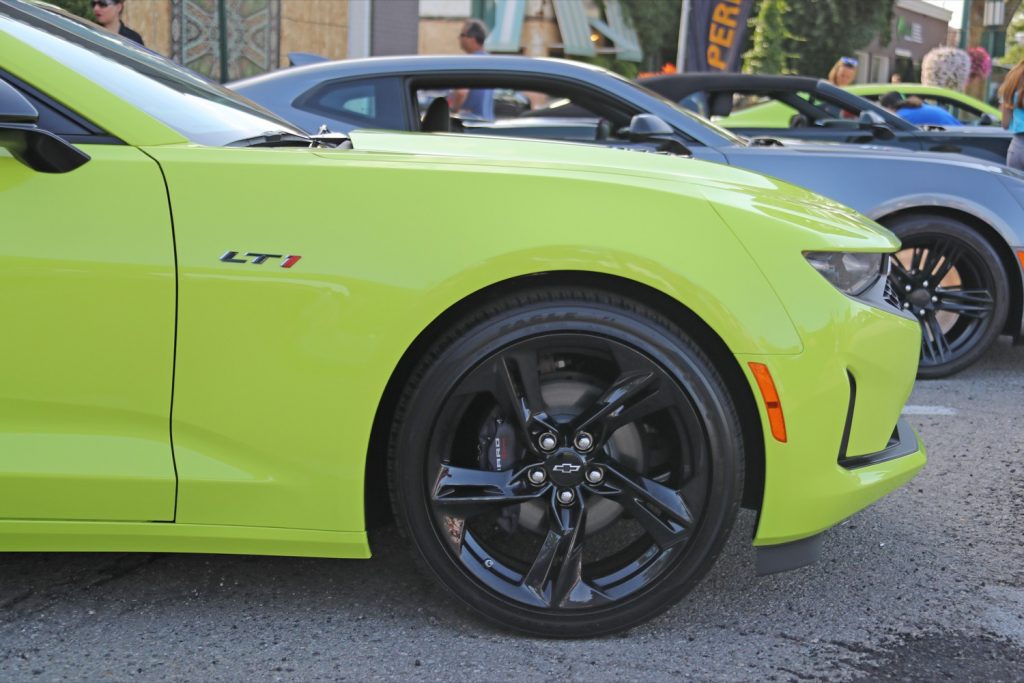
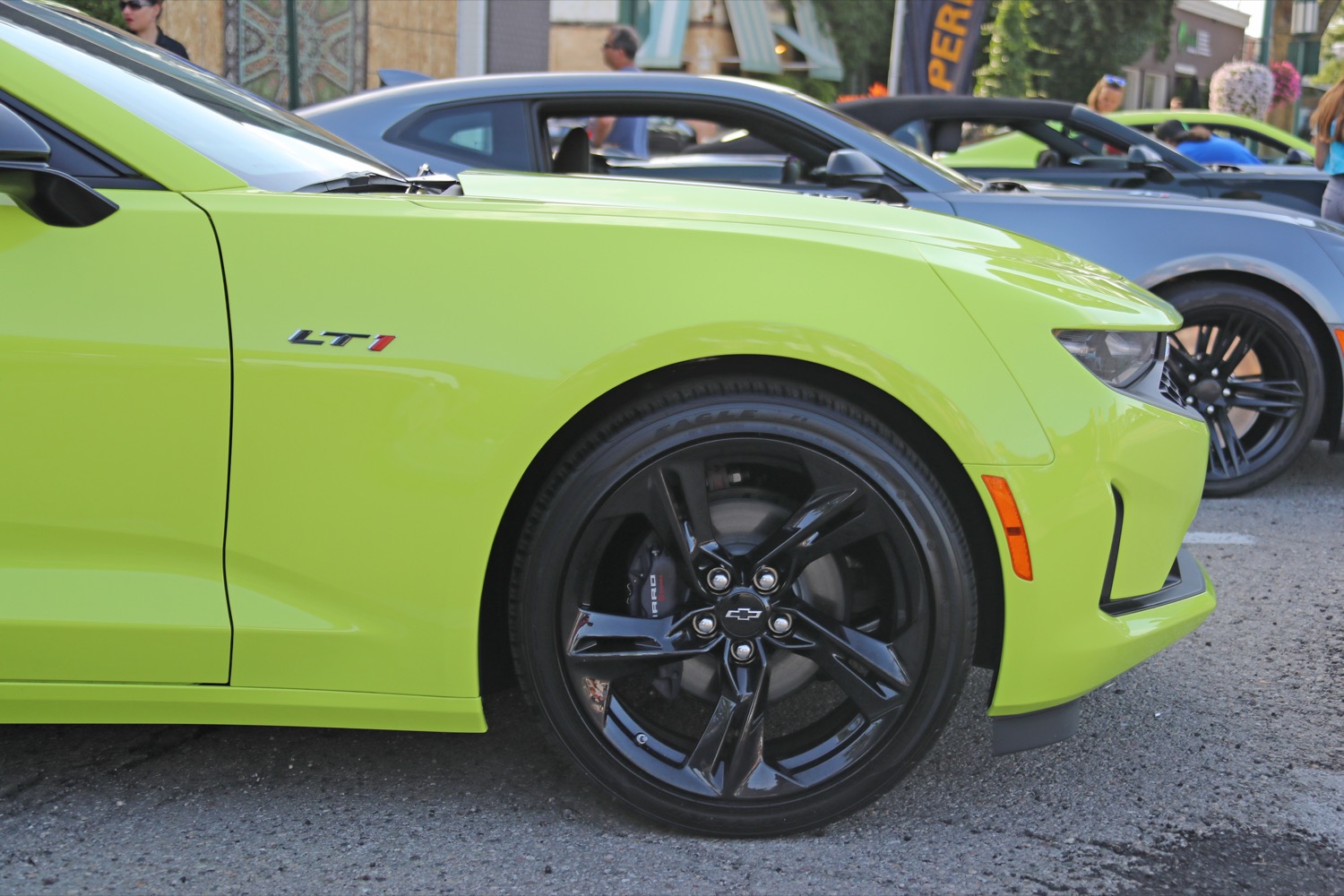
Similarly, higher prices of Camaro V8 models compared to those of the Mustang GT base and Challenger R/T compounded the issue and resulted in the introduction of the bare-bones LT1 model for the 2020 model year. When it entered the market, the LT1 had a starting price of $34,995, making it more affordable than the V8-powered Challenger and Mustang models and about $2,000 less than a 2019 Camaro 1SS. Although it was more affordable, the LT1 still offered respectable components, including Brembo brakes and Recaro performance seats.
Issue 2: Controversial Design
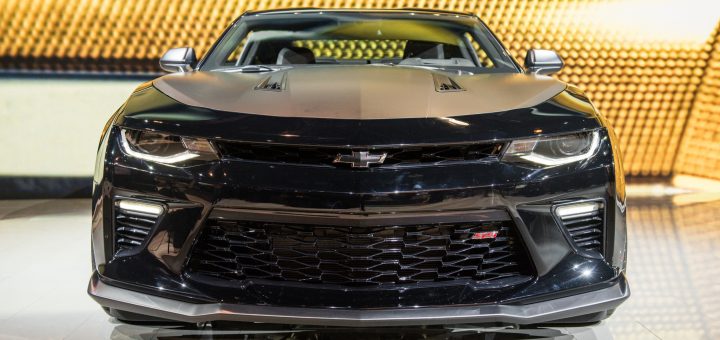
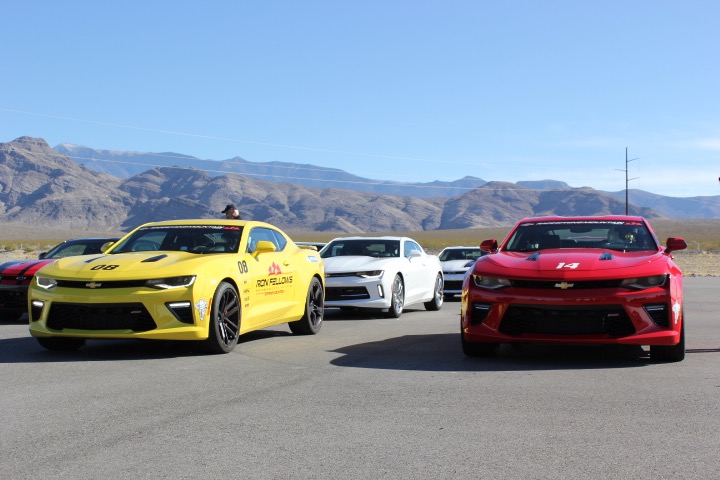
Whether you love it, like it, or hate it, the styling of the sixth-generation Chevy Camaro has always been a point of contention. The general consensus is that the new model wasn’t different enough from its fifth-gen predecessor, which ultimately worked against the muscle car.
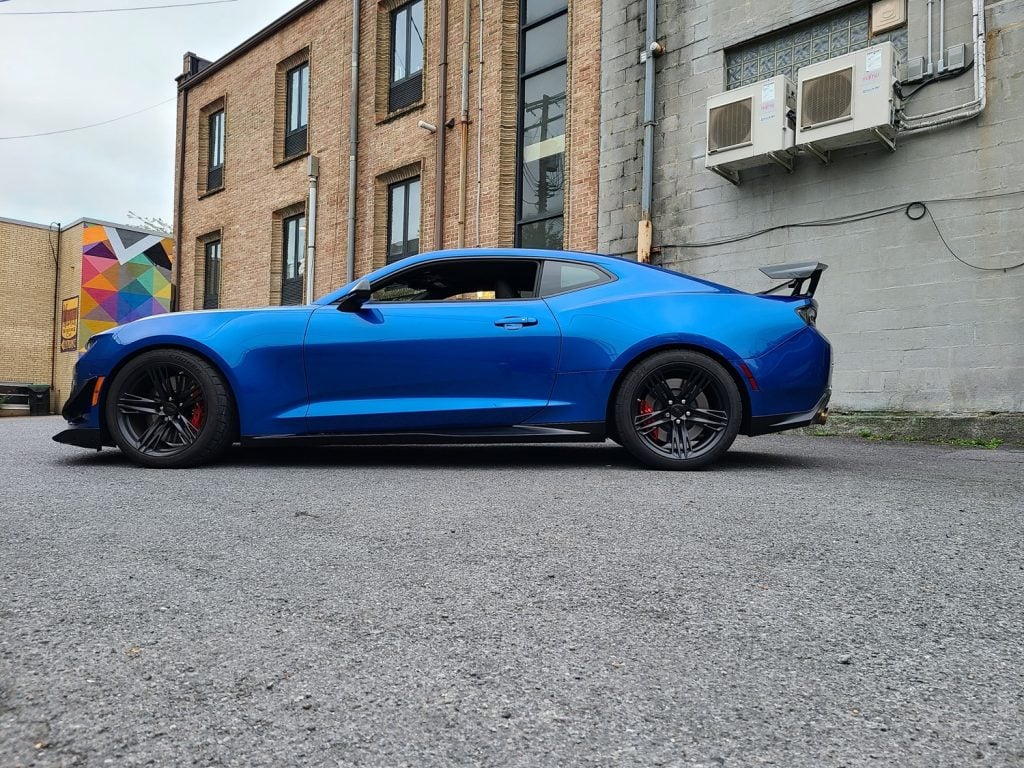
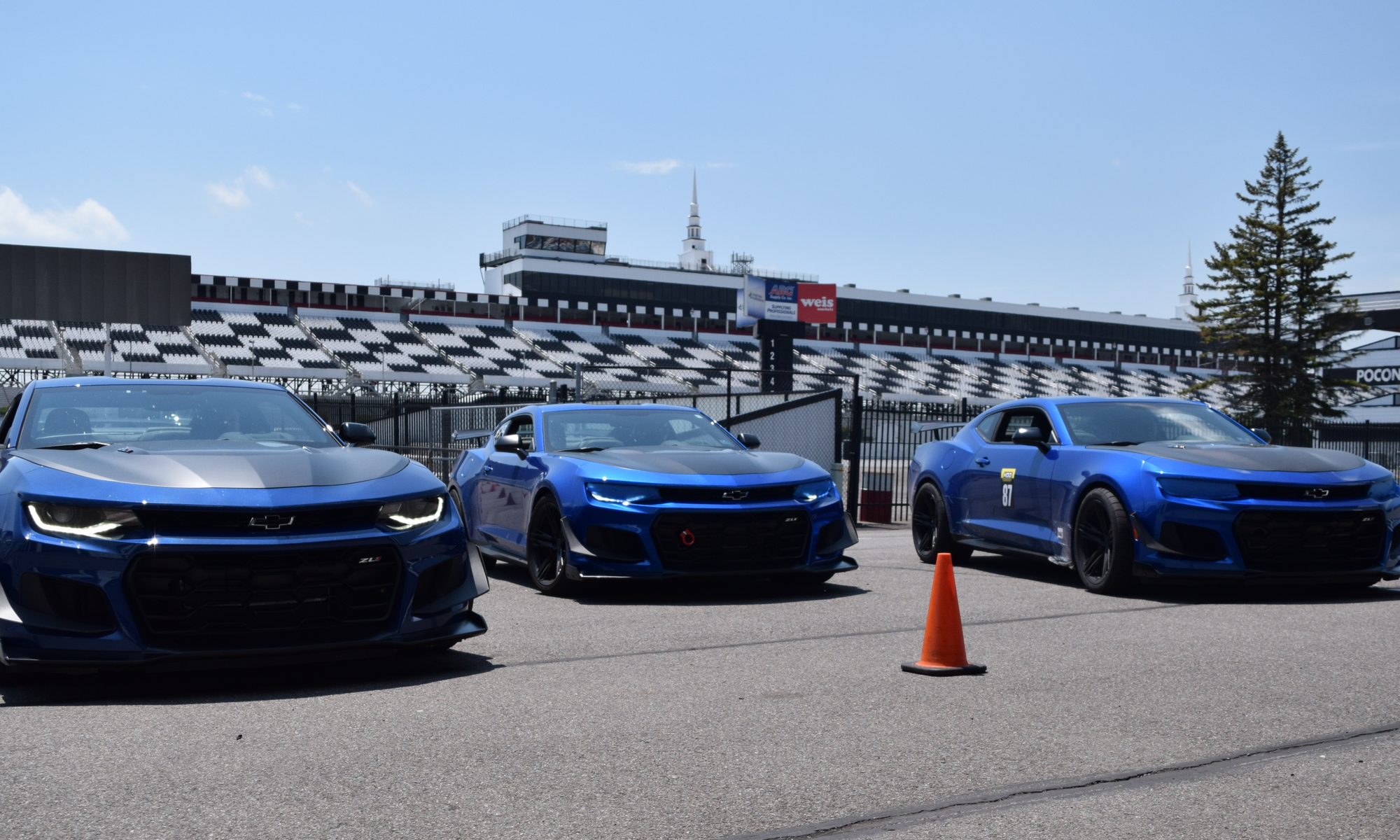
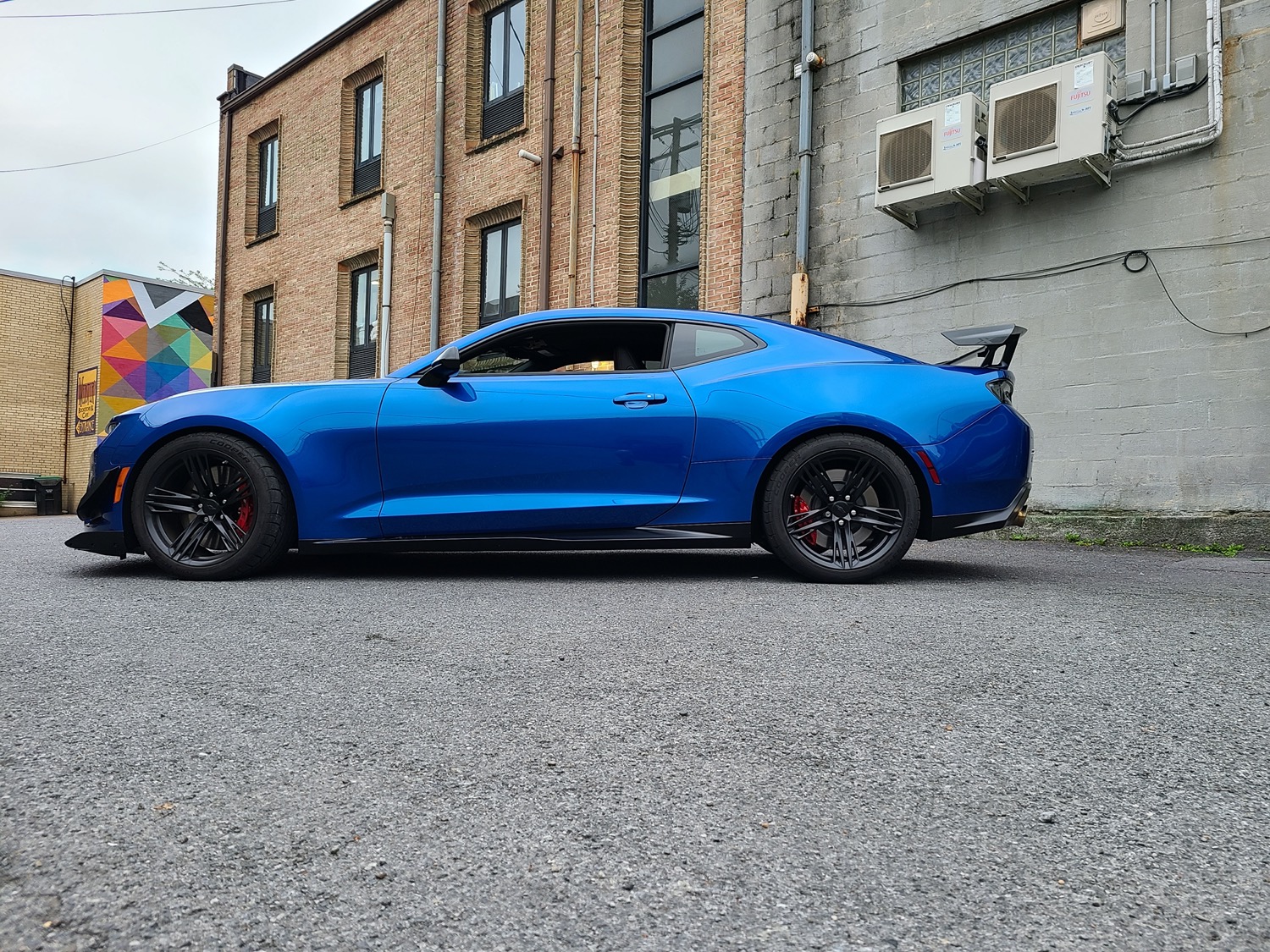
While this is indeed a subjective measure, the way a vehicle looks and its perception in the public eye can surely be a contributing factor when it comes to sales performance. To that end, this is not merely a reflection of what we think of the car ourselves. Yours truly was a big fan of the sixth-gen Camaro, particularly the monstrous ZL1 1LE. In fact, I liked it so much that I decided to purchase my very own.
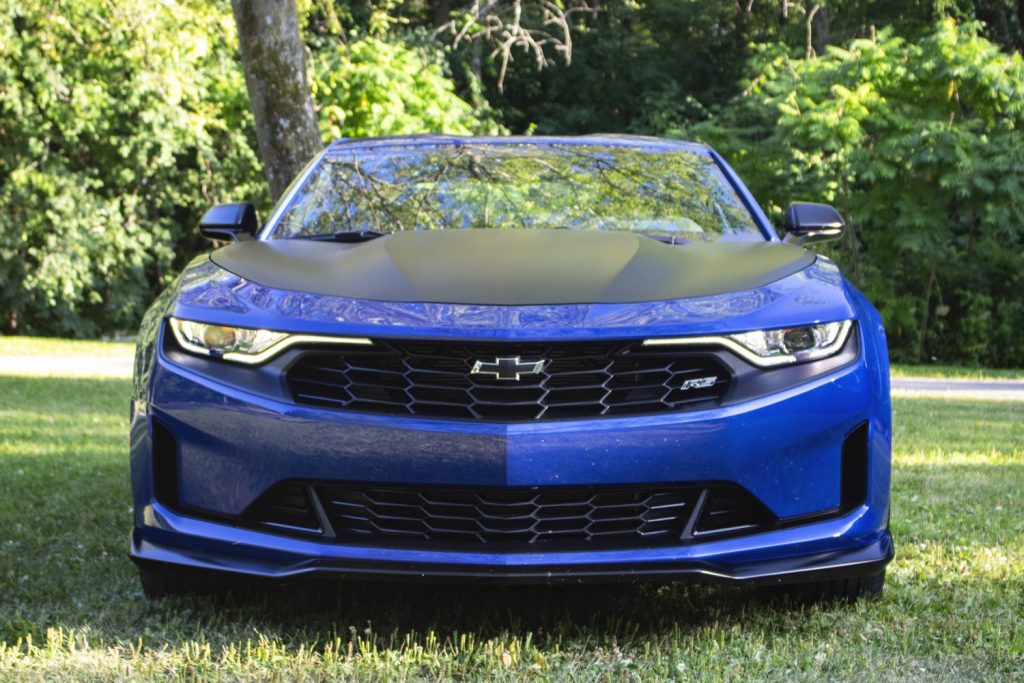
To assuage criticism that the design of the sixth-gen Camaro wasn’t different enough from the fifth-gen model, Chevy updated the styling in conjunction with the 2019 model year refresh. Notably, the ZL1 trim level was the only model to forego the updated fascia, which ended up backfiring on The Bow Tie. The short-lived facelift generated such a negative reaction that the automaker made a snap decision to introduce a “concept” fascia design for the car during the 2018 SEMA show. The revised front end was then rolled out for the 2020 model year, effectively representing a facelift to the facelift.
Despite rolling out a hasty correction for the questionable change – which was ironically done to boost sales in the first place – interest in the pony car continued to dwindle. To put it in perspective, 48,265 units of the Camaro were sold in 2019 versus 29,775 units in 2020.
Issue 3: Poor Outward Visibility
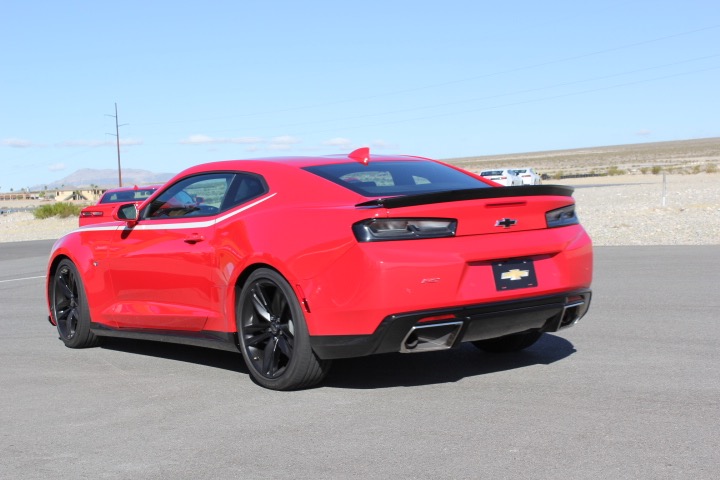
The sixth-gen Camaro was often hammered for its less-than-optimal outward visibility. While some might disagree with this criticism, the point stands that it is much harder to see out of one of these Camaros than its direct rival – the Mustang.
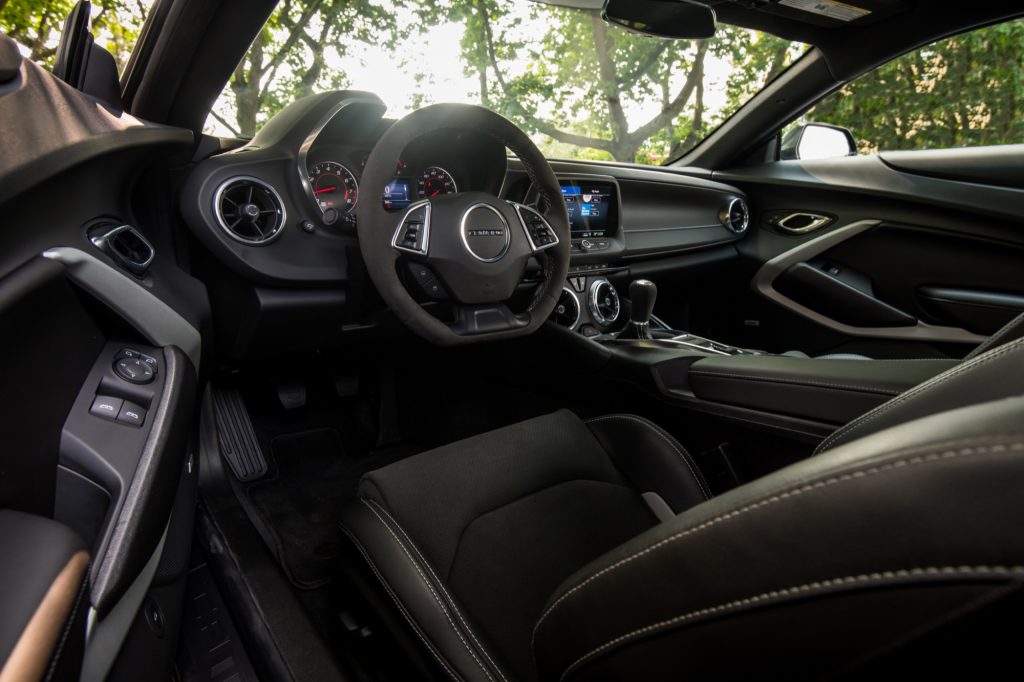
Inspiring a sense of confidence is a major selling point for cars in this segment, and while the Camaro certainly does so mechanically, it arguably leaves much to be desired when one is actually sitting behind the steering wheel, which brings us to our next point: the interior.
Issue 4: Sub-Par Interior Materials And Quality
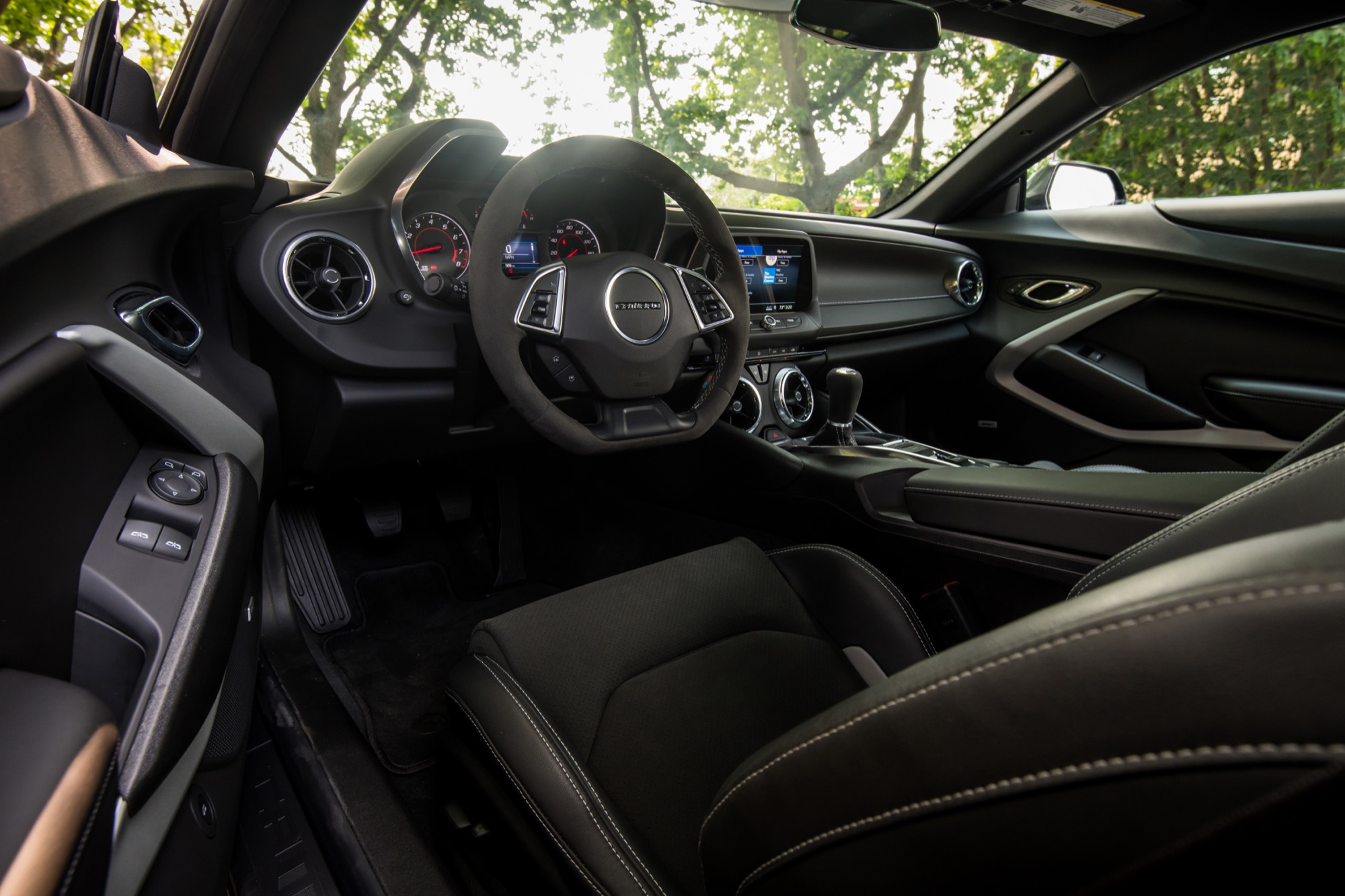
Another demerit for the Gen Six Camaro was its interior quality, or lack thereof. Generally speaking, the Camaro cost more than its rivals, creating the expectation of a superior cabin than its competitors. For some, the Camaro’s higher levels of performance, handling and driver engagement more than overcame the demerits of its cabin, but that also wasn’t the case for many.
Aside from feeling cramped, the plastics and seating materials were often criticized for “feeling cheap” and leaving much to be desired. The forward-leaning center screen was also a bit strange, though in its defense, it does prevent sun glare in Convertible models.
Issue 5: Little To No Marketing
Unfortunately, many are simply unaware of the Camaro’s existence, even today. Sure, the Camaro has more presence than the Holden Commodore-based Chevy SS sedan, but the fact remains that we rarely saw any commercials or ads for the sixth-gen Camaro. In fact, my own Camaro was even mistaken for a Mustang. While a more passionate car enthusiast would have never made this mistake, a car needs to be recognized and well-received by the general public and broader consumer base if it has any chance of achieving sales success (see Tesla), which is the number-one priority in a business that aims to turn a profit.
Ironically, the Chevy Camaro ZL1 has finally made it to the big screen in the movie Free Guy in which it plays a supporting role for Ryan Reynolds’ character, Guy. The spotlight is, however, perhaps a bit too late to have any positive impact on the muscle car’s future.
Issue 6: More Sports Car Than Muscle Car
Speaking of performance, did we mention the fact that the 2018 Camaro ZL1 1LE ran a 7 minute and 16 second lap at the Nürburgring? While the Gen Six Camaro was praised for this feat, it began to be referred to as a sports coupe. Moving away from its muscle car roots may have done more harm than good to the nameplate, as its lesser-capable rivals began to widen the sales gap. In addition, Chevy already has a bonafide sports car in its stable – the Corvette. Despite the latter being twice as expensive (or even more), having two sports cars in the family might not have been a winning formula.
Ultimately, this is where the Camaro fell short. It’s beloved by enthusiasts who want top-dollar performance on a budget, but doesn’t really deliver for anyone else. While it can be praised as being one of the most capable vehicles of its time and lauded for giving buyers affordable performance, it looks like a failed product in the eyes of the accounting department.
My 84 had the catalytic converter bump on the passenger side. Every year I had to replaced the insides of the windshield washer pump. The impeller was made out of plastic that broke apart constantly.
My brother-in-law's 93 had the distorted windshield which made you dizzy to drive the car. It felt like you were looking through wrong prescription glasses.
This generation has the small side windows that I can't get over.
Just so many missed opportunities with this car always.
The Camaro segment just disappeared for the most part
I think it was more than that. The Mustang and Challenger segments, which are quite similar, are still going quite strong. Ford, for example, saw fit to keep the Mustang in production even after it had dumped all of its other passenger-cars from the American market.
I tend to agree with the part of the article that says that Chevy focused too much on a sports-car chassis. People don't get a Camaro SS to run the Nurburgring...they buy them, like with similar Shelby Mustangs and SRT Challengers, essentially for the drag strip. Also, the windows on the Camaro are like looking out of a bunker.
Last edited by mmarshall; Nov 20, 2021 at 09:08 PM.
The car at first did fine with it's faults. The problem is/was, as with many GM cars, the company does nothing to update them. So what faults were minor back in 2010 are now very old and unacceptable in 2021. The car could be heavily refreshed or even redesigned, and all the problems listed could be addressed and fixed. But like many past fun GM cars, the company lets them whither away. There's no point in trying to over-analyze it. If you leave any car on the vine too long, all the negatives become magnified and unacceptable to the buying public.
I think it was more than that. The Mustang and Challenger segments, which are quite similar, are still going quite strong. Ford, for example, saw fit to keep the Mustang in production even after it had dumped all of its other passenger-cars from the American market.
I tend to agree with the part of the article that says that Chevy focused too much on a sports-car chassis. People don't get a Camaro SS to run the Nurburgring...they buy them, like with similar Shelby Mustangs and SRT Challengers, essentially for the drag strip. Also, the windows on the Camaro are like looking out of a bunker.
It's the same segment, with a small (and getting smaller) customer base. When you build an inferior product, you get squeezed out.
I don't understand why, it's by far the best of the three performance wise. They should have emphasized this and used the M and AMG cars to show its superiority not waste time competing against the other two who have cars that are for a different use IMO
because its small, cramped, bad visibility, the latest refresh was fugly. The 10+ year old challenger outsold the newest camaro. Its not clearly not about laptimes
It's the same segment, with a small (and getting smaller) customer base. When you build an inferior product, you get squeezed out.
I dunno if it is an inferior product, but I believe the customer base is shrinking. Younger customers want tech.
Back in the day I lusted after the 1st and 2nd gen Camaros and FireChickens. Not now.
Last edited by JeffKeryk; Nov 21, 2021 at 10:52 AM.
I dunno if it is an inferior product, but I believe the customer base is shrinking. Younger customers want tech.
Back in the day I lusted after the 1st and 2nd gen Camaros and FireChickens. Not now.
Young ppl can’t afford new Camaro or any other serious sports car.
Average age for even an enthusiast car like BRZ/86 is around 40.
Young ppl can’t afford new Camaro or any other serious sports car.
Average age for even an enthusiast car like BRZ/86 is around 40.
A lot of owners have these as their weekend cars.
Yeah, this makes a lot of sense. I'm 35 and have had my WRX for 7 years now. My limited cost $29k at the time. A 2021 goes for $35k....I see a lot of "older" men driving these vehicles now.
Young ppl can’t afford new Camaro or any other serious sports car.
Average age for even an enthusiast car like BRZ/86 is around 40.
A lot of owners have these as their weekend cars.
That's kinda my point. As generations go by, I think these cars are losing their appeal.
Of course, I could be wrong. Ask young people what get their blood going; it seems to be tech.
I guess it seems like some cars are growing in popularity and some are going the other way.
How many lust after a 1968 Corvette 427 Roadster? How many even know what this is?
That's kinda my point. As generations go by, I think these cars are losing their appeal.
Of course, I could be wrong. Ask young people what get their blood going; it seems to be tech.
I guess it seems like some cars are growing in popularity and some are going the other way.
How many lust after a 1968 Corvette 427 Roadster? How many even know what this is?
Have you seen the waitlist for C8?
When you build a product that ppl want there will be huge demand for it.
Most sports cars are selling very well especially lately with many ppl flush with cash due to govt, stock market, crypto etc.




 What went wrong with the Camaro?