


2021 Toyota Mirai


Thread Starter
Lexus Test Driver


Joined: Mar 2020
Posts: 5,482
Likes: 89
From: N/A

It's interesting you say that, as another prolific member in Car Chat frequently claims that Toyota and the Japanese government placed their efforts on hydrogen in order to avoid relying on China (mainly for batteries).

Pole Position
Joined: May 2004
Posts: 2,602
Likes: 89
From: Singapore
2021 Toyota Mirai Test Drive Review: Is Hydrogen Right For you?
2021 Toyota Mirai Test Drive Review: Is Hydrogen Right For you?
https://insideevs.com/reviews/460274...-drive-review/
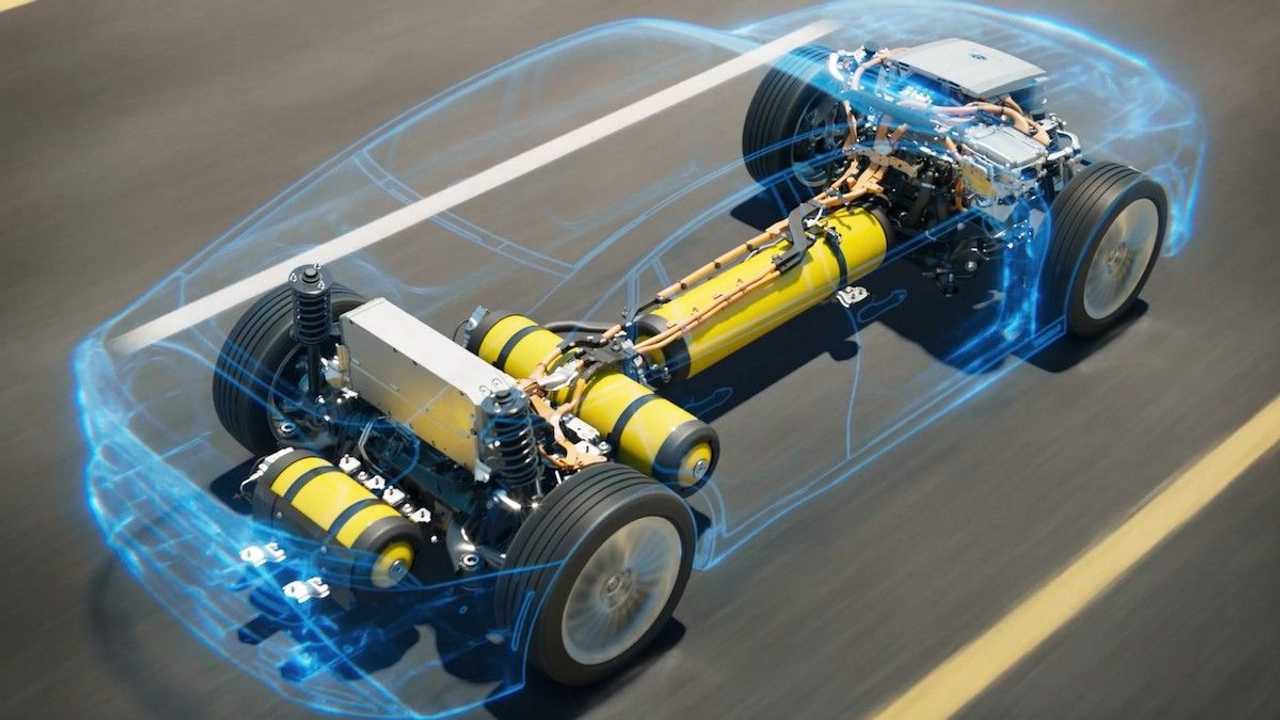
The entire body is lower, longer and wider with an aggressive stance, and combined with four-wheel independent suspension provides an incredibly solid ride with amazing handling, which gives a very comfortable “limousine” ride just like the Lexus LS. Now with seating for five, the interior matches the quality of the exterior.
The new exterior conveys the look of a long-distance Grand Touring car but with the usefulness of a four-door sedan.
The new Mirai body is bigger in every dimension from the outgoing car:
•Wheelbase is up 5.5 inches (+140mm) to 144.9 inches (2920 mm)
•Length is up 3.3 inches (+85mm) to 195.8 inches (4975mm)
•Width is up 2.7 inches (+70mm) to 74.2 inches (1885mm)
•Height is down 2.5 inches (-65mm) to 57.9 inches (1470mm)
•Weight is up 176 pounds (79.8 kg) to 4255 pounds (1930 kg)
Seating is now 5, up from 4 passengers, and weight distribution is now 50:50, which greatly contributes to the solid neutral handling.
The new Mirai body is bigger in every dimension from the outgoing car:
•Wheelbase is up 5.5 inches (+140mm) to 144.9 inches (2920 mm)
•Length is up 3.3 inches (+85mm) to 195.8 inches (4975mm)
•Width is up 2.7 inches (+70mm) to 74.2 inches (1885mm)
•Height is down 2.5 inches (-65mm) to 57.9 inches (1470mm)
•Weight is up 176 pounds (79.8 kg) to 4255 pounds (1930 kg)
Seating is now 5, up from 4 passengers, and weight distribution is now 50:50, which greatly contributes to the solid neutral handling.
Toyota's trying to replicate the ICE car owner experience as much as possible in order to smooth over their transition to EVs as they recognize that not every car buyer is a technophile and listing stock market performance, Green street cred, reflected Elon Musk glory and Energy Density numbers may not win them( general public) over.

Lead Lap


Joined: Aug 2011
Posts: 4,729
Likes: 553
From: Ca
It is not just Japan, China is going hard for Fuel Cells, together with their sworn enemies, subsidizing Japanese technology with government money.
It is a different usage case to BEV, and both countries have problems with energy importation.
Same FC system from Mirai is used in trucks and busses, and is probably making it all possible.
It is a different usage case to BEV, and both countries have problems with energy importation.
Same FC system from Mirai is used in trucks and busses, and is probably making it all possible.
Both China and Japan produce very little oil on its own, and rely on oil imports.
China:
To make matters worse, China is "encircled" by US allied countries beginning at the 1 o'clock position with South Korea, then Japan, then by the 3 o'clock position is Taiwan, at 4 o'clock is the Philippines, 5 o'clock is Indonesia, 6 o'clock is South East Asian nations like Vietnam and Malaysia, and 7 o'clock is India.
Because China is heavily dependent on oil imports, and China is "encircled" by US allied countries - China deliberately tries to break away from dependence on oil imports, hence there is a push in China for BEV's and HFCEV's - not just to lower carbon emissions, but to diminish dependence on oil imports, which can be easily cut off by encircling US allied nations.
Preparing for war, it is thought that US allied nations can quickly cut off China's energy import to bring China to a standstill.
This is why China likes to support North Korea, and why China wants the Senkaku Islands, as well as Taiwan and the South China Sea - to break this "encircling" by US allied nations.
Japan:
Apart from reducing their dependence on oil imports, as well as lowering carbon emissions, the Japanese also want to reduce dependence on Chinese rare earth metals - hence Japanese BEV's and Japanese HFCEV's as an interim measure for long distance commercial vehicles like Toyota Crown/Mirai II taxis etc.
Keep in mind that Toyota Crowns are used as taxis in Japan, just as Benz E Class are used as taxis in Germany.
A Toyota Crown Hybrid is a Low Emissions Vehicle LEV, and is commonly used for taxis.
However, a Toyota Mirai II HFCEV is a Zero Emissions Vehicle ZEV, and could potentially be used in the interim for long distance taxis - until superhigh density superfast charging batteries with superlong lifecycles are in production.
Rare Earth Metals
Motorola, you can read more below regarding rare earth metal supplies:
Japan is brutally ending China's dominance in rare earth metals and teaching China a lesson it will never forget (tfipost.com)
Japan moves to secure rare earths to reduce dependence on China | South China Morning Post (scmp.com)
Is Japan’s rare earth discovery fool’s gold? (lowyinstitute.org)
Ending China’s chokehold on rare-earth minerals | American Enterprise Institute - AEI
Last edited by peteharvey; Jan 13, 2021 at 03:13 PM.


Lexus Test Driver
Joined: Jan 2007
Posts: 7,460
Likes: 232
From: CA
Originally Posted by Motorola
$70,000? Good luck competing with Tesla at that price.
Lead Lap
Joined: Aug 2011
Posts: 4,729
Likes: 553
From: Ca
If governments mandate, then...
Else, it all depends on the demand for hydrogen vehicles.
Hydrogen vehicles are more relevant to commercial vehicles, since most private motor vehicle trips are well under 50 miles.
For commercial purposes, a Mirai II would be more relevant to a Japanese Domestic Market taxi.
HFCEV's packaging efficiency is very poor.
HFCEV's would be much better suited to commercial vehicles, or at least a CUV/SUV tall wagons - rather than a sedan with most probably a cramped interior like Mirai II.
Mirai II will have an absolutely huge transmission tunnel, with NO spare tire, nor rear pass-through facility...

Last edited by peteharvey; Jan 19, 2021 at 04:19 PM.

Lexus Fanatic


Joined: Oct 2003
Posts: 94,521
Likes: 261
From: Virginia/D.C. suburbs
Lexus Test Driver
Joined: Jan 2007
Posts: 7,460
Likes: 232
From: CA
There isn't an adequate hydrogen infrastructure even in California. It will never happen in the United States for private vehicles so there is no point in building it out for that purpose. Compared to BEV, its completely inefficient, underpowered, and far more expensive with far less availability. Sounds like a foolish investment proposition.

Lexus Fanatic

Joined: Sep 2010
Posts: 26,053
Likes: 4,328
From: Alberta
There isn't enough hydrogen to fuel the cars on the road now. Recently in California there were shortages some stations had ZERO. Good luck producing enough to fuel 10's of millions of cars the cost to build that infrastructure is estimated to be approaching a trillion dollars. Each station can run $1 million, more if it also has onsite solar and battery storage to power the electrolysis systems.
Lead Lap
Joined: Aug 2011
Posts: 4,729
Likes: 553
From: Ca
Like I say, it's up to government, manufacturers, and public demand.
For example, the government subsidized electric cars to get them going.
If HFCEV's will happen in the US, then the government must subsidize etc.
Likewise, just as Tesla sold their vehicles at a loss to boost the volume, TMC must also sell the Mirai II at a loss to make volumes possible...
For example, the government subsidized electric cars to get them going.
If HFCEV's will happen in the US, then the government must subsidize etc.
Likewise, just as Tesla sold their vehicles at a loss to boost the volume, TMC must also sell the Mirai II at a loss to make volumes possible...

Lexus Fanatic

Joined: Jan 2005
Posts: 20,240
Likes: 274
Oil
Both China and Japan produce very little oil on its own, and rely on oil imports.
China:
To make matters worse, China is "encircled" by US allied countries beginning at the 1 o'clock position with South Korea, then Japan, then by the 3 o'clock position is Taiwan, at 4 o'clock is the Philippines, 5 o'clock is Indonesia, 6 o'clock is South East Asian nations like Vietnam and Malaysia, and 7 o'clock is India.
Because China is heavily dependent on oil imports, and China is "encircled" by US allied countries - China deliberately tries to break away from dependence on oil imports, hence there is a push in China for BEV's and HFCEV's - not just to lower carbon emissions, but to diminish dependence on oil imports, which can be easily cut off by encircling US allied nations.
Preparing for war, it is thought that US allied nations can quickly cut off China's energy import to bring China to a standstill.
This is why China likes to support North Korea, and why China wants the Senkaku Islands, as well as Taiwan and the South China Sea - to break this "encircling" by US allied nations.
Japan:
Apart from reducing their dependence on oil imports, as well as lowering carbon emissions, the Japanese also want to reduce dependence on Chinese rare earth metals - hence Japanese BEV's and Japanese HFCEV's as an interim measure for long distance commercial vehicles like Toyota Crown/Mirai II taxis etc.
Keep in mind that Toyota Crowns are used as taxis in Japan, just as Benz E Class are used as taxis in Germany.
A Toyota Crown Hybrid is a Low Emissions Vehicle LEV, and is commonly used for taxis.
However, a Toyota Mirai II HFCEV is a Zero Emissions Vehicle ZEV, and could potentially be used in the interim for long distance taxis - until superhigh density superfast charging batteries with superlong lifecycles are in production.
Rare Earth Metals
Motorola, you can read more below regarding rare earth metal supplies:
Japan is brutally ending China's dominance in rare earth metals and teaching China a lesson it will never forget (tfipost.com)
Japan moves to secure rare earths to reduce dependence on China | South China Morning Post (scmp.com)
Is Japan’s rare earth discovery fool’s gold? (lowyinstitute.org)
Ending China’s chokehold on rare-earth minerals | American Enterprise Institute - AEI
Both China and Japan produce very little oil on its own, and rely on oil imports.
China:
To make matters worse, China is "encircled" by US allied countries beginning at the 1 o'clock position with South Korea, then Japan, then by the 3 o'clock position is Taiwan, at 4 o'clock is the Philippines, 5 o'clock is Indonesia, 6 o'clock is South East Asian nations like Vietnam and Malaysia, and 7 o'clock is India.
Because China is heavily dependent on oil imports, and China is "encircled" by US allied countries - China deliberately tries to break away from dependence on oil imports, hence there is a push in China for BEV's and HFCEV's - not just to lower carbon emissions, but to diminish dependence on oil imports, which can be easily cut off by encircling US allied nations.
Preparing for war, it is thought that US allied nations can quickly cut off China's energy import to bring China to a standstill.
This is why China likes to support North Korea, and why China wants the Senkaku Islands, as well as Taiwan and the South China Sea - to break this "encircling" by US allied nations.
Japan:
Apart from reducing their dependence on oil imports, as well as lowering carbon emissions, the Japanese also want to reduce dependence on Chinese rare earth metals - hence Japanese BEV's and Japanese HFCEV's as an interim measure for long distance commercial vehicles like Toyota Crown/Mirai II taxis etc.
Keep in mind that Toyota Crowns are used as taxis in Japan, just as Benz E Class are used as taxis in Germany.
A Toyota Crown Hybrid is a Low Emissions Vehicle LEV, and is commonly used for taxis.
However, a Toyota Mirai II HFCEV is a Zero Emissions Vehicle ZEV, and could potentially be used in the interim for long distance taxis - until superhigh density superfast charging batteries with superlong lifecycles are in production.
Rare Earth Metals
Motorola, you can read more below regarding rare earth metal supplies:
Japan is brutally ending China's dominance in rare earth metals and teaching China a lesson it will never forget (tfipost.com)
Japan moves to secure rare earths to reduce dependence on China | South China Morning Post (scmp.com)
Is Japan’s rare earth discovery fool’s gold? (lowyinstitute.org)
Ending China’s chokehold on rare-earth minerals | American Enterprise Institute - AEI