



Is Lexus quality declining?

Lexus Test Driver


Joined: Mar 2008
Posts: 9,999
Likes: 250
From: California

Hi, I drove a Lexus several years ago and liked it very much, particularly for Lexus’s legendary quality and reliability. That was then. Several years later, I’m considering a new Lexus, however, am rather surprised at the many customer complaints on the Consumer Affairs website regarding quality/reliability problems and problems getting them resolved from dealer to Lexus corporate. Are these complaints the exceptions or the rule?
https://www.consumeraffairs.com/automotive/lexus.html
https://www.consumeraffairs.com/automotive/lexus.html
From my past and recent experiences with Lexus vehicles, they are as reliable now as they have ever been. I am not seeing any decline of quality anywhere. It is a very safe bet you will have a lot of positive luck with your purchase.

Lead Lap

Joined: Dec 2019
Posts: 630
Likes: 72
From: Ontario
Lexus has to be one of the most consistent brands out there.
Look at their engines and transmissions. The technology practically hasn't changed at all over the years. The leaves me with one thing to blame.
The way the cars are maintained and serviced. Particularly - Lexus goes through great lengths to ensure you maintain (or rather, don't) your car a very specific way in the North American market. I believe this is the main contributing factor should anyone make the argument that quality is declining.
Again, new Lexus's don't have new technology. There is no reason why they shouldn't last hundreds of thousands of miles if maintained optimally.
Look at their engines and transmissions. The technology practically hasn't changed at all over the years. The leaves me with one thing to blame.
The way the cars are maintained and serviced. Particularly - Lexus goes through great lengths to ensure you maintain (or rather, don't) your car a very specific way in the North American market. I believe this is the main contributing factor should anyone make the argument that quality is declining.
Again, new Lexus's don't have new technology. There is no reason why they shouldn't last hundreds of thousands of miles if maintained optimally.

Pole Position
Joined: Jun 2010
Posts: 3,185
Likes: 1,735
From: NC
Lexus is #1 in reliability for eight years in a row. Lexus is third in lowest maintenance cost but lowest by far in the luxury group. Lexus is #1 in brand loyalty. Lexus is # in customer satisfaction. Will put a lot more weight on these then posters on a forum complaining. In the US Lexus sells 262,000 vehicles per year so I expect some unhappy owners.

Lexus Fanatic
Joined: Nov 2011
Posts: 35,651
Likes: 426
From: ON/NY
Lexus is #1 in reliability for eight years in a row. Lexus is third in lowest maintenance cost but lowest by far in the luxury group. Lexus is #1 in brand loyalty. Lexus is #1 in customer satisfaction. Will put a lot more weight on these then posters on a forum complaining. In the US Lexus sells 262,000 vehicles per year so I expect some unhappy owners.
Last edited by Toys4RJill; Dec 14, 2019 at 05:01 AM.

Lexus Champion


Joined: Jan 2012
Posts: 17,318
Likes: 558
From: Knoxville, TN
Lexus has to be one of the most consistent brands out there.
Look at their engines and transmissions. The technology practically hasn't changed at all over the years. The leaves me with one thing to blame.
The way the cars are maintained and serviced. Particularly - Lexus goes through great lengths to ensure you maintain (or rather, don't) your car a very specific way in the North American market. I believe this is the main contributing factor should anyone make the argument that quality is declining.
Again, new Lexus's don't have new technology. There is no reason why they shouldn't last hundreds of thousands of miles if maintained optimally.
Look at their engines and transmissions. The technology practically hasn't changed at all over the years. The leaves me with one thing to blame.
The way the cars are maintained and serviced. Particularly - Lexus goes through great lengths to ensure you maintain (or rather, don't) your car a very specific way in the North American market. I believe this is the main contributing factor should anyone make the argument that quality is declining.
Again, new Lexus's don't have new technology. There is no reason why they shouldn't last hundreds of thousands of miles if maintained optimally.

Lexus Fanatic


Joined: May 2012
Posts: 69,226
Likes: 4,222
From: Maryland
They do not build Lexus vehicles as solidly as they did in the 90s. Thats not to say they are not built solidly, they certainly are, but the 90s Lexus models were over the top and they just aren't quite like that anymore.
I would say that Lexus quality hit a low point between 2006-2012 or so, and has improved since then with modern Lexuses being notably more solid with better interior materials, etc. The new LS and LC have beautiful interiors that are VERY solid and extremely high quality, the 13 refresh of the LS460 solved all the interior quibbles with previous LS460s, the 4GS is very solid and well built.
From a reliability perspective I would say newer ones aren't quite as reliable just because they are more complex, more to go wrong more complicated to diagnose and repair. My 98 LS400 was in reality a very simple car, it had the air suspension but that was rare and if you think about it, without that there isn't much electronic there to go wrong. My 2017 by comparison has direct and port injection, air suspension and AVS, 8 control arms in the suspension, electronic power steering, electronic brake assist, radar cruise, PCS, navigation, satellite linked so on and so forth...the new LS is a twin turbo on top of that.
With that said, I would never trade my LS460L for an LS430 or LS400 even if they were a little better made. Those vehicles are just ancient and lack all of the tech comforts that I enjoy and like today. I just have no interest in driving a 20 year old car.
I would say that Lexus quality hit a low point between 2006-2012 or so, and has improved since then with modern Lexuses being notably more solid with better interior materials, etc. The new LS and LC have beautiful interiors that are VERY solid and extremely high quality, the 13 refresh of the LS460 solved all the interior quibbles with previous LS460s, the 4GS is very solid and well built.
From a reliability perspective I would say newer ones aren't quite as reliable just because they are more complex, more to go wrong more complicated to diagnose and repair. My 98 LS400 was in reality a very simple car, it had the air suspension but that was rare and if you think about it, without that there isn't much electronic there to go wrong. My 2017 by comparison has direct and port injection, air suspension and AVS, 8 control arms in the suspension, electronic power steering, electronic brake assist, radar cruise, PCS, navigation, satellite linked so on and so forth...the new LS is a twin turbo on top of that.
With that said, I would never trade my LS460L for an LS430 or LS400 even if they were a little better made. Those vehicles are just ancient and lack all of the tech comforts that I enjoy and like today. I just have no interest in driving a 20 year old car.
Lead Lap
Joined: Dec 2019
Posts: 630
Likes: 72
From: Ontario
They do not build Lexus vehicles as solidly as they did in the 90s. Thats not to say they are not built solidly, they certainly are, but the 90s Lexus models were over the top and they just aren't quite like that anymore.
I would say that Lexus quality hit a low point between 2006-2012 or so, and has improved since then with modern Lexuses being notably more solid with better interior materials, etc. The new LS and LC have beautiful interiors that are VERY solid and extremely high quality, the 13 refresh of the LS460 solved all the interior quibbles with previous LS460s, the 4GS is very solid and well built.
From a reliability perspective I would say newer ones aren't quite as reliable just because they are more complex, more to go wrong more complicated to diagnose and repair. My 98 LS400 was in reality a very simple car, it had the air suspension but that was rare and if you think about it, without that there isn't much electronic there to go wrong. My 2017 by comparison has direct and port injection, air suspension and AVS, 8 control arms in the suspension, electronic power steering, electronic brake assist, radar cruise, PCS, navigation, satellite linked so on and so forth...the new LS is a twin turbo on top of that.
With that said, I would never trade my LS460L for an LS430 or LS400 even if they were a little better made. Those vehicles are just ancient and lack all of the tech comforts that I enjoy and like today. I just have no interest in driving a 20 year old car.
I would say that Lexus quality hit a low point between 2006-2012 or so, and has improved since then with modern Lexuses being notably more solid with better interior materials, etc. The new LS and LC have beautiful interiors that are VERY solid and extremely high quality, the 13 refresh of the LS460 solved all the interior quibbles with previous LS460s, the 4GS is very solid and well built.
From a reliability perspective I would say newer ones aren't quite as reliable just because they are more complex, more to go wrong more complicated to diagnose and repair. My 98 LS400 was in reality a very simple car, it had the air suspension but that was rare and if you think about it, without that there isn't much electronic there to go wrong. My 2017 by comparison has direct and port injection, air suspension and AVS, 8 control arms in the suspension, electronic power steering, electronic brake assist, radar cruise, PCS, navigation, satellite linked so on and so forth...the new LS is a twin turbo on top of that.
With that said, I would never trade my LS460L for an LS430 or LS400 even if they were a little better made. Those vehicles are just ancient and lack all of the tech comforts that I enjoy and like today. I just have no interest in driving a 20 year old car.
Lexus taking a hit with reliability between 2006-2012 like you said was roughly during the recession period, like many other car makers. No surprise there.
Lexus by far has to be the most consistent car maker in terms of quality. By a long shot. The only other brand which impresses me in terms of persistent quality would be Mazda. They are the only brand which improved over time - going from building fun but medicore vehicles back when they were parterned with ford, to sorting out all the kinks and building some truly excellent vehicles.
My 2015 Mazda 6 which I bought for commuting is one of the best cars i've ever owned - at any price point.
Lexus Fanatic
Joined: May 2012
Posts: 69,226
Likes: 4,222
From: Maryland
I'm just telling you, as someone who has owned Lexus vehicles through all of these periods, they are not built like they were. Still very well built, but the competition has caught up big time and they have slipped somewhat.
Great example is rattles. LS400, LS430, ES300...zero rattles. I can get in and drive my 03 ES300 today with 210,000 miles (its still in the family) and it has NO rattles or vibrations inside. Never had to worry about one rattle or issue with the LS400 or the LS430 either, and we had the LS400 to 170k miles and the LS430 to 100k miles. However, every Lexus I have owned since 2010 I have had to address interior rattles, including both my LS460s, and I didn't own any of those vehicles over 45,000 miles. My LS460L has developed a little vibration in the console at idle that is solved by laying my leg against the side of the console, my 2015 LS460 had the same issue so I know how to address it in the 17.
One of the several reasons why I feel like my current Lexus will be my last Lexus.
Last edited by SW17LS; Dec 14, 2019 at 02:28 PM.
ClubLexus Stories
Celebrating Lexus & Toyota from Around the Globe

Lexus NX 350h: A Fuel-Sipping Secret Hot Hatch???
Michael S. Palmer
5 Best & 5 Worst Lexus Daily Drivers
Joe Kucinski
Top 5 Hottest Lexus & Toyotas in 2026 (Hardest To Buy)
Brett Foote
2026 Lexus IS 350 F Sport Review: The Last of Its Kind Still Rocks
Michael S. Palmer
Top 10 Most Confusing Things Lexus Has Ever Done!
Joe Kucinski
2026 Lexus ES Review: Lexus Re-Embraces Founding Principles
Michael S. Palmer
10 Lexus Bargains That are Cheaper Than a New Toyota RAV4
Joe Kucinski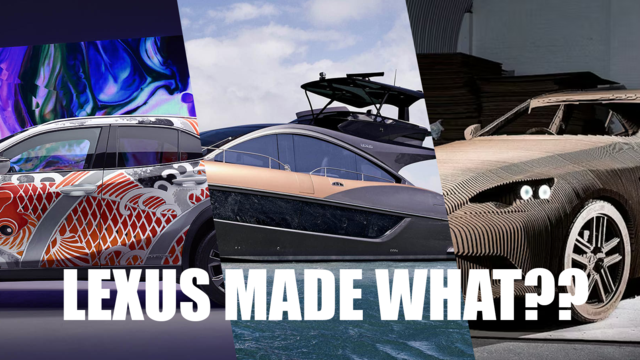
8 Weirdest Things Lexus Has Ever Built
Verdad Gallardo
10 Lexus Designs That Have Aged Like Fine Wine
Verdad Gallardo
Lexus Fanatic
Joined: Nov 2011
Posts: 35,651
Likes: 426
From: ON/NY
My 2017 by comparison has direct and port injection, air suspension and AVS, 8 control arms in the suspension, electronic power steering, electronic brake assist, radar cruise, PCS, navigation, satellite linked so on and so forth...the new LS is a twin turbo on top of that.
But yeah, some of the electronic additions are worrisome, but some other parts become more reliable too. The engine is what I would be most worried about, if they work, that is a big relief. . Same with the screens for the dash. Turbos are not of concern as Toyota has been making turbos since the 80s, they just did not have them in the US.
Last edited by Toys4RJill; Dec 14, 2019 at 02:30 PM.
Lexus Fanatic
Joined: May 2012
Posts: 69,226
Likes: 4,222
From: Maryland
But yeah, some of the electronic additions are worrisome, but some other parts become more reliable too. The engine and is what I would be most worried about. Same with the screens for the dash. Turbos are not of concern as Toyota has been making turbos since the 80s, they just did not have them in the US.
Lexus Fanatic
Joined: Nov 2011
Posts: 35,651
Likes: 426
From: ON/NY
Direct injection, what is to worry about? Do we worry about fuel injection from a 1990 LS?
I believe Toyota radar cruise, Pre collision has been in the US since 2005ish.
Last edited by Toys4RJill; Dec 14, 2019 at 03:07 PM.
Lexus Fanatic
Joined: May 2012
Posts: 69,226
Likes: 4,222
From: Maryland
Direct injection, what is to worry about? Do we worry about fuel injection from a 1990 LS?
I believe Toyota radar cruise, Pre collision has been in the US since 2005ish.
Lexus Fanatic
Joined: Nov 2011
Posts: 35,651
Likes: 426
From: ON/NY
What Toyota or Honda in the early 90s had electric power steering? None lol.
Direct injection systems create issues that we didnt worry about when we were talking about port injection. High pressure fuel rails, carbon buildup, additional stress put on oil and rings and such are all very real concerns, engines as they age are more apt to use oil, etc.
And those components are expensive to replace if you want to maintain the functionality of those systems. Its just a reality that the newer cars have more things to fail.
Direct injection systems create issues that we didnt worry about when we were talking about port injection. High pressure fuel rails, carbon buildup, additional stress put on oil and rings and such are all very real concerns, engines as they age are more apt to use oil, etc.
And those components are expensive to replace if you want to maintain the functionality of those systems. Its just a reality that the newer cars have more things to fail.
Direct injection for Toyota dates back to the mid 90s when Toyota announced it. The first engines were 2.0 I4. Japan only (I think)
Last edited by Toys4RJill; Dec 14, 2019 at 03:28 PM.
Lexus Fanatic
Joined: May 2012
Posts: 69,226
Likes: 4,222
From: Maryland
And those issues I mentioned with DI existed and exist today.
The net result is, I wouldnt expect a modern Lexus or Toyota to go as painlessly to 300k miles and 20 years old as one built in the 90s.
The net result is, I wouldnt expect a modern Lexus or Toyota to go as painlessly to 300k miles and 20 years old as one built in the 90s.
Lead Lap
Joined: Dec 2019
Posts: 630
Likes: 72
From: Ontario
Carbon build up, damage to the cylinder walls and piston rings, and fuel dilution of the oil supply is still possible with port injection.
Just because these issues are exuberated with DI does not mean it is completely nonexistent with older port injection designs.
Plus, simply using port injection to just wash the carbon off of the intake ports isnt exactly a surefire way to deal with the problem. For example Mazda rerouted the coolant passages in their engine away from the intake ports so that they get hot enough to burn off excess deposits during spirited driving. Software changes can also help. That would be an example of effectively tackling the issue head on rather than just bypassing it with a bandaid.
Also, high pressure injection existed back in the days with port injection as well. Direct injection isnt a new technology either. It was implemented in the 1960's by mercedes to allow the engine to run at a cooler temperature.
Just because these issues are exuberated with DI does not mean it is completely nonexistent with older port injection designs.
Plus, simply using port injection to just wash the carbon off of the intake ports isnt exactly a surefire way to deal with the problem. For example Mazda rerouted the coolant passages in their engine away from the intake ports so that they get hot enough to burn off excess deposits during spirited driving. Software changes can also help. That would be an example of effectively tackling the issue head on rather than just bypassing it with a bandaid.
Also, high pressure injection existed back in the days with port injection as well. Direct injection isnt a new technology either. It was implemented in the 1960's by mercedes to allow the engine to run at a cooler temperature.