


2020 Corvette Stingray (C8)


Lexus Champion


Joined: Jan 2012
Posts: 17,130
Likes: 523
From: Knoxville, TN

There still seems to be at least a partial (if not total) media blackout on formal C8 road tests. I'm not sure if this video has been posted (I didn't check back through 400+ posts in the thread)....but here is a partial-video of some C8 track-running, with at least the noise of the engine and transmission for reference. (if your ears are good enough, you'll also hear a very faint tire-squeal on some sharp corners here and there, but the tires apparently do a remarkable job of gripping)
Enjoy.
https://youtu.be/9kxcwgtaqAc
Enjoy.
https://youtu.be/9kxcwgtaqAc
All this for $60k. The average Tahoe and Yukon, the dozens of them I see a day, cost more than this new Vette.


CL Community Team


Joined: Feb 2007
Posts: 9,375
Likes: 614
From: IL

Thread Starter
Lexus Fanatic

Joined: Oct 2003
Posts: 94,483
Likes: 254
From: Virginia/D.C. suburbs


Thread Starter
Lexus Fanatic
Joined: Oct 2003
Posts: 94,483
Likes: 254
From: Virginia/D.C. suburbs

 The 2020 Chevrolet Corvette Convertible Arrives Not a Moment Too Soon
https://www.roadandtrack.com/new-cars/a29328615/2020-chevrolet-c8-corvette-convertible-debut-photos-price/
The mid-engine Corvette convertible gets a Ferrari-style folding hardtop, and a $7500 price increase over the coupe.

By Chris Perkins
Oct 3, 2019
 Chevrolet
Chevrolet might've brought big changes to the Corvette with the introduction of a mid-engine layout for the new C8, but the automaker isn't about to abandon all traditions. Like a convertible version.
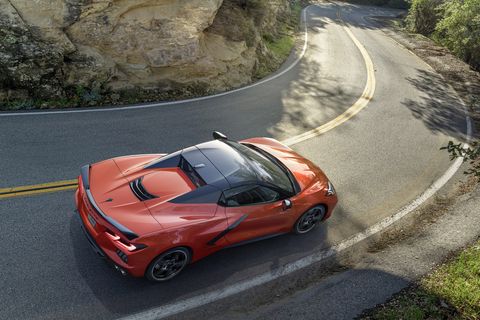
The 2020 Chevrolet Corvette Convertible makes its debut today, with a new two-piece folding hardtop mechanism similar to that of a Ferrari 458. It's the first hardtop convertible in Corvette history, and Chevy promises it doesn't compromise the car in any way. The composite top folds down under a tonneau cover above the engine, which means rear trunk size isn't impacted. That wasn't the case with previous Corvette convertibles. Chevy also says the hardtop helps reduce interior noise—unless, of course, you roll down the electric rear window to hear the C8's 6.2-liter naturally aspirated V-8 a bit more clearly.
Chevrolet
The C8 derives much of its torsional strength from its central tunnel, so chopping off the roof shouldn't affect chassis rigidity significantly. Additionally, a Chevrolet representative told R&T that the convertible will be less than 80 pounds heavier than the coupe, which is a remarkably low weight gain. You can blame most of that on the top itself, and the six electric motors that raise and lower it.
As a result, we don't expect the convertible to drive all that differently from the coupe. Apparently, the drag figures of the two are identical, and the convertible receives its own spring and damper tuning so it can match the performance of the coupe.

Chevrolet
The C8 convertible loses the coupe's glass engine cover, but gains two flying buttresses that blend the roof into the rear deck. Buyers can pick between having the top and buttresses painted body color, or in black for added contrast.
Chevy says C8 convertible production will start towards the end of the first quarter of 2020. Stepping up from coupe to convertible will cost $7500, $3000 more than the difference between the C7 coupe and convertible. Still, at $67,495, the C8 convertible costs less than a Porsche 718 Boxster S and at about the same as an Alfa Romeo 4C Spider.

The mid-engine Corvette convertible gets a Ferrari-style folding hardtop, and a $7500 price increase over the coupe.
By Chris Perkins
Oct 3, 2019
ChevroletChevrolet might've brought big changes to the Corvette with the introduction of a mid-engine layout for the new C8, but the automaker isn't about to abandon all traditions. Like a convertible version.
The 2020 Chevrolet Corvette Convertible makes its debut today, with a new two-piece folding hardtop mechanism similar to that of a Ferrari 458. It's the first hardtop convertible in Corvette history, and Chevy promises it doesn't compromise the car in any way. The composite top folds down under a tonneau cover above the engine, which means rear trunk size isn't impacted. That wasn't the case with previous Corvette convertibles. Chevy also says the hardtop helps reduce interior noise—unless, of course, you roll down the electric rear window to hear the C8's 6.2-liter naturally aspirated V-8 a bit more clearly.
Chevrolet
The C8 derives much of its torsional strength from its central tunnel, so chopping off the roof shouldn't affect chassis rigidity significantly. Additionally, a Chevrolet representative told R&T that the convertible will be less than 80 pounds heavier than the coupe, which is a remarkably low weight gain. You can blame most of that on the top itself, and the six electric motors that raise and lower it.
As a result, we don't expect the convertible to drive all that differently from the coupe. Apparently, the drag figures of the two are identical, and the convertible receives its own spring and damper tuning so it can match the performance of the coupe.
Chevrolet
The C8 convertible loses the coupe's glass engine cover, but gains two flying buttresses that blend the roof into the rear deck. Buyers can pick between having the top and buttresses painted body color, or in black for added contrast.
Chevy says C8 convertible production will start towards the end of the first quarter of 2020. Stepping up from coupe to convertible will cost $7500, $3000 more than the difference between the C7 coupe and convertible. Still, at $67,495, the C8 convertible costs less than a Porsche 718 Boxster S and at about the same as an Alfa Romeo 4C Spider.
Lexus Champion
Joined: Jan 2012
Posts: 17,130
Likes: 523
From: Knoxville, TN
Which kind of sucks but there is no reason I wouldn't buy the convertible otherwise.
 Chevy Corvette C8.R race car revealed with a new 5.5-liter engine
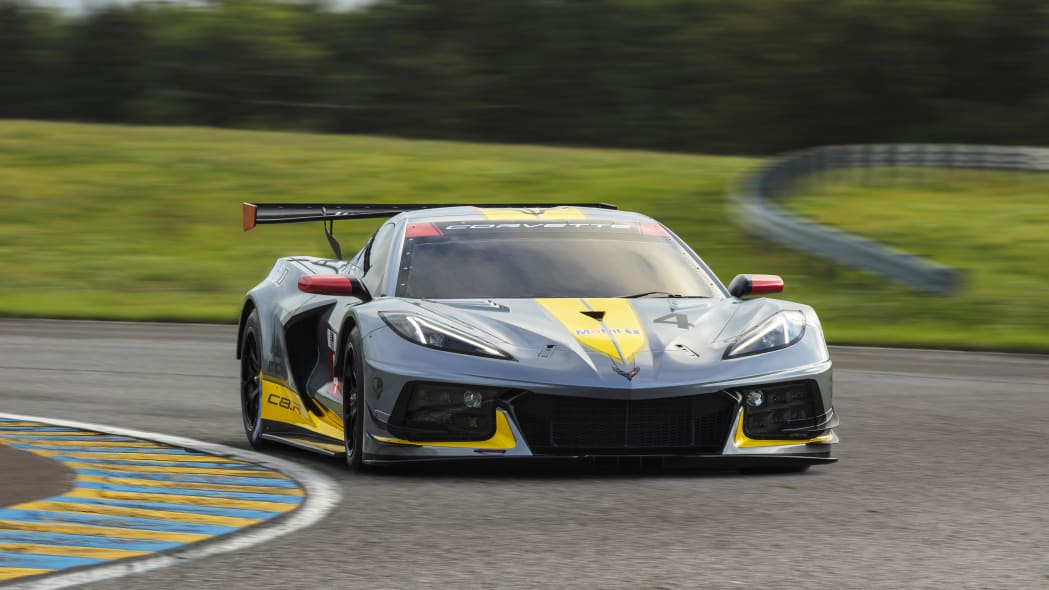
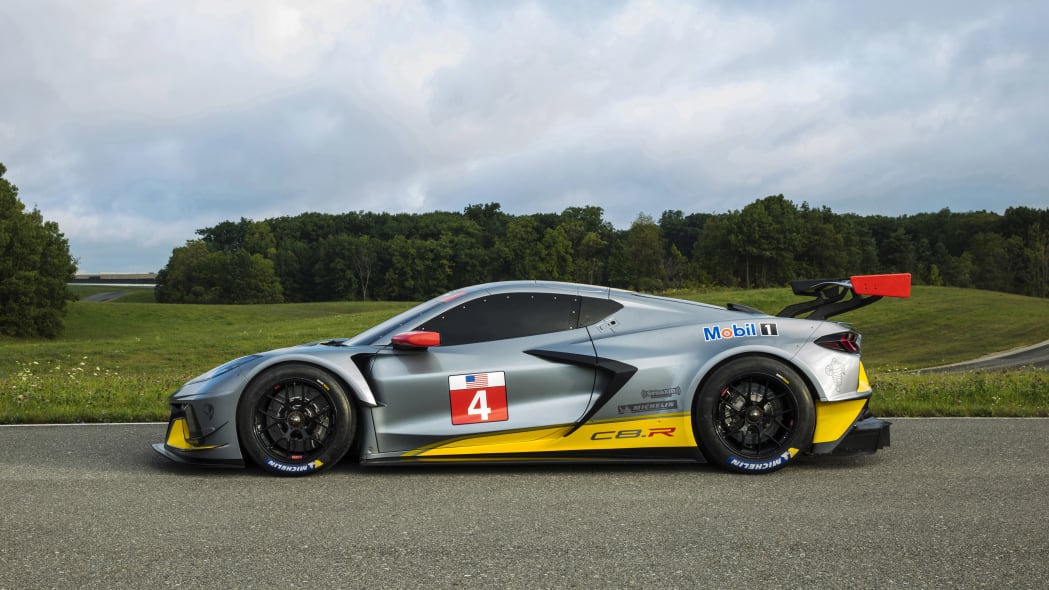
Last week, the 2020 Chevy Corvette C8.R race car made a surprise debut alongside the new C8 convertible. Now the company has finally provided some details on what makes it tick. And the first thing you should know is that it does not use the 6.2-liter LT2 production engine, but rather something designed specifically for racing.
According to Chevy, it's a naturally aspirated 5.5-liter V8, and it has similar output to the production engine. It makes 500 horsepower and 480 pound-feet of torque, just 5 more ponies and 10 more pound-feet of twist than the regular C8 with performance exhaust. It should have a vastly different character, though, because Bozi Tatarevic reports for Jalopnik that it's a double-overhead-cam engine with a flat-plane crankshaft. That means it should rev higher and faster than the regular C8 engine.
Jalopnik also reports that this racing engine could be used as a base for high-performance road Corvettes, which would make for the first double-overhead-cam Corvette since the ZR1 in the early 1990s.
The engine isn't the only change to the racing C8, the C8.R also gets a six-speed sequential manual transmission. The factory car has an eight-speed dual-clutch automatic. Chevy says it created this transmission because it was smaller and lighter, and allowed them to add a large rear diffuser for improved aerodynamics. Obviously there are loads of aerodynamic aids including splitters, wings and things. The race car also loses its front cargo area to a front-mounted radiator. The whole car is also lighter and stiffer than the front-engine C7.R that precedes it. Not everything is different, though. According to Chevy, the race car still starts with a production C8 chassis, and then that chassis is modified to race spec.
According to Chevy, it's a naturally aspirated 5.5-liter V8, and it has similar output to the production engine. It makes 500 horsepower and 480 pound-feet of torque, just 5 more ponies and 10 more pound-feet of twist than the regular C8 with performance exhaust. It should have a vastly different character, though, because Bozi Tatarevic reports for Jalopnik that it's a double-overhead-cam engine with a flat-plane crankshaft. That means it should rev higher and faster than the regular C8 engine.
Jalopnik also reports that this racing engine could be used as a base for high-performance road Corvettes, which would make for the first double-overhead-cam Corvette since the ZR1 in the early 1990s.
The engine isn't the only change to the racing C8, the C8.R also gets a six-speed sequential manual transmission. The factory car has an eight-speed dual-clutch automatic. Chevy says it created this transmission because it was smaller and lighter, and allowed them to add a large rear diffuser for improved aerodynamics. Obviously there are loads of aerodynamic aids including splitters, wings and things. The race car also loses its front cargo area to a front-mounted radiator. The whole car is also lighter and stiffer than the front-engine C7.R that precedes it. Not everything is different, though. According to Chevy, the race car still starts with a production C8 chassis, and then that chassis is modified to race spec.


