


Questions About Aftermarket Wheels


Thread Starter
Lead Lap
Joined: Jun 2006
Posts: 412
Likes: 0
From: New York
 Questions About Aftermarket Wheels
I'm getting the 2009 Acura TL. The car comes with 17" rims which are probably too small aesthetically for a car like this. But I'm worried about replacing them with anything other than the exact same size wheel for fear of messing up the suspension or other aspects of the car. If you go to a larger rim, do you then also have to go to a lower profile tire in order to keep the overall size of the rim/tire combination the same? If you do this, aren't you likely to end up with a much harder ride, etc. And if you go with a rim/tire combo which is any larger, wouldn't you mess up the speedometer's acuracy and other suspension dynamics of the car in terms of how it was designed?

NELOC Mod


Joined: Mar 2006
Posts: 5,201
Likes: 9
From: MD
Not throughly versed in Acura. You may want to check out www.Acurazine.com. this is an enthusiast club similar to CL.
1. Replacing stock for aftermarket wheel WILL NOT mess up the suspension. Just depends on how big you go.
2. Larger rim will not necessarily require a lower profile tire. You will have the same amount of wheel gap but the car, asthetically, will look disproportionate(4X4 looking wheelgap). Lowering the car with an aftermarket suspension will solve this, and does not necessarily void your warranty. When you do lower the car, it WILL require a lower profile tire to avoid rubbing issues.
3. Larger rims will not give you the exact stock ride that you may be used to but can still be very comfortable. Depends on how large you go, how much lower the profile on the tire is, as well as if the car has been lowered any. Ex. I went from a stock 15" rim on my 92LS to an 18" rim. My tire profile went from 205/70/15 to 235/40/18. My car is also lowered (slightly,,about 1.5 inches) and I still have a very decent ride(especially on the highway). So to answer your question, the ride will be a little stiffer/harsher than stock but can also still be very comfortable.
4. While larger rims CAN throw off the speedo a little, this again is dependant on how large you go as well as how heavy the rims are. With my upgrade, my speedo is still correct to within 1 mph of the tach. As far as suspension components, larger wheels do stress tham a little mor than stock, but nothing too unbearable.
As I stated before, I am no expert, but this may help a little.
1. Replacing stock for aftermarket wheel WILL NOT mess up the suspension. Just depends on how big you go.
2. Larger rim will not necessarily require a lower profile tire. You will have the same amount of wheel gap but the car, asthetically, will look disproportionate(4X4 looking wheelgap). Lowering the car with an aftermarket suspension will solve this, and does not necessarily void your warranty. When you do lower the car, it WILL require a lower profile tire to avoid rubbing issues.
3. Larger rims will not give you the exact stock ride that you may be used to but can still be very comfortable. Depends on how large you go, how much lower the profile on the tire is, as well as if the car has been lowered any. Ex. I went from a stock 15" rim on my 92LS to an 18" rim. My tire profile went from 205/70/15 to 235/40/18. My car is also lowered (slightly,,about 1.5 inches) and I still have a very decent ride(especially on the highway). So to answer your question, the ride will be a little stiffer/harsher than stock but can also still be very comfortable.
4. While larger rims CAN throw off the speedo a little, this again is dependant on how large you go as well as how heavy the rims are. With my upgrade, my speedo is still correct to within 1 mph of the tach. As far as suspension components, larger wheels do stress tham a little mor than stock, but nothing too unbearable.
As I stated before, I am no expert, but this may help a little.



NELOC Mod
Joined: Mar 2006
Posts: 5,201
Likes: 9
From: MD


I don't think it's the weight that is the issue when it comes to the speedometer.
It's the circumference of the wheel/tire. The vehicle expects x amount of wheel/tire circumference, the vehicle takes expected x to calculate how fast you're going by how fast the axles are spinning. If you replace x with y and the vehicle is still calculating on x then you're getting the wrong speedo. That's how I always thought of it at least.
It's the circumference of the wheel/tire. The vehicle expects x amount of wheel/tire circumference, the vehicle takes expected x to calculate how fast you're going by how fast the axles are spinning. If you replace x with y and the vehicle is still calculating on x then you're getting the wrong speedo. That's how I always thought of it at least.

Lead Lap

Joined: Feb 2004
Posts: 705
Likes: 0
From: California
use a tire size calculator and your wheel size questions will be answered.
http://www.miata.net/garage/tirecalc.html
yes it's on miata.net, but i've been using this calculator for years. it matches my manual calculations.
keep in mind that larger wheels/tires will generally put more stress on your wheel bearings and suspension components. if you get a larger wheel there is less tire to help absorb the road shock.
depending on how wide you go, i personally don't like going below a 40 aspect ratio (second number) tire as a personal rule of thumb.
haha rambling post, i know. kind of just throwing stuff up there as it comes to me.
http://www.miata.net/garage/tirecalc.html
yes it's on miata.net, but i've been using this calculator for years. it matches my manual calculations.
keep in mind that larger wheels/tires will generally put more stress on your wheel bearings and suspension components. if you get a larger wheel there is less tire to help absorb the road shock.
depending on how wide you go, i personally don't like going below a 40 aspect ratio (second number) tire as a personal rule of thumb.
haha rambling post, i know. kind of just throwing stuff up there as it comes to me.
Trending Topics

Pole Position
Joined: Nov 2006
Posts: 294
Likes: 0
From: Ft. Worth, Texas
I don't think it's the weight that is the issue when it comes to the speedometer.
It's the circumference of the wheel/tire. The vehicle expects x amount of wheel/tire circumference, the vehicle takes expected x to calculate how fast you're going by how fast the axles are spinning. If you replace x with y and the vehicle is still calculating on x then you're getting the wrong speedo. That's how I always thought of it at least.
It's the circumference of the wheel/tire. The vehicle expects x amount of wheel/tire circumference, the vehicle takes expected x to calculate how fast you're going by how fast the axles are spinning. If you replace x with y and the vehicle is still calculating on x then you're getting the wrong speedo. That's how I always thought of it at least.
This also depends on how your car reads speed. I've been told that the IS uses wheel sensors to read speed based on wheel revolutions and will correct itself if you go with a larger or smaller diameter wheel/tire combo. Traditionally cars used a sensor in the transmission and would need to be corrected if you went with a different wheel/tire combo (assuming the overall diameter is different from stock).
on my gs400 and sc430, i had overspec wheel combo, so my speedo reads slower than what the actual speed is by a few %. to me it doesn't really matter, not like the factory speedo is 100% accurate anyway
and yes, if you get larger wheels, you should get lower profile tires if you want to match the diameter size
Pole Position
Joined: Nov 2006
Posts: 294
Likes: 0
From: Ft. Worth, Texas
can you elaborate how it corrects itself then when it's just reading on the wheel revolutions? i actually believe on lexus the speed sensor is on the wheel calculating revolutions, but if that's the case, it can never know how big your wheel diameter is right? if it can't tell, how can it adjust its speed?
on my gs400 and sc430, i had overspec wheel combo, so my speedo reads slower than what the actual speed is by a few %. to me it doesn't really matter, not like the factory speedo is 100% accurate anyway
and yes, if you get larger wheels, you should get lower profile tires if you want to match the diameter size
on my gs400 and sc430, i had overspec wheel combo, so my speedo reads slower than what the actual speed is by a few %. to me it doesn't really matter, not like the factory speedo is 100% accurate anyway
and yes, if you get larger wheels, you should get lower profile tires if you want to match the diameter size
I would guess with most tire and wheel changes you would do on a car there would be so little change in the speedo reading that it wouldn't be worth messing with. I'm also into Jeeps and when you go from 31" to 35" tires the speedo error is pretty great. Luckily, I also swapped in 4.88 gears in the place of the factory 4.10s when I went with bigger tires so my speedo is fairly close.
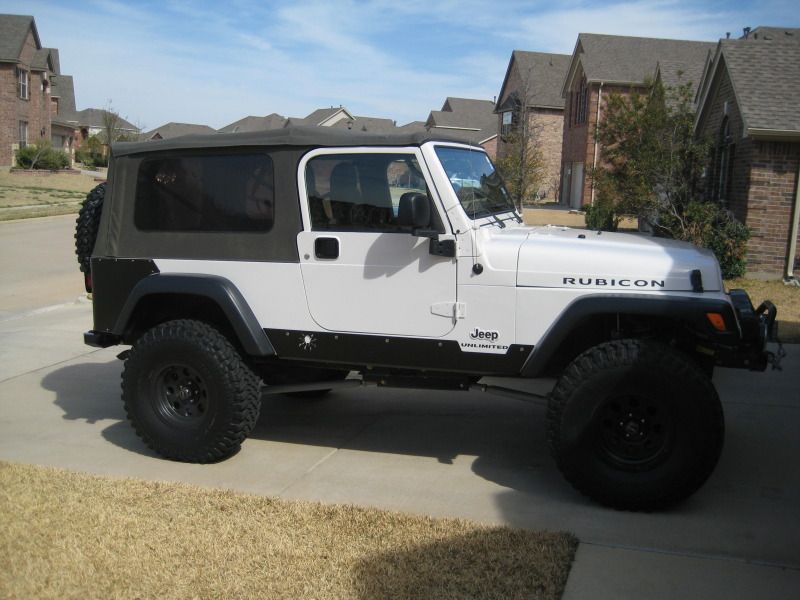
i don't know about lexus, but i remember on my old acura, there was a setting to change the tire size in the nav (within certain %). can't remember exactly anymore.
on lexus though, i am pretty sure if you change the rear gear ratio, it won't affect the speedo. some people in the 2gs forum changed their rear end to lower gear but speedo stays the same. that's another reason why i believe the speed sensors are at the wheel counting revolutions
on lexus though, i am pretty sure if you change the rear gear ratio, it won't affect the speedo. some people in the 2gs forum changed their rear end to lower gear but speedo stays the same. that's another reason why i believe the speed sensors are at the wheel counting revolutions

Lead Lap

Joined: Sep 2005
Posts: 3,593
Likes: 5
From: CA
I almost think if you're this concerned about putting wheels on your car you should not mod the car, at all. Any sort of mod usually leaves you more susceptible in one way or another to adverse affects.
Also, dont get bigger wheels with low-profile tires otherwise and no drop or you'll look worse than that Jeep pic. Bigger wheels + same size tires, if even available, might look kinda ugly too, though I'm not sure I've really observed this before; I think the ride height would be disproportionately high, for a car anyway.
Also, dont get bigger wheels with low-profile tires otherwise and no drop or you'll look worse than that Jeep pic. Bigger wheels + same size tires, if even available, might look kinda ugly too, though I'm not sure I've really observed this before; I think the ride height would be disproportionately high, for a car anyway.

Thread
Thread Starter
Forum
Replies
Last Post