When you click on links to various merchants on this site and make a purchase, this can result in this site earning a commission. Affiliate programs and affiliations include, but are not limited to, the eBay Partner Network.
Things are a bit crazy here in the UK with fuel availability, but I did manage to get a full tank of Supreme about a week ago.
Now, almost by coincidence, I have a wierd starting issue - hot or cold - where I have to have the gas pedal right to the floor for it to fire. And even this is on the second or third crank.
I only have the repair manual for the 1st Gen - which mentions a cold-start injector - so I do also wonder if that is blocked/malfunctioning in some way.
By the way, once I do get it started it runs like a top and drives as smooth as ever.
Any advice much appreciated...
Things are a bit crazy here in the UK with fuel availability, but I did manage to get a full tank of Supreme about a week ago.
Now, almost by coincidence, I have a wierd starting issue - hot or cold - where I have to have the gas pedal right to the floor for it to fire. And even this is on the second or third crank.
I only have the repair manual for the 1st Gen - which mentions a cold-start injector - so I do also wonder if that is blocked/malfunctioning in some way.
By the way, once I do get it started it runs like a top and drives as smooth as ever.
Any advice much appreciated...
Is it a coincidence that it occurred when you filled up with your "Supreme" gas? If so I would not rule out the possibility of getting a tank of "bad" gas, if the problem started "before" you filled up then you can illuminate the gas being the problem. My obvious next question is did the problem begin "before" putting in the "Supreme"?
Other than suspecting the gas quality, I'd try bypassing the fuel pump resistor. You can simply do it short-circuiting FP and +B at the DLC1 below (left upper corner and left lower corner). If this improves the problem, your fuel pump relay may not be working well.
Thanks for reply.
It was fine before. Did a couple of short journeys on the new gas - totalling about 20 miles - with no problem. Then the trouble started the very next day.
Last edited by VolumeToo; Oct 1, 2021 at 12:43 AM.
Many thanks Yamae.
If this is the case, then I think I'd rather just try replacing the relay!
However, once started, the car runs fine - which led me to suspect the cold-start injector (if it exists on the 1998).
Last edited by VolumeToo; Oct 1, 2021 at 12:42 AM.
Many thanks Yamae.
If this is the case, then I think I'd rather just try replacing the relay!
However, once started, the car runs fine - which led me to suspect the cold-start injector (if it exists on the 1998).
A 1998 does not have any cold-start injectors. Instead, the fuel pressure is increased by the fuel pump relay bypassing the fuel pump resistor as well as the temperature compensation for the fuel trim is done by the ECU based on the ECT sensor's feed back voltage. Once the engine is started, the fuel pump relay opens contacts and the current to the fuel pump is reduced by the fuel pump resistor. In other words, at the normal running, the fuel pump is working with lesser current limited by the fuel pump resistor. When the load is increased such as going up hills, quick accelerations or running very fast, the fuel pump relay works to bypass the fuel pump resistor. So, as long as the fuel pump resistor is OK, the car runs good once the engine is started. The drawing below may help you to understand how the fuel pump is driven.
I have a question. Does your car accelerate and run very good at steep hills as it used to be?
When the fuel pump relay is not OK, the car does not start well nor the acceleration is not very good but runs good at flat roads up to 75miles/H = 120km/H or so. These are the reasons why I suspect that the fuel pump relay's contacts are not fully working OK.
I have not noticed any reduction in performance, but then I have not really had the car beyond 40 m.p.h. since the trouble started, nor done any steep hills.
Please, where on the car do I find this relay? Also, do you have the part number to hand?
I have not noticed any reduction in performance, but then I have not really had the car beyond 40 m.p.h. since the trouble started, nor done any steep hills.
Please, where on the car do I find this relay? Also, do you have the part number to hand?
Regards,
Rich
The fuel pump relay is located in the big fuse/relay box behind the battery. It sits next to the heater relay (upper right) in this photo. Regarding the P/N, I don't know at the moment.
Hi Yamae,
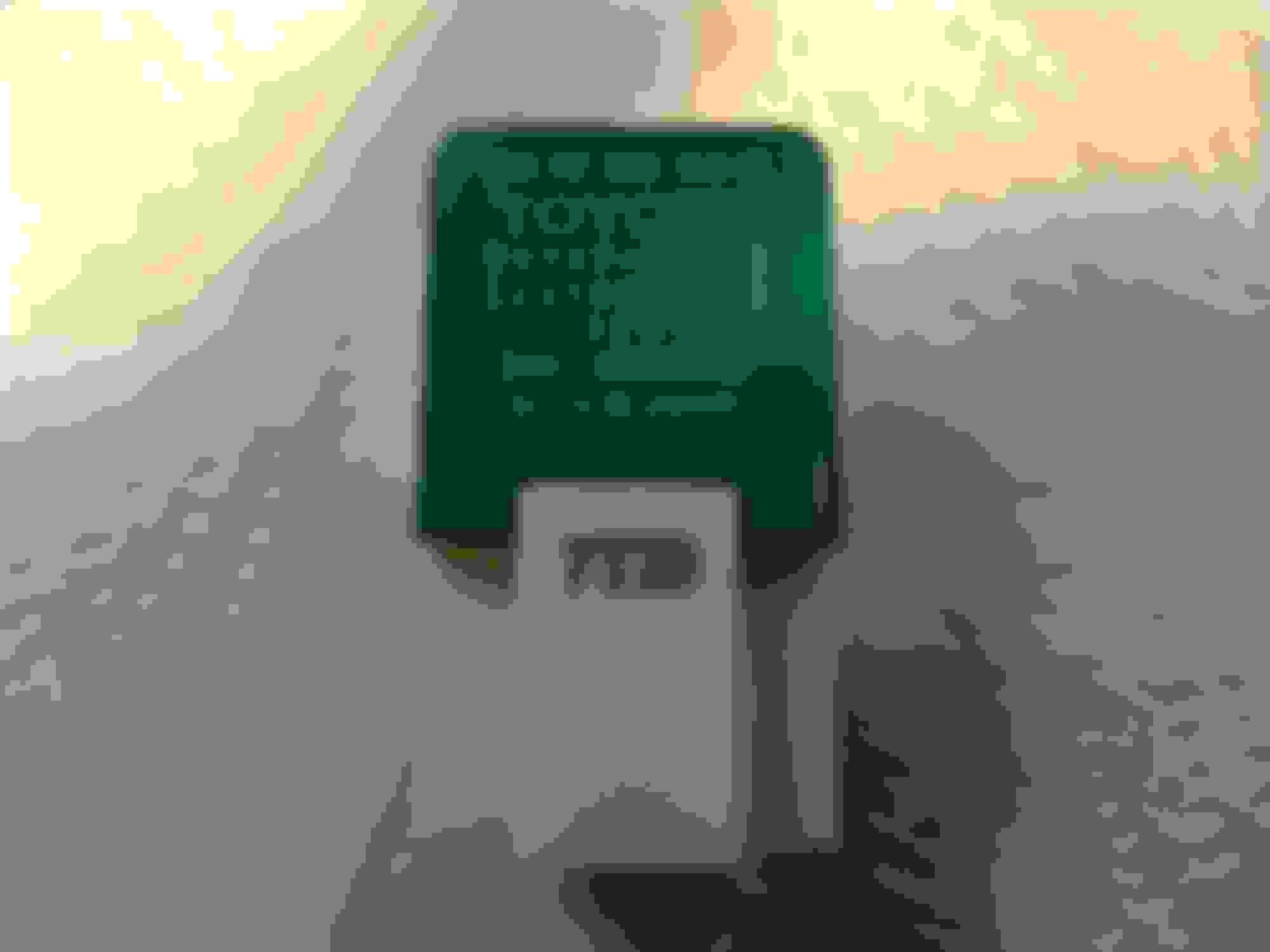
I pulled and tested the relay, which works just fine. (It has the part number marked on it, by the way.) Its contacts are normally-closed, thus bypassing the fuel pump resistor by default.
So I'm now wondering what other conditions are set exclusively for starting.
This is getting interesting!
Update: Having effectively reseated the relay, guess what? The symptom has cleared!
(However, there was no sign of overheating or corrosion on the pins - and the contacts measured 0.1R - the resistance of the probe leads.)
I'll order a replacement anyway, but go figure!
So the reseating changed the situation?
Isn't that a relay socket problem?
Anyway congratulations on your finding.
Well yes that's possible, except there was no sign of deterioration of the connection - at least on the relay itself. It had never been out before, that was clear!
When I get a replacement relay I'll open this one up for internal inspection and report back.
Thank you once again for your help.
New relay bought at a cost of £102. Outrageous price. Fitted, and guess what? The problem is back!
The old relay does have some carbonizing of the contacts, which may or may not be significant. As stated before, it measures fine (even though the contact pads appear misaligned).
In an attempt to inspect the crimping and wiring under the relay frame, I succeeded only in shearing the plastic mounting, with the nut and bolt rotating as one.
I gave up. (However I'd like to know where the fuel pump resistor is, and its value. Measuring from the relay socket, I obtained a reading of 1 Ohm; clearly this is not possible to measure in-circuit.)
Either there is still a problem in this vicinity, or it was all a coincidence and the real trouble is (1) bad fuel, or (2) a failing fuel pump.
New relay bought at a cost of £102. Outrageous price. Fitted, and guess what? The problem is back!
The old relay does have some carbonizing of the contacts, which may or may not be significant. As stated before, it measures fine (even though the contact pads appear misaligned).
In an attempt to inspect the crimping and wiring under the relay frame, I succeeded only in shearing the plastic mounting, with the nut and bolt rotating as one.
I gave up. (However I'd like to know where the fuel pump resistor is, and its value. Measuring from the relay socket, I obtained a reading of 1 Ohm; clearly this is not possible to measure in-circuit.)
Either there is still a problem in this vicinity, or it was all a coincidence and the real trouble is (1) bad fuel, or (2) a failing fuel pump.
Not a good day!
What is vehicle mileage?
Fuel pump mileage?
Fuel filter mileage?
Fuether issue: ECT Sensor resistance (meaaured at various coolant temperatures)?



 1998 LS400 Starting Issues