When you click on links to various merchants on this site and make a purchase, this can result in this site earning a commission. Affiliate programs and affiliations include, but are not limited to, the eBay Partner Network.
As some of you may know, I have had RCF base wheels on my ISF for three years now. My rear fenders have been rolled flat, but there was still some occasional rubbing with my 295/30/19 Bridgestone S-04 tires. While at the "F" meet a couple of weeks ago, I met a fellow named Robert who had a USB ISF with RCF 20-spoke forged alloy wheels. He was running the stock RCF tires. He mentioned that he had the hub of his wheels milled 5mm. I had thought of this in the past, but had not pursued the idea. His positive experience motivated me. So tuesday I brought my F in and had it done. This effectively changed the rear offset from 41mm to 46mm. The operation was a success on my ride home. There is a grated section on the exit ramp from the FW that always caused me to rub, today - NO Rub.
My initial post about my wheels is here - Post #71:
On my old Honda Prelude I bought a used set of Volk TE-37's with 40mm offset and I had them milled to 44mm by a wheel repair shop without problems. Drove with those wheels for years until I sold the car with them.
You definately remove structural integrity. There is less material in the hub portion of the wheel now. I’m not saying it is unsafe, but it definately is not as strong now. I would rather buy wheels that fit, but that’s just me.
You definately remove structural integrity. There is less material in the hub portion of the wheel now. I’m not saying it is unsafe, but it definately is not as strong now. I would rather buy wheels that fit, but that’s just me.
This is actually pretty common practice. Even on the TE37's in our size for example. The 18x9.5 +45 and the 18x9.5 +38 are identical except that the +38 has a 7mm thicker hub and the lug holes are drilled deeper. The actual barrel and face are the same.
You definately remove structural integrity. There is less material in the hub portion of the wheel now. I’m not saying it is unsafe, but it definately is not as strong now. I would rather buy wheels that fit, but that’s just me.
Originally Posted by BirgeyT1
This is actually pretty common practice. Even on the TE37's in our size for example. The 18x9.5 +45 and the 18x9.5 +38 are identical except that the +38 has a 7mm thicker hub and the lug holes are drilled deeper. The actual barrel and face are the same.
this ^ ..
my main concern was that he took a grinder to it like the idiot who did it to clear his calipers and fragged his wheels lol...
given if a specialty machine shop measure and assures it. im bound to do this to now.
This is actually pretty common practice. Even on the TE37's in our size for example. The 18x9.5 +45 and the 18x9.5 +38 are identical except that the +38 has a 7mm thicker hub and the lug holes are drilled deeper. The actual barrel and face are the same.
exactly, the lug holes are drilled according to the offset to leave sufficient structure to the areas that the lugs bite into. That is the part that is now weakened. Lug nut depth is set to specific offsets.
1. As I said, I checked the thickness in the hub, front to back. The hub in the rears is still a bit thicker than the fronts.
2. The wheel shop I went to, link above, are specialists, and they assured me there was no structural integrity loss with the material removal.
Lou
The thickness of the hub is not what keeps the wheel strong and attached, it’s the amount of material directly between the lugs and the hub of the car. That is based on lug nut depth, not hub thickness. There is less material there now, by a large percentage.



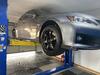
 My modified RCF wheels