When you click on links to various merchants on this site and make a purchase, this can result in this site earning a commission. Affiliate programs and affiliations include, but are not limited to, the eBay Partner Network.
i Am making this post as it seems quite rare to happen on our cars. I took my car in for its oil change, and my friend noticed I had a front diff leak. I had no discernible spots on my driveway/garage, so it was quite slow.
symptoms I did notice were a burning gear oil smell on park up. This is because a drip would hit the exhaust when driving, and well you know the rest.
Here it is, leaking Leaking
The next step was getting parts. My buddy diagnosed it as a pinion seal leak so that’s what I bought - a differential pinion seal
https://www.lexuspartsdirect.ca/p/Lexus_2016_IS300-F-Sport-Sedan-35L-V6-AT/Differential-Pinion-Seal/94498017/9031143015.html
lexus also recommended I get a new nut for the flange. Cost about $5. After going through it, I would say the nut is not needed and can be reused. But for $5 I figured what the hell.
The steps are:
1. remove the drive shaft. This is pretty straightforward. It’s on there pretty tight so my buddy had to hit it out. That being said, you need to hit it indirectly to avoid damaging it. My buddy is a tech and knows how to do this. You don’t just take a hammer to it. Before removing the drive shaft, you MUST mark how it’s coming off to ensure it goes back on in the same exact orientation. You will get driveline vibrations otherwise. This is crucial before taking it off. Once off, he cleaned the rust off it. He also greased it before putting it back up.
2. now you will face that $5 nut on the flange. This was a problem area as it was on TIGHT. The air gun couldn’t get it off even. The other issue is the flange spins so you need to keep it in place. My buddy used a pry bar against one of the aluminum bolts which he placed back to use; subsequently snapping the bolt. Toyota has a tool for this but we didn’t have it (he’s a tech for the German competitors lol). He found two bolts from another diff job and put those two in and used the pry bar against those to prevent the movement. Worked like a charm. Turns out the Toyota tool works basically the exact same way!! We even called his buddy at Toyota and he was surprised how tight this nut was. These repairs are so rare that his buddys dealer has one tech who has done not even a handful of these in 10 years. Now you can remove the flange. Also, the bolt is krimped to prevent it coming lose. You must unkrimp it before take it off (chisel and hammer). Don’t forget to rekrimp on the installation.
2. Now you see the seal. You have to pry it out and eventually it come out. It’s in there good! To install the new seal, he had a tool used to go against the seal as you hit it into place. The tool is used to hit the seal into place evenly without distorting the seal itself. Once the seal is in, you put back the flange, put on your new bolt (torque to 90 ft lbs), then reinstall the drive shaft according to the marks you made when taking it off.
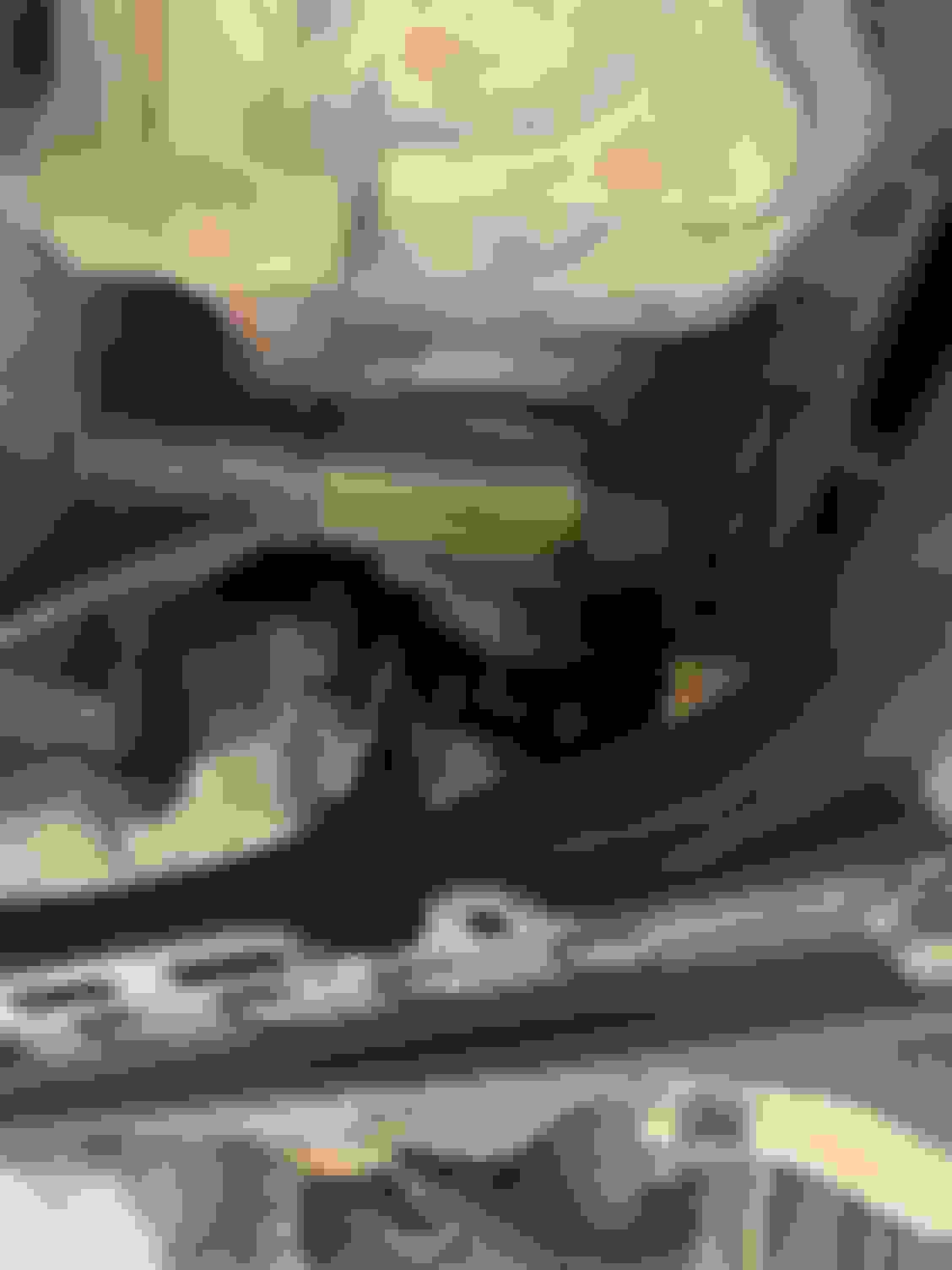
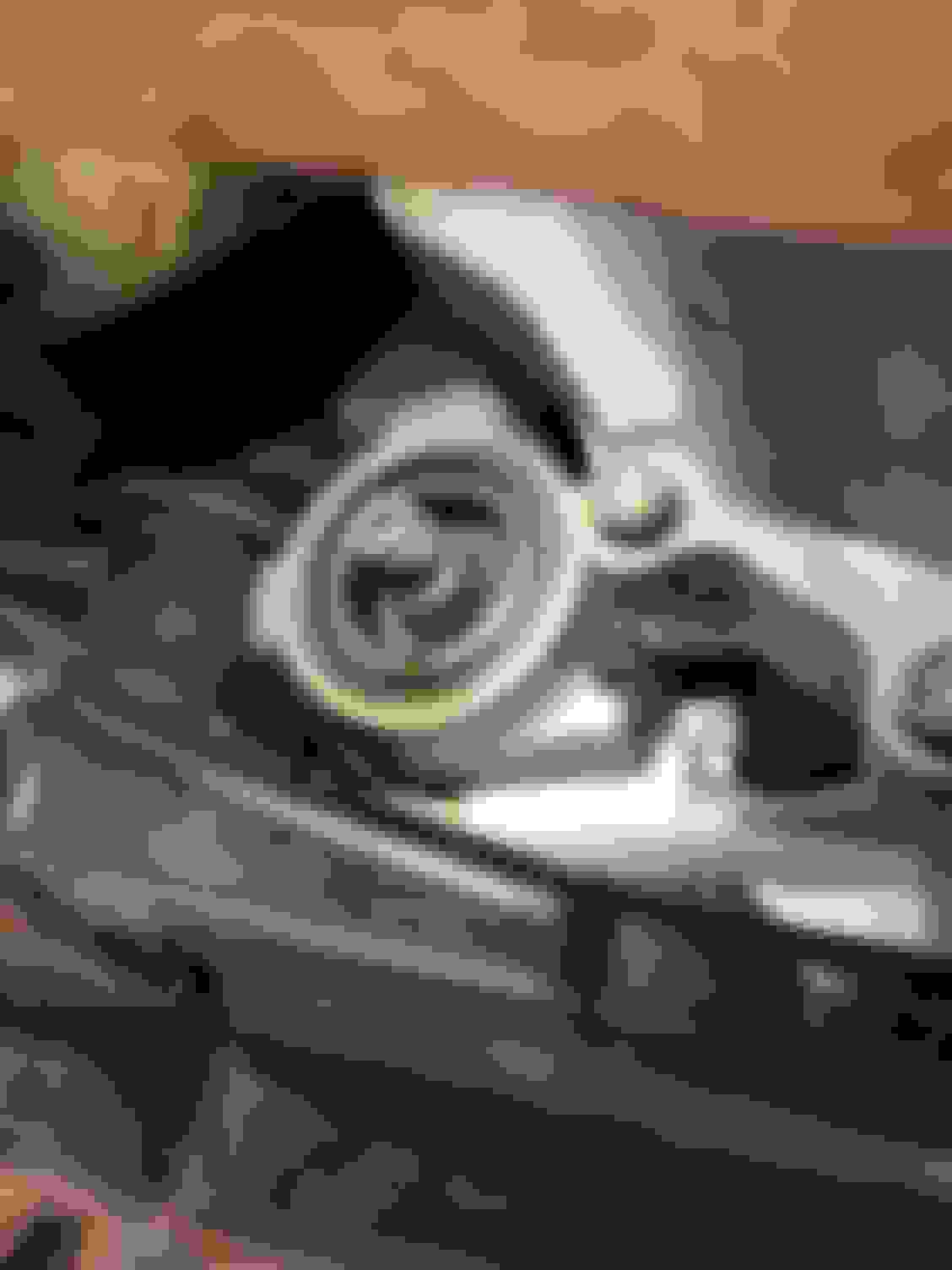
Seal on the car before removal. Seal after
this concludes the differential seal replacement. Read on for additional things that were done. For a video guide, I looked at a video of it being done on a Lexus lx or Toyota Land Cruiser. The process is the same
following the seal replacement, we replaced the front diff fluid with fresh Toyota 75w85LT fluid. I was questioning what oil to use in my last post and was given some great advice. Decided to go ahead and use this grade fluid. My buddy said worst case, I can just drain it out and put in one of the suggested fluids on my other thread if I notice anything weird. Because we were on a hoist, the front diff drain and fill was easy. On your driveway, filling will be a challenge. The fluid was black and had a putrid odour.
Also changed the rear fluid. Super easy to do. Fluid was very clean… so likely was done by the first owner who leased the car. DIY Dan has a good video on both front and rear for those who wish to see
also had some rear inner tire wear so I had him align the car. It was aligned by him 6mo ago and was still in spec from then to now. He adjusted the rear toe though so we will see.
All in all, here’s the damage:
If you’re doing the seal alone, the parts cost was $35cad. Labour from Toyota would see this job reach about $4-500 as it is 3hrs of book time but can be done in 1-1.5h. He charged me $200 for this alone originally
if you add in the drain and fills, oil costed me $40cad/quart x3 for the Toyota fluid. Labour would be maybe $300 for both from Toyota but includes whatever oil they use.
alignment is minimum $100 or more if you’re at the dealer.
So all I had done would cost about $1000-$1100cad.
I was fortunate to know my buddy, so I paid $250 in labour for everything. With parts, my total cost for the seal, drain and fill, and alignment was $420cad.
Last edited by datis250; Nov 20, 2022 at 08:26 AM.
Usually when doing a pinion seal replacement most people will try to reuse the original pinion nut because when the diff is set up that nut is set to a specific rotational torque to get the correct preload on the inner and outer pinion bearings.
The indented area on the nut will give you a good idea where to stop tightening, some will go a little past the original indentation, with a new nut if 90 Ft lbs on an previously crushed (crush sleeve) is too much and increases the preload on the bearings you could have a problem.
Was the 90 ft lbs the spec in the manual for doing this job?
Usually when doing a pinion seal replacement most people will try to reuse the original pinion nut because when the diff is set up that nut is set to a specific rotational torque to get the correct preload on the inner and outer pinion bearings.
The indented area on the nut will give you a good idea where to stop tightening, some will go a little past the original indentation, with a new nut if 90 Ft lbs on an previously crushed (crush sleeve) is too much and increases the preload on the bearings you could have a problem.
Was the 90 ft lbs the spec in the manual for doing this job?
Hey gerf,
so my friend said the same thing as you did. We consulted the manual which did in fact specify 90 ft lbs. this was verified by my buddy’s friend at Toyota who double checked using their access and said the same. Given how tight the nut was to begin with, 90 actually seems less. But yes we did reference the manual and followed the torque specs outlined there. The repair is still fresh so I will be following it for the next few weeks to see how things unfold. Hopefully all is well!
Glad you got it fixed, nice to have a friend that's a wrench right.
haha that’s for sure! And a friend that fixes properly. Lots of people that can “fix” but don’t do things properly or to spec. I’m a little particular (as you might’ve been able to tell lmao)
i Am making this post as it seems quite rare to happen on our cars. I took my car in for its oil change, and my friend noticed I had a front diff leak. I had no discernible spots on my driveway/garage, so it was quite slow.
symptoms I did notice were a burning gear oil smell on park up. This is because a drip would hit the exhaust when driving, and well you know the rest.
lexus also recommended I get a new nut for the flange. Cost about $5. After going through it, I would say the nut is not needed and can be reused. But for $5 I figured what the hell.
The steps are:
1. remove the drive shaft. This is pretty straightforward. It’s on there pretty tight so my buddy had to hit it out. That being said, you need to hit it indirectly to avoid damaging it. My buddy is a tech and knows how to do this. You don’t just take a hammer to it. Before removing the drive shaft, you MUST mark how it’s coming off to ensure it goes back on in the same exact orientation. You will get driveline vibrations otherwise. This is crucial before taking it off. Once off, he cleaned the rust off it. He also greased it before putting it back up.
2. now you will face that $5 nut on the flange. This was a problem area as it was on TIGHT. The air gun couldn’t get it off even. The other issue is the flange spins so you need to keep it in place. My buddy used a pry bar against one of the aluminum bolts which he placed back to use; subsequently snapping the bolt. Toyota has a tool for this but we didn’t have it (he’s a tech for the German competitors lol). He found two bolts from another diff job and put those two in and used the pry bar against those to prevent the movement. Worked like a charm. Turns out the Toyota tool works basically the exact same way!! We even called his buddy at Toyota and he was surprised how tight this nut was. These repairs are so rare that his buddys dealer has one tech who has done not even a handful of these in 10 years. Now you can remove the flange. Also, the bolt is krimped to prevent it coming lose. You must unkrimp it before take it off (chisel and hammer). Don’t forget to rekrimp on the installation.
2. Now you see the seal. You have to pry it out and eventually it come out. It’s in there good! To install the new seal, he had a tool used to go against the seal as you hit it into place. The tool is used to hit the seal into place evenly without distorting the seal itself. Once the seal is in, you put back the flange, put on your new bolt (torque to 90 ft lbs), then reinstall the drive shaft according to the marks you made when taking it off.
Seal on the car before removal. Seal after
this concludes the differential seal replacement. Read on for additional things that were done. For a video guide, I looked at a video of it being done on a Lexus lx or Toyota Land Cruiser. The process is the same
following the seal replacement, we replaced the front diff fluid with fresh Toyota 75w85LT fluid. I was questioning what oil to use in my last post and was given some great advice. Decided to go ahead and use this grade fluid. My buddy said worst case, I can just drain it out and put in one of the suggested fluids on my other thread if I notice anything weird. Because we were on a hoist, the front diff drain and fill was easy. On your driveway, filling will be a challenge. The fluid was black and had a putrid odour.
Also changed the rear fluid. Super easy to do. Fluid was very clean… so likely was done by the first owner who leased the car. DIY Dan has a good video on both front and rear for those who wish to see
also had some rear inner tire wear so I had him align the car. It was aligned by him 6mo ago and was still in spec from then to now. He adjusted the rear toe though so we will see.
All in all, here’s the damage:
If you’re doing the seal alone, the parts cost was $35cad. Labour from Toyota would see this job reach about $4-500 as it is 3hrs of book time but can be done in 1-1.5h. He charged me $200 for this alone originally
if you add in the drain and fills, oil costed me $40cad/quart x3 for the Toyota fluid. Labour would be maybe $300 for both from Toyota but includes whatever oil they use.
alignment is minimum $100 or more if you’re at the dealer.
So all I had done would cost about $1000-$1100cad.
I was fortunate to know my buddy, so I paid $250 in labour for everything. With parts, my total cost for the seal, drain and fill, and alignment was $420cad.
I think I found my issue... I noticed a burnt smell while idling after a long drive, then crawled under to find a large leak. It is strange to me that this leaks onto the oil pan, trans pan, and exhaust, but somehow doesn't leak onto the actual driveshaft? Regardless, I see a pinion seal in my near future. 2016 IS300 AWD (3.5L V6)
I am trying to gauge how difficult this would be in the driveway, and if I have all the tools. @datis250 I have a few questions if you get a second:
1. Do you know what size hex heads the bolts are for the drive shaft? Also, does the entire front driveshaft need to be removed (disconnected at the transfer case as well) or can it simply be disconnected from the front where it attaches to the differential? And can you elaborate on how you needed to hit it out?
2. You referenced a special tool from Toyota or two bolts to stop the flange from spinning. Is there a particular size bolt? Could I simply lock the wheels in place or have someone hold the brakes?
3. Did you need to use a puller (2 or 3 jaw puller) to get the flange off like the Landcruiser video? I believe most auto parts store rent these out but I would like to know if I should plan to rent it before I start.
4. Prying out the seal, I assume a pry bar will do?
5. I definitely don't have a socket large enough to cover the new seal, but would the old seal work as a tamper (assuming it isn't mangled after removal)?
6. Was it simply the seal labeled "C" in the below diagram? Or is "D" a seal as well?
Sorry for the thread revival, but I'm hoping someone can help me out. If this is not doable in a driveway, I may have to bring it to a shop, but I'd prefer to learn on my own and it is difficult to find a reputable shop that won't take advantage or mess something up.
I was able to get this done over the weekend and figured some additional information may be helpful. Here are a few notes that should help with this pinion seal and/or driveshaft work. I’m not a trained mechanic so some of this may be common knowledge to others but knowing it will same some time.
Both ends of the front driveshaft need to be removed. My original thought was the front end of the driveshaft only needed to be removed but the exhaust does not let it drop.
The driveshaft has six (6) 6mm hex/allen bolts at each end. It is difficult to remove the transfer case side bolts without rotating the drive shaft because the car floor creates a tight space. I found it best to put the car in neutral to spin the driveshaft and then either put it back in park when you have the bolt head lined up to fit a hex on it or have someone hold the brakes.
The driveshaft is cupped on both ends. To get it out after all 12 bolts are removed require pushing it towards the front of the car. This is not very easy the first time if it has never been taken off. I used a block of wood and rubber mallet to tamp around the edges of these “cups” to break them free (northeast rust belt…). I also put a light layer of grease on this edge when putting it back together to hopefully prevent the sticking in the future.
Getting the punch/crimp undone on the pinion nut is not fun. I don’t have a punch set so I had to grind down an old bolt into a semi-circle end to fit in the slot to punch out the crimp. It was a tight space, only made more difficult by the subframe that is right under it. Having the right tools for this (which I’m not sure what that is) would hopefully make it easier.
The pinion nut is a 27mm. This is the point that stumped me on Saturday because I didn’t have a large enough socket. You will want an impact because it is on there tight. I was bending an 18” breaker bar trying to get it loose. The impact make easy work of it. Also, the diff spins freely so that brings me to my next point.
You will need to figure out a way to stop the diff/front-wheels from spinning. It may be obvious, but now that the driveshaft is out, there is noting stopping the front wheels from spinning when they are off the ground. I took off the front wheels to make it easier to see things. With them off, I was able to wedge a 2x4 between the wheel studs and the brake caliper to hold them in place. Note, both sides need to be wedged because the diff spins the wheel with least resistance. Even with the wood wedged in there, trying to break the pinion nut loose with the breaker bar caused the wheel studs to dig into the 2x4. The impact didn’t cause this as bad.
Once the pinion nut is off, the front flange(?) that the 6 driveshaft bolts go into, needs to be removed. Again, I needed to tamp them out with a 2x4 and a mallet (northeast rust belt…). I did this by sticking the 2x4 between the front diff and the subframe, angles up towards the flange from the front of the car. Just a few tamps and it came off. The flange is splined so I decided to mark it so I could put it back in the same orientation. May not be necessary, but figured it doesn’t hurt.
Now you finally have access to the main event, the seal. At this point, you can clearly see leaking gear oil (if you didn’t already get dirty from everything else). I used a set of 3” gear pullers (I got a cheap Vevor set) which just barely fit between the seal and the splined shaft. I had to put the hooked arms in sideways and turn them into place once the hook was behind the seal. This required assembling the puller in that small space, but once set up, the seal came out nicely.
Installing the seal was the next tricky part. I rented a “bearing and race installer” kit from AutoZone but quickly realized it wouldn’t work because the kit includes flat solid disks to tamp the seal, but the splined shaft sticks out past the seal, so the kit would not work. I managed to start the seal by hand, then used a long 1/4” extension and mallet to slowly move around the seal to tamp it in. This was a slow process to press it evenly, but it worked it’s way in eventually. The seal sits pretty much flush with the surrounding surface (I noted this before I took off the old seal). I was able to get it to less than 1mm from flush and figured I didn’t want to risk over setting it (past the surface).
Reassembly was pretty straightforward, after the lessons learned from taking everything apart.
That is all I can think of at the moment but feel free to quote this post when replying to this thread and ask any questions. I’ll try to clarify if needed. Also, apologies for grammatical errors, this was a one-take and I haven't proof read it.A few things I forgot to mention in the original list:
I did this all in a driveway with a Jack and Jack stands. Probably much easier on a lift, but it is possible in the driveway. Again, I am not a trained mechanic and my experience thus far has been oil changes, brakes, and suspension work to lift a 4runner.
I added grease to the edge of the new seal before pushing it in. I think this made it slightly easier to tamp in with the socket extension.
Also, probably self explanatory but I figured it’s worth mentioned, the front diff fluid should be changed. I changed mine after the seal was replaced. The fill bolt on the front diff is the biggest PITA because there is no clearance. Getting it loose required a 12 point box end wrench with a slight angle to the head (I have a set of Tekton wrenches that worked for me). It is on there very tight from the factory... Also, getting the fill plug back on after filling the diff is a nightmare.
Last edited by PJSnow; Oct 6, 2025 at 11:17 AM.
Reason: additional info
I think I found my issue... I noticed a burnt smell while idling after a long drive, then crawled under to find a large leak. It is strange to me that this leaks onto the oil pan, trans pan, and exhaust, but somehow doesn't leak onto the actual driveshaft? Regardless, I see a pinion seal in my near future. 2016 IS300 AWD (3.5L V6)
I am trying to gauge how difficult this would be in the driveway, and if I have all the tools. @datis250 I have a few questions if you get a second:
1. Do you know what size hex heads the bolts are for the drive shaft? Also, does the entire front driveshaft need to be removed (disconnected at the transfer case as well) or can it simply be disconnected from the front where it attaches to the differential? And can you elaborate on how you needed to hit it out?
2. You referenced a special tool from Toyota or two bolts to stop the flange from spinning. Is there a particular size bolt? Could I simply lock the wheels in place or have someone hold the brakes?
3. Did you need to use a puller (2 or 3 jaw puller) to get the flange off like the Landcruiser video? I believe most auto parts store rent these out but I would like to know if I should plan to rent it before I start.
4. Prying out the seal, I assume a pry bar will do?
5. I definitely don't have a socket large enough to cover the new seal, but would the old seal work as a tamper (assuming it isn't mangled after removal)?
6. Was it simply the seal labeled "C" in the below diagram? Or is "D" a seal as well?
Sorry for the thread revival, but I'm hoping someone can help me out. If this is not doable in a driveway, I may have to bring it to a shop, but I'd prefer to learn on my own and it is difficult to find a reputable shop that won't take advantage or mess something up.
To clarify for those looking at this in the future, only the part circled as "D" in my markup of the diagram is the seal that needs to be changed. Part "A" is the 27mm nut and parts "B" and "C" are one unit as the driveshaft flange.



 2016 IS AWD Front Diff Pinion Seal Leak - Fixed.