


MM Retro Write-Up: First-Generation VW Microbus (Type 2)


Thread Starter
Lexus Fanatic


Joined: Oct 2003
Posts: 94,476
Likes: 252
From: Virginia/D.C. suburbs
 MM Retro Write-Up: First-Generation VW Microbus (Type 2)

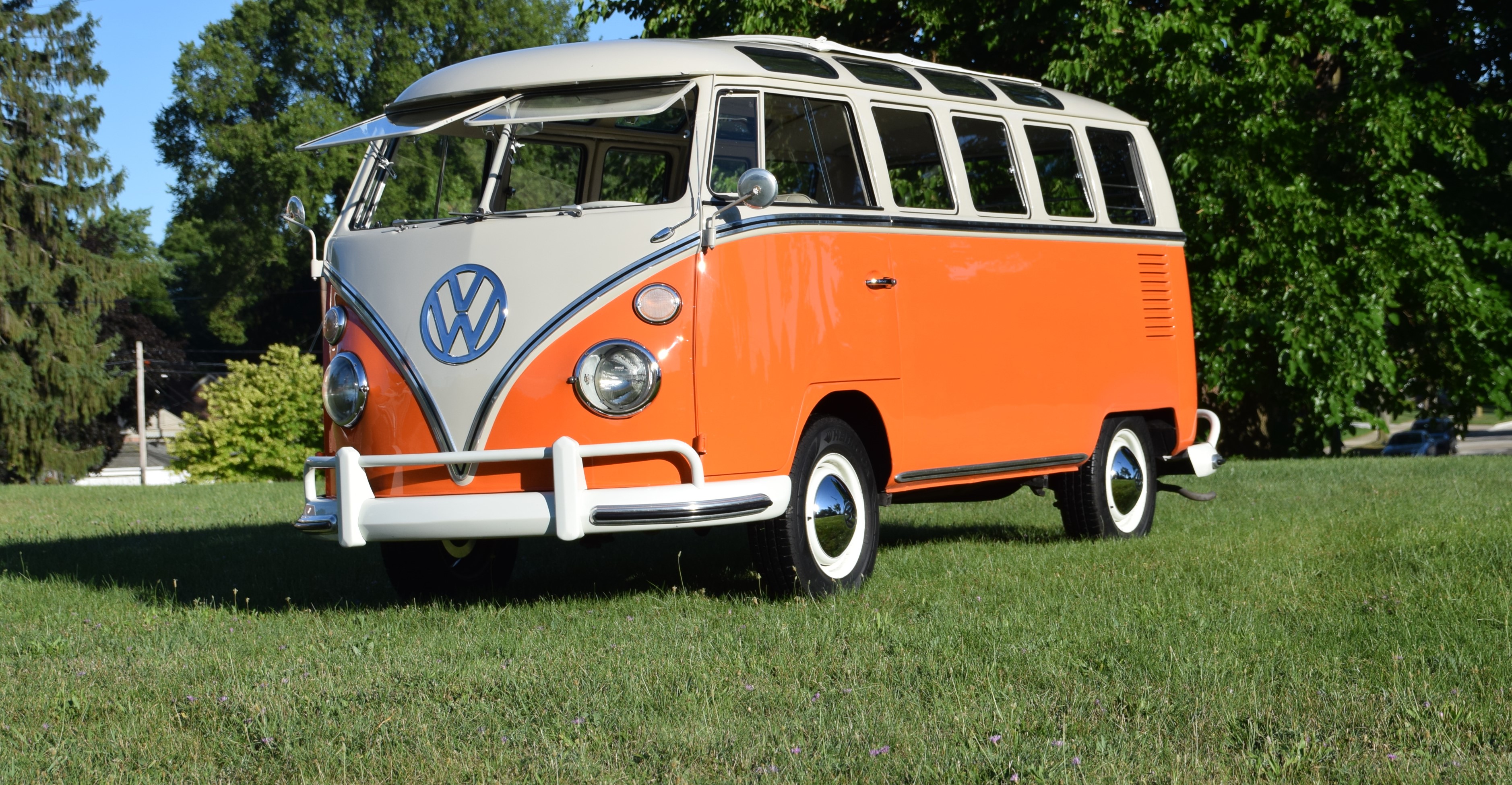


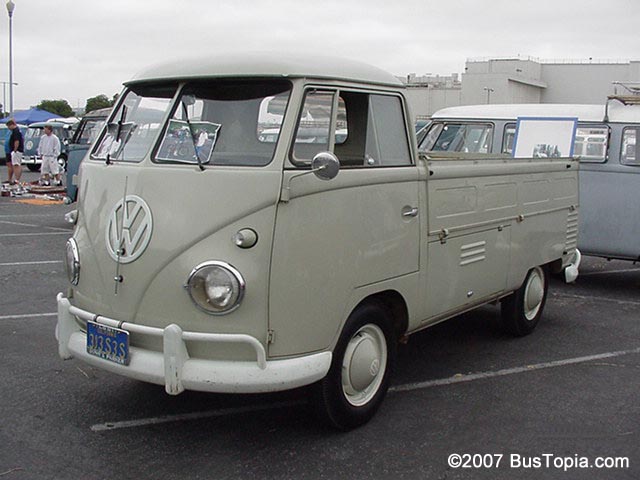


IN A NUTSHELL: The TRUE original minivan...but it had many quirks.
Automotive historians (correctly) attribute the birth of front-engine/FWD minivans to the Plymouth/Dodge Voyager/Caravan, debuting in the fall of 1983 for the 1984 model-year....and it took competitors years to catch up and come out with front-drive versions of their own. But the Voyager/Caravan twins were not the first compact-to-mid-sized people-movers in production by any means. In the 1960s, decades before the FWD Chrysler twins were introduced, Chevrolet was producing the small, Corvair-based Greenbriar van, with its air-cooled rear engine and rear-drive. The similar-sized but front/engine/rear-drive Econline, which was Falcon-based, was produced by Ford around the same time. Dodge itself sold the A-100, which, mechanically, was more or less similar to the Ford Econoline. And front-engined/rear-wheel drive vans and people-movers were being produced by Japanese manufacturers in their home market.
But it was the famous Volkswagen air-cooled Type 2, dating to the fall of 1949 as a 1950 model (the first-generation version was in production until the late 1960s) that first introduced the concept of a box-shaped, Small-on-the-Outside/Large-on-the-Inside people-mover. Over the years (though officially the Type 2), it was called a variety of names and nicknames, including Kombi, Transporter, Microbus, Vanagon, and (sarcastically, in the U.S.), Hippie-Bus, for its association with the Counterculture (more on that role later).
I can (vaguely) remember first seeing them in the mid-late 1950s, when my late Father, in the Army, was based in Brussels, Belgium. I was born and raised Catholic, and, at the time, as a young boy, I can remember that the local nuns there in Brussels used to ride around in them. Later, as I grew older and learned more abut vehicles, I could understand why this vehicle was so popular in convents....driving one or riding in one, it was probably the perfect vehicle for self-denial, public penance, and the ascetic life.
To understand why, one must look at its design, which was classically Spartan and underpowered even for the times. It was essentially a bare, large-inside-volume box, designed to carry up to eight adults, with the same tiny air-cooled power plant found in the much smaller VW Beetle coupe. Initial versions had (get this) only 24 HP, and, even as late as the late 1960s, was still only 54 HP. With this kind of (non) power in a large, heavy box with the aerodynamics of a brick, 0-60 times weren't even measured because, in many wind/road/vehicle-load conditions, 60 MPH was simply not possible. Acceleration, even unloaded, made a snail look quick in comparison. The noisy, air-cooled engine, together with minimal sound-insulation, constantly chuffled away....more so in back than up front. Up front, in the driver's seat, the large, bus-type, horizontally-angled steering wheel was (being facetious) about an inch away from the front windshield, with no seat belts in early versions.....and there was nothing in front of you (and impact with other vehicles) except a pane of glass (non-safety-glass in early versions) and the front pane of sheet metal and headlights. You pushed the accelerator/clutch/brake pedals down instead of forward, and reached down to a LONG and wobbly shift-lever coming up from the floor....and a similarly-long parking brake lever. Because the engine was so tiny, made little heat, was air-cooled, and had such an enormous area to try and heat up inside in cold weather or for defrost, these functions were essentially useless.....even more so than the much smaller Beetle interiors. In cold weather, you simply wore winter clothes in these vehicles if you wanted to stay even reasonably comfortable, and wiped the glass off in front of you with a towel (if not frozen) so you could see. I'm not sure, but I think that later versions might (?) have had a optional auxiliary gas-powered heater inside like some early Corvairs, but those gas-heaters could be dangerous. Air-conditioning? LOL....flip the hinged-windows open. With next to no power, a large slab-side body, nonexistent aerodynamics, and what little weight there was in the engine/transmission all the way in the back over the rear wheels (engine-access was through a small hinged-cover under the hatch-lid), driving one of these things pretty much put you at the mercy the wind. With almost no weight up front, this vehicle had the tracking-stability of a drunk on New Year's Eve....almost any crosswind would blow you all over your lane, and a headwind would make the tiny engine struggle even harder. I suspect that the nuns learned to pray for tailwinds. The high center of gravity meant unstable handling, particularly with the Beetle/Corvair type swing-axle suspension on the earlier models, which, under severe conditions, could allow underside tire tuck-in.
Yet, with all of its quirks/eccentricities, this vehicle had some good and noteworthy features as well. Typical of German-built vehicles of that period, its fit/finish, paint-job, overall assembly-quality, and material-solidness were all excellent, particularly compared to the often-shoddily-built vehicles of that period from many other countries. Gas mileage for a vehicle of that size was quite good, though, of course, would have probably been better if the tiny underpowered engine didn't have to work so hard. Like other VW products, it was built and sealed so tightly that if it ended up in the water with its window and doors closed, it tended to float more than sink....giving occupants somewhat more of a chance to escape. It had a reputation for generally good reliability, except for frequent valve-jobs on the engine. You could (sometimes) get around the lane-tracking and weight/center-of-gravity problems by having most of your passengers sit a far forward as possible, concentrating more weight up front. The rear-engine design meant better-than-average traction on snow or slippery roads. And VW successfully marketed this vehicle, as it did with most of its line, with the clever and sophisticated ads that the company was known for.
Still, somewhat understandably, it never was very popular with the mainstream American public, although one of our neighbors in the D.C. area, back in the 1960s, owned one for their rather large family. A pickup vision, with a small cab and a bed, was marketed with some success in Europe, but, again, was not successful in the U.S. Perhaps its best fans here in the U.S. was with the Counterculture movement of the 1960s, where, often painted with Peace signs, bright rainbow-color swirls, and Psychadelic patterns, it became known as the "Hippie-Bus", where it served as a rolling communal-life platform for the traveling free-love and drug-use lifestyle.
Though my neighbors in the 1960s had a Microbus (the version with the secondary upper-row oval glass-windows), I never got a chance to actually test-drive a Type 2 until the single mother of a high-school friend of mine started dating a guy who owned a used-car place in Arlington, VA. He got a couple of used ones into his shop. I asked him (the owner) if I could sample one, and he said, "Sure"....he knew that I was a careful driver, particularly by teen standards, and could be trusted....besides, you can't really speed in this vehicle, because it's impossible LOL. So, I took one out long enough to get a pretty good idea of what it was like to drive......it was almost exactly like I described above, and demanded almost constant attention to every foot that you covered, particularly in the wind.
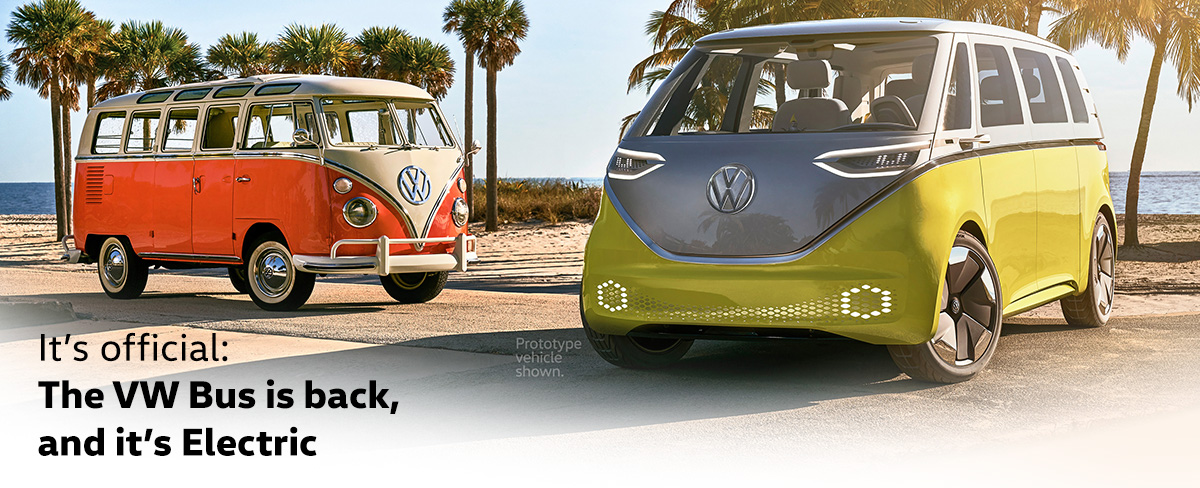
Looking forward, VW is supposedly bringing a modern, electric version of the Microbus for 2022. That will be an interesting design, and, no doubt, will eliminate most of the problems/quirks that plagued the original gas-powered air-cooled versions. But, of course, today, VW no longer has the Class-A reputation for quality and reliability that it did in the 1950s and 60s.....that went downhill when the front-engined VWs debuted in the early-mid 1970s, and, for the most part, has never really returned.
And, as Always, Happy-Car-Memories.

MM
Last edited by mmarshall; Nov 27, 2020 at 06:33 PM.

Pole Position


Joined: Dec 2019
Posts: 2,994
Likes: 609
From: The Jet City
A remember a couple of the surfer guys had them, but most around my neighborhood had the late '30's early 40's woody's, lot of those. Speaking of vdub's, most of the hippie chicks had beatles, just have to keep the momentum up, hence some lots of lane changes. As you know those 23 windows are worth big $ now, specially in SoCal......As always another great memory of time gone by....
Thread Starter
Lexus Fanatic
Joined: Oct 2003
Posts: 94,476
Likes: 252
From: Virginia/D.C. suburbs
Thanks.....I wasn't aware of the surfer-use, but, then, we didn't have much surfing here on the East Coast compared to California and Hawaii. With the back seats taken out (or with the pickup-bed version), I agree, it would be a relatively good machine for hauling around the surfboards.
My brother also had an air-cooled Beetle. I did a write-up on air-cooled Beetles several months ago, if you didn't see it.
https://www.clublexus.com/forums/car...ed-beetle.html
Yes, that was sometimes true, but, in more cases, Beetles were popular with just regular (non-hippie) kids and young people who just wanted something simple, well-built, and cheap to run. A couple of my college friends (in the local community college) had Beetles.....at a time when I was driving a 19-foot-long Buick Electra 225 that could have carried a Beetle in its trunk LOL.
Speaking of vdub's, most of the hippie chicks had beatles, just have to keep the momentum up, hence some lots of lane changes. As you know those 23 windows are worth big $ now, specially in SoCal......As always another great memory of time gone by....
https://www.clublexus.com/forums/car...ed-beetle.html
Speaking of vdub's, most of the hippie chicks had beatles, just have to keep the momentum up,
Pole Position
Joined: Dec 2019
Posts: 2,994
Likes: 609
From: The Jet City
The few guys w/ vdub vans had roof racks for the boards & the guys w/ the woody's either had a roof rack or most, just had the rear window opened & had the boards hanging out on the top edge of the tailgate.

Pole Position
Joined: Jan 2020
Posts: 2,738
Likes: 544
From: CA
Thanks again M&M for the excellent write up...you're great at pumping out the nostalgia jams!
I owned three of these early split-window buses in my early days and sold my last one, a '67 Deluxe Westfalia Camper, in the 90's. I wanted to keep it, but didn't have room in the garage. So, it was a sitting-duck for the kids in the neighborhood who were stealing parts off it. They tried to steal the whole thing, but I had it well locked down. Since the 90's, these buses have steadily increased in value with restored ones going for $40-50K and up!
My next older one was '59 delivery van that still had remnants of the egg-farm signs on its sides! That was the only one of my three that had the hinged-style of windshields you spoke of, which I always assumed was an option.
My coolest bus was a '57 Westfalia Camper. All of the cabinetry was made of high quality plywood with a mahogany veneer, with brass screws and hardware, reminiscent of the quality of a sailboat cabin! The later Westfalias used particle board with a fake wood veneer.
I replied to your earlier bug write-up and mentioned the buses were referred to as "Hitler's revenge" because they slowed traffic on the freeways (and everywhere else). I fixed this in my '67 by building a high-performance, Gene Berg Racing engine for it. These little VW engines were capable of being built to HP levels similar to the 4-cylinder Porsche engines of the day!
As with my many bugs and Karmann Ghias, I always found the bus heaters to be adequate as long as the engines were maintained properly, including the sheet metal, seals, thermostat, hoses and cables. The problems ensued when owners and mechanics messed them up as they weren't as easy to work on as the first "Idiot Book" claimed.
I owned three of these early split-window buses in my early days and sold my last one, a '67 Deluxe Westfalia Camper, in the 90's. I wanted to keep it, but didn't have room in the garage. So, it was a sitting-duck for the kids in the neighborhood who were stealing parts off it. They tried to steal the whole thing, but I had it well locked down. Since the 90's, these buses have steadily increased in value with restored ones going for $40-50K and up!
My next older one was '59 delivery van that still had remnants of the egg-farm signs on its sides! That was the only one of my three that had the hinged-style of windshields you spoke of, which I always assumed was an option.
My coolest bus was a '57 Westfalia Camper. All of the cabinetry was made of high quality plywood with a mahogany veneer, with brass screws and hardware, reminiscent of the quality of a sailboat cabin! The later Westfalias used particle board with a fake wood veneer.
I replied to your earlier bug write-up and mentioned the buses were referred to as "Hitler's revenge" because they slowed traffic on the freeways (and everywhere else). I fixed this in my '67 by building a high-performance, Gene Berg Racing engine for it. These little VW engines were capable of being built to HP levels similar to the 4-cylinder Porsche engines of the day!
As with my many bugs and Karmann Ghias, I always found the bus heaters to be adequate as long as the engines were maintained properly, including the sheet metal, seals, thermostat, hoses and cables. The problems ensued when owners and mechanics messed them up as they weren't as easy to work on as the first "Idiot Book" claimed.
Thread Starter
Lexus Fanatic
Joined: Oct 2003
Posts: 94,476
Likes: 252
From: Virginia/D.C. suburbs
I owned three of these early split-window buses in my early days and sold my last one, a '67 Deluxe Westfalia Camper, in the 90's. I wanted to keep it, but didn't have room in the garage. So, it was a sitting-duck for the kids in the neighborhood who were stealing parts off it. They tried to steal the whole thing, but I had it well locked down. Since the 90's, these buses have steadily increased in value with restored ones going for $40-50K and up!

My next older one was '59 delivery van that still had remnants of the egg-farm signs on its sides! That was the only one of my three that had the hinged-style of windshields you spoke of, which I always assumed was an option.
My coolest bus was a '57 Westfalia Camper. All of the cabinetry was made of high quality plywood with a mahogany veneer, with brass screws and hardware, reminiscent of the quality of a sailboat cabin! The later Westfalias used particle board with a fake wood veneer.
I replied to your earlier bug write-up and mentioned the buses were referred to as "Hitler's revenge" because they slowed traffic on the freeways (and everywhere else).
As far as "Hitler's Revenge" goes, though, perhaps the same could be said for other tiny, Micky-Mouse-powered Buzz-mobiles like the French Citroen 2CV, Renault 4CV/Dauphine, BMW Isetta, and Italian Fiat 500 "Topolino". The earliest 2CVs had a 12 HP engine in the rear.The main reason we saw cars like this from Postwar Europe, of course, was that the war had not only impoverished many persons lucky enough to survive it (and not being able to afford larger vehicles), but had also decimated the European oil industry, leading to years of chronic gasoline and diesel-fuel shortages, which, when available at all, were often rationed. So, what cars were being produced, for the most part, had to stretch each gallon of gas as far as possible. Many of the most basic-transportation vehicles were essentially 4-wheeled motorcycles. Some even had only three wheels, like the early BMW Isettas, Robin Reliant, and Messerschmitt KR200.
I fixed this in my '67 by building a high-performance, Gene Berg Racing engine for it. These little VW engines were capable of being built to HP levels similar to the 4-cylinder Porsche engines of the day!
And, especially with more power, you also had to be very careful trying to toss those early rear-drive machines around corners, particularly with the classic drop-throttle oversteer. The tail-happy designs, quick steering response, and swing-axle (tuck-under) suspension/tires could unload some nasty surprises even for experienced racing drivers. Some of those quirks, of course, were also to show up in early versions of Chevy's air-cooled Corvair.
As with my many bugs and Karmann Ghias, I always found the bus heaters to be adequate as long as the engines were maintained properly, including the sheet metal, seals, thermostat, hoses and cables. The problems ensued when owners and mechanics messed them up as they weren't as easy to work on as the first "Idiot Book" claimed.
Thanks again for your input.
Last edited by mmarshall; Nov 27, 2020 at 04:32 PM.

Advanced

Joined: Aug 2013
Posts: 608
Likes: 23
From: CA
As with my many bugs and Karmann Ghias, I always found the bus heaters to be adequate as long as the engines were maintained properly, including the sheet metal, seals, thermostat, hoses and cables. The problems ensued when owners and mechanics messed them up as they weren't as easy to work on as the first "Idiot Book" claimed.
I loved my VWs and they filled the bill for a college student in that they were cheap and easy to work on. But now that I have a Lexus with luxuries like an electric fan for heat, defrost and AC, I'm not going back.
Trending Topics
Thread Starter
Lexus Fanatic
Joined: Oct 2003
Posts: 94,476
Likes: 252
From: Virginia/D.C. suburbs
I loved my VWs and they filled the bill for a college student in that they were cheap and easy to work on.
But now that I have a Lexus with luxuries like an electric fan for heat, defrost and AC, I'm not going back.


The good news is the VW Microbus seems to be on the way albeit in ev form
Volkswagen I.D. Buzz EV Concept
http://newsroom.vw.com/vehicles/futu...-its-electric/
Volkswagen I.D. Buzz EV Concept
http://newsroom.vw.com/vehicles/futu...-its-electric/
2022 Volkswagen Microbus
https://www.caranddriver.com/volkswagen/microbus#:~:text=With%20electric%20vehicles%20becoming%20more,the%20new%20van's%20retro%20design.
Pole Position
Joined: Jan 2020
Posts: 2,738
Likes: 544
From: CA
I had a Super Beetle, a Karmann Ghia and a Bus and put a lot of work in making sure the thermostat flaps worked correctly and all the levers and cables worked. It was still difficult to get decent heat, especially in the bus and defrosting in the first half hour, when you needed it, was a joke.
Thread Starter
Lexus Fanatic
Joined: Oct 2003
Posts: 94,476
Likes: 252
From: Virginia/D.C. suburbs

Racer
Joined: Nov 2017
Posts: 1,586
Likes: 279
From: Ohio
I remember going on a test drive with a used one with my dad in 1967. At the age of 12, I was seriously concerned with the safety aspect in the event of a front end collision. He ended up buying a '65 Buick wagon from the same VW dealer which I totaled one week after getting my license 4 years later.
Thread Starter
Lexus Fanatic
Joined: Oct 2003
Posts: 94,476
Likes: 252
From: Virginia/D.C. suburbs
I remember going on a test drive with a used one with my dad in 1967. At the age of 12, I was seriously concerned with the safety aspect in the event of a front end collision. He ended up buying a '65 Buick wagon from the same VW dealer which I totaled one week after getting my license 4 years later.
Sorry the car got totalled...I hope it wasn't your fault. Glad you (Apparently) were all right.
I assume the wagon your Dad got was the Buick Skylark Sport Wagon....in 1965, Buick did not produce the big full-sized Estate Wagon, leaving that to Chevy and Pontiac.
I had two '65 Buicks myself (both used, though one was in like-new condition)...helped endear me to the brand.
One thing that (may)? have helped a little with the VW bus's dangerous front end in a crash, particularly after seat belts were added in the late 60s, was that the power-to-weight ratio and slab-aerodynamics of this vehicle simply did not permit much speed to start with. From what I remember, the car magazines didn't even do 0-60 times on it, because 60 MPH was difficult or impossible to reach under many conditions.
Last edited by mmarshall; Dec 1, 2020 at 08:57 AM.
Racer
Joined: Nov 2017
Posts: 1,586
Likes: 279
From: Ohio
Actually it was a Buick Special wagon. My dad replaced it with a '65 Sportwagon. Several months later I bought my first car - a '65 Buick GS. Although I've probably owned close to 100 autos, that was the only Buick (and I still have a soft spot for the brand).
The accident was 100% my fault due to inexperience. Lost it on a curve and rolled the car. It stopped upon impact with a tree. All 4 of us were injured (mostly by flying glass), one fairly seriously. It was fortunate that nobody was killed.
The accident was 100% my fault due to inexperience. Lost it on a curve and rolled the car. It stopped upon impact with a tree. All 4 of us were injured (mostly by flying glass), one fairly seriously. It was fortunate that nobody was killed.

Thread
Thread Starter
Forum
Replies
Last Post
JBison73
IS - 3rd Gen (2014-present)
1201
May 20, 2021 02:56 PM