


MM Retro-Write-Up: VW Air-Cooled Beetle


Thread Starter
Lexus Fanatic


Joined: Oct 2003
Posts: 94,432
Likes: 249
From: Virginia/D.C. suburbs
 MM Retro-Write-Up: VW Air-Cooled Beetle

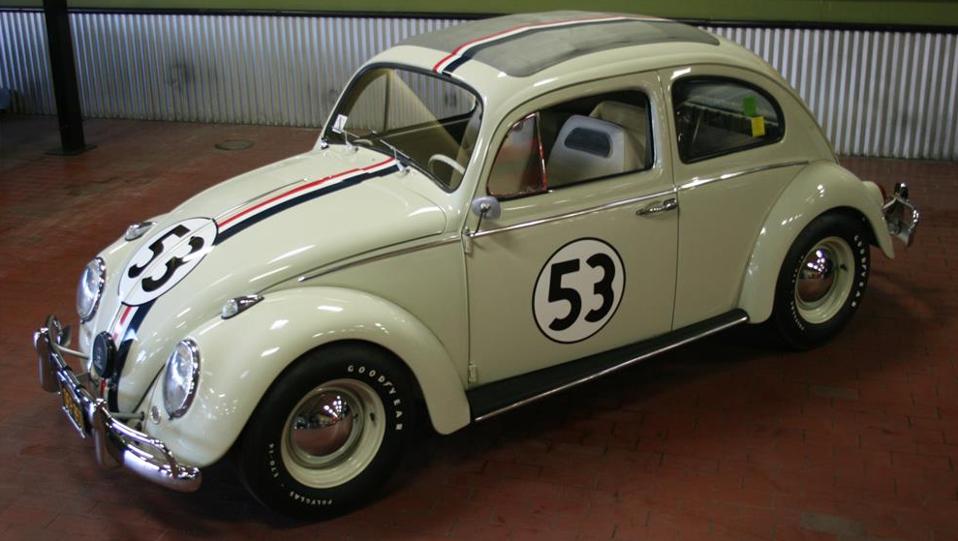
^^^^Herbie, the Love-Bug, from the movie.

^^^Just like my brother's

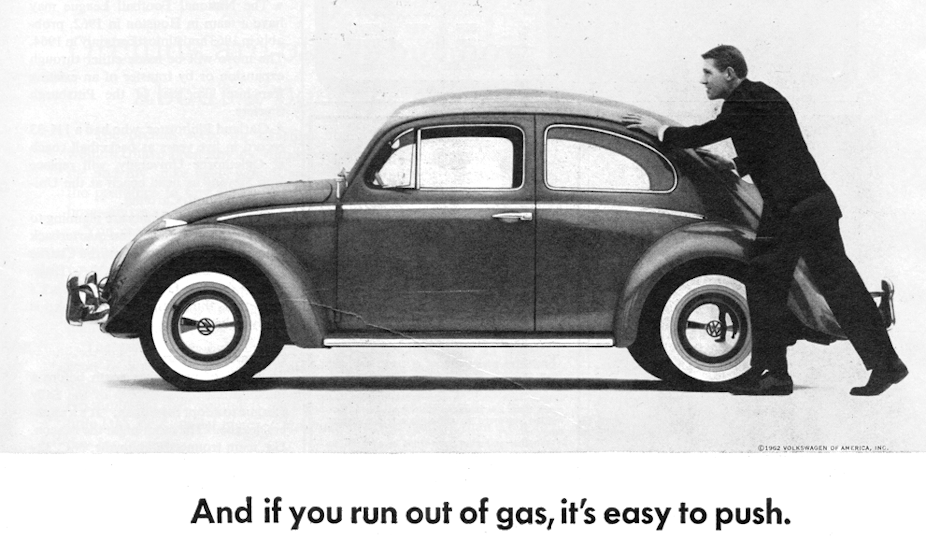


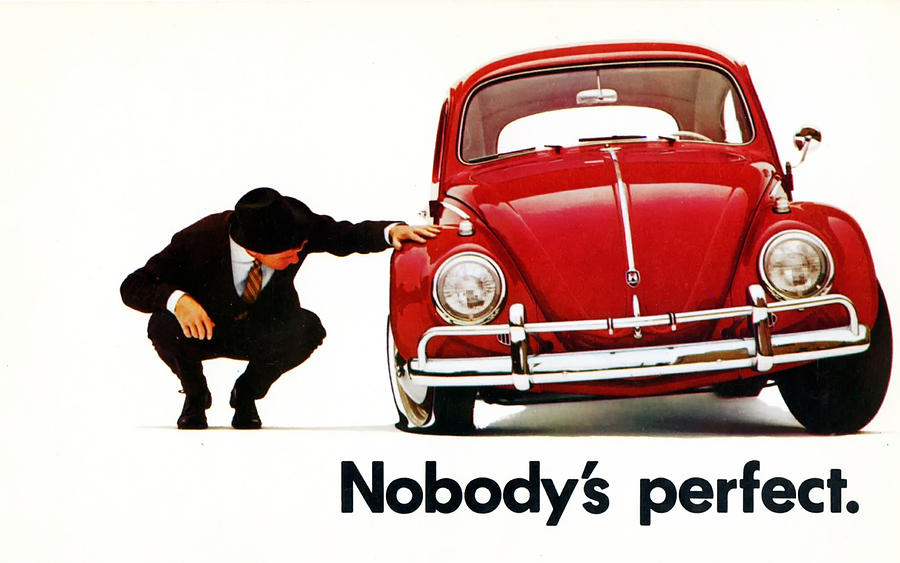
VW ads of that period were very sophisticated.

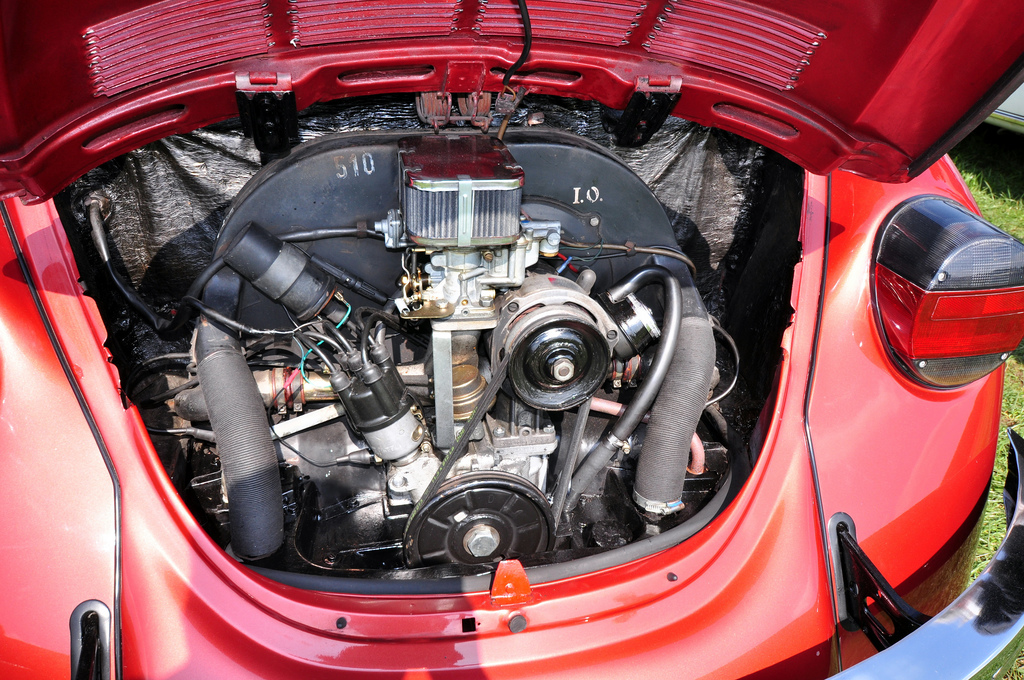
If one wants to talk about a truly ubiquitous vehicle, it is probably difficult to beat the famous air-cooled rear-engined VW Beetle....which, for decades, played fiddle with the Toyota Corolla for the title of the world's most popular passenger car ever. Production of the air-cooled versions did not end until 2003, in Pueblo, Mexico...after an almost 70-year run, although production of the more conventional, front-engined, liquid-cooled New Beetle versions (which, in effect, was a VW Golf-chassis with a somewhat-retro-Beetle body) lasted until July of 2019. Perhaps no other car in the U.S. (with the possible exception of the compact 1950s Nash/Rambler) was more responsible for making inroads into the traditional large-car American market, which by the late 1950s, had become mostly chrome-laden dinosaurs. Ever-increasing Beetle and Rambler sales forced the Big Three (Ford, GM, and Chrysler), in 1960-61, to introduce their own lineup of domestic compacts, one of which (the air-cooled rear-engined Chevrolet Corvair) strongly-imitated the Beetle's general layout, though with a number of safety-problems.
To understand the air-cooled Beetle's origins and growth, one must go back to Germany in the 1930s.....in the midst of a serious worldwide economic Depression. Adolf Hitler, the German Chancellor (and eventual dictator) had just come to power, and one of his well-known obsessions was a strong jealously / admiration for Henry Ford and what Ford had accomplished in the U.S., with the Model T, perfection of automotive mass-production techniques, and the moving assembly line. Ford had literally, for the first time in its history, put the American nation on wheels, and Hitler, although he and the other **** leaders rode around in custom-built Mercedes and Maybach limos / cabriolets, had a similar dream of a small, simple, inexpensive Volks-Wagen, or "People's Car" for the Germans. (OK, now you know where the name originated). In Italy and France at the time, small, similar, ubiquitous People-Cars were being developed by Fiat, Renault, and Citroen, so Hitler ordered Dr. Ferdinand Porsche to come up with a suitable design for mass-production in Germany.
Dr. Porsche turned to Czechoslovakia, next door, and its somewhat larger rear-engined/air-cooled Tatra vehicles as an inspiration/starting point, and, after some work of his own and his assistants, came up with the first Beetle as we know it today. And Germany was far ahead of the U.S. (and most other countries at that time) in construction of the high-speed/limited-access Autobahn Highway system...that would not come to the U.S. until the late 1950s into the 1960s. But, despite a far superior highway system, the early Beetles never transformed German life and mobility in the 1930s as the Model T had done in the U.S., despite our then-antiquated road system. For one thing, except for a small pocket in the Ruhr, the Germans never had the same industrial capacity we did. And, by later on in the 1930s, Hitler was, of course, using most of that available capacity to re-arm for what was to become World War II. Many, of not most, of the early Beetles ended up being used by the German military...along with other military vehicles using the ubiquitous air-cooled powerplant. Then, of course, during the war, the plants producing Beetles and other air-cooled vehicles for the military were heavily damaged by Allied bombing. A dark side of that production, during the war, was that forced-labor from slaves and POWs was also used in the plants....which only added to the already-extensive (and still-growing) list of **** atrocities. After the war, the whole Eastern part of the country was Soviet-occupied, and Western companies/capitalism was simply not allowed to operate there. So, for these, and a number of other reasons, the Beetle did not really get West Germany rolling until the 1950s, some twenty years after first-envisioned, after the country and its damaged factories had been reconstructed, and the American/British/French occupation forces removed....though NATO forces stayed on.
And, of course, by the 1950s, the Beetle was becoming a symbol of anti-materialism and a revolt against the enormous standard cars of the period in the U.S. Later, in the 1960s, it, and the larger VW Microbus, were adopted by the Counterculture movement...better-known as the Hippies. Even outside of the Counterculture, many people chose to purchase Beetles not only as a revolt against the huge American vehicles of the time, but also because of its better gas mileage, simplicity of design (no complex liquid-cooling-system), general mechanical reliability, and, most importantly, its excellent build quality and fit/finish. Beetles, at this time, were built during a period when West German factories were turning out some of the most carefully built products in the world....Japan was to follow some twenty years later, in the 1970s.
The air-cooled Beetle itself was a masterpiece of simple design in many ways, although it also had some faults, with a couple of those faults potentially serious...I'll get to those in a minute. Most of the overall design was quite reliable, though the small engine was often stressed with age, and valve-jobs or new piston-rings were common around the 60,000 mile mark or so....few engines in any vehicles back then, outside of the durable Chrysler Slant-Six, Chevy Stovebolt Six, and Mercedes/Peugeot diesels, could routinely go 100,000 miles or more without major repairs. Stopping distances were usually quite short, not only because of the rather large drum brakes themselves which resisted fading (a common problem back then), but also because, with the rear engine, the forward weight-transfer, on heavy braking, placed the approximate center of gravity in the middle of the vehicle instead of up front, where all four wheels/tires were forced by physics to do their equal share of the braking-load. Snow-tracton in the winter, despite the car's generally light weight, was good, because the weight of the engine and transmission were over the rear driving wheels. The small size provided good maneuverability and ease of parking in tight spaces....along with the light non-power steering effort from very little weight over the front wheels. The paint job was a jewel compared to most existing Detroit finishes. Fit/finish was excellent.....each car came off the line like it was assembled by Elves from the Black Forest (the Black Forest, of course, is in Germany itself LOL). Simple but quality materials were used inside and out. In fact, the car was so tightly-built that it was actually difficult to sink in a flood...for the most part, water simply could not get inside when the doors/windows were tightly-shut, and the vehicle would simply float like a boat. You had to crack a window open sometime to shut the doors solidly without resistance and air-buffeting inside. The car's quality was reflected in its very low depreciation as well. The synchronized 4-speed manual transmission shifted somewhat vaguely but smoothly, and the very light clutch was a breeze to engage, even in the days before hydraulically-operated clutches.
But the air-cooled Beetles, particularly the earlier ones, also had several weaknesses...some of them potentially serious. Like the Chevy Corvair, the swing-axle suspension design in the back, combined with the car's tail heaviness, made for squirrely handing and classic oversteer...you needed only very moderate steering-effort most of the time, and sharp curves were to be respected. The swing-axle suspension in back could cause dangerous tire-tuck-under during some too-aggressive maneuvers, which could toss the car on its side. The lack of weight up front over the steering-wheels, made the car somewhat unstable and prone to wander left and right on freeways, particularly in a crosswind. Though quality materials were used inside and out, there was little sound insulation, so the loud air-cooled engine always made a racket, even at low speeds. (Air-cooled engines are usually noisier than liquid-cooled ones because the water-jackets around the cylinders and in the engine-block absorb noise). Power level was quite low (40-55 HP), and you had to give yourself plenty of room to pull into traffic. The interior, being an ancient design, was not space-efficient, and could be cramped inside for tall persons. Instrumentation, particularly on the early ones, was a round speedometer, a couple of warning lights, and little else....even a gas gauge was omitted for some time, and to check the tank, you opened the front hood, unscrewed the gas-cap for the tank next to the firewall, and simply looked inside....some models had a stick and markings attached to the cap. There was little crash-protection up front....essentially nothing but an empty cargo area, and your head and face were very close to the windshield. The overall design was so unconventional that few shops during that period, outside of VW dealerships, knew how to work on them. And, one more thing...something the car became famous for. In the winter, the engine's very slow warm-up meant that you had to drive a hundred miles to get any warm or hot air out of the heater/defrost system...and then, if the exhaust-system was not 100% perfectly sealed, exhaust-gas and dangerous carbon monoxide could leak and enter the cabin's heat/defrost. Proper maintenance/inspection of this vehicle included numerous safety-checks of the exhaust-system.
My brother owned a bright red air-cooled Beetle for some time (don't remember exactly how long) in the early 1970s, at the same time I had a big Chrysler. I got to drive it several times, and sampled other air-cooled Beetles as well. Despite its well-known faults, I liked a number of things about them, particularly the excellent build-quality....which was hard to come by in many vehicles of that period. When VW started to convert to front-drive liquid-cooled vehicles in the mid-1970s (Dasher, Rabbit, Quantum, etc...), the drastic drop in quality was obvious. Starting around 1974/75 or so, VW service shops had long lines waiting for appointments each morning (I know....at that time, I worked right next to a VW shop). The last air-cooled Beetle sold in the U.S. was the convertible (Cabriolet), which was pulled from the American market at the end of that year, although production, as aforementioned, went on in Mexico until 2003.
And, as Always, Happy-Car-Memories.

MM
Last edited by mmarshall; Jun 2, 2020 at 04:32 PM.

Racer


Joined: Nov 2017
Posts: 1,585
Likes: 279
From: Ohio
I grew up in a time when Beetles were everywhere. Heck, my dad bought a used one after gas prices jumped in 1973. I never considered them to be particularly well sealed, but your mention of that trait called to mind an event earlier in '73. In June our area experienced its first and only serious flooding one night. Friends and I attempted to dissuade drivers on a main road from proceeding into high water. Most listened and turned around. Some disregarded us and made it through. A few stalled out, one which was a Beetle. However, rather than remain where it quit, it floated away, eventually ending up against a curb where we pulled the driver out through an open window. No water had penetrated the passenger compartment, so, yeah, they were tightly sealed!
Another Beetle tidbit - parts were cheap! A friend had damaged his front left fender. Rather than repair it, I replaced it with a new one. The price was $20 for a factory fender in about 1974. It seemed amazing then and even more so now.
The worst practical aspect about them was the standard heater didn't keep occupants very warm in the coldest temperatures.
Another Beetle tidbit - parts were cheap! A friend had damaged his front left fender. Rather than repair it, I replaced it with a new one. The price was $20 for a factory fender in about 1974. It seemed amazing then and even more so now.
The worst practical aspect about them was the standard heater didn't keep occupants very warm in the coldest temperatures.
Thread Starter
Lexus Fanatic
Joined: Oct 2003
Posts: 94,432
Likes: 249
From: Virginia/D.C. suburbs
I grew up in a time when Beetles were everywhere. Heck, my dad bought a used one after gas prices jumped in 1973. I never considered them to be particularly well sealed, but your mention of that trait called to mind an event earlier in '73. In June our area experienced its first and only serious flooding one night. Friends and I attempted to dissuade drivers on a main road from proceeding into high water. Most listened and turned around. Some disregarded us and made it through. A few stalled out, one which was a Beetle. However, rather than remain where it quit, it floated away, eventually ending up against a curb where we pulled the driver out through an open window. No water had penetrated the passenger compartment, so, yeah, they were tightly sealed!
Another Beetle tidbit - parts were cheap! A friend had damaged his front left fender. Rather than repair it, I replaced it with a new one. The price was $20 for a factory fender in about 1974. It seemed amazing then and even more so now.
The worst practical aspect about them was the standard heater didn't keep occupants very warm in the coldest temperatures.
Another Beetle tidbit - parts were cheap! A friend had damaged his front left fender. Rather than repair it, I replaced it with a new one. The price was $20 for a factory fender in about 1974. It seemed amazing then and even more so now.
The worst practical aspect about them was the standard heater didn't keep occupants very warm in the coldest temperatures.

Pole Position
Joined: Jan 2020
Posts: 2,738
Likes: 544
From: CA
Thanks MM for this! Before I became a Toyota fan-boy in 1980, I was an air-cooled VW fanatic. As a side job, I flipped bugs, buses, and Ghias. Since I had grown up on air-cooled Honda motorcycles, learning the art of VW maintenance was cake. I would joke that the simplicity of the design made working on them akin to working on a lawn mower! I always loved the historic Hitler connection. Not that I love Hitler, I simply liked that he aspired to promote a car for the "folks" (even a broken clock is right twice a day)! Of course, the VW critiques called the bug/bus "Hitler's revenge," because they tended to slow traffic. My first VW was a '59 bug (bought for $50 in 1975) with a 36hp motor. My second was a '57 bus with the same motor. When running right, they were fast enough for me. However, due to lack of proper maintenance, many VW's were running around with burnt/warped valves and as you wrote, "bad rings," so they were slow as s#!+. Too, I never had the problem with the heaters you wrote about. When kept in proper working order, they were fine. Again, however, lack of maintenance and improper mods tended to ruin the heating systems. Speaking of mods, toward the end of my fanaticism, I lived down the street from the nation's preeminent VW race-engine builder, Gene Berg. His engines won all the races at the air-cooled, drag racing events. After studying his catalogs and literature, I set about building a Gene Berg engine for my '67 Westphalia deluxe camper bus that could keep pace on California freeways (before all the traffic). It cost me a couple grand in parts and machining in 1985, but it went like a bat out of hell! Unfortunately, I couldn't keep it garaged, and some neighborhood kids kept stealing parts off it, so I had to sell it in the mid '90's (been kicking myself ever since as their values have gone through the roof). I believe the repair manual "for complete idiots" was the first in a long line of "idiot" how-to books. This book and the simplicity of the VW design inspired many to take up automotive repair. This, of course, is a by-gone era, as there is nothing simple about vehicles and their maintenance today! Thanks for the trip down memory lane...you are a fountain of automotive information and I'm glad you're a part of CL!
Thread Starter
Lexus Fanatic
Joined: Oct 2003
Posts: 94,432
Likes: 249
From: Virginia/D.C. suburbs
^^^ Thanks for your comments, Wilson. I'm glad you enjoyed the ones you owned. Like I said, I was a fan myself of their build-quality........especially compared to the mid-70s and later FWD liquid-cooled VWs.
On the heat / defrost issue, it was OK if the exhaust system didn't leak....and it looks like the ones on your vehicles didn't. But the way the system was designed (the warm air coming into the cabin was blown across the hot exhaust-shield to heat it up), the exhaust system had to be completely sealed, with no leaks at all. On a number of the air-cooled engines, perhaps for the reason you indicated in lack of maintenance or inspection (you probably know more about that system than I do), the exhaust did leak, and when the heater was turned on, harmful fumes could get inside the cabin.
You taught me something with that one......I had not heard that line before. And it's ironic that they could slow traffic that much, because, at the time that they were first designing the Beetle, the Germans were also building and perfecting what was, at that time, arguably the most advanced high-speed (Autobahn) roads in the world. In fact, the idea for our own Interstate system of limited-access highways came from General Dwight Eisenhower, the Allied Supreme Military Commander in Europe during the war. When our forces fought their way across France and into Germany, he got a good look at the Autobahn system....and was very impressed with it. Seven years later, in 1952, he was elected President...and promptly set to work to fund, develop and build a similar system in the U.S.
I'm glad you enjoyed the ones you owned. Like I said, I was a fan myself of their build-quality........especially compared to the mid-70s and later FWD liquid-cooled VWs.On the heat / defrost issue, it was OK if the exhaust system didn't leak....and it looks like the ones on your vehicles didn't. But the way the system was designed (the warm air coming into the cabin was blown across the hot exhaust-shield to heat it up), the exhaust system had to be completely sealed, with no leaks at all. On a number of the air-cooled engines, perhaps for the reason you indicated in lack of maintenance or inspection (you probably know more about that system than I do), the exhaust did leak, and when the heater was turned on, harmful fumes could get inside the cabin.
Of course, the VW critiques called the bug/bus "Hitler's revenge," because they tended to slow traffic.
Last edited by mmarshall; Jun 3, 2020 at 04:28 PM.


Thread Starter
Lexus Fanatic
Joined: Oct 2003
Posts: 94,432
Likes: 249
From: Virginia/D.C. suburbs
Trending Topics
Thread Starter
Lexus Fanatic
Joined: Oct 2003
Posts: 94,432
Likes: 249
From: Virginia/D.C. suburbs
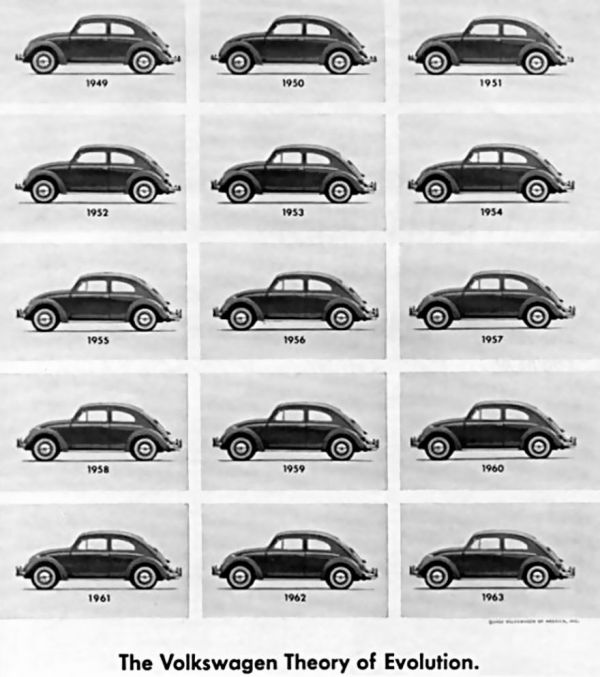
One of the things that really stood out with the air-cooled VWs, particularly in the 1960s, as much or more so than the vehicles themselves, were the witty, clever, sophisticated ads. I've already posted some of them above in the OP............here are some more.




Thread Starter
Lexus Fanatic
Joined: Oct 2003
Posts: 94,432
Likes: 249
From: Virginia/D.C. suburbs
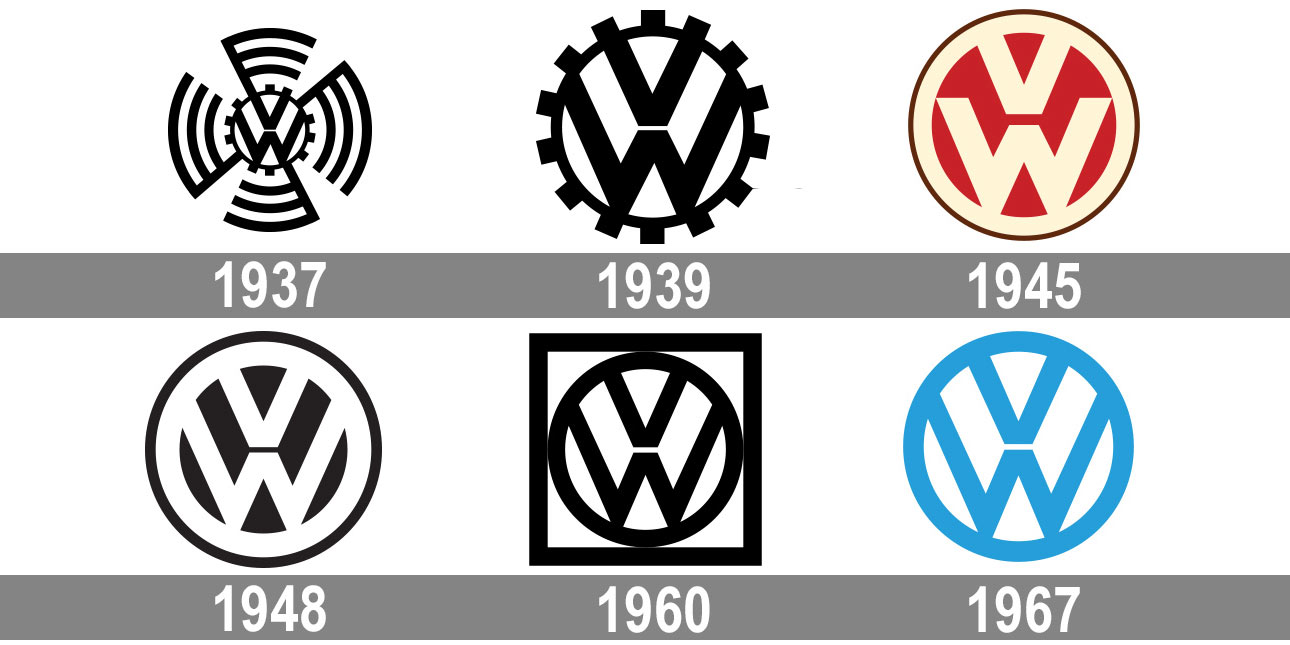
Oh, I agree the swatika-intent was probably clear. The Native-American resemblance may have just been a coincidence. Already, though, by the late 1930s, though, they had adopted something else...as the evolutionary chart shows.
The combination of the "V" and the "W", one above the other, in a linear pattern like that, was also very interesting. It has certainly stood the test of time......it remains the VW logo even today.


Thread
Thread Starter
Forum
Replies
Last Post