


Mazda BT-50 pickup


Thread Starter
Joined: Oct 2008
Posts: 42,476
Likes: 321
From: California
 Mazda BT-50 pickup
It's based on the Isuzu D-Max
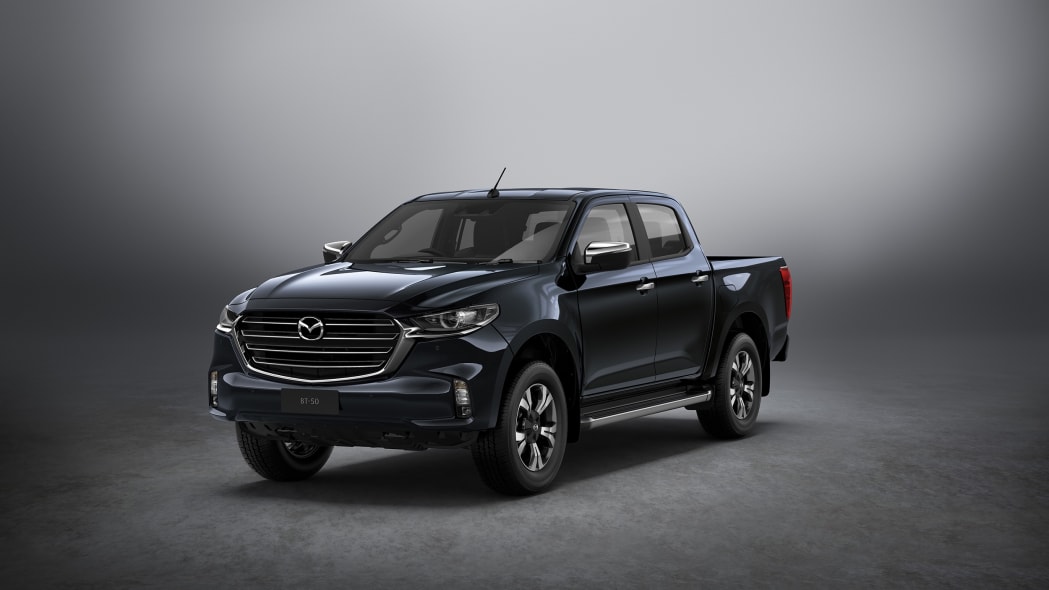
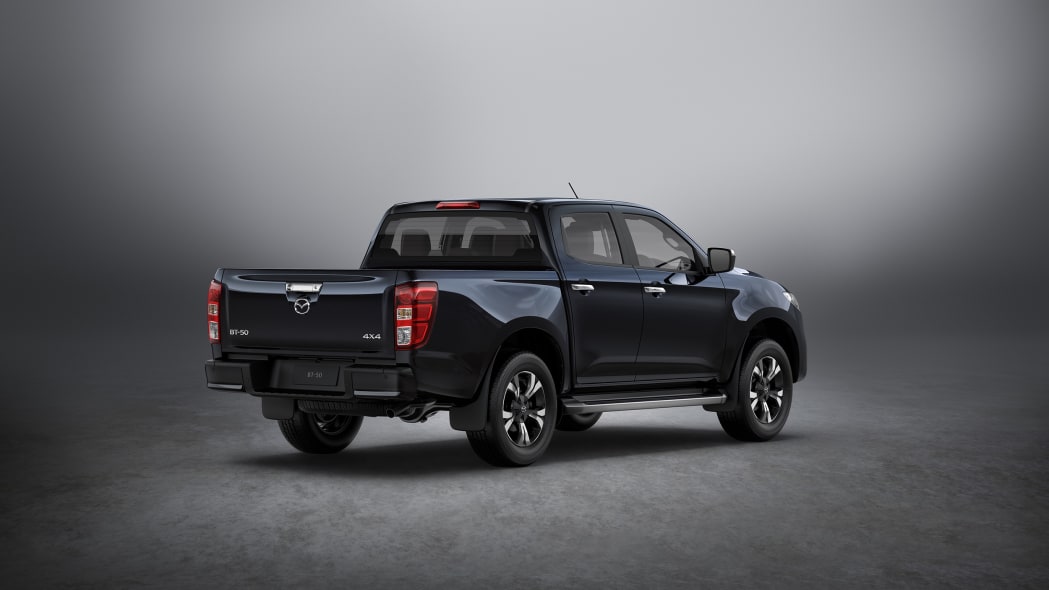
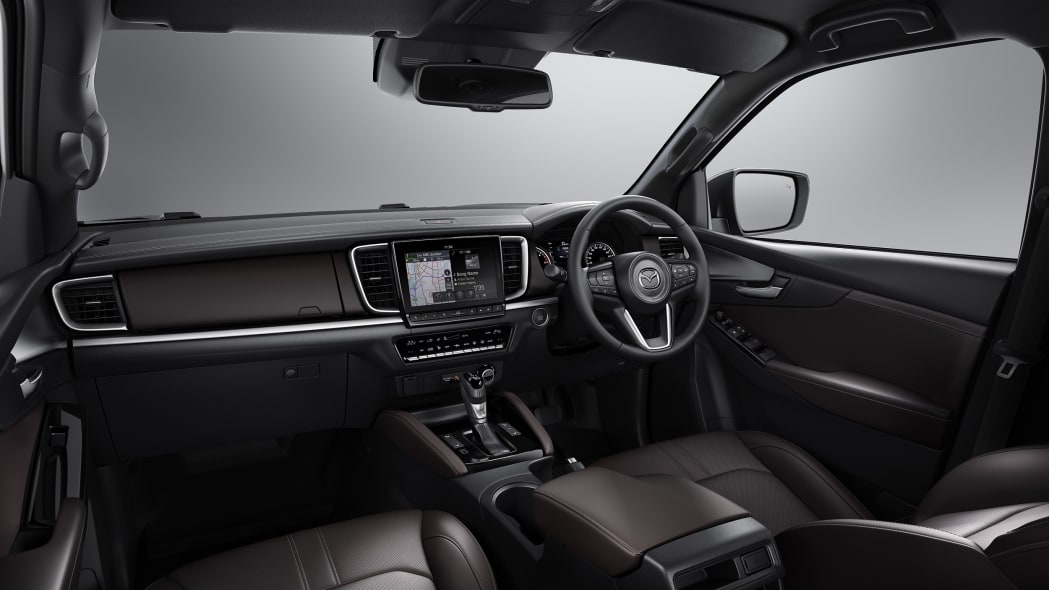
Mazda exited America's pickup segment when it deep-sixed the Ford Ranger-based B-Series after the 2009 model year, but it remains committed to the body style overseas. The third-generation BT-50 introduced online wears an unusually stylish design for a global truck, while its interior looks and feels more car-like than before.
The BT-50 is based on the Isuzu D-Max, but the familiar shield-shaped grille hides the common DNA well. Horizontal slats and a thick chrome frame create a visual link between the pickup and members of Mazda's line of sedans and crossovers, while stylists gave the rear end more utilitarian-looking lines characterized by vertical lights. The variant depicted in Mazda's images is an upmarket trim built for users who need a rugged daily driver, and more basic versions that feel at home on a construction site will ship will inevitably look a lot cheaper.
It measures 208 inches long, 74 inches wide, and 70 inches tall when buyers select the double-cab model and order four-wheel drive. These figures give it a footprint almost identical to the four-door Ranger's.
Inside, the BT-50 shares some parts with the D-Max, including its 9.0-inch touchscreen and its HVAC controls. Motorists in global markets are increasingly using pickups as daily drivers, so Mazda chased this trend by adding more technology and safety features to the BT-50. Those willing to climb the trim hierarchy are rewarded with conveniences like an eight-speaker stereo, digital gauges, automatic headlights, parking sensors on both ends, and dual-zone climate control, among other features. Mazda wants to peg its truck a little bit higher than Isuzu's.
The only engine detailed by the firm is a 3.0-liter four-cylinder turbodiesel built by Isuzu and tuned to deliver 190 horsepower at 3,600 rpm and 332 pound-feet of torque from 1,600 to 2,600 rpm. Rear-wheel drive and a six-speed manual transmission come standard, and motorists can pay extra for four-wheel drive, a six-speed automatic, or both. It's reasonable to assume a smaller, entry-level turbodiesel will join the range later on.
With the 3.0-liter, the BT-50 can haul 2,347 pounds, and its towing capacity checks in at 7,716 pounds. That's more than enough to tow an enclosed trailer, your stripped-out Miata, an extra set of slicks, and a boxful of tools.
Making your dreams of Mazda-Mazda towing come true will require moving far overseas, because the Japanese company isn't planning on returning to America's pickup segment. Built in Thailand by Isuzu, the BT-50 was developed primarily for Asian markets and Australia, where motorists love trucks almost as much as Americans do. When it arrives Down Under, it will compete in the same segment as the Toyota Hilux, Australia's bestseller.
The BT-50 is based on the Isuzu D-Max, but the familiar shield-shaped grille hides the common DNA well. Horizontal slats and a thick chrome frame create a visual link between the pickup and members of Mazda's line of sedans and crossovers, while stylists gave the rear end more utilitarian-looking lines characterized by vertical lights. The variant depicted in Mazda's images is an upmarket trim built for users who need a rugged daily driver, and more basic versions that feel at home on a construction site will ship will inevitably look a lot cheaper.
It measures 208 inches long, 74 inches wide, and 70 inches tall when buyers select the double-cab model and order four-wheel drive. These figures give it a footprint almost identical to the four-door Ranger's.
Inside, the BT-50 shares some parts with the D-Max, including its 9.0-inch touchscreen and its HVAC controls. Motorists in global markets are increasingly using pickups as daily drivers, so Mazda chased this trend by adding more technology and safety features to the BT-50. Those willing to climb the trim hierarchy are rewarded with conveniences like an eight-speaker stereo, digital gauges, automatic headlights, parking sensors on both ends, and dual-zone climate control, among other features. Mazda wants to peg its truck a little bit higher than Isuzu's.
The only engine detailed by the firm is a 3.0-liter four-cylinder turbodiesel built by Isuzu and tuned to deliver 190 horsepower at 3,600 rpm and 332 pound-feet of torque from 1,600 to 2,600 rpm. Rear-wheel drive and a six-speed manual transmission come standard, and motorists can pay extra for four-wheel drive, a six-speed automatic, or both. It's reasonable to assume a smaller, entry-level turbodiesel will join the range later on.
With the 3.0-liter, the BT-50 can haul 2,347 pounds, and its towing capacity checks in at 7,716 pounds. That's more than enough to tow an enclosed trailer, your stripped-out Miata, an extra set of slicks, and a boxful of tools.
Making your dreams of Mazda-Mazda towing come true will require moving far overseas, because the Japanese company isn't planning on returning to America's pickup segment. Built in Thailand by Isuzu, the BT-50 was developed primarily for Asian markets and Australia, where motorists love trucks almost as much as Americans do. When it arrives Down Under, it will compete in the same segment as the Toyota Hilux, Australia's bestseller.
 Interior looks quite nice


Lexus Fanatic


Joined: Oct 2003
Posts: 94,422
Likes: 249
From: Virginia/D.C. suburbs
Why does it have to be based on an Isuzu product?  In the 1980s, before Ford came along and started calling most of the shots for Mazda, Mazda produced what were some of the best compact trucks in the industry, winning J.D. Power awards for quality. Then, in the 1990s, those Japanese-designed B-series Mazda trucks went out the window for what were essentially rebadged Ford Rangers, and now are depending on Isuzu? I say bring back the days when Mazda did their own trucks.
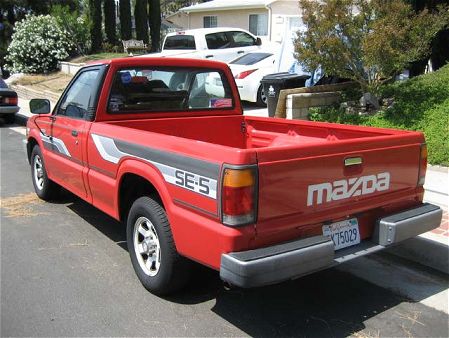

Oddly enough, in the 1970s, it was actually the reverse.....Ford sold a Mazda-designed small truck as the Courier.

In the 1980s, before Ford came along and started calling most of the shots for Mazda, Mazda produced what were some of the best compact trucks in the industry, winning J.D. Power awards for quality. Then, in the 1990s, those Japanese-designed B-series Mazda trucks went out the window for what were essentially rebadged Ford Rangers, and now are depending on Isuzu? I say bring back the days when Mazda did their own trucks.Oddly enough, in the 1970s, it was actually the reverse.....Ford sold a Mazda-designed small truck as the Courier.
Last edited by mmarshall; Jun 18, 2020 at 06:58 AM.

Lead Lap

Joined: Jul 2010
Posts: 3,898
Likes: 296
From: NY
Why does it have to be based on an Isuzu product? In the 1980s, before Ford came along and started calling most of the shots for Mazda, Mazda produced what were some of the best compact trucks in the industry, winning J.D. Power awards for quality. Then, in the 1990s, those Japanese-designed B-series Mazda trucks went out the window for what were essentially rebadged Ford Rangers, and now are depending on Isuzu? I say bring back the days when Mazda did their own trucks.
Oddly enough, in the 1970s, it was actually the reverse.....Ford sold a Mazda-designed small truck as the Courier.
In the 1980s, before Ford came along and started calling most of the shots for Mazda, Mazda produced what were some of the best compact trucks in the industry, winning J.D. Power awards for quality. Then, in the 1990s, those Japanese-designed B-series Mazda trucks went out the window for what were essentially rebadged Ford Rangers, and now are depending on Isuzu? I say bring back the days when Mazda did their own trucks.Oddly enough, in the 1970s, it was actually the reverse.....Ford sold a Mazda-designed small truck as the Courier.
Lexus Fanatic
Joined: Oct 2003
Posts: 94,422
Likes: 249
From: Virginia/D.C. suburbs
Can't speak for all Isuzu trucks as I haven't sampled them, but the last ones they sold here (The I-series), before they left the American market, were awful, both inside and out. The design was shared with GM as the 1Gen Colorado/Canyon. The 2Gen Colorado/Canyon, a GM-sourced design, was literally a tremendous improvement....light-years ahead of the original I-series.
if Mazda brings this new Isuzu-sourced truck to the U.S., though, and I have a chance to sample it, I'll keep an open mind on it. This is obviously not 2003 any longer, and Isuzu, today, probably could not build a truck that poorly-done and unrefined if it tried LOL.

Lexus Champion


Joined: Oct 2002
Posts: 11,204
Likes: 11
From: The Woodlands, TX
Agreed, looks good.
Price needs to be kept low - way below competitors to succeed (at least initially) IMO.
Base price for the Isuzu in Australia $ is $26K (or $18479 USD)
D-Max review https://www.caradvice.com.au/853136/...x-ls-t-review/
Price needs to be kept low - way below competitors to succeed (at least initially) IMO.
Base price for the Isuzu in Australia $ is $26K (or $18479 USD)
D-Max review https://www.caradvice.com.au/853136/...x-ls-t-review/
Last edited by bagwell; Jun 18, 2020 at 11:26 AM.
Trending Topics

Lexus Fanatic
Joined: Nov 2011
Posts: 35,438
Likes: 372
From: ON/NY
Agreed, looks good.
Price needs to be kept low - way below competitors to succeed (at least initially) IMO.
Base price for the Isuzu in Australia $ is $26K (or $18479 USD)
D-Max review https://www.caradvice.com.au/853136/...x-ls-t-review/
Price needs to be kept low - way below competitors to succeed (at least initially) IMO.
Base price for the Isuzu in Australia $ is $26K (or $18479 USD)
D-Max review https://www.caradvice.com.au/853136/...x-ls-t-review/

Thread
Thread Starter
Forum
Replies
Last Post