


MM Retro Write-Up: 1982 Cadillac Cimarron


Thread Starter
Lexus Fanatic


Joined: Oct 2003
Posts: 94,430
Likes: 249
From: Virginia/D.C. suburbs
 MM Retro Write-Up: 1982 Cadillac Cimarron


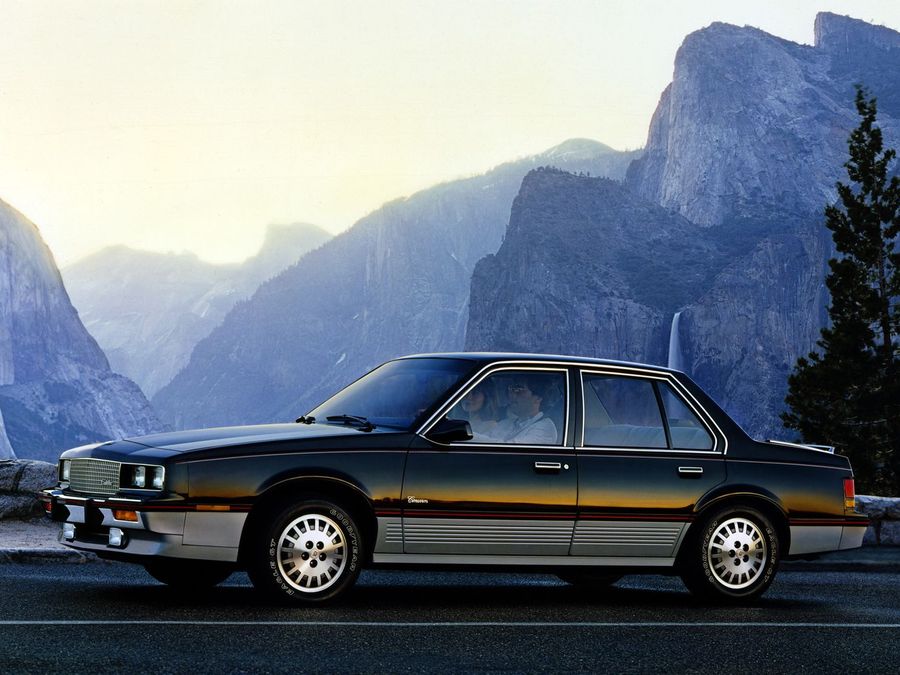


IN A NUTSHELL: Overly-hated by the automotive press and historians, but I did not think it was that bad a design.
Throughout automotive history, there have been a number of vehicles that simply fell flat on their face as soon as they were introduced, were roundly-panned by the automotive press, and never really got a chance from a skeptical public. Classic examples are the Pontiac Aztek (which I recently did a write-up on), Acura ZDX (although I thought the ZDX's roofline and rear end was ridiculous), and Mazda Millenia (which was supposed to be introduced as an upscale-division Amati product, but ended up being sold as a Mazda...and I found it rather unimpressive compared to its Lexus ES competition).
And another one, of course, is the poor Cimarron.....Cadillac's first attempt to do a compact luxury-sedan, though a mid-sized attempt several years earlier, with the Seville, targeting the (at the time) increasingly-popular Mercedes E-Class. But, unlike the Cimarron, the Seville turned out to be reasonably successful, except for the disastrous Oldmobile-sourced 5.7L diesel V8 version (that later was the subject of a class-action suit) and the ungainly rear end on the 1980 model.
I never owned a Cimarron (too many shortcomings in the power train), but I checked it out, and did a fairly long test-drive. I don't remember exactly, but I think the one I sampled was white one with a red leather interior. The drivetrain was a joke (more about that in a minute), but I actually liked the Interior, general layout, 3-spoke steering steering wheel, and general design theme. It was, IMO, a very attractive small car inside and out....something that I thought was being overlooked by the press and reviewers.
The Cimarron's origin was in the GM "J"-Body platform, which also gave us the Chevy Cavalier, Buick Skyhawk, Oldsmobile Firenza, and Pontiac J2000/Sunbird. As such, it shared, with them, the anemic carbonated 88 HP 1.8L in-line four, which was slow enough in its lighter brothers, but, in the heavier Cimarron (which came standard with substantially more trim and equipment), couldn't outrun a snail....on my test-drive, I could have walked back to the dealership quicker. Later, a larger, fuel-injected 2.0L four and 2.8L V6 were added.....I probably should have taken another look at them, but by then, I was happy driving Mazdas, and Cadillac, by then, had changed to a quirky digital dash and unattractive two-spoke steering wheel for the Cimarron.
Style-wise, though, inside and outside, IMO, this car was anything but a joke, and, if it had had a decent engine at first, I personally think it would have made good competition for smaller entry-level upscale products from Europe. I found the car pleasing to look at, pleasing to sit inside, pleasant-riding for something that size, and decent road manners.......as long, of course, as you weren't in a hurry to get where you were going. It had much of the ornateness of larger Cadillacs inside, but in a small, nimble, easy-to-park exterior size, and (except for the larger Cadillac' diesel engine) generally a lot better gas mileage....on regular 87 octane fuel. Yes, this car cost substantially more than its smaller J-Body cousins, but there was a reason for it...except for the joke of a power-train, you were getting what IMO was more of a downsized Cadillac than an upscale Chevy.
Unfortunately, at the time, the automotive press did not see it that way. Despite the obvious shortcomings of the early-version's drive train, they panned the entire car, bumper-to-bumper, unfairly, IMO. And, by this time, though not to the level of today, the auto press and reviewers were becoming somewhat more influential with the public and its auto-buying decisions. So, despite GM's later efforts to address the engine shortcomings, and refresh the vehicle with new trim-level options, the Cimarron was born a pariah, lived a pariah, and, in the late 1980s, died a pariah. A later attempt by Cadillac to do a smaller luxury-sedan (the Opel-sourced Catera) also proved unsuccessful, was quite unreliable, and, unlike the Cimarron, had what IMO was an unimpressive cheaply-done interior. I test-drove a Catera, and, like its Saturn L-series brother which came off the same platform, was poorly-built, had assembly-defects, and creaked and rattled on the road....but those are subjects for another write-up.
Perhaps what the Cimarron was trying to accomplish (a credible entry-level upmarket/luxury sedan) was finally done in 2012, under the Buick nameplate instead of Cadillac, when Buick introduced the Verano. Like the Catera, the Verano was Opel-sourced but, with the exception of the Verano's oil-using 2.4L four, was FAR more solidly-built, and was a lot-better-received by the auto press (Donald Trump himself, before he was President, liked the Verano, and appeared in a commercial for it). I, of course, owned a Verano for some five years, and did a write-up on it.
And, as Always, Happy-Car-Memories.

MM
Last edited by mmarshall; May 19, 2020 at 05:51 PM.


Thread Starter
Lexus Fanatic
Joined: Oct 2003
Posts: 94,430
Likes: 249
From: Virginia/D.C. suburbs


Thread Starter
Lexus Fanatic
Joined: Oct 2003
Posts: 94,430
Likes: 249
From: Virginia/D.C. suburbs
Your view respected, but I guess we can disagree on that. I actually liked its looks, at least with the early models before they adopted that ugly steering wheel and digital-gauge cluster. I don't mind front overhangs.....all else equal, they add stability, weight, good-tracking, and ride-comfort to the front suspension...at the expense of quick steering response, of course. What WAS a tragedy (yes, I said it before, and will admit it again) was the powertrain on the early versions....I could have walked back to the dealership in less time.
Trending Topics
Thread Starter
Lexus Fanatic
Joined: Oct 2003
Posts: 94,430
Likes: 249
From: Virginia/D.C. suburbs
Overall, GM's done lots worse than this...Corvair, Vega, Citation (I know firsthand with the Citation), 5.7L diesel V8, Cadillac V8/6/4, undersized transmissions on their V8s, Pontiac G6, and, of course, the Aztek. I won't defend the carburated 1.8L, though, in the Cimarron's early versions....as I stated more than once in the write-up, it was a joke,

Lexus Champion


Joined: Apr 2007
Posts: 11,044
Likes: 98
From: Southeastern PA
Overall, GM's done lots worse than this...Corvair, Vega, Citation (I know firsthand with the Citation), 5.7L diesel V8, Cadillac V8/6/4, undersized transmissions on their V8s, Pontiac G6, and, of course, the Aztek. I won't defend the carburated 1.8L, though, in the Cimarron's early versions....as I stated more than once in the write-up, it was a joke,
Thread Starter
Lexus Fanatic
Joined: Oct 2003
Posts: 94,430
Likes: 249
From: Virginia/D.C. suburbs
When the Cimarron debuted, the Cadillac name still meant something. Think about what Caddy could have done here if they did it right--the Cimarron was ahead of the Baby Benz 190.
The idea is to seller a smaller more affordable Caddy to build up brand loyalty to customers who will keep coming back buying more expensive cars as their spending potential grows. MB nailed it when the 190 came out.
Remembering a car 40 years later because it was terrible for the brand is .... not good.
Lexus Champion
Joined: Apr 2007
Posts: 11,044
Likes: 98
From: Southeastern PA
I accept other points of view, but to say they aren't Cadillacs is simply incorrect. The V8/6/4 was strictly a Cadillac power plant (one of my former co-workers had one)...no other GM division that I know of used it. And the infamous 5.7L Olds 350 diesel V8 was used across the board, from Chevys to Cadillacs. GM abandoned the practice of each division doing their own drivetrain engineering, starting as far back as the from the late 60s. THAT's why the early Cimarron's were stuck with a Mickey-Mouse powerplant unworthy of the Cadillac nameplate.


Thread Starter
Lexus Fanatic
Joined: Oct 2003
Posts: 94,430
Likes: 249
From: Virginia/D.C. suburbs
I agree with you on the comfort. My Flight Instructor had a RWD DeVille Brougham like that for a couple of years, after his uncle passed away and left it to him in his will. Not well-built, and there seemed to be a lot of loose or poorly-assembled items on it, but it was darned comfortable to drive. Vehicles like this, with a few exceptions (S-Class, G90, K900, 7-series) are sorely missing from today's American-market line-up...everything is either sport or crossover/SUV-oriented.
