
McLaren Elva


Thread Starter

Joined: Oct 2008
Posts: 42,476
Likes: 320
From: California
 McLaren Elva
The next Ultimate Series model, with 800 horsepower
It has no roof and no windows
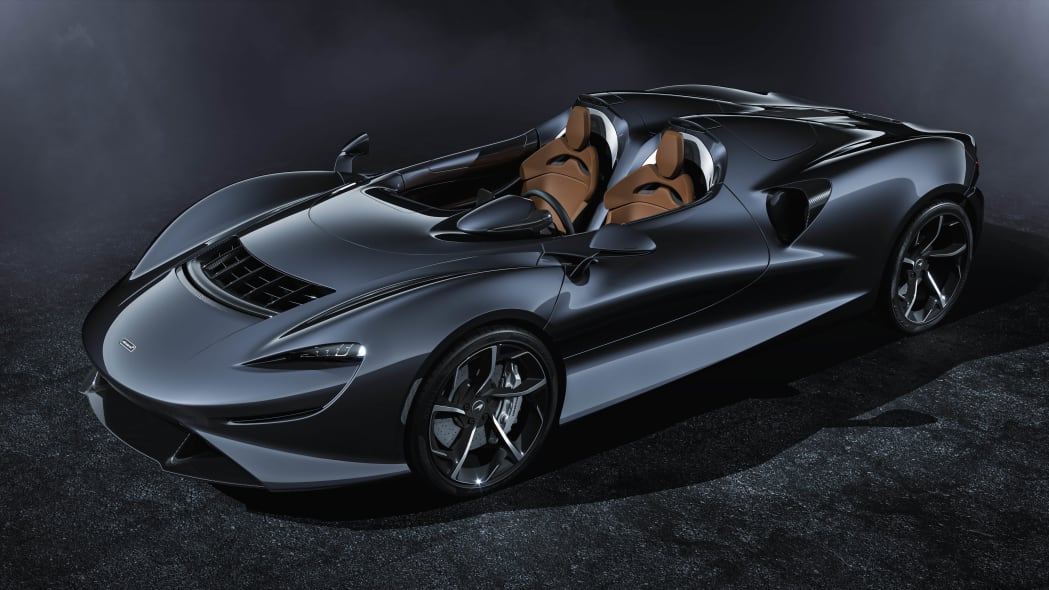
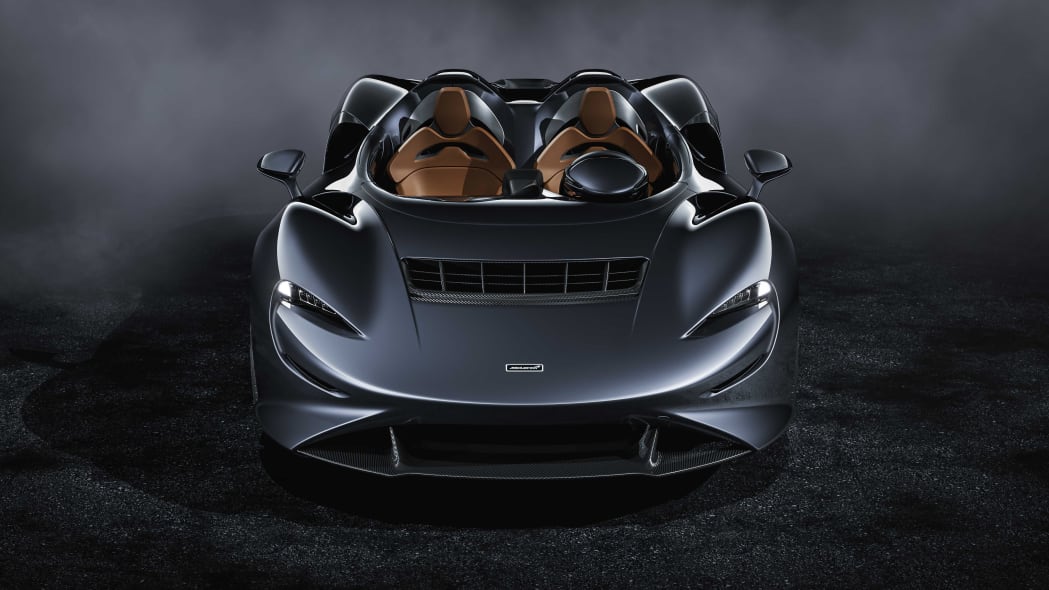

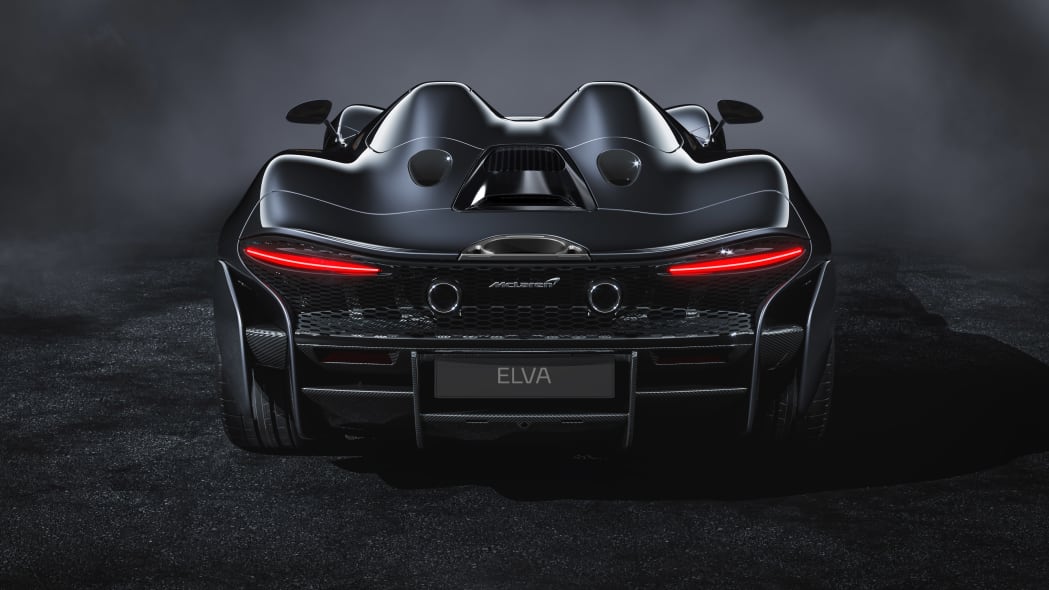
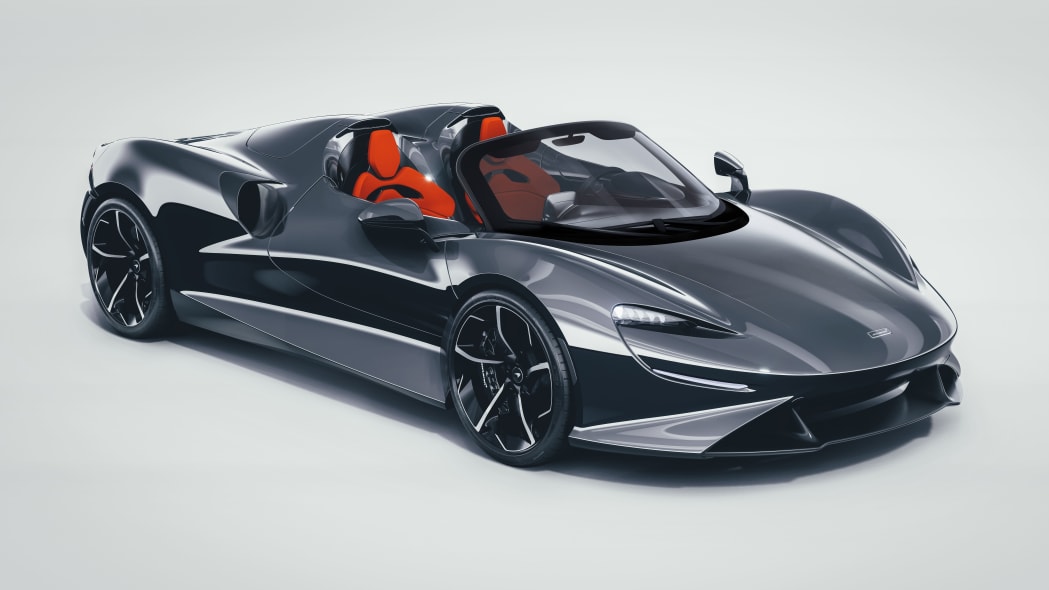
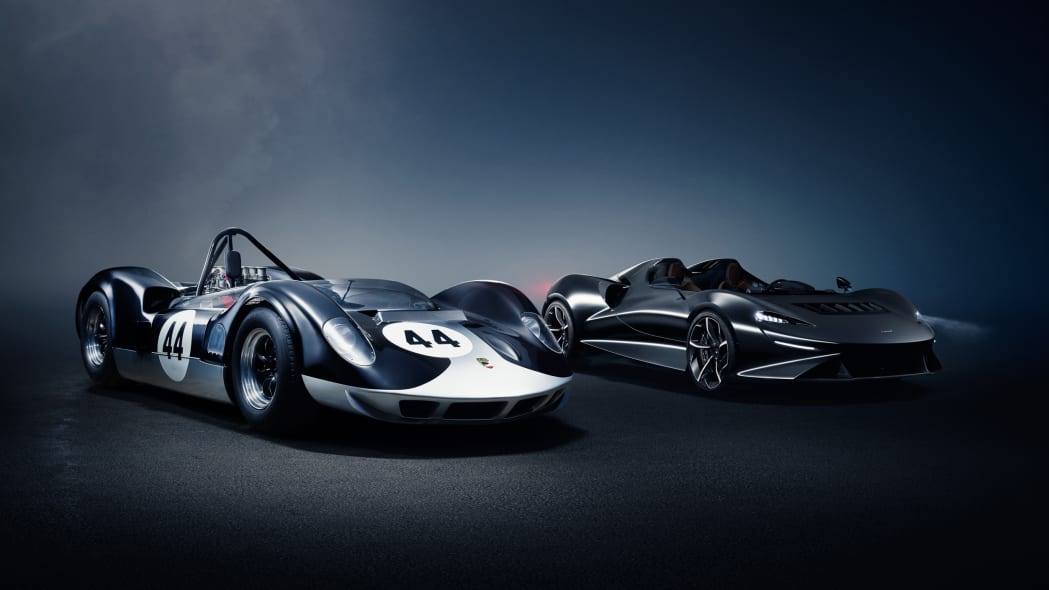
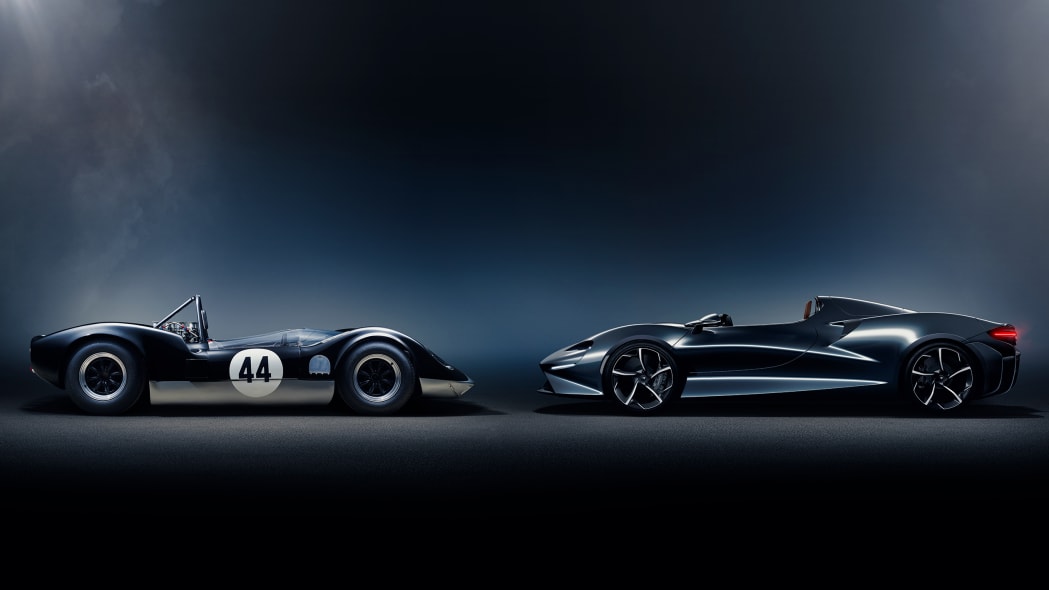
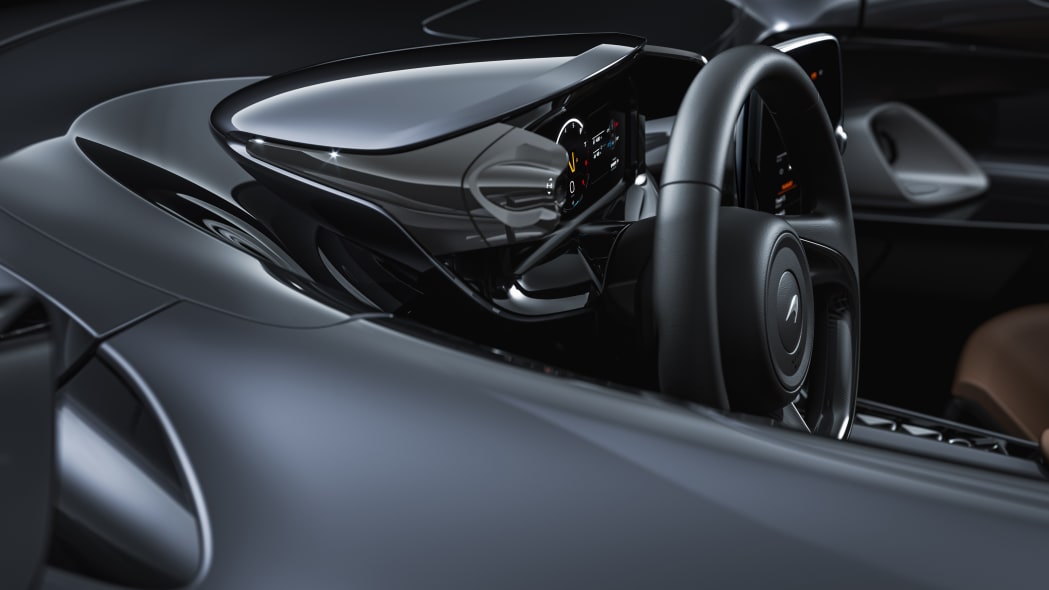
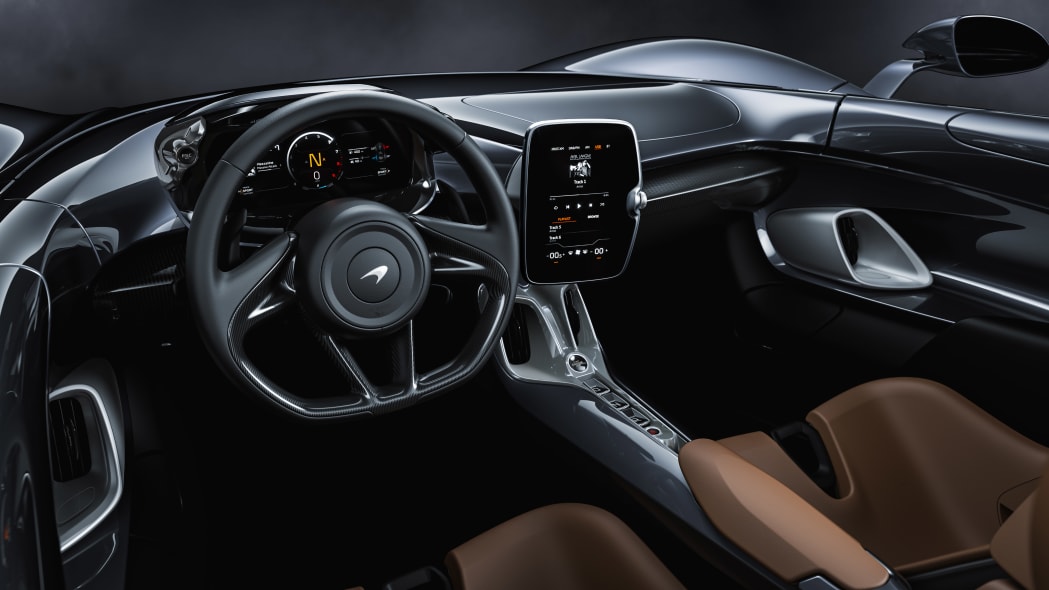
McLaren's latest Ultimate Series hypercar has been revealed, and its name is Elva. The McLaren Elva is an open roadster named and themed after the open race cars built by founder Bruce McLaren and the Elva sports car company in the 1960s. This new car is the lightest and one of the quickest cars from McLaren yet.
The new Elva's resemblance to the classic race car is clear with undulating, exaggerated wheel arches, discreet rear air scoops, low nose and completely exposed cockpit. But it has trademark design cues from modern McLarens such as the squinting headlights, slender taillights and a tail dominated by air vents and a diffuser. The Elva has no roof or windows, but it does have McLaren's typical butterfly doors, and a windshield will be available as an option.
Hidden under the voluptuous body is a version of the McLaren Senna's twin-turbo 4.0-liter V8, but thanks to a high-flow exhaust, it now makes 804 horsepower and 590 pound-feet of torque. It's coupled to a seven-speed transmission that sends power to the rear wheels only. McLaren says the engine will propel the car to 62 mph in under 3 seconds, and it will hit 124 mph (200 kph) in 6.7 seconds, which is faster than the Senna.
This is in part made possible by the Elva being the lightest McLaren road car yet. A final weight hasn't been announced, but we know it's less than the 2,900-pound Senna. Much of the credit for the weight savings goes to the new carbon fiber chassis and body, plus the lack of any kind of driver enclosure. McLaren doesn't even include an audio system as standard (it's a no-cost option) to help keep the weight down. The seats are made of carbon fiber. Even the brakes, which are based on the already light setup in the Senna, get titanium calipers that save about two pounds in total.
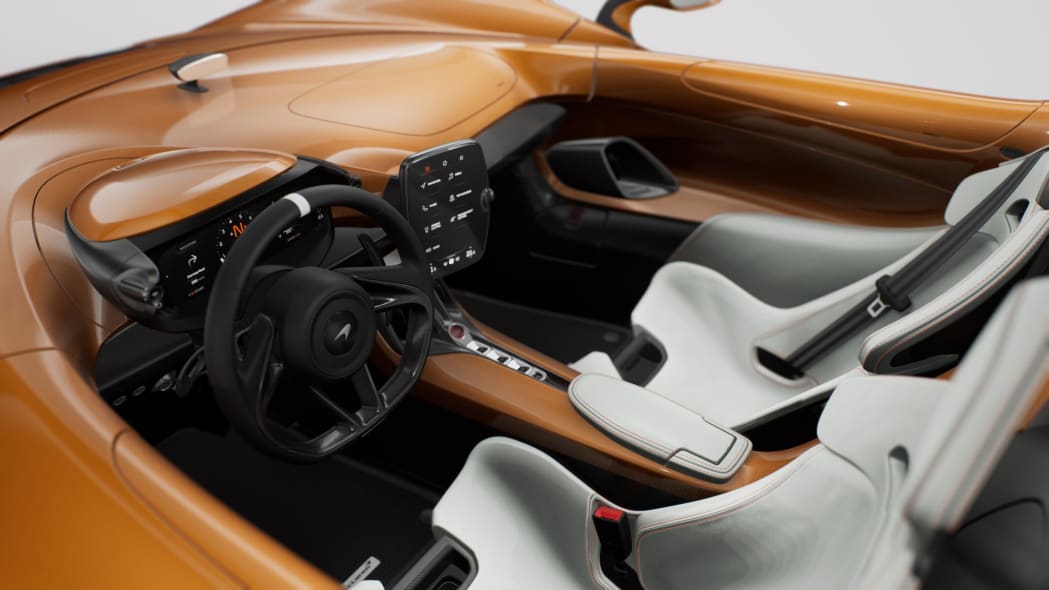
While light and serious, McLaren has still tried to make the driving experience reasonably comfortable. It has implemented a fancy set of vents, vanes and deflectors in the front of the car called the McLaren Active Air Management System to channel air around the passenger compartment. That way, the "cabin" is still tolerable even if you're not wearing a full-face helmet. If you do decide to wear a helmet, there is a storage area under the cowls behind the seat that has space for your headgear. The seats can be covered in a variety of materials from leather with additional protective coatings to a new durable, breathable fabric. The Elva also gets McLaren's latest infotainment system that spans eight inches and has a control wheel hanging off the side, almost like the crown on a watch. If you do plan on using the Elva purely for track use, though, you can skip adding the windshield or sound system and add the optional six-point seat harness instead. Or add all of them — McLaren will spec the car out however you want.
McLaren will spec out only 399 Elvas, though, so get your order in while you can. Make sure your bank account is healthy, too, as the base price for a McLaren Elva is $1.69 million. That's roughly $700,000 more than the Senna, but it is a bit more exclusive, and it accelerates a little harder.
The new Elva's resemblance to the classic race car is clear with undulating, exaggerated wheel arches, discreet rear air scoops, low nose and completely exposed cockpit. But it has trademark design cues from modern McLarens such as the squinting headlights, slender taillights and a tail dominated by air vents and a diffuser. The Elva has no roof or windows, but it does have McLaren's typical butterfly doors, and a windshield will be available as an option.
Hidden under the voluptuous body is a version of the McLaren Senna's twin-turbo 4.0-liter V8, but thanks to a high-flow exhaust, it now makes 804 horsepower and 590 pound-feet of torque. It's coupled to a seven-speed transmission that sends power to the rear wheels only. McLaren says the engine will propel the car to 62 mph in under 3 seconds, and it will hit 124 mph (200 kph) in 6.7 seconds, which is faster than the Senna.
This is in part made possible by the Elva being the lightest McLaren road car yet. A final weight hasn't been announced, but we know it's less than the 2,900-pound Senna. Much of the credit for the weight savings goes to the new carbon fiber chassis and body, plus the lack of any kind of driver enclosure. McLaren doesn't even include an audio system as standard (it's a no-cost option) to help keep the weight down. The seats are made of carbon fiber. Even the brakes, which are based on the already light setup in the Senna, get titanium calipers that save about two pounds in total.
While light and serious, McLaren has still tried to make the driving experience reasonably comfortable. It has implemented a fancy set of vents, vanes and deflectors in the front of the car called the McLaren Active Air Management System to channel air around the passenger compartment. That way, the "cabin" is still tolerable even if you're not wearing a full-face helmet. If you do decide to wear a helmet, there is a storage area under the cowls behind the seat that has space for your headgear. The seats can be covered in a variety of materials from leather with additional protective coatings to a new durable, breathable fabric. The Elva also gets McLaren's latest infotainment system that spans eight inches and has a control wheel hanging off the side, almost like the crown on a watch. If you do plan on using the Elva purely for track use, though, you can skip adding the windshield or sound system and add the optional six-point seat harness instead. Or add all of them — McLaren will spec the car out however you want.
McLaren will spec out only 399 Elvas, though, so get your order in while you can. Make sure your bank account is healthy, too, as the base price for a McLaren Elva is $1.69 million. That's roughly $700,000 more than the Senna, but it is a bit more exclusive, and it accelerates a little harder.

Thread Starter
Joined: Oct 2008
Posts: 42,476
Likes: 320
From: California
McLaren Elva production cut from 399 units to 249
Too many specialist roadsters in uncertain times
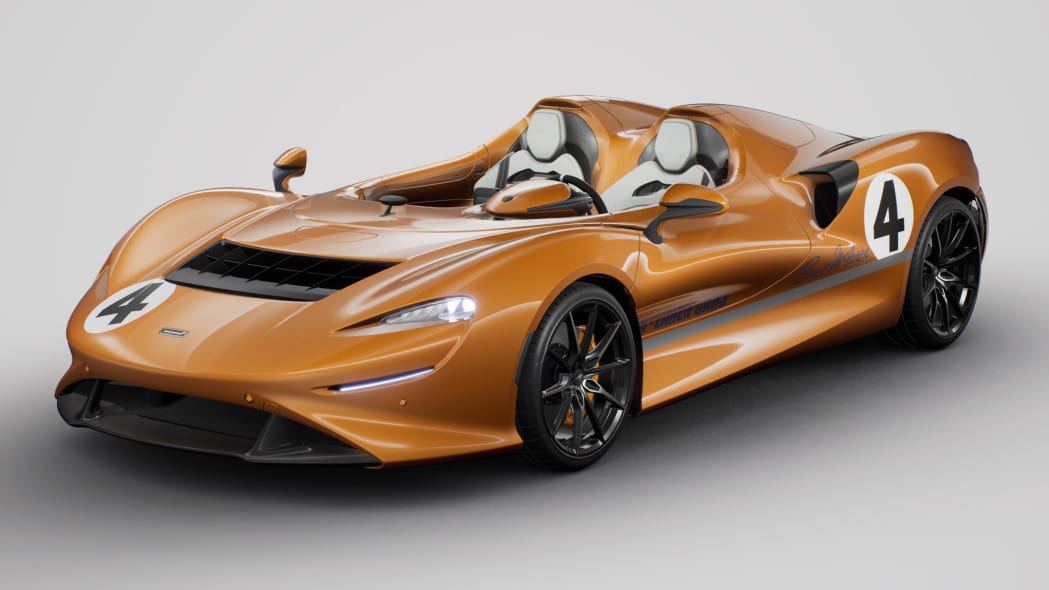

In an interview with the Australian Financial Review, McLaren Automotive CEO Mike Flewitt revealed the production quota for the new Elva speedster will drop from 399 units to 249. The boss explained lopping volume by 38% with, "the feedback from our customers is that they think the car should be more exclusive than that, so we’ve capped it at 249.”
While it's to be expected that owners investing $1.7 million in a specialized road car would promote exclusivity — and thereby residual values — it seems dubious that McLaren would return 150 down payments if the automaker had 399 orders. More likely, the global market for windscreen-less roadsters, no matter how technologically advanced, couldn't absorb all 399 Elvas on top of 500 total Ferrari SP1 and SP2 Monzas, 88 Aston Martin V12 Speedsters, 40 Pagani Huayra BC Roadsters, and 12 Bentley Bacalars.
The production revision puts the Elva in company with the McLaren F1. Ron Dennis would have built more F1 road cars, but the market (just 20 years ago!) wasn't ready for a supercar that cost $810,000 before special requests, so production ended after 106 road and racing chassis' and a complete set of parts for another. The Elva represents technical high points for McLaren, too, being the company's lightest-ever car outside the F1, able to hit 62 miles per hour in under three seconds, and announcing its presence with the dual-exit "Nirvana" titanium exhaust. The handling, designed to be less intense than that of the Senna but more supple than that of the Speedtail, kept engineers up late due to the Elva being lighter than the Senna yet more powerful.
Nevertheless, even without sharing its rear lights with an Italian bus, as the F1 did, the Elva may have had a hard time convincing shoppers it deserved to be the second-most-expensive model in the carmaker's Ultimate Series range, at the same time as being the least practical. The Elva runs about $700,000 more than the Senna and $500,000 less than the Speedtail. A lightly used P1 can be had for as low as $1.2 million.
While it's to be expected that owners investing $1.7 million in a specialized road car would promote exclusivity — and thereby residual values — it seems dubious that McLaren would return 150 down payments if the automaker had 399 orders. More likely, the global market for windscreen-less roadsters, no matter how technologically advanced, couldn't absorb all 399 Elvas on top of 500 total Ferrari SP1 and SP2 Monzas, 88 Aston Martin V12 Speedsters, 40 Pagani Huayra BC Roadsters, and 12 Bentley Bacalars.
The production revision puts the Elva in company with the McLaren F1. Ron Dennis would have built more F1 road cars, but the market (just 20 years ago!) wasn't ready for a supercar that cost $810,000 before special requests, so production ended after 106 road and racing chassis' and a complete set of parts for another. The Elva represents technical high points for McLaren, too, being the company's lightest-ever car outside the F1, able to hit 62 miles per hour in under three seconds, and announcing its presence with the dual-exit "Nirvana" titanium exhaust. The handling, designed to be less intense than that of the Senna but more supple than that of the Speedtail, kept engineers up late due to the Elva being lighter than the Senna yet more powerful.
Nevertheless, even without sharing its rear lights with an Italian bus, as the F1 did, the Elva may have had a hard time convincing shoppers it deserved to be the second-most-expensive model in the carmaker's Ultimate Series range, at the same time as being the least practical. The Elva runs about $700,000 more than the Senna and $500,000 less than the Speedtail. A lightly used P1 can be had for as low as $1.2 million.


Thread
Thread Starter
Forum
Replies
Last Post