


160 Thermostat and 1.3 Radiator Cap


Thread Starter
Pole Position
Joined: Jul 2008
Posts: 298
Likes: 2
From: La
 160 Thermostat and 1.3 Radiator Cap
When we would S/C and turbo Scions we swapped the oem thermstat to a 160, and swapped the cap to a 1.3. I feel this may help with cooling on the IS350, being I live in the hot as hell Louisiana. Any input?



If you really want to screw up your car, put in a colder thermostat. The cap won't make a difference on the stock car, but a colder thermostat is a bandaid for an overworked cooling system with insufficient heat shedding capacity.
No it won't. Its just that much more heat you waste with every single engine cycle. You want the heads to stay as hot as possible without causing detonation. You want your cooling system to only remove as much heat as is necessary to maintain the head at the highest possible temperature. Anything else is a waste of fuel and power. Best power comes when you have the most heat pushing down on the piston, not heating the cooling system.

there were some mugen cooling mods for the 2nd gen acura tl-s that were proven to free up a few hp. i never read/heard anything negative about it.
i dont remember what the difference was from stock to the mugen mods, but it was enough to not cause any issues and free up some hp.
maybe we can find something similar for the IS.
i dont remember what the difference was from stock to the mugen mods, but it was enough to not cause any issues and free up some hp.
maybe we can find something similar for the IS.
Trending Topics

Thread Starter
Pole Position
Joined: Jul 2008
Posts: 298
Likes: 2
From: La
Yeah but the TRD cap is 1.1 and the oem is 0.9. Thats what I'm asking...I know the ***** is over priced lol


Before I would use a HP cap I'd highly rec to upgrade radiators to aluminum radiators (which are not available) also replace the radiator hoses with silicone ones from Samco (which also are not available).
HP caps keep the coolant from boiling within the cylinder heads but I don't think you have that problem with these engines. Other engines you may need to do something about it.
Lower temp thermostats normally reduce the temps when the vehicle is in motion but the fan activation is preset to the temp the ecu is programmed to turn it on. Once you come to a stop the temp will rise again until the fan turns on. Also bare in mind that most ULEV vehicle's ecus keep a close eye on the temp of the engine. Running a lower temp may irritate the ecu to setoff a P0212 thermostat malfunction or cooling system problem code. Lower temp could create an issue with proper flame propagation and create a rise in unburned fuel in the exhaust which is directly related to your $4+/gal. being sent out the tail pipe and killing that cat and your ULEV certification that the manufacturer has spent a lot of money in R&D to achieve.
Some vehicles could benefit from a change over to a HP cap and low temp stat. I don't think there is any benefit in our cars. The TL-S and a few hondas are a prime example. The ecu could very well allow for a higher timing curve @ lower temps but this won't be of much benefit once you stay parked for a while and the temp normalizes since the fan control isn't adjusted to fit the mods.
HP caps keep the coolant from boiling within the cylinder heads but I don't think you have that problem with these engines. Other engines you may need to do something about it.
Lower temp thermostats normally reduce the temps when the vehicle is in motion but the fan activation is preset to the temp the ecu is programmed to turn it on. Once you come to a stop the temp will rise again until the fan turns on. Also bare in mind that most ULEV vehicle's ecus keep a close eye on the temp of the engine. Running a lower temp may irritate the ecu to setoff a P0212 thermostat malfunction or cooling system problem code. Lower temp could create an issue with proper flame propagation and create a rise in unburned fuel in the exhaust which is directly related to your $4+/gal. being sent out the tail pipe and killing that cat and your ULEV certification that the manufacturer has spent a lot of money in R&D to achieve.
Some vehicles could benefit from a change over to a HP cap and low temp stat. I don't think there is any benefit in our cars. The TL-S and a few hondas are a prime example. The ecu could very well allow for a higher timing curve @ lower temps but this won't be of much benefit once you stay parked for a while and the temp normalizes since the fan control isn't adjusted to fit the mods.
there were some mugen cooling mods for the 2nd gen acura tl-s that were proven to free up a few hp. i never read/heard anything negative about it.
i dont remember what the difference was from stock to the mugen mods, but it was enough to not cause any issues and free up some hp.
maybe we can find something similar for the IS.
i dont remember what the difference was from stock to the mugen mods, but it was enough to not cause any issues and free up some hp.
maybe we can find something similar for the IS.
All automotive cooling systems are designed with less than 100% duty cycle in mind. If you exceed 40%, most will fail and the engine will overheat unless you do something to add capacity. If you've ever seen the cooling system for a 1000 hp engine (I have) that runs all day long at full load, you'll get a pretty clear picture of how undersized most automotive cooling systems are if you intend to operate at WOT for any extended period of time. Here's an example - 2172 hp all day long - note the size of the door on the building behind the generator set to get an idea how big the radiator needs to be:
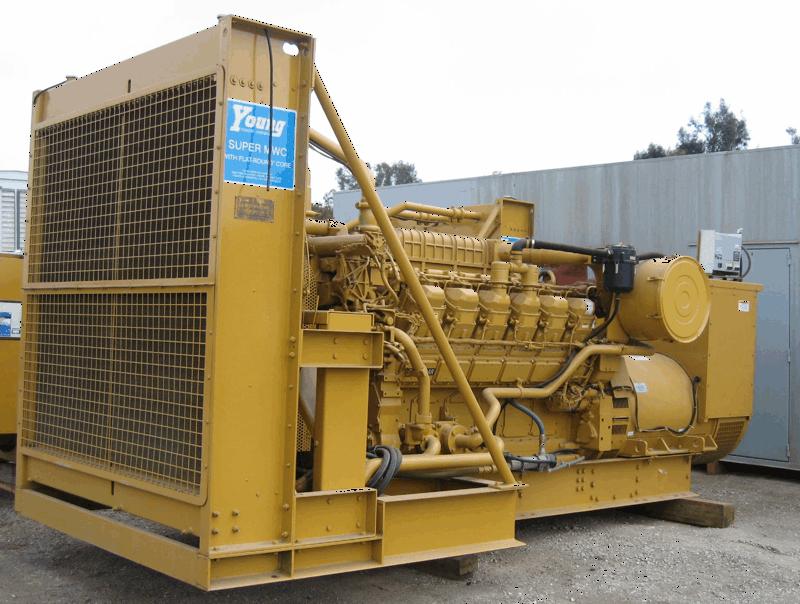
Every manufacturer uses a different target load value to determine cooling system size. Thankfully ALL modern cooling systems are vastly better than those of yore in the old school muscle car days. Still, its not only possible to generate more heat than the system can shed, but it's more possible on some manufacturer's vehicles even when they're completely stock. Honda is notorious for using the Colin Chapman school of design - just big enough and no more is their mantra. So when you change something on a Honda is usually means you'll need to make 5 or 10 supporting mods to other systems so the entire car will withstand the new operating parameters. Their bikes are very similar.
Toyota build the most headroom into their engine systems of all the manufacturers, so adding cooling capacity isn't often the order of the day, even with some pretty serious mods - 2JZ-GTEs can survive with the stock cooling system even at twice the rated output just because Toyota did a great job of ensuring there is plenty of heat shedding capability in the stock setup. Most Toyotas are similar (unfortunately this same philosophy does not seem to hold with their transmissions with the notable exception of the Getrag 233) so adding power to a Scion/Lexus/Toyota isn't nearly as problematic as other brands.
Still, as carchitect said, running cold will likely cause a host of issues with the ECM because coolant temperature is one of the critical inputs to calculating timing and fuel, so if the engine runs cold you're very likely to see DTCs set for a few operating parameters being out of normal range. And at $4+ a gallon, you'll be seeing more of that fuel going out the exhaust and into the cooling system than you will see moving the car forward.
The other thing Gernby said - the American Petroleum Institute recommends 180F as the ideal oil operating temperature. Most thermostats these days are 182F, so the manufacturers are trying their best to get ideal thermal efficiency, and running 20 degrees low is definitely adding to fluid drag which is one efficiency's larger enemies.
TRD sells a lot of stuff that's sketchy. Intakes that add no power and superchargers that break routinely are common from TRD. It would be really wonderful to believe TRD uses the same kind of overkill thinking Toyota does, but unfortunately the truth doesn't support this. So we get stupid expensive radiator caps which add nothing at all to a stock engine's performance, and we get colder thermostats because back in the old school muscle car days they worked with those under-designed cooling systems as a band-aid. They're not necessary on any Toyota I've seen that was within 50% of stock output, and even when power is dramatically increased there are still advantages to running hot.
One guy on a Scion tC board installed a 210F thermostat in his tC and got a better than 10% increase in fuel economy (a big deal to him because he drives ~200 miles daily) just from running hotter. That should speak volumes about why a colder thermostat isn't the greatest of ideas in many cases.
Oh, I do have 80/20 water to coolant and a 1.3 radiator cap for my Supra. It was essential to running on 92 and 91 octane in California. Not so important here in Georgia with 93 being the standard for premium.
Every manufacturer uses a different target load value to determine cooling system size. Thankfully ALL modern cooling systems are vastly better than those of yore in the old school muscle car days. Still, its not only possible to generate more heat than the system can shed, but it's more possible on some manufacturer's vehicles even when they're completely stock. Honda is notorious for using the Colin Chapman school of design - just big enough and no more is their mantra. So when you change something on a Honda is usually means you'll need to make 5 or 10 supporting mods to other systems so the entire car will withstand the new operating parameters. Their bikes are very similar.
Toyota build the most headroom into their engine systems of all the manufacturers, so adding cooling capacity isn't often the order of the day, even with some pretty serious mods - 2JZ-GTEs can survive with the stock cooling system even at twice the rated output just because Toyota did a great job of ensuring there is plenty of heat shedding capability in the stock setup. Most Toyotas are similar (unfortunately this same philosophy does not seem to hold with their transmissions with the notable exception of the Getrag 233) so adding power to a Scion/Lexus/Toyota isn't nearly as problematic as other brands.
Still, as carchitect said, running cold will likely cause a host of issues with the ECM because coolant temperature is one of the critical inputs to calculating timing and fuel, so if the engine runs cold you're very likely to see DTCs set for a few operating parameters being out of normal range. And at $4+ a gallon, you'll be seeing more of that fuel going out the exhaust and into the cooling system than you will see moving the car forward.
The other thing Gernby said - the American Petroleum Institute recommends 180F as the ideal oil operating temperature. Most thermostats these days are 182F, so the manufacturers are trying their best to get ideal thermal efficiency, and running 20 degrees low is definitely adding to fluid drag which is one efficiency's larger enemies.
TRD sells a lot of stuff that's sketchy. Intakes that add no power and superchargers that break routinely are common from TRD. It would be really wonderful to believe TRD uses the same kind of overkill thinking Toyota does, but unfortunately the truth doesn't support this. So we get stupid expensive radiator caps which add nothing at all to a stock engine's performance, and we get colder thermostats because back in the old school muscle car days they worked with those under-designed cooling systems as a band-aid. They're not necessary on any Toyota I've seen that was within 50% of stock output, and even when power is dramatically increased there are still advantages to running hot.
One guy on a Scion tC board installed a 210F thermostat in his tC and got a better than 10% increase in fuel economy (a big deal to him because he drives ~200 miles daily) just from running hotter. That should speak volumes about why a colder thermostat isn't the greatest of ideas in many cases.
Oh, I do have 80/20 water to coolant and a 1.3 radiator cap for my Supra. It was essential to running on 92 and 91 octane in California. Not so important here in Georgia with 93 being the standard for premium.
Last edited by lobuxracer; Jul 29, 2008 at 04:38 PM.
