



 Got any Videos?


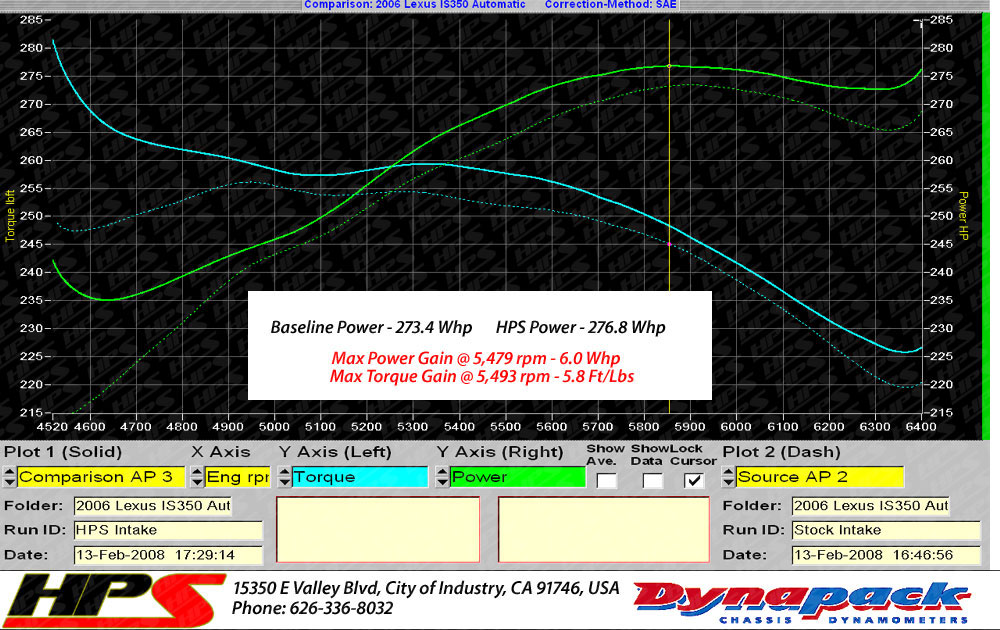
HPS Intake Dyno Results

http://www.youtube.com/watch?v=8sd-FkQwEkI
that's when the intake is on, but not on the dyno
this dyno was tested at the HPS facility using a Dynapack.. dyno numbers may be different, but the gain is there..
that's when the intake is on, but not on the dyno
this dyno was tested at the HPS facility using a Dynapack.. dyno numbers may be different, but the gain is there..
Trending Topics
of course that may be different, but they also considered the map temperature and air temp.. fan blowing is the same as the car driving.. there's still an air vent that has air coming through.. obviously in order to keep the engine from overheating, hood has to be up..
ClubLexus Stories
Celebrating Lexus & Toyota from Around the Globe

Lexus NX 350h: A Fuel-Sipping Secret Hot Hatch???
Michael S. Palmer
5 Best & 5 Worst Lexus Daily Drivers
Joe Kucinski
Top 5 Hottest Lexus & Toyotas in 2026 (Hardest To Buy)
Brett Foote
2026 Lexus IS 350 F Sport Review: The Last of Its Kind Still Rocks
Michael S. Palmer
Top 10 Most Confusing Things Lexus Has Ever Done!
Joe Kucinski
2026 Lexus ES Review: Lexus Re-Embraces Founding Principles
Michael S. Palmer
10 Lexus Bargains That are Cheaper Than a New Toyota RAV4
Joe Kucinski
8 Weirdest Things Lexus Has Ever Built
Verdad Gallardo
10 Lexus Designs That Have Aged Like Fine Wine
Verdad Gallardo
On a nit-pick note, there is no "map temperature". The dyno was only adjusting for ambient temperature for the SAE correction. Real world results will be much worse than this. The common consensus is that all aftermarket (short ram / hot air) intakes actually reduce power for the ISX50.
i understand where you are going.. i understand that the stock box will give a better performance than the short ram intakes and i have nothing against what you say...
i'm only putting up the results of this intake through the dynapack..
i'm only putting up the results of this intake through the dynapack..

Driver
Joined: Oct 2007
Posts: 112
Likes: 0
From: Minnesota
You don't understand. The OEM intake is a cold air ntake that pulls air from in front of the radiator while the car is moving. All aftermarket intakes pull in air from inside the engine compartment, which is MUCH hotter with the hood closed since it has to pass throught the radiator.
On a nit-pick note, there is no "map temperature". The dyno was only adjusting for ambient temperature for the SAE correction. Real world results will be much worse than this. The common consensus is that all aftermarket (short ram / hot air) intakes actually reduce power for the ISX50.
On a nit-pick note, there is no "map temperature". The dyno was only adjusting for ambient temperature for the SAE correction. Real world results will be much worse than this. The common consensus is that all aftermarket (short ram / hot air) intakes actually reduce power for the ISX50.

You're losing maybe 3-5 hp, nothing anyone could possibly "notice" in casual driving. Doesn't make the loss not exist though.
Short rams can show gains on vehicles that otherwise have crappy/restrictive stock intakes... the ISx50 just isn't such a vehicle.
Short rams can show gains on vehicles that otherwise have crappy/restrictive stock intakes... the ISx50 just isn't such a vehicle.



No company would discontinue a product that makes good profit. K&N doesn't produce intakes or filters because they improve performance. They produce them because people buy them.