


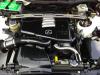


Dyno'd the GS430

THats pretty impressive from a few bolt on mods and not even the SRT instake.. I guess people should rethink the SRT for its performance... I'm amazed at how those spark plugs could generate 13HP.. Nice work.. 


Pole Position
Joined: Sep 2002
Posts: 358
Likes: 3
From: FL
guys, just pointing this out but you all are referencing the SRT and lexizm didn't even dyno his car with an SRT intake. just more speculation with no hard facts. no two cars are alike and just because one car dynoed stock at 235rwhp (which would put the driveline at a whopping 22% loss if you believe the car is making 300 flywheel hp) doesn't mean all stock GS400s will dyno at 235rwhp. if you want to find out what an SRT intake does, dyno the same car without it and then with it. everything else is just conjecture.
guys, just pointing this out but you all are referencing the SRT and lexizm didn't even dyno his car with an SRT intake. just more speculation with no hard facts. no two cars are alike and just because one car dynoed stock at 235rwhp (which would put the driveline at a whopping 22% loss if you believe the car is making 300 flywheel hp) doesn't mean all stock GS400s will dyno at 235rwhp. if you want to find out what an SRT intake does, dyno the same car without it and then with it. everything else is just conjecture.
And then add in the fact that the SRT intake is designed for the intake with STOCK exhaust so any of us with the SRT intake AND aftermarket exhaust are very likely not utilizing the setup to it's full potential. I have the intake and my car performs exactly the way a car with an high flow intake is supposed to do. Better at the top end where I want it.
I plan on removing the SRT ECU and adding in a SAFC with an X pipe catback exhaust and getting on the dyno in the future. But in the meantime, ANY stock GS4 that wants to line up side by side to do some comparison runs, feel free.
Drum roll please....well my best run was 248 rwhp and 253 torque. I was researching the threads to find the stock rwhp and I found that it was right at 235 for the 400/430. I was really surprised to find out the a few guys with GS430 had the SRT intake with the racing ECU were getting 243 rwhp.
I'm going to install the headers in the next week or so. Hopefully by that time I'll also have one of the first Akimoto Intakes for the GS430 with the high velosity cone filter. I'm planning on dynoing the car after the header and intake installs. I'm pretty happy.
I'm going to install the headers in the next week or so. Hopefully by that time I'll also have one of the first Akimoto Intakes for the GS430 with the high velosity cone filter. I'm planning on dynoing the car after the header and intake installs. I'm pretty happy.
did you get the A/F reading also?
Just wanted to show the dyno sheet of Eric's car & that of an SRT intake equipped car. 300hp at the crank car should put down no less than 220hp at the wheels period. 220hp + 30hp = 250hp to the wheels. 248hp should be the goal for those thinking about an aftermarket intake. Eric... Is it possible for you to do a dyno run with just the Akimito intake installed to see how much of a gain you get with it?
Erics Dyno results

SRT Dyno results

http://www.swiftracing.com/vehicles/...take_gs400.htm
Erics Dyno results
SRT Dyno results
http://www.swiftracing.com/vehicles/...take_gs400.htm
Just wanted to show the dyno sheet of Eric's car & that of an SRT intake equipped car. 300hp at the crank car should put down no less than 220hp at the wheels period. 220hp + 30hp = 250hp to the wheels. 248hp should be the goal for those thinking about an aftermarket intake. Eric... Is it possible for you to do a dyno run with just the Akimito intake installed to see how much of a gain you get with it?
Erics Dyno results
SRT Dyno results
http://www.swiftracing.com/vehicles/...take_gs400.htm
Erics Dyno results
SRT Dyno results
http://www.swiftracing.com/vehicles/...take_gs400.htm
Pole Position
Joined: Sep 2002
Posts: 358
Likes: 3
From: FL
sorry but there is a whole lot of info missing there. we know that eric's dyno was done on a dynojet, the SRT graph does not show what type of dyno it was done on. i've dynoed a whole lot of cars on a lot of different dynos, experience says that load dynos like mustang dynos, for instance, will almost always show lower readings than their dynojet counterparts. the type of correction used bye the operator will also cause a huge difference in numbers given the type of weather we are currently having in GA. the gear in which the dyno run is done will also cause a difference in reading. lots of variables that are not accounted for, which is again why i said the only way to prove anything is to dyno a stock car and then dyno it with the intake on the same type of dyno.
Got the headers installed and as many have said that have them, you can really notice a difference throughout the whole range. I haven't gotten the car dynoed yet; I will have that done sometime this week. I love this mod.
ClubLexus Stories
Celebrating Lexus & Toyota from Around the Globe
8 Tips for Improving Your Hybrid or Plug-in Hybrid's Efficiency!
Michael S. Palmer
10 Best Lexus Models No One Remembers
Joe Kucinski
TRD Off-Road Premium: Best 2026 4Runner, Except This One Thing
Michael S. Palmer
Top 10 Lexus & Toyotas to Drive Before You Die!
Joe Kucinski
Top 10 Lexus/Toyotas With The LEAST 5-Year Depreciation
Joe Kucinski
Lexus LC500 Convertible Auction: A Preview of Rising Values?
Brett Foote
GX 550 vs TX 550: Best 3-Row Luxury Lexus Family Hauler
Michael S. Palmer
9 Best Lexus Models You Can Buy for Half Price (And 1 You Shouldn't!)
Joe Kucinski
2026 Lexus NX Buyer's Guide: Models, Features, Prices & More!
Brett Foote
i'd love to see the numbers. I know what you mean with barely on the throttle and the headers put you back..take pics man..I also noticed the x pipe is kinda small on our cars. I'm wondering if taking them up to 2.25" would improve #"s

Lexus Champion


Joined: Feb 2001
Posts: 3,124
Likes: 32
From: Texas
It is worth noting that dyno number are not by any means the only way to properly evaluate a mod. We need to remember that dyno numbers are wide open throttle only and usually only from 3000rpm or so and up. The way an engine FEELs and behaves during transition from part throttle to either more throttle or full throttle is how reponsive it is. The design of these headers was specifically to create a part that not only increased peak power but also overall response.
Great report.
Lexus Champion
Joined: Feb 2001
Posts: 3,124
Likes: 32
From: Texas
I assume you mean the main piping which is 50mm = 1.97". On a stock engine it is debatable if larger piping will be a good overall tradeoff and depends heavily on the specific system design and installation. On your engine which is pushing 500hp at the crank I would say yes 2.25" pipes would be recommended. That said the stock center pipe is 60mm = 2.36" so to maintain the ratios you would want a 2.75" center pipe (forms the X on the stock design). Feeding a single 2.5" with twin 2.25" does not seem to work very well. We tried that on a stock GS400 with S&S headers and while the power did not change the FEEL was mushy and sluggish. Again, getting an ideal system is much more that simply throwing parts together.

I assume you mean the main piping which is 50mm = 1.97". On a stock engine it is debatable if larger piping will be a good overall tradeoff and depends heavily on the specific system design and installation. On your engine which is pushing 500hp at the crank I would say yes 2.25" pipes would be recommended. That said the stock center pipe is 60mm = 2.36" so to maintain the ratios you would want a 2.75" center pipe (forms the X on the stock design). Feeding a single 2.5" with twin 2.25" does not seem to work very well. We tried that on a stock GS400 with S&S headers and while the power did not change the FEEL was mushy and sluggish. Again, getting an ideal system is much more that simply throwing parts together.

by installing the X pipe you will be removing the Y pipe correct? Therefore you will no longer have a center pipe.