When you click on links to various merchants on this site and make a purchase, this can result in this site earning a commission. Affiliate programs and affiliations include, but are not limited to, the eBay Partner Network.
Do strut tower cross braces really increase rigidity?
While strut tower braces triangulated with the firewall offer real improvements in torsional rigidity, it is unclear how spindly mounting plates jointed to a thin cross bar spanning the engine compartment strut towers offers noticable improvement.
This is a typical strut tower brace design. It doesnt appear to possess necessary structural rigidity or material heft to accomplish it's objective. The bar is jointed to strut mount via a spider legged mounting plate. This is the elusive part needed for use templating a functioning strut tower cross brace assembly for forum post.
We've not had a way to prove if the brace enhanced rigidity. This add-on will not amount to much without suspension mods and bracing. Access to certain work is more of a PITA by having to remove that cross brace. PD's comment back then was the unibody was sufficiently rigid for the normal driving. The car does have some flex as certain uneven transitions I can hear some interior panels making noise.
It's hard for me to tell chassis flex vs. suspension travel\softness, but I can tell that un-even suspension compression at speed the car does some weird things. But, given what the car's intended purpose is, I'm totally fine with it.
For comfort oriented street car this old that was fundamentally designed in the 1980's, it doesn't have some incredibly stiff chassis and amazing bracing holding it all together. It's not a Porsche GT3.
Whether or not a strut tower brace will do anything, idk. I'm with RA40 here, you would have to do a lot of work to get any meaningful improvement to the platform.
It's hard for me to tell chassis flex vs. suspension travel\softness, but I can tell that un-even suspension compression at speed the car does some weird things. But, given what the car's intended purpose is, I'm totally fine with it.
For comfort oriented street car this old that was fundamentally designed in the 1980's, it doesn't have some incredibly stiff chassis and amazing bracing holding it all together. It's not a Porsche GT3.
Whether or not a strut tower brace will do anything, idk. I'm with RA40 here, you would have to do a lot of work to get any meaningful improvement to the platform.
the LS is definitely a rigid car but also a very squishy car, it maintains its composure over bumps very well and doesn't give you any real vibrations apart from the initial impact itself
but yea i also don't think a strut brace will have any meaningful improvement or even be noticeable... the car itself is already highly optimized and essentially designed to be the complete opposite of a race car in the first place lol
We've not had a way to prove if the brace enhanced rigidity. This add-on will not amount to much without suspension mods and bracing. Access to certain work is more of a PITA by having to remove that cross brace. PD's comment back then was the unibody was sufficiently rigid for the normal driving. The car does have some flex as certain uneven transitions I can hear some interior panels making noise.
I have a solution for a working cross brace that will decrease maintenance interference...
So when I locate an air suspension sock tower cover can start fabricating.
Located a strut tower brace diagram for the LC500 depicting the general scheme employed by auto manufacturers..
The OEM employs hollow bars triangulated between the strut towers and the firewall and radiator core support. It is bad practice to fasten with only one bolt at the strut tower, to firewall and , at strut tower to core support.
i think having a bar there will be better than not having a bar at all. the benefit is likely negligible, if any at all.
it's hard to compare the LS which is a luxury sedan versus the LC which is a luxury sport coupe - different end goals! the LS has extra doors, and a solid rear deck (with no trunk access/pass thru) which contributes to its stiffness!
While strut tower braces triangulated with the firewall offer real improvements in torsional rigidity, it is unclear how spindly mounting plates jointed to a thin cross bar spanning the engine compartment strut towers offers noticable improvement.
There is a lot of marketing out there, where vendors try to find the "great idea" that is easy and cheap to make and comes with compelling ad copy. Win!
So, a billion dollar engineering exercise like the LS 400, do you think it needs a cross brace across the spring towers? Do ya?
Colin
(last time I saw a real *need* for that brace was a 1965 Mustang where the factory shoved a V-8 in a poorly-engineered Ford Falcon-appropriated cowl structure)
I have a solution for a working cross brace that will decrease maintenance interference...
I am thinking that the illustrated bracing you posted is not about firming up the chassis/flex. I am thinking that it has more to do with keeping up with proper crash performance by tuning the collapse progression. I dunno ...
Colin
(last time I saw a real *need* for that brace was a 1965 Mustang where the factory shoved a V-8 in a poorly-engineered Ford Falcon-appropriated cowl structure)
It made a *HELL* of a difference in my old Honda accord. But that's a totally different FWD platform. Stiffer rear swaybar was the other big improvement to the chassis that surprised me how much it did. I think I went from a 14mm to a 21mm? I don't remember. Both really helped keep the body composed when you load up the suspension and initial turn-in. As for the 65... I'm sure every car made back then could use any help it could get in the chassis stiffness department 🤣
But again, these are modifications that targeted a totally different pursuit. They aim for performance, turn in, handling. I wonder if typing the shock towers together probably has other un-intended side effects that compromise the ride quality Lexus was originally going for. There must be a reason why you only ever see it on performance cars.
It made a *HELL* of a difference in my old Honda accord. But that's a totally different FWD platform. Stiffer rear swaybar was the other big improvement to the chassis that surprised me how much it did. I think I went from a 14mm to a 21mm? I don't remember. Both really helped keep the body composed when you load up the suspension and initial turn-in. As for the 65... I'm sure every car made back then could use any help it could get in the chassis stiffness department 🤣
But again, these are modifications that targeted a totally different pursuit. They aim for performance, turn in, handling. I wonder if typing the shock towers together probably has other un-intended side effects that compromise the ride quality Lexus was originally going for. There must be a reason why you only ever see it on performance cars.
Am going to use Yamaha Performance Dampers in place of a solid bar to reduce NVH, secondarily strut tower brace:
Several images of Yamaha Damper used by Toyota in similat application.
Have also attached several PDF's describing technology, albeit Japanese language. Time to learn.
Yamaha Performance dampers in strut tower bar mode.
Yamaha damper in place of strut tower bar.
Yamaha Damper used in tear of vehicle
https://global.yamaha-motor.com/business/pd/The Performance Dampers is a completely new technology developed by Yamaha Motor to improve chassis performance. When the chassis is in motion, it limits dynamic distortion to just a few microns. A metal vehicle body has elastic characteristics and lacks damping force, meaning that external distortion energy is accumulated and released almost unchanged, repeating the cycle of distortion at a natural frequency.
The Performance Dampers adds a damping element to the chassis that absorbs distortion energy and releases it as heat. This curbs the chassis’s excessive distortion speed, not only boosting driving comfort at normal speeds, but also achieving both high mobility and excellent stability at high speeds, which are accompanied by relatively major chassis distortion.
Principle of the Performance Dampers
A chassis is an assembly of multiple spring elements. While in motion, it undergoes continuous distortion and vibration. The Performance Dampers connects two points on the chassis using a special high- performance shock absorber (damping element), curbing micro- distortion and vibrations by intentional increasing the chassis’s viscosity. Without Performance DampersWith Performance Dampers
Basic Structure of the Performance Dampers
The Performance Dampers design is based on a high-pressure nitrogen-charged oil damper architecture.
Key Technologies
1. Improved damping performance at ultra low piston speed.
2. Cancellation of gas reaction force.
3. Optimization of damping properties.
Cylinder bore φ28mm
Mass :
about 500g without bracket and extension rod
Benefits of the Performance Dampers
Adds additional body damping to achieve optimum body viscosity.
Appropriate body viscosity is an essential factor in the comfort and stability that characterize high-quality and premium vehicle bodies.
The Performance Dampers is a product that delivers optimum body viscosity in a controllable manner.
Sorry but that is a ridiculous pursuit.Now you want this luxury liner to be a Nascar road racer? Waste of time and money.SMH,fix your gas tank,you know,something that matters to people? Something that will actually contribute to keeping our cars on the road? This is just ridiculous.
Sorry but that is a ridiculous pursuit.Now you want this luxury liner to be a Nascar road racer? Waste of time and money.SMH,fix your gas tank,you know,something that matters to people? Something that will actually contribute to keeping our cars on the road? This is just ridiculous.
My program here relies on technology Toyota is using on it's production vehicles (predominantly Japan) and on newer Lexus.
Yoda....but WHY?? You are a great innovator and mechanic,do something that will help us all. Fix a steering rack,add great pictures and the benefit would be REAL and useful to the community.Come up with a tank seal repair,you could think that out.Your alternator upgrade? Simple,cost effective at 5 bucks,genius! The ISSUE is keeping the darn things running to LS400 standards,not re inventing the wheel for nothing that matters in miniscule 'gains.'
Come up with some answers to repair the the suspension bushings that can be pressed in.Everybody needs help on that.



 Do strut tower cross braces really increase rigidity?








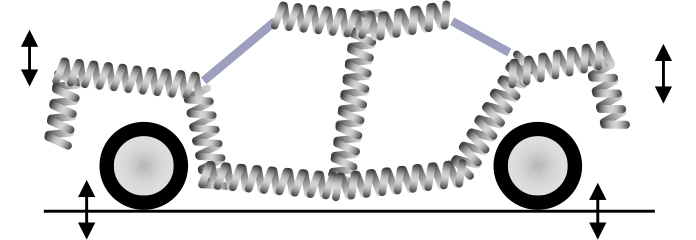 The Performance Dampers connects two points on the chassis using a special high- performance shock absorber (damping element), curbing micro- distortion and vibrations by intentional increasing the chassis’s viscosity.
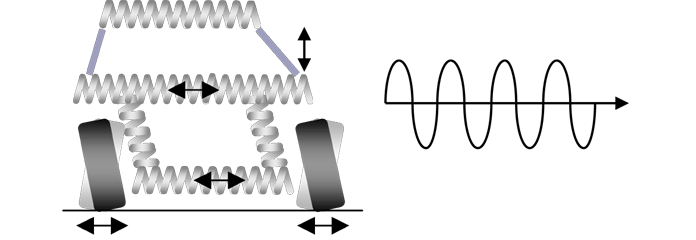 Without Performance Dampers
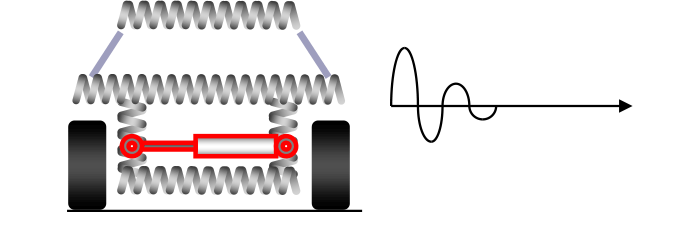 With Performance Dampers
 Cylinder bore φ28mm


