


US approves new headlights that won’t blind oncoming drivers


Lexus Test Driver


Joined: Mar 2020
Posts: 5,482
Likes: 89
From: N/A


DoT has outdated regs (understandably made long before LED tech when light output was terrible) that your brakelights have to be a certain square mm in total
S5.1.1.27 (a) Except as provided in paragraph (b) of this section, each passenger car manufactured on or after September 1, 1985, and each multipurpose passenger vehicle, truck, and bus, whose overall width is less than 80 inches, whose GVWR is 10,000 pounds or less, manufactured on or after September 1, 1993, shall be equipped with a high-mounted stop lamp which:
(1) Shall have an effective projected luminous lens area not less than 2903 square mm. (41/2 square inches).
(2) Shall meet the visibility requirements specified in S5.3.2(c).
(3) Shall have the minimum photometric values in the amount and location listed in Figure 10.
(4) Need not meet the requirements of paragraphs 3.1.6 Moisture Test, 3.1.7 Dust Test, and 3.1.8 Corrosion Test of SAE Recommended Practice J186a, Supplemental High-Mounted Stop and Rear Turn Signal Lamps, September 1977, if it is mounted inside the vehicle.
(5) Shall provide access for convenient replacement of the bulb without the use of special tools.(b) Each multipurpose passenger vehicle, truck and bus whose overall width is less than 80 inches, whose GVWR is 10,000 pounds or less, whose vertical centerline, when the vehicle is viewed from the rear, is not located on a fixed body panel but separates one or two movable body sections, such as doors, which lacks sufficient space to install a single high-mounted stop lamp on the centerline above such body sections, and which is manufactured on or after September 1, 1993, shall have two high-mounted stop lamps which:
(1) Are identical in size and shape and have an effective projected luminous lens area not less than 1452 square mm. (21/4 square inches) each.
(2) Shall meet the visibility requirements specified in S5.3.2(d).
(3) Together have the minimum photometric values specified in paragraph (a)(3) of this S5.1.1.27.
(4) Shall provide access for convenient replacement of the bulbs without special tools.
(1) Shall have an effective projected luminous lens area not less than 2903 square mm. (41/2 square inches).
(2) Shall meet the visibility requirements specified in S5.3.2(c).
(3) Shall have the minimum photometric values in the amount and location listed in Figure 10.
(4) Need not meet the requirements of paragraphs 3.1.6 Moisture Test, 3.1.7 Dust Test, and 3.1.8 Corrosion Test of SAE Recommended Practice J186a, Supplemental High-Mounted Stop and Rear Turn Signal Lamps, September 1977, if it is mounted inside the vehicle.
(5) Shall provide access for convenient replacement of the bulb without the use of special tools.(b) Each multipurpose passenger vehicle, truck and bus whose overall width is less than 80 inches, whose GVWR is 10,000 pounds or less, whose vertical centerline, when the vehicle is viewed from the rear, is not located on a fixed body panel but separates one or two movable body sections, such as doors, which lacks sufficient space to install a single high-mounted stop lamp on the centerline above such body sections, and which is manufactured on or after September 1, 1993, shall have two high-mounted stop lamps which:
(1) Are identical in size and shape and have an effective projected luminous lens area not less than 1452 square mm. (21/4 square inches) each.
(2) Shall meet the visibility requirements specified in S5.3.2(d).
(3) Together have the minimum photometric values specified in paragraph (a)(3) of this S5.1.1.27.
(4) Shall provide access for convenient replacement of the bulbs without special tools.

Lexus Fanatic


Joined: Oct 2003
Posts: 94,410
Likes: 249
From: Virginia/D.C. suburbs
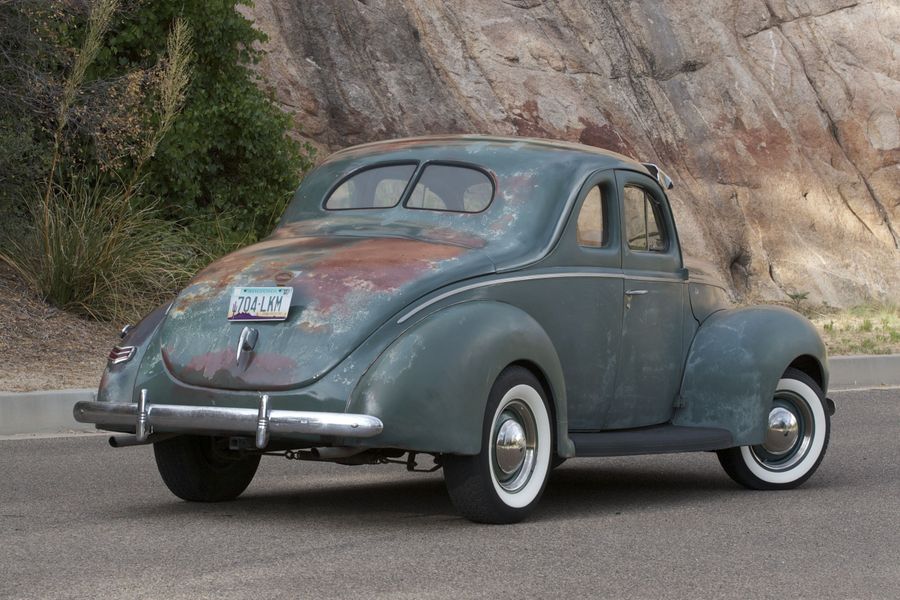
Although it's true that some of those regs may be outdated today, they came about for good reason. There were a lot of crashes at night (and on foggy days), because a lot of vehicles, even as late as the 1940s, were like this in the rear, with only one small difficult-to-see light.


Apparently BMW have had the ability to enable this feature ever since the hardware became available, but it gets reset every time BMW issues a software update. Hopefully they wont reset it anymore now that it legal, although I have a feeling they will, so they can charge extra $ for this feature.
Lexus Fanatic
Joined: Oct 2003
Posts: 94,410
Likes: 249
From: Virginia/D.C. suburbs
Can't totally answer that question for you. But one possible reason is that we are an extremely litigious society, and problems with new technology (such as new and/or unproven headlight system blinding other drivers, failing in very dark conditions, or other problems causing accidents) are, more often than not, settled by lawyers and juries in the courtroom. In Europe, the burden of proof for those filing suit in civil cases is generally higher than it is here....and new technologies can be more easily mandated by their governments.

Lexus Fanatic


Joined: Jan 2005
Posts: 20,237
Likes: 274
i think this is fun part:
The agency acted in response to a petition filed by Toyota Motor Corp (7203.T) in 2013 to allow the lights. Theyautomatically adjust the beams using additional sensors so they can provide more illumination without a glare to oncoming motorists.

Lexus Champion
Joined: Apr 2007
Posts: 11,041
Likes: 98
From: Southeastern PA
Lexus Champion
Joined: Apr 2007
Posts: 11,041
Likes: 98
From: Southeastern PA
Can't totally answer that question for you. But one possible reason is that we are an extremely litigious society, and problems with new technology (such as new and/or unproven headlight system blinding other drivers, failing in very dark conditions, or other problems causing accidents) are, more often than not, settled by lawyers and juries in the courtroom. In Europe, the burden of proof for those filing suit in civil cases is generally higher than it is here....and new technologies can be more easily mandated by their governments.


I had my wife's car programmed to enable the technology, and at first I was disappointed because it doesn't do anything on roads with lights and dense traffic. But tonight we were out on the rural part of Long Island, and finally got to experience the system working, and it is absolutely amazing. It bends the light around oncoming cars, and cars up aheads, and lights up the sides of the road very wide, and far into the distance. For any of you with cars that have the hardware, find a way to enable the tech, you will appreciate it!

Lexus Test Driver
Joined: Jan 2003
Posts: 5,001
Likes: 525
From: Maryland
I had my wife's car programmed to enable the technology, and at first I was disappointed because it doesn't do anything on roads with lights and dense traffic. But tonight we were out on the rural part of Long Island, and finally got to experience the system working, and it is absolutely amazing. It bends the light around oncoming cars, and cars up aheads, and lights up the sides of the road very wide, and far into the distance. For any of you with cars that have the hardware, find a way to enable the tech, you will appreciate it!
I had someone remotely program it for me for $100, BMW OTA updates are not frequent, and they won't necessarily reset this function.

Lexus Champion

Joined: Aug 2006
Posts: 12,540
Likes: 273
From: Illinois
Our 5 Series has the adaptive headlights and on the window sticker there is a line showing the feature is coded out (for U.S. cars). The headlights are great as is, but I'll probably get them coded to activate the feature.