


MM Retro-Write-Up: Toyota FJ Cruiser.


Thread Starter
Lexus Fanatic


Joined: Oct 2003
Posts: 94,503
Likes: 261
From: Virginia/D.C. suburbs
 MM Retro-Write-Up: Toyota FJ Cruiser.

(Original 1960s Land Cruiser)
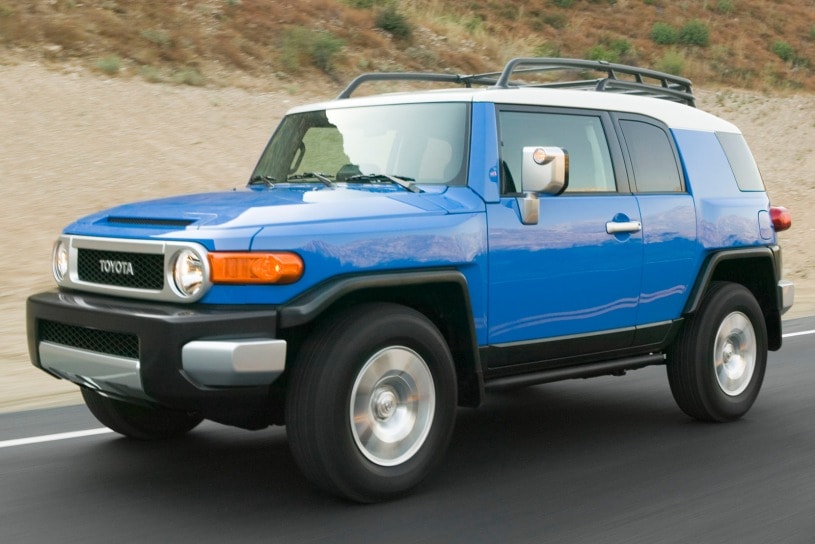
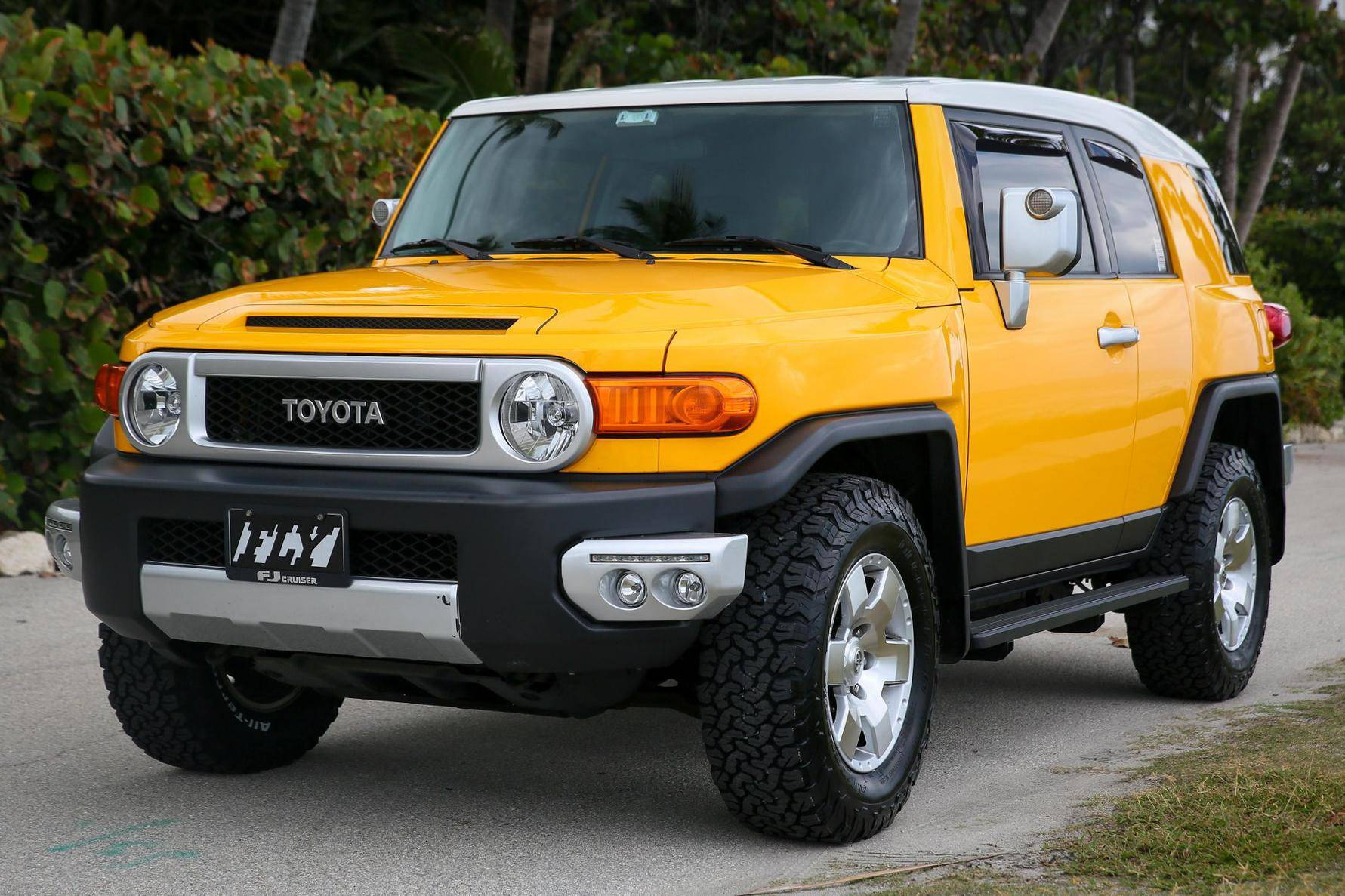


Unlike what we have seen quite a bit of in the 21st Century from companies such as VW, Chevy, Ford, and Chrysler, Toyota, with its design-philosophy, has never been a big one for retro-designs. So, when the (concept) FJ Cruiser was unveiled at the 2003 Detroit North American International Auto Show, and met with very enthusiastic response from the public and auto-press, Toyota planners made the decision to put it in production. It debuted, in production form, at the same Detroit show in 2005, and went into production in 2006 for the 2007 model year. It was also sold in the Japanese and other markets over a different time period, but I will concentrate on the American-spec version here. It carried on in the U.S. market through 2014, and in Japan through early 2018, so it is now considered retro both in design and in the time-period.
The basic idea for this retro-design goes back to the original Toyota Land Cruiser of the 1960s. We Americans had first developed the Jeep (GP, or General-purpose) in 1941, which became a military workhorse during World War II, the British we’re impressed enough with it to do their own restyled/enclosed-body version after the war in the Land Rover, and, some years later, when the Japanese auto industry was given free reign again following a period of Allied-oversight after the war, Toyota developed their own enclosed-body Jeep-type vehicle (not of direct Jeep origin, though), called the Land Cruiser.
Only, back then, in the 1960s, the term “Made in Japan” was not the quality-epitaph that it would become by the late 1970s and early 80s. Toyota, Toyopet, Datsun (Nissan), Subaru, Mitsubishi, and other Japanese products were often, by American standards, little more than primitive motorized toys. Indeed, when Consumer Reports evaluated and tested a Land Cruiser from the 1960s (I don’t remember exactly which model-year), it was so poorly-engineered that the lines from the fuel tank to the fuel-pump and carburetor actually ran INSIDE the passenger cabin, where they could become a fireball under some accident-conditions. Needless to say, CR rated the vehicle Not Acceptable.
I don’t have to go into the story, however, of how the Japanese auto industry went from a joke to arguably the highest-quality in the world in the space of only about 15 years or so…..that is quite well-known, and I won’t spend any time on it here. The Land Cruiser itself, over the years, went from a potentially hazardous joke to one of the world’s most-durable and respected SUVs/off-roaders. Its classic 1960s styling, however, became the inspiration for what was to become the 2007 FJ Cruiser.
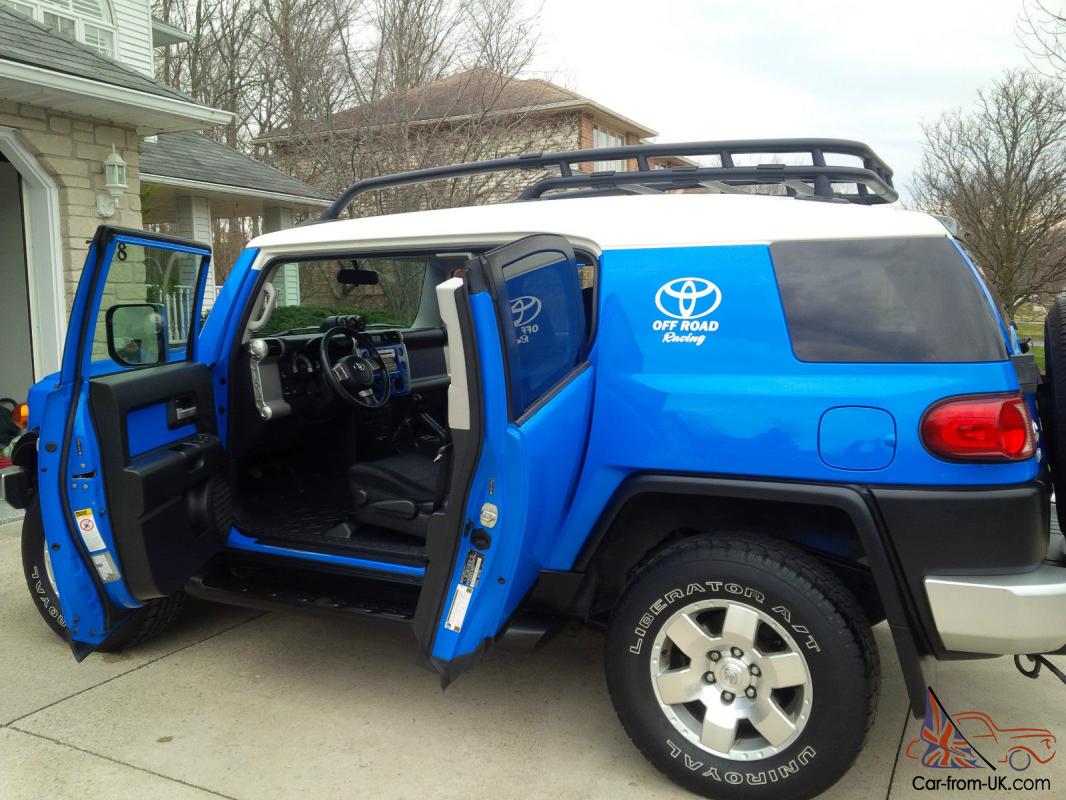
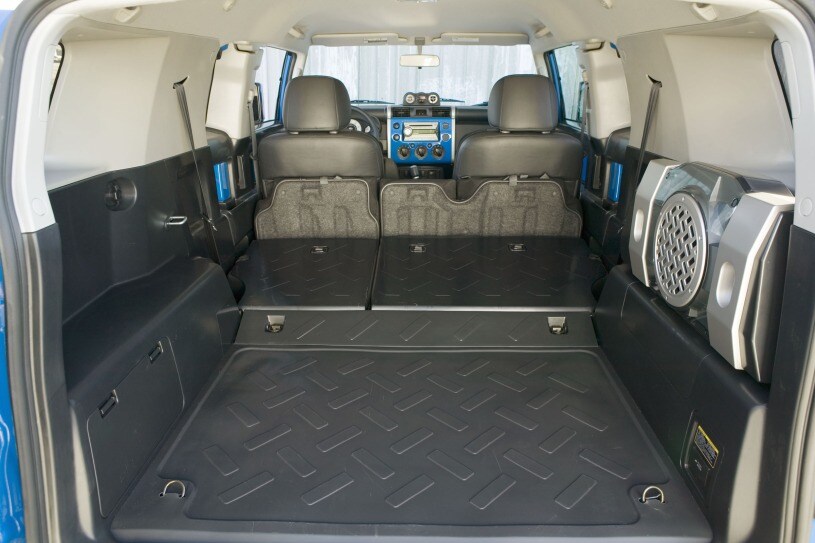
However, the Land Cruiser had physically grown so much over the years, and had become so expensive (along with its Lexus-badged twin, the LX), that Toyota’s designers, for the FJ Cruiser, decided to use the smaller platform shared by the Toyota 4Runner, Toyota Tacoma, Toyota Land Cruiser Prado (smaller than the full-size Land-Cruiser), and Lexus GX. The body-on-frame, truck-based RWD/4WD mechanicals of that platform/chassis were overlaid with a radically different body and interior, offered in a variety of bright and interesting paint-colors, that, especially in front-end styling, was strongly-suggestive of the original 1960s Land Cruiser. Some ideas were also taken from Honda’s popular (at that time) Element….doors on the side that opened outward, without central pillar, to allow easy entry/exit and loading large, bulky items, and a simple, hose-it-out interior, without fancy or ornate trim, that used rubberized materials, for the times it was expected to get dirty from off-road use. Large, simple controls were designed to be used with gloved hands. Unfortunately, the extremely wide C-pillars also hampered a bit of the rear-quarter visibility….at a time before some of today’s cameras and electronic blind-spot monitors had been developed. Underhood, the 4.0L 1GR-FE DOHC V6 was used, which produced 239 HP and 278 ft-lbs. of torque., although those figures supposedly required 91 Octane fuel. Full-time 4WD versions got a 6-speed manual transmission. RWD (where available) and Part-Time 4WD versions got a 5-speed automatic.
Not surprisingly, the FJ shared the well-known mechanical durability and longevity of its sister 4Runner and Lexus GX. 200-300K, or even more relatively trouble-free miles were possible with reasonable care and service. Like with the 4Runner, Toyota dealerships had so much confidence in these vehicles that, although some of them had far too many miles on them to ever qualify as Certified-Previously-Owned (CPO) vehicles, they would still sell them used, with at least a dealer-warranty, with as many as 175-180K miles on them.
Being a medium-sized truck-based SUV, though, one generally did not buy or lease an FJ for ride-comfort. The firm off-road suspension did produce some discomfort and harshness on all but glass-smooth roads, although the relatively long wheelbase (for its length) helped somewhat, and the ride was nowhere near as bad as the smaller truck-based SUVs like the Chevy/Geo Tracker (which almost drove me nuts on the road when I sampled one) or Suzuki Sidekick/Vitara. The FJ was clearly a truck in its driving-manners……but that is probably what most of its owners were looking for, and was almost unstoppable off-road as long as the break-over-angle for the wheelbase and underbody-components allowed it. Some relatively light/cheap plastics and textures were used for outside hardware like the side-mirror-housings, but this was a relatively minor issue compared to the durability of most of the rest of the vehicle…and, for reasons explained earlier, it was not intended to have Lexus-levels of fit/finish. And some Special-Edition versions, with unique color and trim patterns, were also offered over the years.
Initially, sales were pretty good….56,000+ in the first year in the U.S. market, 55,000+ the second, but then dropped in half, to 28,000 the third year, and between 11,000 and 15,000 for the rest of its production life in the U.S. It was a classic case of the initial novelty of a retro-design, and then a loss of public-interest. The FJ, though popular at first, clearly did not have the lasting attraction of a retro-design like, say, a Mustang/Charger/Challenger, which just keeps on going, or, for that matter, even the VW New Beetle. As a result, don’t bet the rent money on Toyota doing many, if any, more classic retro-designs, at least in the near future.
And, as Always, Happy Vehicle-Memories.

MM
Last edited by mmarshall; Aug 4, 2021 at 08:01 PM.

Thread Starter
Lexus Fanatic
Joined: Oct 2003
Posts: 94,503
Likes: 261
From: Virginia/D.C. suburbs
Originally Posted by Motorola
The mid-2000s FJ Cruiser was ahead of its time. If Toyota made it today, it would sell gangbusters.
What a V8 would have meant for the FJ, of course, can only be surmised, but, personally, I don't think it would have made a lot of difference. Most people bought the FJ for its retro-looks and versatility, not for a lot of power under the hood, although, of course, power can come in handy for towing.


Thread Starter
Lexus Fanatic
Joined: Oct 2003
Posts: 94,503
Likes: 261
From: Virginia/D.C. suburbs

Lead Lap

Joined: Jul 2010
Posts: 3,931
Likes: 306
From: NY
Perhaps. Today, however, most people seem to want crossovers. A RAV-4 or Highlander-chassis, though, with an FJ-retro body might be a thought. Ford is doing more or less the same thing with the smaller crossover Bronco Sport, but is also producing a larger, truck-based Bronco along with it....and that larger BOF Bronco definitely has a market, judging by the waiting-list.
Starting with the 4Gen 2003 model, Toyota did offer a 4.7L V8 in the sister 4Runner. Sales-figures for the 4Runner are not broken down between V8 and V6 models (at least from what I could see)...but the total sales figures after 2003 did not seem affected by the V8 that much. In fact, total sales figures for recent years, in the American market, seem to have risen after the V8 was dropped. Jill just recently bought one of them.
What a V8 would have meant for the FJ, of course, can only be surmised, but, personally, I don't think it would have made a lot of difference. Most people bought the FJ for its retro-looks and versatility, not for a lot of power under the hood, although, of course, power can come in handy for towing.
Starting with the 4Gen 2003 model, Toyota did offer a 4.7L V8 in the sister 4Runner. Sales-figures for the 4Runner are not broken down between V8 and V6 models (at least from what I could see)...but the total sales figures after 2003 did not seem affected by the V8 that much. In fact, total sales figures for recent years, in the American market, seem to have risen after the V8 was dropped. Jill just recently bought one of them.
What a V8 would have meant for the FJ, of course, can only be surmised, but, personally, I don't think it would have made a lot of difference. Most people bought the FJ for its retro-looks and versatility, not for a lot of power under the hood, although, of course, power can come in handy for towing.
Trending Topics
Thread Starter
Lexus Fanatic
Joined: Oct 2003
Posts: 94,503
Likes: 261
From: Virginia/D.C. suburbs
The 4Runner was on the verge of being cancelled then the SUV craze happened. If a V8 was offered for the current gen, no one would really complain or clamor for a new one actually. It doesnt even have to be the 5.7L, even the 4.6L would suffice. Similarly, for the GX. If they offer the 5.7L and just updates with features, no one would complain for at least another 5yrs.
The 5.7L I-Force V8 was designed for use in the larger Tundra/Sequoia/Land-Cruiser and LX570. There might not be enough space under the hood for it in the 4Runner/FJ class.

Lead Lap


Joined: Apr 2002
Posts: 4,892
Likes: 14
From: Virginia
Bought the first year FJ in the signature VooDoo Blue. Loved that thing despite the visibility of wearing a football helmet. Was also before they made a backup camera available. Quirky 3 front wipers always made me smile, although the bolt upright windshield was prone to chips and cracks.
When I was at Toyota, I pushed hard for a 4 door FJ/merge with 4Runner but it wasn't in the cards. It coulda been a contender.
Crazy how low mileage ones can push over $40,000 today, while even 150K mileage ones are commanding nearly $20K+
When I was at Toyota, I pushed hard for a 4 door FJ/merge with 4Runner but it wasn't in the cards. It coulda been a contender.
Crazy how low mileage ones can push over $40,000 today, while even 150K mileage ones are commanding nearly $20K+
Thread Starter
Lexus Fanatic
Joined: Oct 2003
Posts: 94,503
Likes: 261
From: Virginia/D.C. suburbs
Yes, the FJ had a much more interesting color-choice than platform-mates 4Runner or Lexus GX. I see a fair number of them in my area in the bright yellow, and, to try and attract Jeep-lovers, some versions were done in Army-Green.
Lead Lap
Joined: Jul 2010
Posts: 3,931
Likes: 306
From: NY
The 4.6 would have sufficed. If the 4.7 used to fit, no reason why the 4.6 cant. Besides if they can make the 5.0 fit in an IS, they can make the 5.7 fit in smaller BOF vehicles.

Pole Position


Joined: Dec 2019
Posts: 2,994
Likes: 609
From: The Jet City
Bought the first year FJ in the signature VooDoo Blue. Loved that thing despite the visibility of wearing a football helmet. Was also before they made a backup camera available. Quirky 3 front wipers always made me smile, although the bolt upright windshield was prone to chips and cracks.
>>>Thats also I've heard from ppl w/ them...
When I was at Toyota, I pushed hard for a 4 door FJ/merge with 4Runner but it wasn't in the cards. It coulda been a contender.
Crazy how low mileage ones can push over $40,000 today, while even 150K mileage ones are commanding nearly $20K+
>>>Thats also I've heard from ppl w/ them...
When I was at Toyota, I pushed hard for a 4 door FJ/merge with 4Runner but it wasn't in the cards. It coulda been a contender.
Crazy how low mileage ones can push over $40,000 today, while even 150K mileage ones are commanding nearly $20K+


Thread
Thread Starter
Forum
Replies
Last Post
pagemaster
Car Chat
31
Apr 8, 2010 09:31 AM
LexFather
Car Chat
9
Oct 16, 2009 02:35 PM