


Buick Electra electric concept


Thread Starter
Joined: Oct 2008
Posts: 42,476
Likes: 321
From: California
 Buick Electra electric concept
Its dual-motor powertrain delivers 583 horsepower
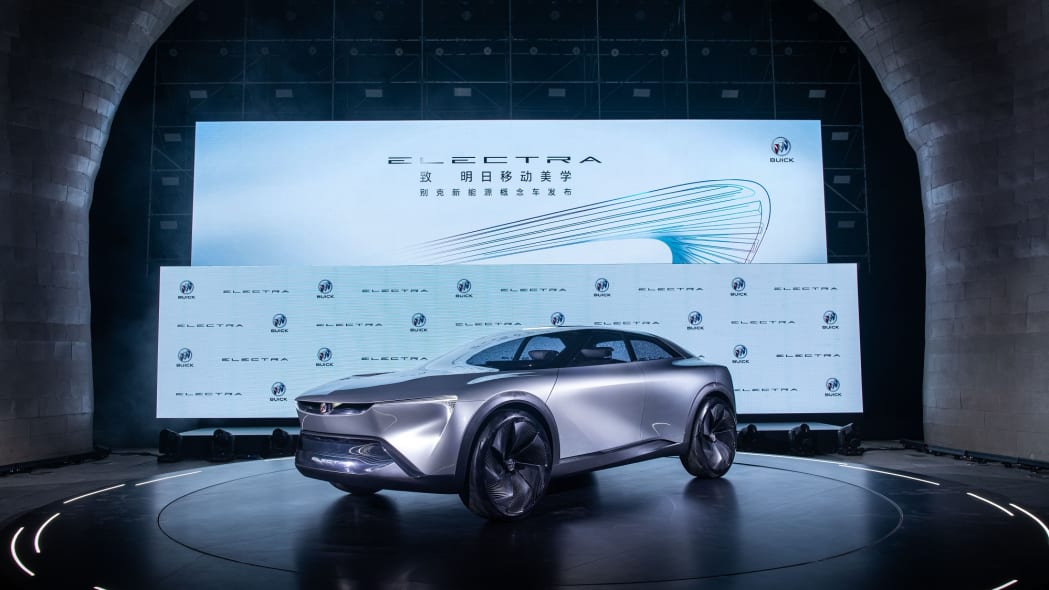
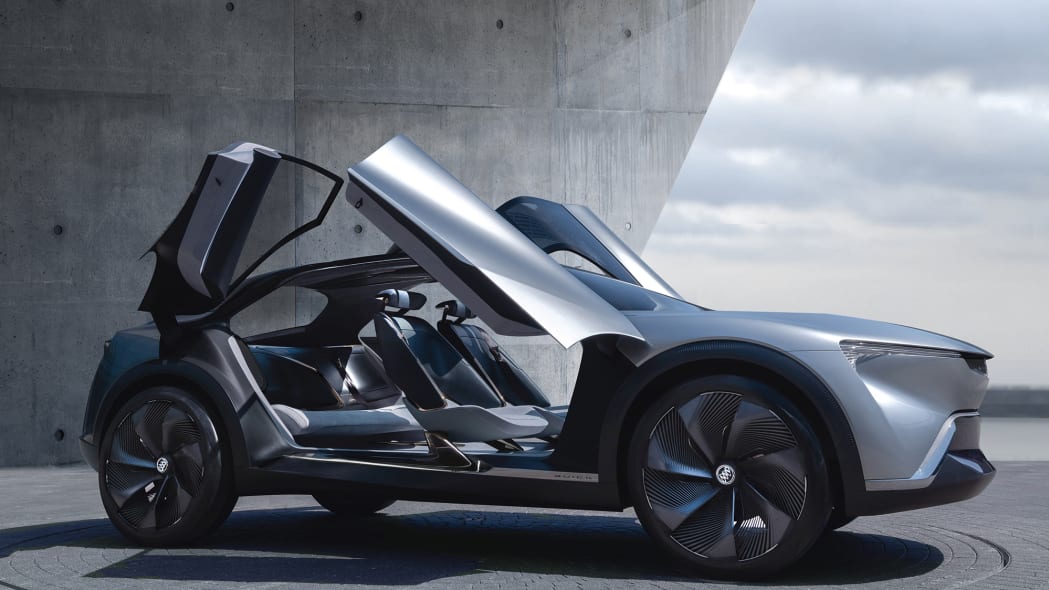

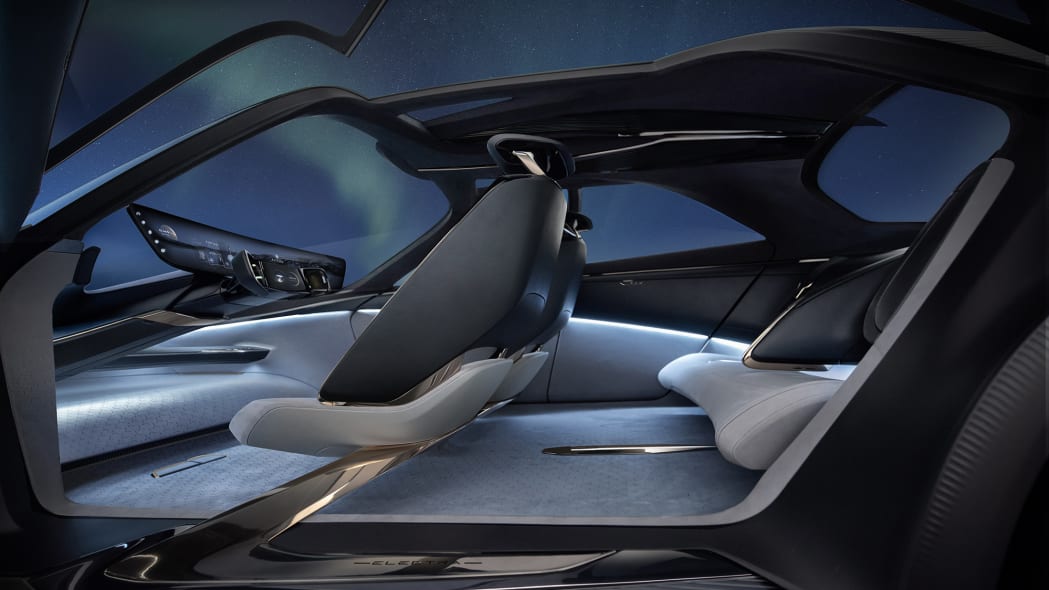

Buick plans to broaden its range of electric cars in the coming years, and it still owns the rights to the heritage-laced Electra nameplate, so it was only a matter of time before the past and the future met head-on. Buick resurrected the name it used between the 1959 and 1990 model years on a futuristic, battery-powered concept car.
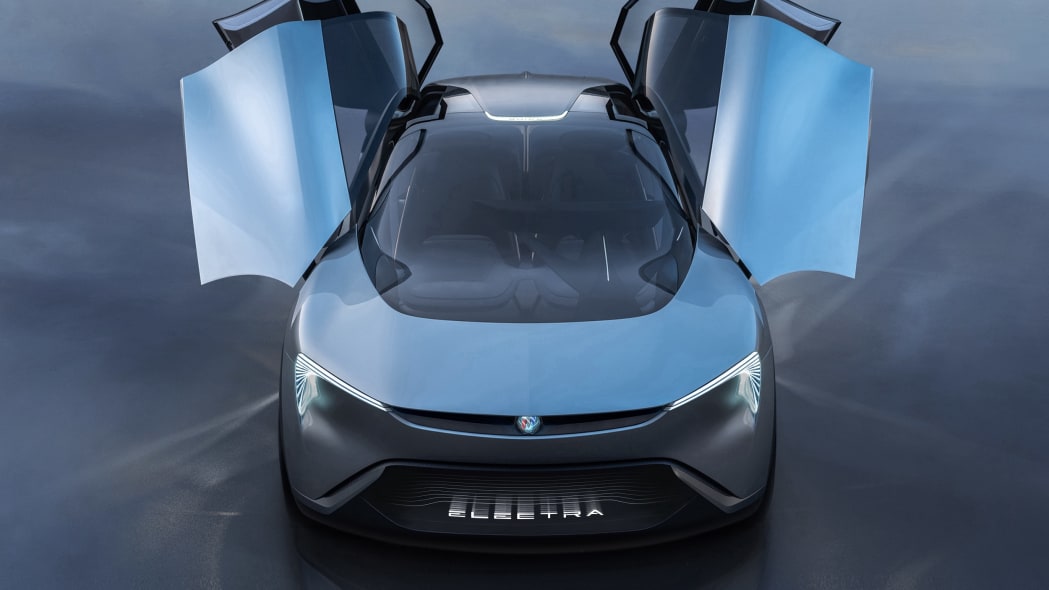
Created by a Shanghai-based design studio, the Electra concept takes the form of either a tall sedan or a low crossover, depending on your perspective. While it's not officially a preview of an upcoming production model, it ushers in a design language named Potential Energy that will permeate most of the electric cars the firm will release during the 2020s. It's inspired by a space capsule, according to Buick, so its greenhouse was drawn to resemble a glass pod. Its surfaces are sculpted but not chiseled, and its front fascia wears LED lights with a three-dimensional effect. Fear not: Stylists didn't forget the seemingly obligatory back-lit emblem.
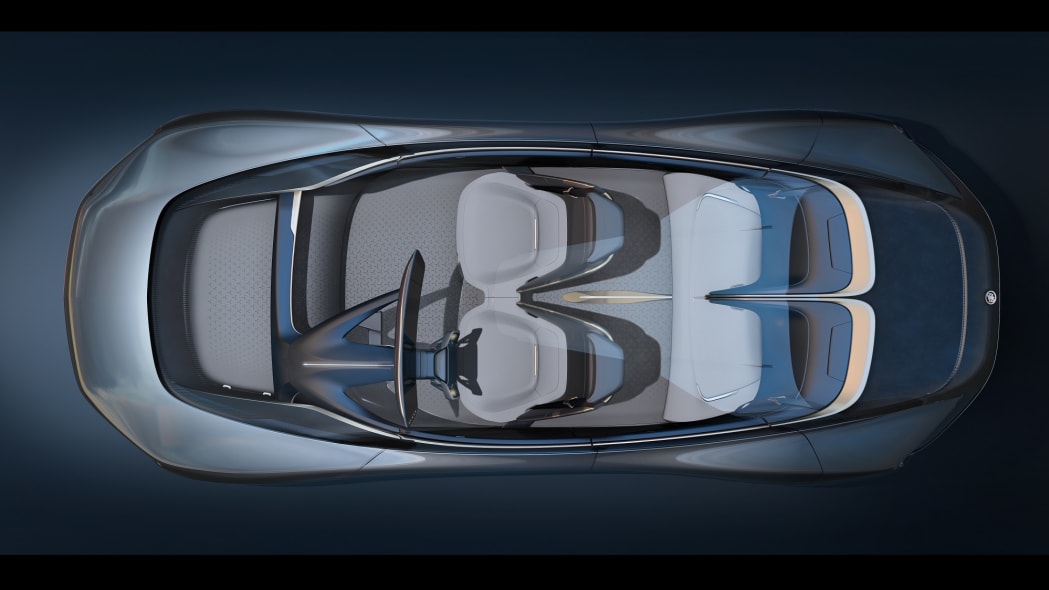
Butterfly doors provide access to the cabin, where the space capsule theme continues. Buick packed the Electra with cutting-edge technology features, but it concealed them rather well to avoid a tech overload. The driver faces a rectangular steering wheel that retracts when it's not needed, behind which is a wide, curved screen that replaces all of the buttons, *****, and switches normally found in a car's interior. An electric motor is far more compact than a comparable four- or six-cylinder engine, so designers were able to carve out a generously sized interior.
Engineers embedded technology into the Electra from the project's earliest stage. It's equipped with software named eConnect that supports over-the-air updates, provides on-demand information about a specific trip, and gives details about the various electronic driving aids. An artificial intelligence-powered assistant lets users perform various tasks, such as setting the air conditioning or controlling home devices, with voice commands.
Buick noted the Electra offers about 410 miles of driving range thanks in part to the Ultium battery technology developed by General Motors to power a wide selection of electric models, including the Cadillac Lyriq, the GMC Hummer, and a pair of Honda-badged models scheduled to go on sale for the 2024 model year. Its dual-motor drivetrain sends 583 horsepower to all four wheels, a figure which easily eclipses the 2020 Chevrolet Corvette's, and sends the concept from zero to 62 mph in 4.3 seconds -- in theory, at least.
Supercar-like power is useless if you park two miles away from your destination. Buick thought of that, too. While images aren't available, the company said it cleverly integrated a space-age skateboard beneath the rear bumper to allow the driver to reach his or her destination, even if it's located deep in an area that's off-limits to cars.
Buick hasn't revealed what the future holds for the Electra concept. We know it's planning on releasing two electric models in the 2020s; one will be a crossover with conventional proportions, and the second will arrive as a high-riding model with, in the company's words, "more expressive proportions." Could it be a toned-down Electra? Time will tell. What's certain is that both models will at least borrow styling cues from the design study.
Created by a Shanghai-based design studio, the Electra concept takes the form of either a tall sedan or a low crossover, depending on your perspective. While it's not officially a preview of an upcoming production model, it ushers in a design language named Potential Energy that will permeate most of the electric cars the firm will release during the 2020s. It's inspired by a space capsule, according to Buick, so its greenhouse was drawn to resemble a glass pod. Its surfaces are sculpted but not chiseled, and its front fascia wears LED lights with a three-dimensional effect. Fear not: Stylists didn't forget the seemingly obligatory back-lit emblem.
Butterfly doors provide access to the cabin, where the space capsule theme continues. Buick packed the Electra with cutting-edge technology features, but it concealed them rather well to avoid a tech overload. The driver faces a rectangular steering wheel that retracts when it's not needed, behind which is a wide, curved screen that replaces all of the buttons, *****, and switches normally found in a car's interior. An electric motor is far more compact than a comparable four- or six-cylinder engine, so designers were able to carve out a generously sized interior.
Engineers embedded technology into the Electra from the project's earliest stage. It's equipped with software named eConnect that supports over-the-air updates, provides on-demand information about a specific trip, and gives details about the various electronic driving aids. An artificial intelligence-powered assistant lets users perform various tasks, such as setting the air conditioning or controlling home devices, with voice commands.
Buick noted the Electra offers about 410 miles of driving range thanks in part to the Ultium battery technology developed by General Motors to power a wide selection of electric models, including the Cadillac Lyriq, the GMC Hummer, and a pair of Honda-badged models scheduled to go on sale for the 2024 model year. Its dual-motor drivetrain sends 583 horsepower to all four wheels, a figure which easily eclipses the 2020 Chevrolet Corvette's, and sends the concept from zero to 62 mph in 4.3 seconds -- in theory, at least.
Supercar-like power is useless if you park two miles away from your destination. Buick thought of that, too. While images aren't available, the company said it cleverly integrated a space-age skateboard beneath the rear bumper to allow the driver to reach his or her destination, even if it's located deep in an area that's off-limits to cars.
Buick hasn't revealed what the future holds for the Electra concept. We know it's planning on releasing two electric models in the 2020s; one will be a crossover with conventional proportions, and the second will arrive as a high-riding model with, in the company's words, "more expressive proportions." Could it be a toned-down Electra? Time will tell. What's certain is that both models will at least borrow styling cues from the design study.


Lexus Fanatic


Joined: Oct 2003
Posts: 94,434
Likes: 249
From: Virginia/D.C. suburbs
I actually owned one, Josh. Best-driving car I ever had.
I was just being facetious, though. Yes, those cars simply don't fit in today's traffic-conditions any more....too bulky and hard to park. That's why I'm downsizing myself.
Back to topic, though, in some ways, I have no problem with BEVs. You yourself, as a rated technician, know that they are a lot simpler and less maintenance-intensive than a gas-engine vehicle (even hybrids need gas-engine maintenance), and that the only hang-up, right now (besides the demand it will put on electric-power-grids) is getting enough recharging stations.
Lexus Fanatic
Joined: Oct 2003
Posts: 94,434
Likes: 249
From: Virginia/D.C. suburbs
The Electra name was also used for motorcycles, and Lockheed also used the name on both a twin-engine/twin-ruddered transport plane in the 1930s and a four-engine turboprop airliner (L-188) of the late 1950s through the 1970s.

Lexus Champion


Joined: Aug 2006
Posts: 12,544
Likes: 275
From: Illinois
Trending Topics

Lexus Fanatic
Joined: Nov 2011
Posts: 35,447
Likes: 373
From: ON/NY
They sure don’t make em like they used to. Electric cars lack some sort of passion IMO. I will say the name Electra is kinda fitting.
Very sad to see China-based design studio creating this. Will be made in China too.... what ever happened to GM-American manufacturing.
Very sad to see China-based design studio creating this. Will be made in China too.... what ever happened to GM-American manufacturing.
Lexus Fanatic
Joined: Oct 2003
Posts: 94,434
Likes: 249
From: Virginia/D.C. suburbs
Yeah.....I don't want to drag politics too far into this (per CL rules), but that's one area where we, as Americans, simply have to start putting our foot down. We can't stop all merchandise, particularly small appliances, from coming into the U.S. from China (if we did, Wal-Mart and Target would probably go out of buisness LOL)...but we can simply say no to buying something that costs five figures, like an new vehicle, from Chinese plants. In fact, that was one of several deal-breakers (another one being the shifter-designs) why I went with an Encore GX, built in Korea, instead of the new 2021 Envision, built in China. Some Encore GXs are also built in China, but, at least, they are not sold in the U.S.....they are solely for the Chinese market, which is fair. American-spec versions are built in South Korea, our ally.
Thread Starter
Joined: Oct 2008
Posts: 42,476
Likes: 321
From: California
GM applies to trademark Buick's Electra name in Canada
Already used on a concept, could serve an EV crossover for the U.S.
At Auto China 2020 in Beijing, Buick revealed an Electra concept with a design language called Potential Energy created by one of GM's Shanghai-based design studios. A press release about the concept said the "all-electric crossover offers a sneak peek at Buick’s vision for a new intelligent electric future." It's possible that the "intelligent electric future" could include the Electra name, as the Rivian Owners Forum discovered Buick applied to trademark that model name in Canada on December 20. Buick isn't new to the name, having put it on a luxury sedan it produced from 1959 to 1990. What better way to resurrect history with electricity using the name Electra and a design language called Potential Energy?
What we imagine more likely is a more production-possible evolution of the Electra concept shown in Beijing last year that had Ultium batteries powering two electric motors that shared a combined 583 horsepower among both axles. The sprint to 60 miles per hour was said to take 4.3 seconds, range estimated at about 410 miles. The dihedral doors enclosed a buttonless cockpit with a rectangular, retracting steering wheel, huge curved screen, eConnect software, and an AI-powered assistant for feature control.
We expect Buick to launch at least one crossover in 2024, and another in 2025. One of them will likely compete with the Ford Mustang Mach-E and the production version of the Chrysler Airflow concept.
What we imagine more likely is a more production-possible evolution of the Electra concept shown in Beijing last year that had Ultium batteries powering two electric motors that shared a combined 583 horsepower among both axles. The sprint to 60 miles per hour was said to take 4.3 seconds, range estimated at about 410 miles. The dihedral doors enclosed a buttonless cockpit with a rectangular, retracting steering wheel, huge curved screen, eConnect software, and an AI-powered assistant for feature control.
We expect Buick to launch at least one crossover in 2024, and another in 2025. One of them will likely compete with the Ford Mustang Mach-E and the production version of the Chrysler Airflow concept.

Pole Position

Joined: May 2021
Posts: 2,544
Likes: 1,362
From: IL
While Chinese-designed, this is a GM show car in the time-honored tradition of GM show cars created to get free press with no intention of ever actually producing or selling anything that resembles it in the slightest.
How is this thing unusable an an automobile? Let me count the ways. The giant slab sides and eeenty-teensy greenhouse would leave the occupants feeling as if they're peering out through the peephole of a tank. The nose is ridiculously unaerodynamic even in an era of blunt noses and giganto grilles. The doors are faintly reminiscent of the idiotic gull-wing design pressed into the Tesla Model X by Mr. Musk himself, a design that delayed production and then dumps snow into the car every time they're opened on a Midwestern winter morning. The interior is the same set of swoopy, flying-buttress First Men On Mars cliches seen on every American maker's "car o' the future" designs for, oh, about 50 years now.
The one and only goal of this exercise was to get enough press to create positive buzz around GM and Buick in China for about a week and maybe goose the stock price accordingly. Unfortunately, to achieve that goal, it would have had to be well executed and at least faintly viable. Swing and a(nother) miss.
How is this thing unusable an an automobile? Let me count the ways. The giant slab sides and eeenty-teensy greenhouse would leave the occupants feeling as if they're peering out through the peephole of a tank. The nose is ridiculously unaerodynamic even in an era of blunt noses and giganto grilles. The doors are faintly reminiscent of the idiotic gull-wing design pressed into the Tesla Model X by Mr. Musk himself, a design that delayed production and then dumps snow into the car every time they're opened on a Midwestern winter morning. The interior is the same set of swoopy, flying-buttress First Men On Mars cliches seen on every American maker's "car o' the future" designs for, oh, about 50 years now.
The one and only goal of this exercise was to get enough press to create positive buzz around GM and Buick in China for about a week and maybe goose the stock price accordingly. Unfortunately, to achieve that goal, it would have had to be well executed and at least faintly viable. Swing and a(nother) miss.


Pole Position
Joined: May 2021
Posts: 2,544
Likes: 1,362
From: IL
There's a reason they turned to a Chinese designer for this vehicle: because the Buick brand is much more respected, popular and profitable in China than it is in America. (Pontiac was outselling Buick in the US when it was killed off in 2008; Buick survived instead only because of its Chinese sales.)
Personally, I'm disgusted that GM took taxpayers' money under the guise of saving American jobs, then proceeded once it was out of danger to export massive numbers of those jobs to China. I feel it was a breakage of faith. But since nothing enforcing patriotic behavior was written into the bailout deal, they did what corporations do: raced to the bottom by moving production to the lowest-wage country they could find. More recently GM had an "initiative" with its US parts suppliers it euphemistically called "One World." English translation: If you were a longtime US supplier to GM and wouldn't meet the price a Chinese supplier offered for the same part, you were fired. Even beyond the moral uplift aspect of this behavior, it's predictably resulted in a showroom full of vehicles built as if they were made by the lowest bidder.


