


UAW strike

Instructor
Joined: Oct 2016
Posts: 857
Likes: 47
From: Oregon

Many years ago I dropped out of college after my third year (EE major, lousy grades). I was able to get a job driving a concrete truck, thanks to my uncle who was a mid-level manager in the company. It was an interesting education for a pasty-faced nerdy kid and by the time I left five years later I was tanned, muscular, and extremely fit. But it had become obvious to me that I would be a fool to not finish my engineering degree, so I did.
The point of my little story is this: Back in those days, the Teamsters union controlled the drivers. By the time I left to go back to school I was making about $80,000 (inflation adjusted to the present day). For driving a truck! Yes, there was quite a bit of skill involved, and it could have dangerous moments, but was I "worth" $80K for driving that truck? Nope. I had not sought out that job, but was of course happy to receive the money. My understanding is that these days the Teamsters are much less in evidence and the money is not as generous.
To the extent that an auto worker makes more than the prevailing wage, I'd suggest he or she thank their lucky stars and not bite the hand that feeds them. They are in a market distortion and those things can dissipate in time.
The point of my little story is this: Back in those days, the Teamsters union controlled the drivers. By the time I left to go back to school I was making about $80,000 (inflation adjusted to the present day). For driving a truck! Yes, there was quite a bit of skill involved, and it could have dangerous moments, but was I "worth" $80K for driving that truck? Nope. I had not sought out that job, but was of course happy to receive the money. My understanding is that these days the Teamsters are much less in evidence and the money is not as generous.
To the extent that an auto worker makes more than the prevailing wage, I'd suggest he or she thank their lucky stars and not bite the hand that feeds them. They are in a market distortion and those things can dissipate in time.

Thread Starter
Lexus Fanatic


Joined: Oct 2003
Posts: 94,702
Likes: 290
From: Virginia/D.C. suburbs
The point of my little story is this: Back in those days, the Teamsters union controlled the drivers. By the time I left to go back to school I was making about $80,000 (inflation adjusted to the present day). For driving a truck! Yes, there was quite a bit of skill involved, and it could have dangerous moments, but was I "worth" $80K for driving that truck? Nope. I had not sought out that job, but was of course happy to receive the money. My understanding is that these days the Teamsters are much less in evidence and the money is not as generous.
To the extent that an auto worker makes more than the prevailing wage, I'd suggest he or she thank their lucky stars and not bite the hand that feeds them. They are in a market distortion and those things can dissipate in time.

Lexus Test Driver
Joined: Jan 2007
Posts: 7,460
Likes: 232
From: CA
GM electric car push could mean fewer and lower paying jobs
DETROIT (AP) -- If U.S. consumers ever ditch fuel burners for electric vehicles, then the United Auto Workers union is in trouble.
Gone would be thousands of jobs at engine and transmission plants across the industrial Midwest, replaced by smaller workforces at squeaky-clean mostly automated factories that mix up chemicals to make batteries.
The union is keenly aware of this possibility as it negotiates for the future as much as the present in contract talks with General Motors. Meanwhile, more than 49,000 union workers are on strike against the company and have shut down its factories for the past six days.
GM CEO Mary Barra has promised an "all-electric future," with the company going through a painful restructuring to raise cash in part to develop 20 electric models that it plans to sell worldwide by 2023.
In the contract talks, GM has offered to build an electric vehicle battery factory in Lordstown, Ohio, where the company is closing an assembly plant. The automaker, according to a person briefed on the offer, wants the plant to be run by a joint venture or a battery company. It would be staffed by far fewer union workers who would be paid less than the $30 per hour that UAW members make on the assembly lines, said the person, who didn't want to be identified because contract details are confidential.
Youtube video thumbnail
For the union, getting the top pay at Lordstown is crucial because battery jobs could one day supplant many of those at GM's 10 U.S. powertrain factories that now employ more than 10,500 hourly workers. Also at stake is the future of the union, which has lost high-paying auto jobs over the past 30 years, said Sam Abuelsamid, an analyst for Navigant Research who follows the auto industry.
"I can see why the UAW would reject such a deal," Abuelsamid said. "To accept a lower wage tier for employees at Lordstown or any other plant where GM wants to do something similar, I think that would be foolish for them."
For the company, however, the lower wages are needed to keep costs competitive with other automakers who will contract out battery cell and pack manufacturing to nonunion factories that pay less than the UAW wage, Abuelsamid said. GM also must reign in expenses as it tries to sell more electric vehicles, which now are more expensive than those powered by gas, he said.
The company won't give details about how many workers would be employed at the Lordstown battery plant or how much they'll be paid. But the number won't be anywhere near the $30 an hour top wage at the assembly plant, which two years ago employed 4,500 people making the Chevrolet Cruze compact car.
The only GM plant comparable to what's being proposed in Lordstown now sits in Brownstown Township, Michigan. About 100 UAW workers there took battery cells made by LG Chem in Western Michigan and combined them into packs for the Chevrolet Volt rechargeable gas-electric car. The Volt was canceled last spring, and now 22 remaining workers make hybrid battery packs and assemble autonomous vehicle equipment.
In 2009, the UAW agreed to a lower wage of $15 to $17 per hour at Brownstown to help get the Volt started.
While there is potential for growth if electric car sales take off and more batteries are needed, no one is sure when or if that will happen in the U.S. Few are predicting that Barra's "all electric future" is coming soon and the Trump administration has proposed rolling back fuel economy requirements.
Fully electric vehicles currently make up about 1.5% of U.S. new vehicle sales, and LMC Automotive forecasts it will rise to only 7.5% by 2030. The forecasting firm doesn't see EV sales hitting 50% of the market until at least 2049.
Globally it's a different story. Navigant sees growth from just over 1 million sales last year to 6.5 million by 2025. The surge is expected because of government incentives and fuel economy regulations in China.
Currently, GM loses thousands on each Chevy Bolt electric car it sells, and it hasn't been able to mass produce enough of them to bring the cost down. Without large-volume production, it's tough to cut the price. Paying full union wages at Lordstown would push costs up.
"You can't be at a cost disadvantage in a market that's in its infancy," said Jeff Schuster, senior vice president for LMC.
Even if the union is successful at getting higher wages at battery plants, engine and transmission jobs will someday start to disappear, Abuelsamid said. He estimates that it will take only 25% to 50% of the current engine and transmission workforce to build battery cells, packs and electric motors. GM and others also could keep outsourcing battery cells and packs to nonunion plants as GM does now for the Bolt.
Whether the union will make a stand on electric vehicles in this round of contract talks remains to be seen. It may decide that it doesn't want to set a lower-wage precedent that could spread to Fiat Chrysler or Ford. But if it can preserve health insurance and get pay raises, job guarantees, more profit-sharing and a path for temporary workers to go full-time, it may punt the issue to future contract talks, says Schuster.
"The ultimate path (to electric vehicles), in our opinion, is so far down the road that I'm not sure it has to be dealt with right now," he said. "I don't know if it has to be the thing that holds up a deal at this stage."
Workers at the powertrain plants know their future is in the balance, said Tim O'Hara, president of the UAW local in Lordstown. He expects the union to try to protect as many higher-paying jobs as it can.
"It's been on a lot of people's minds about the electric future," O'Hara said. "The goal is always to have the same kind of jobs with benefits and wages as you start out with."
DETROIT (AP) -- If U.S. consumers ever ditch fuel burners for electric vehicles, then the United Auto Workers union is in trouble.
Gone would be thousands of jobs at engine and transmission plants across the industrial Midwest, replaced by smaller workforces at squeaky-clean mostly automated factories that mix up chemicals to make batteries.
The union is keenly aware of this possibility as it negotiates for the future as much as the present in contract talks with General Motors. Meanwhile, more than 49,000 union workers are on strike against the company and have shut down its factories for the past six days.
GM CEO Mary Barra has promised an "all-electric future," with the company going through a painful restructuring to raise cash in part to develop 20 electric models that it plans to sell worldwide by 2023.
In the contract talks, GM has offered to build an electric vehicle battery factory in Lordstown, Ohio, where the company is closing an assembly plant. The automaker, according to a person briefed on the offer, wants the plant to be run by a joint venture or a battery company. It would be staffed by far fewer union workers who would be paid less than the $30 per hour that UAW members make on the assembly lines, said the person, who didn't want to be identified because contract details are confidential.
Youtube video thumbnail
For the union, getting the top pay at Lordstown is crucial because battery jobs could one day supplant many of those at GM's 10 U.S. powertrain factories that now employ more than 10,500 hourly workers. Also at stake is the future of the union, which has lost high-paying auto jobs over the past 30 years, said Sam Abuelsamid, an analyst for Navigant Research who follows the auto industry.
"I can see why the UAW would reject such a deal," Abuelsamid said. "To accept a lower wage tier for employees at Lordstown or any other plant where GM wants to do something similar, I think that would be foolish for them."
For the company, however, the lower wages are needed to keep costs competitive with other automakers who will contract out battery cell and pack manufacturing to nonunion factories that pay less than the UAW wage, Abuelsamid said. GM also must reign in expenses as it tries to sell more electric vehicles, which now are more expensive than those powered by gas, he said.
The company won't give details about how many workers would be employed at the Lordstown battery plant or how much they'll be paid. But the number won't be anywhere near the $30 an hour top wage at the assembly plant, which two years ago employed 4,500 people making the Chevrolet Cruze compact car.
The only GM plant comparable to what's being proposed in Lordstown now sits in Brownstown Township, Michigan. About 100 UAW workers there took battery cells made by LG Chem in Western Michigan and combined them into packs for the Chevrolet Volt rechargeable gas-electric car. The Volt was canceled last spring, and now 22 remaining workers make hybrid battery packs and assemble autonomous vehicle equipment.
In 2009, the UAW agreed to a lower wage of $15 to $17 per hour at Brownstown to help get the Volt started.
While there is potential for growth if electric car sales take off and more batteries are needed, no one is sure when or if that will happen in the U.S. Few are predicting that Barra's "all electric future" is coming soon and the Trump administration has proposed rolling back fuel economy requirements.
Fully electric vehicles currently make up about 1.5% of U.S. new vehicle sales, and LMC Automotive forecasts it will rise to only 7.5% by 2030. The forecasting firm doesn't see EV sales hitting 50% of the market until at least 2049.
Globally it's a different story. Navigant sees growth from just over 1 million sales last year to 6.5 million by 2025. The surge is expected because of government incentives and fuel economy regulations in China.
Currently, GM loses thousands on each Chevy Bolt electric car it sells, and it hasn't been able to mass produce enough of them to bring the cost down. Without large-volume production, it's tough to cut the price. Paying full union wages at Lordstown would push costs up.
"You can't be at a cost disadvantage in a market that's in its infancy," said Jeff Schuster, senior vice president for LMC.
Even if the union is successful at getting higher wages at battery plants, engine and transmission jobs will someday start to disappear, Abuelsamid said. He estimates that it will take only 25% to 50% of the current engine and transmission workforce to build battery cells, packs and electric motors. GM and others also could keep outsourcing battery cells and packs to nonunion plants as GM does now for the Bolt.
Whether the union will make a stand on electric vehicles in this round of contract talks remains to be seen. It may decide that it doesn't want to set a lower-wage precedent that could spread to Fiat Chrysler or Ford. But if it can preserve health insurance and get pay raises, job guarantees, more profit-sharing and a path for temporary workers to go full-time, it may punt the issue to future contract talks, says Schuster.
"The ultimate path (to electric vehicles), in our opinion, is so far down the road that I'm not sure it has to be dealt with right now," he said. "I don't know if it has to be the thing that holds up a deal at this stage."
Workers at the powertrain plants know their future is in the balance, said Tim O'Hara, president of the UAW local in Lordstown. He expects the union to try to protect as many higher-paying jobs as it can.
"It's been on a lot of people's minds about the electric future," O'Hara said. "The goal is always to have the same kind of jobs with benefits and wages as you start out with."
Thread Starter
Lexus Fanatic
Joined: Oct 2003
Posts: 94,702
Likes: 290
From: Virginia/D.C. suburbs
Strongly disagree. You don't "learn" by telling those who helped save your life to go pound sand. That is exactly what got them into the new mess that they are in now.
true but that doesn't change the fact that change does happen and has happened. once it's happened, you must adapt and old assumptions may no longer be true or possible.
overly simplistic but not going to rehash history, again.
and you are (conveniently) ignoring the fact that the bond holders of GM and Chrysler got STIFFED (nada) during the 'restructuring'. what about them? as for 'big sacrifices by uaw', so what? it was either 'sacrifice' or find another line of work.
it wasn't that simple, not getting into politics but i don't think the administration at the time would have approved the bailout under those conditions.
they were saving their OWN jobs... i expect you consider this current strike a 'sacrifice' too, when all that will happen is damage to gm and gm accelerating plans to go EV and get rid of as much of the UAW as possible.
It was GM's "changes" that got them into this mess in the first place.
And you are (conveniently) ignoring the fact that, among other factors, it was big sacrifices by the UAW that allowed GM and Chrysler to survive this long, get out of bankruptcy, and make good profits. You don't bite the hands that fed you.....especially when those hands are your own employees and customers.
they were saving their OWN jobs... i expect you consider this current strike a 'sacrifice' too, when all that will happen is damage to gm and gm accelerating plans to go EV and get rid of as much of the UAW as possible.
Thread Starter
Lexus Fanatic
Joined: Oct 2003
Posts: 94,702
Likes: 290
From: Virginia/D.C. suburbs
Not to get off-topic, but that's one reason why I stick to municipal, tax-free bonds.....they not only default or fold quite rarely, but, if they do, though not FDIC-insured, sometimes you can get back at least part of the principal from settlements. The interest is Federally tax-free, and, depending on what state you are in and your actual investment, often state tax-free as well.

it wasn't that simple, not getting into politics but i don't think the administration at the time would have approved the bailout under those conditions.
If you have not read about how Iacocca negotiated that loan in his book, "Iacocca" I highly recommend it. It is part of my own automotive library.
they were saving their OWN jobs... i expect you consider this current strike a 'sacrifice' too, when all that will happen is damage to gm and gm accelerating plans to go EV and get rid of as much of the UAW as possible.
Last edited by mmarshall; Sep 24, 2019 at 03:26 PM.
Thread Starter
Lexus Fanatic
Joined: Oct 2003
Posts: 94,702
Likes: 290
From: Virginia/D.C. suburbs
Anyhow, back to the strike. Seems like temporary workers have become one of the big sticking issues. I'm not sure I'd want to be one. They have it worse off than even some of the workers in Mexico and China....three days off a year, and, in some cases, seven-day work weeks.
https://www.freep.com/story/money/ca...rs/2421714001/
https://www.michiganradio.org/post/t...ike-against-gm
https://www.freep.com/story/money/ca...rs/2421714001/
https://www.michiganradio.org/post/t...ike-against-gm
ClubLexus Stories
Celebrating Lexus & Toyota from Around the Globe

Lexus NX 350h: A Fuel-Sipping Secret Hot Hatch???
Michael S. Palmer
5 Best & 5 Worst Lexus Daily Drivers
Joe Kucinski
Top 5 Hottest Lexus & Toyotas in 2026 (Hardest To Buy)
Brett Foote
2026 Lexus IS 350 F Sport Review: The Last of Its Kind Still Rocks
Michael S. Palmer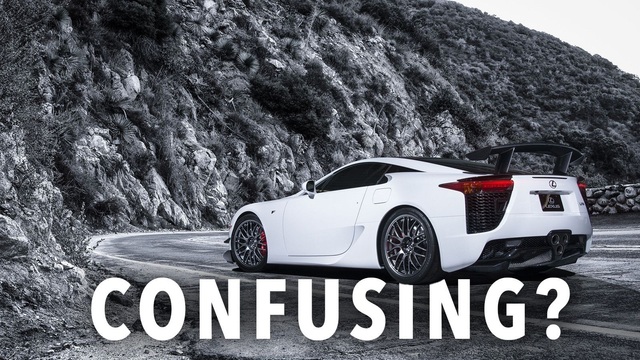
Top 10 Most Confusing Things Lexus Has Ever Done!
Joe Kucinski
2026 Lexus ES Review: Lexus Re-Embraces Founding Principles
Michael S. Palmer
10 Lexus Bargains That are Cheaper Than a New Toyota RAV4
Joe Kucinski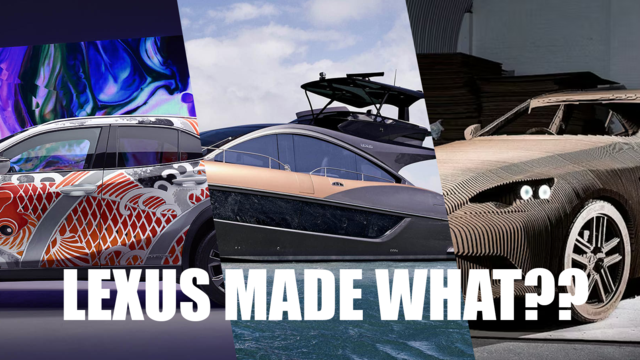
8 Weirdest Things Lexus Has Ever Built
Verdad Gallardo
10 Lexus Designs That Have Aged Like Fine Wine
Verdad Gallardo
Lexus Fanatic


Joined: Sep 2010
Posts: 26,190
Likes: 4,379
From: Alberta
Lexus Test Driver
Joined: Jan 2007
Posts: 7,460
Likes: 232
From: CA
What a hard job. I really hope they develop robots to take care of all manual labor so people can do something easier with their life. A generation from now, factory workers will hopefully be just engineers who fix robots in the line.

Lexus Champion
Joined: Jul 2013
Posts: 2,300
Likes: 4
From: RightHere
Many years ago I dropped out of college after my third year (EE major, lousy grades). I was able to get a job driving a concrete truck, thanks to my uncle who was a mid-level manager in the company. It was an interesting education for a pasty-faced nerdy kid and by the time I left five years later I was tanned, muscular, and extremely fit. But it had become obvious to me that I would be a fool to not finish my engineering degree, so I did.
The point of my little story is this: Back in those days, the Teamsters union controlled the drivers. By the time I left to go back to school I was making about $80,000 (inflation adjusted to the present day). For driving a truck! Yes, there was quite a bit of skill involved, and it could have dangerous moments, but was I "worth" $80K for driving that truck? Nope. I had not sought out that job, but was of course happy to receive the money. My understanding is that these days the Teamsters are much less in evidence and the money is not as generous.
To the extent that an auto worker makes more than the prevailing wage, I'd suggest he or she thank their lucky stars and not bite the hand that feeds them. They are in a market distortion and those things can dissipate in time.
The point of my little story is this: Back in those days, the Teamsters union controlled the drivers. By the time I left to go back to school I was making about $80,000 (inflation adjusted to the present day). For driving a truck! Yes, there was quite a bit of skill involved, and it could have dangerous moments, but was I "worth" $80K for driving that truck? Nope. I had not sought out that job, but was of course happy to receive the money. My understanding is that these days the Teamsters are much less in evidence and the money is not as generous.
To the extent that an auto worker makes more than the prevailing wage, I'd suggest he or she thank their lucky stars and not bite the hand that feeds them. They are in a market distortion and those things can dissipate in time.
But all that is off topic to a certain extent. The UAW's real flaw was getting into bed with management at the car companies and forming a cosy managerial relationship which eventually led to what else? Corruption. It takes two to tango. The workers are the ones who not totally being served by their union and its kleptocracy and Wall Street banksters and assorted big chunk shareholders who are greedy and rapacious are not helping.
In a way the non-union Japanese car plants are better managed and that's why you don't need unions there. The wages are lower but the job security and mobility are much better. Whether we like it or not, you're not going to get rid of the UAW - management needs it to run the workers and it's too large a block of employees to try and cut loose abruptly. There are other workers at the other two Detroit car companies as well.
Instructor
Joined: Oct 2016
Posts: 857
Likes: 47
From: Oregon
The whole point of what I was trying to say about my truck-driving job is that I was not paid $80K because I was "worth it;" I was paid $80K because the employer had no choice. They were not allowed to hire some other driver at $40K. The Teamsters had a lock on the LA market in my industry back then. They don't, now.
The whole point of what I was trying to say about my truck-driving job is that I was not paid $80K because I was "worth it;" I was paid $80K because the employer had no choice. They were not allowed to hire some other driver at $40K. The Teamsters had a lock on the LA market in my industry back then. They don't, now.

Thread Starter
Lexus Fanatic
Joined: Oct 2003
Posts: 94,702
Likes: 290
From: Virginia/D.C. suburbs