When you click on links to various merchants on this site and make a purchase, this can result in this site earning a commission. Affiliate programs and affiliations include, but are not limited to, the eBay Partner Network.
Since you know the future when is a Lexus BEV coming out and what is the model name?
Great post full of FACTS just like mine. Not talking about the future reflecting sales and financial data easily verifiable. Was a Business Analyst for 28 years and a mutual fund manager for ten year. If you can not grasp these financial FACTS about Tesla's plummeting sales, stock price, management leaving and tremendous losses growing then sorry.
Great post full of FACTS just like mine. Not talking about the future reflecting sales and financial data easily verifiable. Was a Business Analyst for 28 years and a mutual fund manager for ten year. If you can not grasp these financial FACTS about Tesla's plummeting sales, stock price, management leaving and tremendous losses growing then sorry.
I've been in the game as long as you and I believe in their long term vision. They are cash flow neutral at this point and they will be viable long term. This doesn't mean their stock isn't over valued. They as are worth more than Ford which is an indication of how much they are overvalued but you're taking short term trends and saying that they are basically going out of business which is FUD. Their valuation is based on a long term vision. Either you believe it or dont.
Listen to their earnings call. They are in their investment phase so no they will not be profitable. They are cash flow positive. Their depreciation is causing their losses as its understood due to their massive investment in multiple factories. They SHOULD NOT be profitable now. They are in growth phase of their expansion. They will be operational for a very long time. It also has nothing to do with their cars. My Model 3 is faaaaar better than any Lexus I have ever driven. I've had multiple Lexus's. Give me the almost $0 running costs and instantaneous acceleration with unbelievable handling. I have a full battery every morning when I wake up and my monthly running costs are $50 extra in electricity. This car is a dream to own.
Horrible job of deflecting from the facts. Is the Model 3 you are referring to the same same Model 3 that Consumer Reports does not recommend buying versus almost every Lexus that is a recommend buy. Sure you read my post that your one Model 3 cost the same to insure and charge as our two Lexus's cost to insure and fill with gas. It would not matter how fast the Model 3 is, how inexpensive and little it cost to insure and operate would not own an interior like this. Now remember I posted FACTS. You brought in the subjective: your car is better then any Lexus.
Horrible job of deflecting from the facts. Is the Model 3 you are referring to the same same Model 3 that Consumer Reports does not recommend buying versus almost every Lexus that is a recommend buy. Sure you read my post that your one Model 3 cost the same to insure and charge as our two Lexus's cost to insure and fill with gas. It would not matter how fast the Model 3 is, how inexpensive and little it cost to insure and operate would not own an interior like this. Now remember I posted FACTS. You brought in the subjective: your car is better then any Lexus.
I said it's better for me because of the factors I listed. We are after all talking about the merits of the cars vs the company. As a counterpoint to your insurance claim, I brought up that wise shoppers can get comparable rates with different insurers. I pay a negligible difference between my Lexus and my Tesla in high priced so cal. I also listed why I thought Tesla is viable long term with neutral cash flows for the quarter. Management has said they are self funding without new product introductions. I expect them not to be profitable until they release the Model Y and slow down on infra spend. You're taking the short seller point of view and speculating on Teslas financial situation as dire. I take the counter to this and think they are still going to be the winners in the long run. We will see who is right.
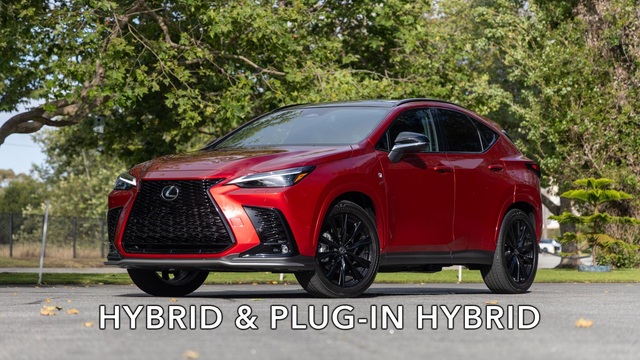
I don't understand why a plug in is better than a normal hybrid. Especially with a paltry range of 30 mi. A plugin requires more batteries therefore more initial cost(+$5000). Of course it also adds the extra hassle of plugging it in. I'm not getting it.
Last edited by rogerh00; Aug 16, 2019 at 05:51 PM.
I read this in how stuff works, "....With plug-in hybrids, the price of the car goes up because there are more batteries in the vehicle than in a traditional hybrid. A compact PHEV out of the box will cost about 10 to 20 percent more than a standard hybrid. For instance, a sedan will cost about $2,000 or $3,000 more and an SUV will cost about $5,000 more than a traditional hybrid [source: CalCars]....."
Of course this is just a general estimate and is no way related to possible Rav4 plug-in cost.Just a talking point.
I don't understand why a plug in is better than a normal hybrid. Especially with a paltry range of 30 mi. A plugin requires more batteries therefore more initial cost(+$5000). Of course it also adds the extra hassle of plugging it in. I'm not getting it.
If you are in an urban area, no need for gas for most of the week. Then when you need to do a long trip you have gas. And no issues filling up. Best of both worlds.
Not sure about Toyota but Tesla is getting close to $100 per KWh (their cost) so double that assuming a silly markup and you'd get a 25KWh battery for $5000 which should take you about 60 miles.
If you are in an urban area, no need for gas for most of the week. Then when you need to do a long trip you have gas. And no issues filling up. Best of both worlds.
Ok then, a plug-in is for urban dwellers. Not practical for my needs.
I don't understand why a plug in is better than a normal hybrid. Especially with a paltry range of 30 mi. A plugin requires more batteries therefore more initial cost(+$5000). Of course it also adds the extra hassle of plugging it in. I'm not getting it.
in many countries there are tax benefits to buying a plugin, hence plugins.
There are also a large discounts and incentives on quite few of them due to credit system for manufacturers, so price premium does not end up being 5k in real life.
For instance Prius Prime often gets sold at similar price to Prius, so it actually does not make sense to buy regular Prius if you live in those areas of the US where Prime is sold at incentivized prices.
I don't understand why a plug in is better than a normal hybrid. Especially with a paltry range of 30 mi. A plugin requires more batteries therefore more initial cost(+$5000). Of course it also adds the extra hassle of plugging it in. I'm not getting it.
I agree. The added battery capacity adds not only cost but a lot of weight. Doing a quick Toyota Canada comparison of the Prius with the Prius Prime, the Prime costs $5,000 more ($27,990 vs $32,990) and is about 130 kg (287 lbs, a big adult male) heavier; fuel consumption figures are about the same; and the EV-only range of the Prime is only 40 km (25 miles).
While driving that relatively-short EV-only range, the heavy deadweight of a piston engine is being dragged around (assuming that it never switches on to keep the battery topped up). And then assuming that the battery is drained and the engine switches on, the extra battery capacity (over and above the capacity of the Prius, which is never fully recharged by the engine) becomes the deadweight (constantly dragging around the weight of a heavy adult male).
What would be the range of a Prius EV if it had the battery capacity of the Prius Prime but lost the deadweight of the piston engine? Greater than 40 miles, no doubt. Or what would be the range of a Prius EV if the equivalent weight of the piston engine had been replaced by battery? (But then, recharging time becomes a worry.)
Merely adding battery capacity to a normal hybrid vehicle -- merely adding the energy equivalent of 290 lbs of battery -- to a Prius is NOT the way to go. To do it properly, the onboard charger should be minimized (and lightened) as much as possible so that the piston engine is less of a deadweight.
But then, merely adding battery capacity to a Prius is the easy way to go and the easy way to game the system, especially if government incentives are involved. It is also an easier (and cheaper) sell to those of us urban commuters who have range anxiety than to redesign the Prius Prime to have a smaller piston engine dedicated only to recharging the battery.