



Why Ferrari engineers don't like turbos

Thread Starter
Joined: Jan 2006
Posts: 26,200
Likes: 70
From: Houston, Texas
 Why Ferrari engineers don't like turbos
echos my exact sentiments when it comes to this trend of turbocharging which is entirely govt regulation driven with mpg and emissions requirement, of which doesnt pan out in the real world sometimes. Which is why I want a NA V8 car before V8s are pushed out of existence and replaced with turbocharged engines.
http://www.roadandtrack.com/car-cult...turbocharging/
http://www.roadandtrack.com/car-cult...turbocharging/
Why Ferrari engineers don't like turbos
No turbos on the Bella Macchina, Signore
"We don't like the turbo," said the man with the Italian accent. Before I could stand up and cheer, he continued, "but it's the right way to reduce emissions without sacrificing performance."
Oh. A rare moment of honesty, then a graceful slingshot into the same turbo spin we've heard from all corners of the globe. But this was the first time I'd heard a senior executive from a major carmaker admit that turbos are less than perfect.
The fact is, every car company is being forced into forced induction, for the exact reasons our Italian friend gave. Since neither he nor the company he works for, Ferrari, can come out and say it, I will: Turbos aren't the best solution, especially for high-performance cars, and they don't always provide the benefits that carmakers claim they do. Less emissions, more performance? Let's take a look.
REDUCING EMISSIONS
By all rights, Ferrari shouldn't give a flaming tailpipe about mpg. But governments are cracking down on CO2 emissions, and the only way to emit less carbon dioxide is to burn less fuel. So even Maranello is looking to the turbo to reduce fuel consumption.
The thing is, while turbo engines perform well on standardized government fuel-economy tests, out in the real world, we consistently see those boosted engines using more fuel than larger, similarly powerful, naturally aspirated ones. There's science behind our observations. The stoichiometric ratio of air and gasoline is such that it takes 14.7 grams of air to completely combust one gram of gasoline. It's the job of your car's fuel-injection system to measure the amount of air the engine inhales and then provide precisely the correct amount of fuel.
Turbos, which are powered by exhaust energy that is otherwise wasted, increase engine output by forcing extra air into the cylinders, prompting the fuel injectors to provide more fuel for combustion. More combustion, alas, means more heat. To keep the engine (and turbo) from overheating, turbo engines inject excess gas under boost. It seems counterintuitive, but this "rich mixture" cools down combustion and reduces exhaust temperatures. It's also a double-whammy fuel-economy killer, because burning that extra fuel doesn't help the engine make more power, it actually reduces output.
Government fuel-economy test cycles, especially those in Europe, approximate the driving style of a heavily sedated 83-year-old librarian. Since the engine is rarely taxed, the turbo doesn't spool up, so no extra fuel is used. But purposely driving slowly enough to keep the turbo from generating boost defeats the point of having a turbocharger in the first place. Sadly, out in the real world, riding that big, effortless wave of boosted midrange torque means burning extra fuel—and creating even more CO2. So much for reducing emissions.
NO REDUCTION IN PERFORMANCE
Performance, in this sense, refers solely to acceleration. The Ferrari California T's turbocharged 3.9-liter, 553-hp V8 easily outmuscles the old California's naturally aspirated 4.3-liter, 483-hp V8. Mission accomplished. Except there's more to an engine's behavior than going fast in a straight line. The way an engine generates power—its personality, if you will—is just as important as the number of Mister Eds it replaces. For the entire history of the marque, Ferrari's engines have delivered urgency and drama in lockstep with revs, creating a festival of sound and fury as they raced toward a stratospheric redline. Ferrari engines love to rev, which is one of the main reasons we love Ferraris.
Once there's a turbo impeller muffling the screaming glory of that prancing horse, you're talking about an entirely different animal. Engines with turbos big enough to provide boost throughout their operating range produce peak torque at low revs and then gradually run out of steam, like turbodiesels do. To combat that, gas-powertrain engineers artificially create broad torque plateaus by limiting boost at lower engine speeds. That electronic trickery helps the engine more closely emulate a naturally aspirated one, but even that isn't enough for Ferrari. The California T's computer also looks at gear position and limits max boost in lower gears to encourage its driver to revel in the revs.
Even so, clever programming can't fix the problem that has afflicted turbochargers since the technology was invented: lag. Ferrari claims the California's new turbo engine has "zero turbo lag" and "instantaneous response," then defines response time as "less than one second." Really? In a car that can hit 60 mph in three seconds, one second is anything but instantaneous.Immediate, predictable response is a requirement in any driver's car. Naturally aspirated engines react without delay to throttle inputs, but a turbo engine is vastly more complicated. It has two torque curves—one when it's off-boost and one when the turbo is at full puff. The transition between the first curve and the second is what we call lag—and both how long it takes and how abruptly it occurs change continually.
Despite the claims of marketers everywhere, lag can't be eliminated. The holy grail for engineers of turbo engines—from the 1962 Oldsmobile Jetfire to today's boosted cars—has been to manage the lag so that it's unobtrusive in normal driving. Some engines do this better than others. But when we're talking about Ferraris, who cares about normal driving? When you're approaching the handling limit of a well-balanced car, you need precise control of engine output. You may need a quick jolt of torque to induce oversteer or to gradually increase power to keep the car at its limit in a corner. These adjustments need to happen the instant you request them and in direct correlation to pedal input.
A naturally aspirated engine's output is determined by the position of the pedal and the engine speed, period. Turbos change that into a complicated matrix with far too many variables for a driver to keep track of. At best, turbo lag is a handicap. At worst, it turns neutral, throttle-adjustable cars into insolent, uncontrollable, four-wheeled bastards.
Over the past 20 years, Ferraris have morphed from oil-spewing headaches into some of the best driver's cars money can buy. Drive a 458 Speciale or an F12 in anger, and by comparison almost every other car will feel removed, recalcitrant. Modern Ferraris do what you ask, when you ask, how you ask. They are pretty much perfect. Although their forthcoming turbocharged replacements will almost certainly be faster, I fear they will be undrivable without assistance from an onboard supercomputer.
To what end? There won't be any environmental benefits, because Ferrari's contribution to worldwide automotive CO2 emissions is already effectively zero. (Toyota sells about as many daily-driver Priuses in a week as Ferrari sells special-occasion sports cars in a year.) It's sad that the marque feels compelled by government policy to bolt turbos on to their lovely engines, when it won't make a whit of difference to air quality.
And it's doubly sad that we all know it will change the way Ferraris drive.
So while I was genuinely ready to cheer Ferrari for that momentary showing of honesty, I'm still waiting to hear some auto-company executive unabashedly tell the whole truth: "We don't like turbos," the speech will begin, "and so we're not going to use them."
My applause may have to wait.
Jason Cammisa is a senior editor at R&T. He specializes in explaining things that suck, squeeze, bang, and blow, though not always in that order.
No turbos on the Bella Macchina, Signore
"We don't like the turbo," said the man with the Italian accent. Before I could stand up and cheer, he continued, "but it's the right way to reduce emissions without sacrificing performance."
Oh. A rare moment of honesty, then a graceful slingshot into the same turbo spin we've heard from all corners of the globe. But this was the first time I'd heard a senior executive from a major carmaker admit that turbos are less than perfect.
The fact is, every car company is being forced into forced induction, for the exact reasons our Italian friend gave. Since neither he nor the company he works for, Ferrari, can come out and say it, I will: Turbos aren't the best solution, especially for high-performance cars, and they don't always provide the benefits that carmakers claim they do. Less emissions, more performance? Let's take a look.
REDUCING EMISSIONS
By all rights, Ferrari shouldn't give a flaming tailpipe about mpg. But governments are cracking down on CO2 emissions, and the only way to emit less carbon dioxide is to burn less fuel. So even Maranello is looking to the turbo to reduce fuel consumption.
The thing is, while turbo engines perform well on standardized government fuel-economy tests, out in the real world, we consistently see those boosted engines using more fuel than larger, similarly powerful, naturally aspirated ones. There's science behind our observations. The stoichiometric ratio of air and gasoline is such that it takes 14.7 grams of air to completely combust one gram of gasoline. It's the job of your car's fuel-injection system to measure the amount of air the engine inhales and then provide precisely the correct amount of fuel.
Turbos, which are powered by exhaust energy that is otherwise wasted, increase engine output by forcing extra air into the cylinders, prompting the fuel injectors to provide more fuel for combustion. More combustion, alas, means more heat. To keep the engine (and turbo) from overheating, turbo engines inject excess gas under boost. It seems counterintuitive, but this "rich mixture" cools down combustion and reduces exhaust temperatures. It's also a double-whammy fuel-economy killer, because burning that extra fuel doesn't help the engine make more power, it actually reduces output.
Government fuel-economy test cycles, especially those in Europe, approximate the driving style of a heavily sedated 83-year-old librarian. Since the engine is rarely taxed, the turbo doesn't spool up, so no extra fuel is used. But purposely driving slowly enough to keep the turbo from generating boost defeats the point of having a turbocharger in the first place. Sadly, out in the real world, riding that big, effortless wave of boosted midrange torque means burning extra fuel—and creating even more CO2. So much for reducing emissions.
NO REDUCTION IN PERFORMANCE
Performance, in this sense, refers solely to acceleration. The Ferrari California T's turbocharged 3.9-liter, 553-hp V8 easily outmuscles the old California's naturally aspirated 4.3-liter, 483-hp V8. Mission accomplished. Except there's more to an engine's behavior than going fast in a straight line. The way an engine generates power—its personality, if you will—is just as important as the number of Mister Eds it replaces. For the entire history of the marque, Ferrari's engines have delivered urgency and drama in lockstep with revs, creating a festival of sound and fury as they raced toward a stratospheric redline. Ferrari engines love to rev, which is one of the main reasons we love Ferraris.
Once there's a turbo impeller muffling the screaming glory of that prancing horse, you're talking about an entirely different animal. Engines with turbos big enough to provide boost throughout their operating range produce peak torque at low revs and then gradually run out of steam, like turbodiesels do. To combat that, gas-powertrain engineers artificially create broad torque plateaus by limiting boost at lower engine speeds. That electronic trickery helps the engine more closely emulate a naturally aspirated one, but even that isn't enough for Ferrari. The California T's computer also looks at gear position and limits max boost in lower gears to encourage its driver to revel in the revs.
Even so, clever programming can't fix the problem that has afflicted turbochargers since the technology was invented: lag. Ferrari claims the California's new turbo engine has "zero turbo lag" and "instantaneous response," then defines response time as "less than one second." Really? In a car that can hit 60 mph in three seconds, one second is anything but instantaneous.Immediate, predictable response is a requirement in any driver's car. Naturally aspirated engines react without delay to throttle inputs, but a turbo engine is vastly more complicated. It has two torque curves—one when it's off-boost and one when the turbo is at full puff. The transition between the first curve and the second is what we call lag—and both how long it takes and how abruptly it occurs change continually.
Despite the claims of marketers everywhere, lag can't be eliminated. The holy grail for engineers of turbo engines—from the 1962 Oldsmobile Jetfire to today's boosted cars—has been to manage the lag so that it's unobtrusive in normal driving. Some engines do this better than others. But when we're talking about Ferraris, who cares about normal driving? When you're approaching the handling limit of a well-balanced car, you need precise control of engine output. You may need a quick jolt of torque to induce oversteer or to gradually increase power to keep the car at its limit in a corner. These adjustments need to happen the instant you request them and in direct correlation to pedal input.
A naturally aspirated engine's output is determined by the position of the pedal and the engine speed, period. Turbos change that into a complicated matrix with far too many variables for a driver to keep track of. At best, turbo lag is a handicap. At worst, it turns neutral, throttle-adjustable cars into insolent, uncontrollable, four-wheeled bastards.
Over the past 20 years, Ferraris have morphed from oil-spewing headaches into some of the best driver's cars money can buy. Drive a 458 Speciale or an F12 in anger, and by comparison almost every other car will feel removed, recalcitrant. Modern Ferraris do what you ask, when you ask, how you ask. They are pretty much perfect. Although their forthcoming turbocharged replacements will almost certainly be faster, I fear they will be undrivable without assistance from an onboard supercomputer.
To what end? There won't be any environmental benefits, because Ferrari's contribution to worldwide automotive CO2 emissions is already effectively zero. (Toyota sells about as many daily-driver Priuses in a week as Ferrari sells special-occasion sports cars in a year.) It's sad that the marque feels compelled by government policy to bolt turbos on to their lovely engines, when it won't make a whit of difference to air quality.
And it's doubly sad that we all know it will change the way Ferraris drive.
So while I was genuinely ready to cheer Ferrari for that momentary showing of honesty, I'm still waiting to hear some auto-company executive unabashedly tell the whole truth: "We don't like turbos," the speech will begin, "and so we're not going to use them."
My applause may have to wait.
Jason Cammisa is a senior editor at R&T. He specializes in explaining things that suck, squeeze, bang, and blow, though not always in that order.
Thread Starter
Joined: Jan 2006
Posts: 26,200
Likes: 70
From: Houston, Texas
so basically what im reading is turbos get to juice the standardize govt tests yet wont have the results in real world driving unless your driving like the 83 year old librarion. Just think about it a second, if turbos were truly better, why arent all engines turboed?
so basically what im reading is turbos get to juice the standardize govt tests yet wont have the results in real world driving unless your driving like the 83 year old librarion. Just think about it a second, if turbos were truly better, why arent all engines turboed?
+ turbos add power (vs. displacement)
+ turbos allow engines with smaller displacement to get decent (and real world) economy vs. larger displacement
- turbos consume more fuel when under boost of course
- turbos generate heat
- turbos cost more
- turbos can have lag, but it's gotten worlds better with modern design, software, etc.
personally i don't want an engine with a turbo, but the writing is on the wall for many vehicles especially ones needing more power but needing to get decent test results

Lexus Fanatic


Joined: Jan 2005
Posts: 20,213
Likes: 261
so basically what im reading is turbos get to juice the standardize govt tests yet wont have the results in real world driving unless your driving like the 83 year old librarion. Just think about it a second, if turbos were truly better, why arent all engines turboed?
Thread Starter
Joined: Jan 2006
Posts: 26,200
Likes: 70
From: Houston, Texas
turbos main advantage is volumetric efficiency, a more dense powerplant. That doesn't necessarily also mean fuel efficiency. Lot more factors in determining fuel efficiency. Again if turbos were truly more fuel efficient they would be on every engine.
Turbos when installed into a truck application is far more desirable than a sportscar. All the turbo disavantages on a car, are pretty irrelevant in a truck. Who cares about predictable throttle modulation, turbo lag, in a truck. Turbo truck will have little lag since trucks are about low end power and that means a small turbo is needed to have power on the low-mid range- so less lag as a result. Thats a better daily driveable power curve too to have your torque in the low end. High end power doesnt really matter in a truck either. A lot more things work out better in a turbo truck vs a turbo performance car.
Turbos when installed into a truck application is far more desirable than a sportscar. All the turbo disavantages on a car, are pretty irrelevant in a truck. Who cares about predictable throttle modulation, turbo lag, in a truck. Turbo truck will have little lag since trucks are about low end power and that means a small turbo is needed to have power on the low-mid range- so less lag as a result. Thats a better daily driveable power curve too to have your torque in the low end. High end power doesnt really matter in a truck either. A lot more things work out better in a turbo truck vs a turbo performance car.
Last edited by 4TehNguyen; Jan 12, 2015 at 07:11 AM.
Trending Topics

Lexus Fanatic
Joined: Feb 2005
Posts: 12,269
Likes: 296
From: ------
I read that article last night. Totally agreed. So troubling that clueless politicians are forcing huge changes in the automotive industry with these insane CAFE regulations and what people will be driving(or won't be able to buy/drive) in the future. Hybrids and Electrics will just create new problems as more people are forced into them. These turbo 4 cylinders particularly are proving more trouble prone while being less fuel efficient then 6 cylinders they replace in many instances. Long term F150 Ecoboost tests were showing real fuel economy a good deal less then advertised, Mustang 4cyl turbo got worse fuel economy then the normally aspirated 6 cylinder and will likely be more trouble prone.
ClubLexus Stories
Celebrating Lexus & Toyota from Around the Globe

Top 10 Lexus & Toyotas to Drive Before You Die!
Joe Kucinski
Top 10 Lexus/Toyotas With The LEAST 5-Year Depreciation
Joe Kucinski
Lexus LC500 Convertible Auction: A Preview of Rising Values?
Brett Foote
GX 550 vs TX 550: Best 3-Row Luxury Lexus Family Hauler
Michael S. Palmer
9 Best Lexus Models You Can Buy for Half Price (And 1 You Shouldn't!)
Joe Kucinski
2026 Lexus NX Buyer's Guide: Models, Features, Prices & More!
Brett Foote
Top 10 Reasons to Buy a Lexus TX 550h+ (& 3 Reasons to AVOID!)
Michael S. Palmer
Top 10 Lexus & Toyota Models of the 1990s RANKED!
Joe Kucinski
10 Great Toyotas That Could Have Been Lexus Models
Joe Kucinski
CL Community Team

Joined: Mar 2007
Posts: 4,262
Likes: 480
From: MA

Lexus Test Driver

Joined: Apr 2011
Posts: 8,340
Likes: 330
From: Las Vegas
turbos main advantage is volumetric efficiency, a more dense powerplant. That doesn't necessarily also mean fuel efficiency. Lot more factors in determining fuel efficiency. Again if turbos were truly more fuel efficient they would be on every engine.
Turbos when installed into a truck application is far more desirable than a sportscar. All the turbo disavantages on a car, are pretty irrelevant in a truck. Who cares about predictable throttle modulation, turbo lag, in a truck. Turbo truck will have little lag since trucks are about low end power and that means a small turbo is needed to have power on the low-mid range- so less lag as a result. Thats a better daily driveable power curve too to have your torque in the low end. High end power doesnt really matter in a truck either. A lot more things work out better in a turbo truck vs a turbo performance car.
Turbos when installed into a truck application is far more desirable than a sportscar. All the turbo disavantages on a car, are pretty irrelevant in a truck. Who cares about predictable throttle modulation, turbo lag, in a truck. Turbo truck will have little lag since trucks are about low end power and that means a small turbo is needed to have power on the low-mid range- so less lag as a result. Thats a better daily driveable power curve too to have your torque in the low end. High end power doesnt really matter in a truck either. A lot more things work out better in a turbo truck vs a turbo performance car.
Thread Starter
Joined: Jan 2006
Posts: 26,200
Likes: 70
From: Houston, Texas
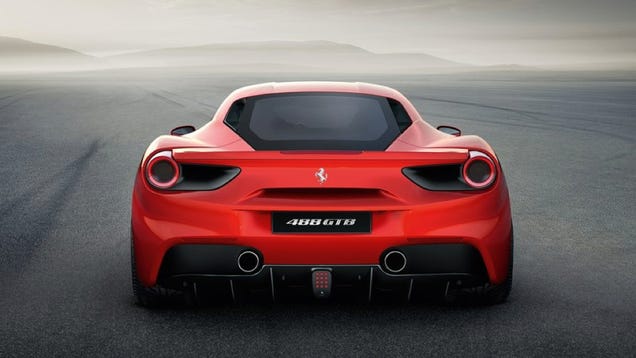
488 GTB
http://jalopnik.com/2016-ferrari-488...-it-1683354918
Since the introduction of the 308 in the mid 1970s, the entry level Ferrari has been powered by a naturally aspirated V8. That all ends today. Meet the Ferrari 488 GTB, a 3.8 liter turbocharged monster with 660 horsepower that gets to 60 in three seconds. I don't think Ferrari knows what "entry level" means.
Last edited by bitkahuna; Feb 3, 2015 at 06:56 AM.


Thread Starter
Joined: Jan 2006
Posts: 26,200
Likes: 70
From: Houston, Texas
would think that since this car has 90 more hp and a slew of other updates it would do a lot better than the 458 and Speciale, but not really. 2 sec and 1 sec faster respectively on Fiorana

2 seconds on the Fiorano track is actually a good margin at these kinds of speed on a 1.9 mile long track. Any faster and you'll be nearing the 950hp, 2800 lbs LaFerrari. It only has 60hp more than the 458 Speciale, so 1 second is expected. That's not bad for a 'base' model pitted against a 'race' car. I can only imagine what a 488 Speciale would be like. 

CL Community Team
Joined: Oct 2002
Posts: 30,273
Likes: 350
From: Canada
488 looks better than the 458 from every angle I think , 458 actually has a pretty awkward looking side profile, this new one I like a lot !!
Last edited by Gojirra99; Feb 3, 2015 at 08:11 AM.