



Camry to Keep Its V6 Option

Lexus Champion
Joined: Jan 2003
Posts: 2,618
Likes: 0
From: NYC/ATL

Thats the dumbest thing I heard


Lexus Fanatic


Joined: Oct 2003
Posts: 94,696
Likes: 290
From: Virginia/D.C. suburbs
The 3Gen 1992-1996 Camry, IMO, was quite comfortable. It wasn't quite as soft as Grandpa's old Cadillac, but mellow enough to absorb most bumps and road-imperfections well, and still maintain what I would call decent handling. That, in strong contrast to many (in fact, most) of today's vehicles with their much stiffer suspensions and substantially lower-profile tires. While not all of today's vehicles necessarily have a bone-jarring ride, most, regardless of size, ride stiff enough to see that ride-comfort today is (mostly) being ignored in favor of quick-handling.
Last edited by mmarshall; Jan 19, 2013 at 06:37 PM.

Lexus Champion


Joined: Aug 2012
Posts: 4,592
Likes: 31
From: TN
I'd say the previous two generations of Camry and first two generations of Avalon have about the same steering responses and sharpness as a late 90's Buick Regal, LeSabre, or a Cadillac Seville or Deville. All of those cars were dull to drive, had numb, overboosted steering, tracked very straight down the interstate, and rode AWESOME. Just what old people wanted. They finally dialed in some sport with the newest Camry SE.

Lexus Test Driver


Joined: Mar 2008
Posts: 9,999
Likes: 250
From: California
it seems you are being fed crap by companies who dont know how to make good V6 so have to resort to using inferior powertrains.
You can show me one Camry comparo where turbo 4 was better powertrain - let me give you a hint, it doesnt exist right now. Both Hyundai and Ford turbo's are slower and spend more fuel. But I guess "turbo" sounds great as a catchword.
You can show me one Camry comparo where turbo 4 was better powertrain - let me give you a hint, it doesnt exist right now. Both Hyundai and Ford turbo's are slower and spend more fuel. But I guess "turbo" sounds great as a catchword.
The potential is there for Toyota and Honda (and for Hyundai to improve upon). The future is in smaller, lighter, more efficient, boosted engines.
Last edited by Fizzboy7; Jan 19, 2013 at 11:30 PM.

Lexus Fanatic

Joined: Jan 2005
Posts: 20,248
Likes: 275
title of the thread:
Camry to Keep Its V6 Option
what are you talking about?
VW itself uses 6cly in Passat as top option not 4cly turbo.
BMW, Audi, cars 10k more expensive than Camry V6.

Lexus Champion
Joined: Aug 2006
Posts: 12,634
Likes: 296
From: Illinois
In the ES350, which I am familiar with, the 3.5 V6/6 speed is still class competitive in performance and fuel efficiency. And this is after 7 model years of using this drivetrain in the ES.
From a marketing and fuel efficiency standpoint Toyota may need to add another gear or two to the trans or offer a CVT sometime down the road.
From a marketing and fuel efficiency standpoint Toyota may need to add another gear or two to the trans or offer a CVT sometime down the road.
Lexus Test Driver
Joined: Mar 2008
Posts: 9,999
Likes: 250
From: California
The point of my above information is to show what COULD be done. Higher brands have already proven the merits and success of the smaller, turbo engine. The technology is there but hasn't been tapped yet by lesser companies.
Speaking of VW, next year they will be dumping the base five cylinder for guess what... a turbo four.
ClubLexus Stories
Celebrating Lexus & Toyota from Around the Globe

Lexus NX 350h: A Fuel-Sipping Secret Hot Hatch???
Michael S. Palmer
5 Best & 5 Worst Lexus Daily Drivers
Joe Kucinski
Top 5 Hottest Lexus & Toyotas in 2026 (Hardest To Buy)
Brett Foote
2026 Lexus IS 350 F Sport Review: The Last of Its Kind Still Rocks
Michael S. Palmer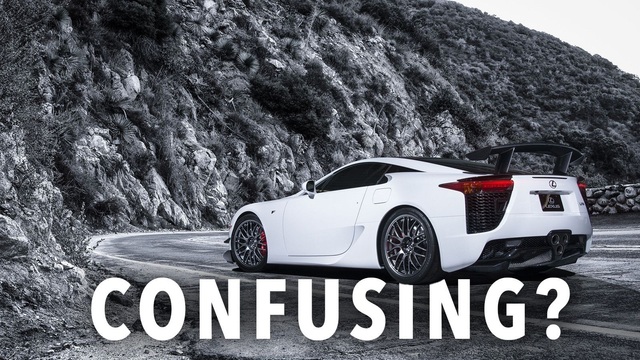
Top 10 Most Confusing Things Lexus Has Ever Done!
Joe Kucinski
2026 Lexus ES Review: Lexus Re-Embraces Founding Principles
Michael S. Palmer
10 Lexus Bargains That are Cheaper Than a New Toyota RAV4
Joe Kucinski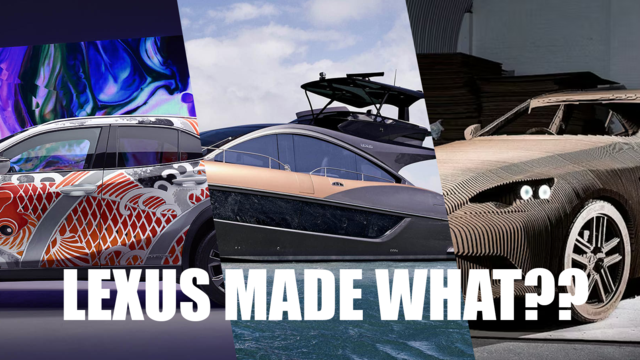
8 Weirdest Things Lexus Has Ever Built
Verdad Gallardo
10 Lexus Designs That Have Aged Like Fine Wine
Verdad Gallardo
Lexus Fanatic
Joined: Oct 2003
Posts: 94,696
Likes: 290
From: Virginia/D.C. suburbs
Electric motors produce their greatest torque at low-RPMs (theoretically, the max-torque is at 0), with lessening as RPMs build)....so they will typically have their strongest response right off the line, somewhat like diesels, which also peak at low RPMs. Most turbos, in contrast, require some lag time for the compressor to spool up enough to pack the extra air and fuel into the cylinders and get noticeable response. Turbo-lag on moden cars is greatly reduced from what it was decades ago, but it is still there. Engines with dual or multiple-turbos generally have the least amount of turbo-lag, because the engineers keep one turbo constantly spinning at low-to-medium RPMs and ready to respond fairly quickly at first, while the other turbo spools up and is ready to kick in at higher RPMs.
Last edited by mmarshall; Jan 21, 2013 at 06:39 PM.
Lexus Fanatic
Joined: Oct 2003
Posts: 94,696
Likes: 290
From: Virginia/D.C. suburbs
I'd say the previous two generations of Camry and first two generations of Avalon have about the same steering responses and sharpness as a late 90's Buick Regal, LeSabre, or a Cadillac Seville or Deville. All of those cars were dull to drive, had numb, overboosted steering, tracked very straight down the interstate, and rode AWESOME. Just what old people wanted. They finally dialed in some sport with the newest Camry SE.
Last edited by mmarshall; Jan 21, 2013 at 06:52 PM.
Lexus Fanatic
Joined: Oct 2003
Posts: 94,696
Likes: 290
From: Virginia/D.C. suburbs
We've seen the turbo four tuned low (base model) or high (top line model).
The point of my above information is to show what COULD be done. Higher brands have already proven the merits and success of the smaller, turbo engine. The technology is there but hasn't been tapped yet by lesser companies.
Speaking of VW, next year they will be dumping the base five cylinder for guess what... a turbo four.
The point of my above information is to show what COULD be done. Higher brands have already proven the merits and success of the smaller, turbo engine. The technology is there but hasn't been tapped yet by lesser companies.
Speaking of VW, next year they will be dumping the base five cylinder for guess what... a turbo four.
Other car-buyers want economy as the highest priority. They, of course, would be more likely to chose a N/A four (despite the lower performance) than a turbo four....although the difference between turbo and non-turbo EPA ratings (on the same engine) is sometimes quite small.
Last edited by mmarshall; Jan 21, 2013 at 07:08 PM.

Pole Position
Joined: Apr 2010
Posts: 392
Likes: 0
From: Montreal, QC
Lexus Fanatic
Joined: Oct 2003
Posts: 94,696
Likes: 290
From: Virginia/D.C. suburbs
Problem is.....the roads in Germany (where many of the best-handling and stiffest-riding European-designed cars come from) are usually glass-smooth, where a stiff suspension doesn't necessarily hurt comfort that much. Contrast that with many of the torn-up and pockmarked roads we have here in the U.S..........particularly in the Great Lakes/Northeast states and cities. Michigan's are (arguably) the worst. In Germany, road-maintenance seems to be taken very seriously....here, for a variety of reasons, it simply isn't. Euro-suspension vehicles, despite the clamor in the auto-press for them, are often just not suited to the rougher American roads.....although in the American South and Southwest, where the climate is mild and there is little frost/freeze-induced damage to the pavement, the roads are much better.
Lexus Fanatic
Joined: Oct 2003
Posts: 94,696
Likes: 290
From: Virginia/D.C. suburbs
In the ES350, which I am familiar with, the 3.5 V6/6 speed is still class competitive in performance and fuel efficiency. And this is after 7 model years of using this drivetrain in the ES.
From a marketing and fuel efficiency standpoint Toyota may need to add another gear or two to the trans or offer a CVT sometime down the road.
From a marketing and fuel efficiency standpoint Toyota may need to add another gear or two to the trans or offer a CVT sometime down the road.