When you click on links to various merchants on this site and make a purchase, this can result in this site earning a commission. Affiliate programs and affiliations include, but are not limited to, the eBay Partner Network.
Is there such a thing as an "entry level vehicle" anymore? This may be the wrong site to pose this question to as those on CL are into luxury vehicles, but most of us came from humble beginnings and drove basic vehicles in our youth. For instance, I drove a $50 1959 VW Bug, in three shades of primer, while getting through college and starting my career in the 1970's.
It would be an interesting experiment (perhaps in futility) to manufacture a vehicle with modern advancements in efficiency and safety, without all the extra tech and bling that simply drive up cost and complexity. I would be curious to know how much we could reduce the cost of a new vehicle and the cost of ownership, while still delivering a great utilitarian vehicle for the entry level commuter who mostly needs a vehicle to get back and forth to school or work.
Because an entry level vehicle is so well equipped these days, they're exorbitantly expensive to buy, maintain and insure. Buyers now take out 84 to 96-month loans just to afford the payments, but that pretty much ensures they'll have a car payment the rest of their lives! Too, with the high cost of insurance and repairs, in part from the complexity of all the bells and whistles, those strapped with long-term payments likely won't be able to afford to repair them. Working class people can barely afford rent...and now they can't afford transportation!
I feel it's time for manufacturers to take a step back and design affordable, practical, reliable vehicles for the masses. They could call it the Folk's Wagon, oh wait...
Entry level transportation has never been a new car for most drivers.
Entry level transportation is buying a used car, often 10-20 years old. Especially for those of us who started driving as teenagers(that isn't as common today).
Entry level transportation has never been a new car for most drivers.
Entry level transportation is buying a used car, often 10-20 years old. Especially for those of us who started driving as teenagers(that isn't as common today).
All true, and I took your points into consideration when posing this question. I guess I'm asking too why people can't even able to buy entry level used cars, as the trend of manufactures not offering vehicles in this segment has been waning for years. So, inexpensive vehicles to buy, insure, and operate aren't available on the used car market either!
Working class people are gonna be SOL in the years to come!
Yes, people who have money will not buy a basic car and those who don't generally can't afford new at all. It's a dead market as those who just need a car clearly care about money more than anything else and you simply can't beat used for $$$ per mile.
Its the exact reason why luxury cars drop off a cliff price wise, the second a new generation is out it's no longer appealing to those who have the means to buy whatever they want and used ones are EXPENSIVE to run and that precludes them from most used buyers.
The only reason I have the cars I do is because they are comically cheap to run, for me. For most they would be financial suicide, in my case I get an insanely good experience for less than a lease cost of a bargain bin Chevy.
IMHO entry-level vehicles in the American market are not extinct. There are a number of good vehicles today that, price-wise and by today's standards, could be considered "Entry-Level"....Chevrolet Trax, Buick Envista, Mazda CX-30, Hyundai Venue, and Kia Soul/Seltos, to name a few of them right off the bat.
Last edited by mmarshall; Dec 1, 2024 at 09:39 PM.
Is there such a thing as an "entry level vehicle" anymore? This may be the wrong site to pose this question to as those on CL are into luxury vehicles, but most of us came from humble beginnings and drove basic vehicles in our youth. For instance, I drove a $50 1959 VW Bug, in three shades of primer, while getting through college and starting my career in the 1970's.
It would be an interesting experiment (perhaps in futility) to manufacture a vehicle with modern advancements in efficiency and safety, without all the extra tech and bling that simply drive up cost and complexity. I would be curious to know how much we could reduce the cost of a new vehicle and the cost of ownership, while still delivering a great utilitarian vehicle for the entry level commuter who mostly needs a vehicle to get back and forth to school or work.
Because an entry level vehicle is so well equipped these days, they're exorbitantly expensive to buy, maintain and insure. Buyers now take out 84 to 96-month loans just to afford the payments, but that pretty much ensures they'll have a car payment the rest of their lives! Too, with the high cost of insurance and repairs, in part from the complexity of all the bells and whistles, those strapped with long-term payments likely won't be able to afford to repair them. Working class people can barely afford rent...and now they can't afford transportation!
I feel it's time for manufacturers to take a step back and design affordable, practical, reliable vehicles for the masses. They could call it the Folk's Wagon, oh wait...
you're comparing apples and oranges for one thing... your "$50 vw bug" wasn't new i'm sure lol, and you can still get used cars in "three shades of primer" for not much. so no, buyers don't need to take 84-96 month loans for an entry level car.
as for the car makers, partly because of regulations/mandates, they can't make money on 'bare bones' cars.
The cheapest new car ever sold in the US was the Yugo GV, which was $4,379 (including destination) in 1986, or about $12,600 today. I'd say anything costing less than double the cheapest thing ever could qualify as entry level. And there are 23 different vehicles available brand-new for an MSRP of less than $25k, including four for under $20k. Some of the sub-$25k cars are actually quite good.
As others have noted, often a first or low-end car isn't new at all. And while the used market hasn't fully recovered from the post-COVID price inflation, there are still plenty of sub-$5k cars out there in halfway-decent condition.
The cheapest new car ever sold in the US was the Yugo GV, which was $4,379 (including destination) in 1986, or about $12,600 today. I'd say anything costing less than double the cheapest thing ever could qualify as entry level. And there are 23 different vehicles available brand-new for an MSRP of less than $25k, including four for under $20k. Some of the sub-$25k cars are actually quite good.
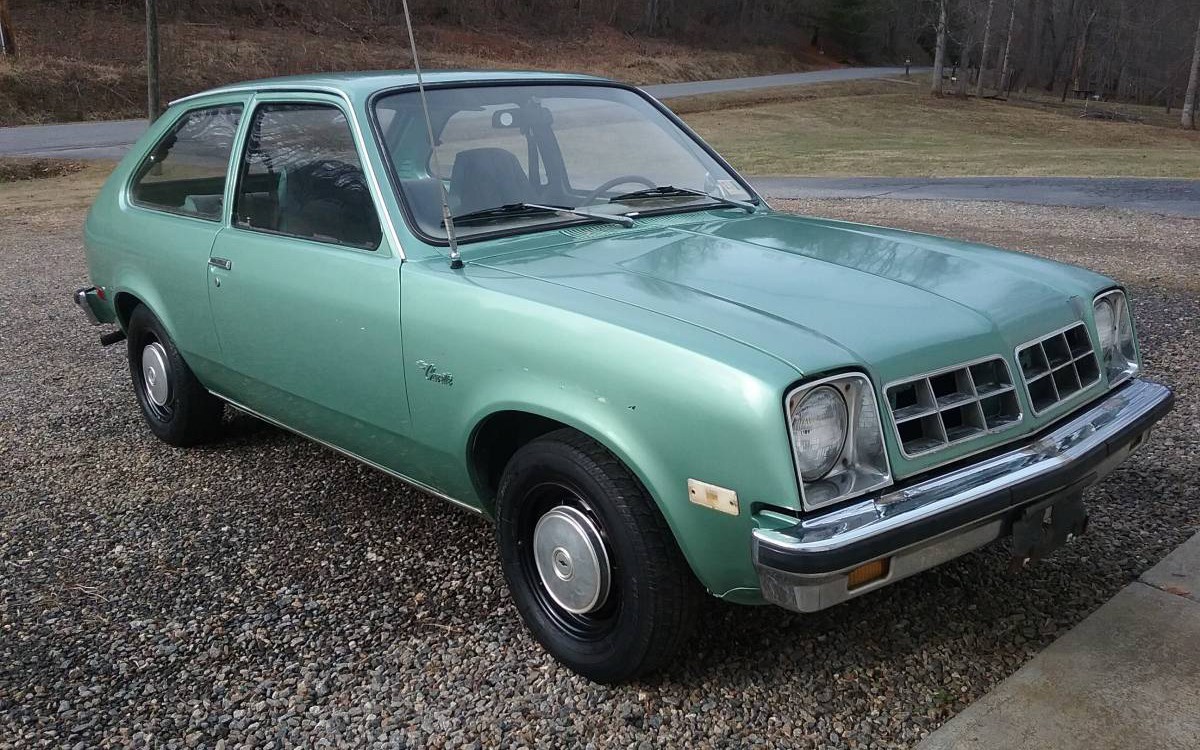
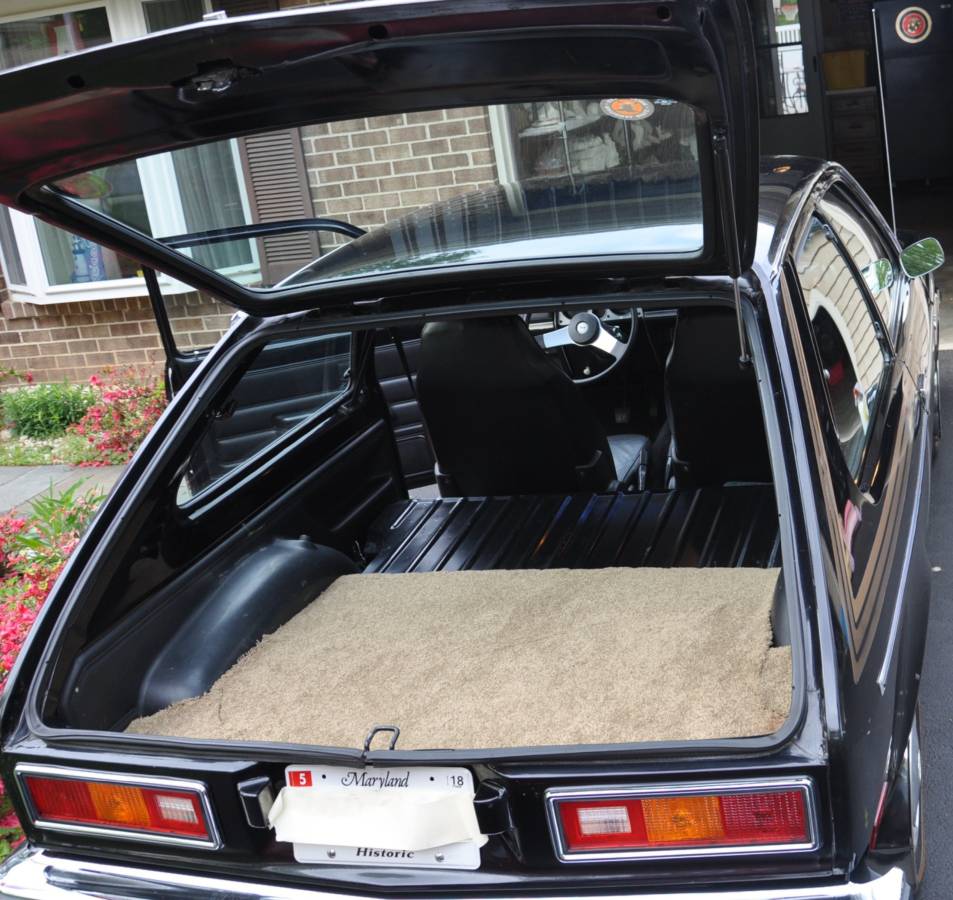
I don't know if you remember it or not, but, a few years before the Yugo, in the early 1980s, the Chevy Chevette Scooter started at $2999. But you got what you paid for....the interior and exterior were almost as stark as a military vehicle, and it did not even have a back seat....that was optional.
Last edited by mmarshall; Dec 2, 2024 at 12:10 PM.
I don't know if you remember it or not, but, a few years before the Yugo, in the early 1980s, the Chevy Chevette Scooter started at $2999. But you got what you paid for....the interior and exterior were almost as stark as a military vehicle, and it did not even have a back seat....that was optional.
I was aware of the Chevette in general, as a friend of mine had one (84 maybe?), but not the Scooter. Wikipedia says it launched in the US in 1975. $2,999 in 1975 dollars is equal to $6,109 in 1986 money (or $17,600 today), and Google says the 1986 Chevette CS 2-door had an MSRP of $6,225, so that tracks pretty well. Either way you compare, it looks like the Chevette Scooter was roughly 50% more expensive than the Yugo GV.
Inflation adjustment is all well and good but also remember that buying power has also suffered on top of that because other aspects of life have gotten dramatically more expensive.
These cars absolutely still exist. One of my agents for instance just sold her old beat up Honda Pilot for $250. Lets assume your 1959 Bug was purchased by you in 1975...$50 in 1975 is $302.94 today. So you could have bought her Pilot for less than your $50 VW Bug.
The reason why carmakers don't sell bare bones stripper models is because it doesn't make business sense for them to do so.
Buyers now take out 84 to 96-month loans just to afford the payments
While these loans exist, they are not commonplace. The average length of financing is 68 months. Loans over 72 months are uncommon.
While these loans exist, they are not commonplace. The average length of financing is 68 months. Loans over 72 months are uncommon.
While the bolded is true, it does not tell the whole story, and does not support the sentences before or after. This is because it is highly skewed by Super Prime borrowers (781-850 credit score), who have an average length of 64 months. But every other tranche has average loan lengths over 71 months.
Roughly 30% of all car loans are 73 months or longer. Almost a third is not uncommon.
Entry level vehicles absolutely exist; but your concept of what that vehicle should cost just doesn't line up with the market.
What I'm asking is: Could manufacturers make entry level vehicles for low wage earners that are affordable to buy, insure and maintain? Sure, most manufacturers have "lower-priced" offerings, but they're relatively well equipped compared to 20-30 years ago, and expensive to insure and maintain. This predicament is not entirely the manufacturer's fault. As repair costs rise, insurance costs rise. Thus, to counter this trend, people without much money need options, like cars designed and built with affordability as a primary objective, rather than style, performance, or convenience. Something has to give, or we'll become a two-class nation...those who can afford to drive, and those who are forced to take public transit, or ride their bike to work or school.
Before I bought my $50 bug, I was commuting to work on my early 60's Honda 160, even in the rain, until somebody stole it from my apartment building where I had it chained to a metal fence post. My school of hard knocks is why I empathize with the others starting out. I was lucky enough to have mechanical skills to do my own maintenance, but people like me are not common. Most low-wage workers can't afford the cost of parts and labor rates at most shops.
Another "people's car" is the answer. One of the things "the people" liked about the bug was how easy it was to work on, and how little there was to go wrong compared to today's entry-level vehicles. DIY people these days are finding it progressively harder to troubleshoot and repair modern vehicles...they're hard to work on, and much to go wrong!
While the bolded is true, it does not tell the whole story, and does not support the sentences before or after. This is because it is highly skewed by Super Prime borrowers (781-850 credit score), who have an average length of 64 months. But every other tranche has average loan lengths over 71 months.
Roughly 30% of all car loans are 73 months or longer. Almost a third is not uncommon.




 Why is the Entry-Level Vehicle Extinct?