


Rims & Performance


 Rims & Performance
I have a 96 SC400 with some still-shiny 16" stock Lexus rims:
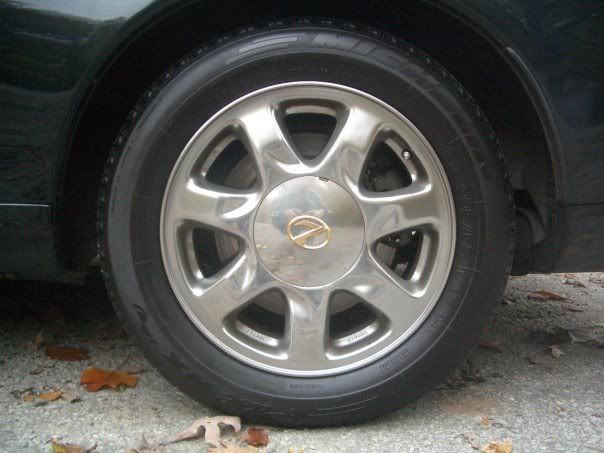
I am looking to upgrade. Some performance purests claim anything over 15" slows the car down. Others claim better times in lightweight eighteens. From tire weight to rotational inertia to traction to handling, I have read dozens of differing arguments on the relationship between wheel size and performance. Please help...
Settle the debate: Will any larger rim models enhance the performance of my SC?
------------------
I would prefer the look of a larger wheel, but I do not want to sacrifcie performance. In fact, I would prefer to enhance it.
I am looking to upgrade. Some performance purests claim anything over 15" slows the car down. Others claim better times in lightweight eighteens. From tire weight to rotational inertia to traction to handling, I have read dozens of differing arguments on the relationship between wheel size and performance. Please help...
Settle the debate: Will any larger rim models enhance the performance of my SC?
------------------
I would prefer the look of a larger wheel, but I do not want to sacrifcie performance. In fact, I would prefer to enhance it.


i got 18 inch wheels and when i put them on i did notice that the low end poerofrmace went down just a little, nothing big, but also the MPG went down from 28 to 21, that was the biggest thing.

Pole Position


Joined: Apr 2006
Posts: 2,873
Likes: 0
From: South Florida
yea you loose low end torque whit bigger rims ,but more top end . performance wise i say 18's are good for our cars im 0n 19's and my gas milage sukks ,but then again i cant stay out of boost

Pole Position
Joined: Mar 2004
Posts: 296
Likes: 0
From: Florida
the complicated answer:
you can run any rim you choose, providing that you have the correct gears to run the size rim/tire you want.
anything between 15" and 18" should do fine, but it comes down to personal prefernce, personally i like the look of a lowered 18" but the mythical number among performance junkies is 17"(looks good and is not too big)
i think you also have a WIDER aray of performance tires in 15 16 and 17. and also remember the bigger the rim the heavier it will be.
if your car is stock vs turbo also plays a major role when choosing a rim/tire.
use the search function there are alot of pics and techie stuff to help you make your decision...
kue
you can run any rim you choose, providing that you have the correct gears to run the size rim/tire you want.
anything between 15" and 18" should do fine, but it comes down to personal prefernce, personally i like the look of a lowered 18" but the mythical number among performance junkies is 17"(looks good and is not too big)
i think you also have a WIDER aray of performance tires in 15 16 and 17. and also remember the bigger the rim the heavier it will be.
if your car is stock vs turbo also plays a major role when choosing a rim/tire.
use the search function there are alot of pics and techie stuff to help you make your decision...
kue

Lexus Test Driver
Joined: Nov 2006
Posts: 1,002
Likes: 0
From: Georgia
****
im gettin new rims as well
28 to 21 gas mileage is pretty scarey
how much would it drop on an SC, our cars start off with something like 19 street and 23 highway right?
i'd go with 18's as well, my preference
im gettin new rims as well
28 to 21 gas mileage is pretty scarey
how much would it drop on an SC, our cars start off with something like 19 street and 23 highway right?
i'd go with 18's as well, my preference

Lexus Test Driver
Joined: Feb 2002
Posts: 1,421
Likes: 1
From: NY
Performance needs to be defined. Different types of rims and tires are needed for different applications. Some people claim that a low profile tire is great for handling and cornering. However, this is useless in a drag racing application. There is no universal super rim.
Define performance.
Define performance.
Trending Topics

Lead Lap
Joined: Nov 2005
Posts: 573
Likes: 0
From: NY
someone mentioned that you would lose low end power, but gain top end... how is that possible?
anyway...
you can have a 20lb 16" rim and a 20" 18" rim, althought the rims WEIGHT the same, the 16" rim will GENERALLY give better performance. this is because think about where the majority of the mass is in the 18, its pushed out further the outsides of the diamater, this makes the wheel harder to turn, where as the 16" rims weight is more centered.
also you have aspect suchs as width, generally the wider the tire/wheel the better acceleration, but if you live where snow can be an issue, narrow tires cut through snow better.
anyway...
you can have a 20lb 16" rim and a 20" 18" rim, althought the rims WEIGHT the same, the 16" rim will GENERALLY give better performance. this is because think about where the majority of the mass is in the 18, its pushed out further the outsides of the diamater, this makes the wheel harder to turn, where as the 16" rims weight is more centered.
also you have aspect suchs as width, generally the wider the tire/wheel the better acceleration, but if you live where snow can be an issue, narrow tires cut through snow better.
Get up and go is my primary focus, but I do not want to completely neglect handling, cornering, and brakeing either.
I would prefer a larger wheel size that maintains quickness while supplying improved handling and cornering. I suppose that is my definition of performance: maintaining or improving quickness while also improving handling. What rim would capacitate this?
---------------
Although I do enjoy the current look with the OEM chrome 16's, I also recognize that bigger rims would make the car look better.
I would prefer a larger wheel size that maintains quickness while supplying improved handling and cornering. I suppose that is my definition of performance: maintaining or improving quickness while also improving handling. What rim would capacitate this?
---------------
Although I do enjoy the current look with the OEM chrome 16's, I also recognize that bigger rims would make the car look better.
you can have a 20lb 16" rim and a 20" 18" rim, althought the rims WEIGHT the same, the 16" rim will GENERALLY give better performance. this is because think about where the majority of the mass is in the 18, its pushed out further the outsides of the diamater, this makes the wheel harder to turn, where as the 16" rims weight is more centered.
also you have aspect suchs as width, generally the wider the tire/wheel the better acceleration, but if you live where snow can be an issue, narrow tires cut through snow better.
also you have aspect suchs as width, generally the wider the tire/wheel the better acceleration, but if you live where snow can be an issue, narrow tires cut through snow better.
Will any bigger rims capacitate as quick or quicker acceleration than my stock rims? Will all bigger rims hinder fuel economy? Would a rim that would quicken the car not imply that less energy would be needed to move the car regardless of rim size?

Zombie Slayer

Joined: May 2004
Posts: 6,053
Likes: 3
From: East Bumble F, NJ
someone mentioned that you would lose low end power, but gain top end... how is that possible?
anyway...
you can have a 20lb 16" rim and a 20" 18" rim, althought the rims WEIGHT the same, the 16" rim will GENERALLY give better performance. this is because think about where the majority of the mass is in the 18, its pushed out further the outsides of the diamater, this makes the wheel harder to turn, where as the 16" rims weight is more centered.
also you have aspect suchs as width, generally the wider the tire/wheel the better acceleration, but if you live where snow can be an issue, narrow tires cut through snow better.
anyway...
you can have a 20lb 16" rim and a 20" 18" rim, althought the rims WEIGHT the same, the 16" rim will GENERALLY give better performance. this is because think about where the majority of the mass is in the 18, its pushed out further the outsides of the diamater, this makes the wheel harder to turn, where as the 16" rims weight is more centered.
also you have aspect suchs as width, generally the wider the tire/wheel the better acceleration, but if you live where snow can be an issue, narrow tires cut through snow better.
I'll answer this along with the OP's question.
In general terms, switching to a larger rim decreases low-end performance due to the total height (wheel + tire) being larger than the stocker. This in turn effectively alters your final rear-end drive ratio to a lower ratio (ie 3.73 rear to 3.50 rear). Conversely, this also results in higher POTENTIAL top speed.
Lets say your stock wheel/tire measures 24" in total height. If you switch to an 18" rim and size your tire's sidewall to result in a 24" total height there would be no change in the final drive ratio. Now, if the new 18" setup weighs more than the stock setup it will decrease responsiveness. This would be an increase in unsprung weight, basically the absolute worst place you can add weight to a car if you are looking to improve all around performance. Going with a lightweight rim will help.
As verylost said, a low, stiff sidewall can improve cornering ability. To add to this, the tire compound and tread pattern also matter. With a stickier compound you'll get better traction but will also wear the tire much faster.
For drag racing the sidewall of the tire tends to be a bit bigger (they do make some "low profile" drag radials but it is more a marketing gimick than a true lowpro tire) and have very sticky compounds. Wont last you more than a few months on the street (if they are DOT approved).
Hope that info helps.
Last edited by mkorsu; Dec 20, 2006 at 01:21 PM.

18"'s if you want balance in cornering performance and accelleration. But only if you have enough power to break traction that is...
But I have 19"s and I think they're great.
But I have 19"s and I think they're great.
Zombie Slayer
Joined: May 2004
Posts: 6,053
Likes: 3
From: East Bumble F, NJ
Not "any". Most of the bling style chrome rims weigh MUCH more than stock rims. A good, lightweight rim will also command a premuim in cost, but can give you a balance of performance and style.
Even with a decrease in weight, your "off-the-line" performance will be barely noticeable. The "butt" dyno will indicate that you've done wonders for the car, but at the track you'd be lucky to see a 1/10th reduction on 1/4mi time.
If you are looking for acceleration, then downsize to a 15" rim, which will effectively increase your final drive ratio, allowing for quicker acceleration.
This raises some questionability to the claims of mileage decreases with larger rims. In theory this should not happen. (unless you went and got some cheesy-azz Pep Boys rims that weigh 50lb each). A good, quality, larger rim, in theory, should result in better gas mileage (based on highway driving). Wheels from companies such as Volk, Work, Racing Hart, etc fit the bill here. iForged and other high end rims also offer some lighter versions.
Pole Position
Joined: Apr 2006
Posts: 2,873
Likes: 0
From: South Florida
i love my 19,s just wish tires was a lil bit cheaper .but jus keep in mind the bigger the wheel the more distance you will cover