When you click on links to various merchants on this site and make a purchase, this can result in this site earning a commission. Affiliate programs and affiliations include, but are not limited to, the eBay Partner Network.
Close inspection of the wiring looks like the next step, then.
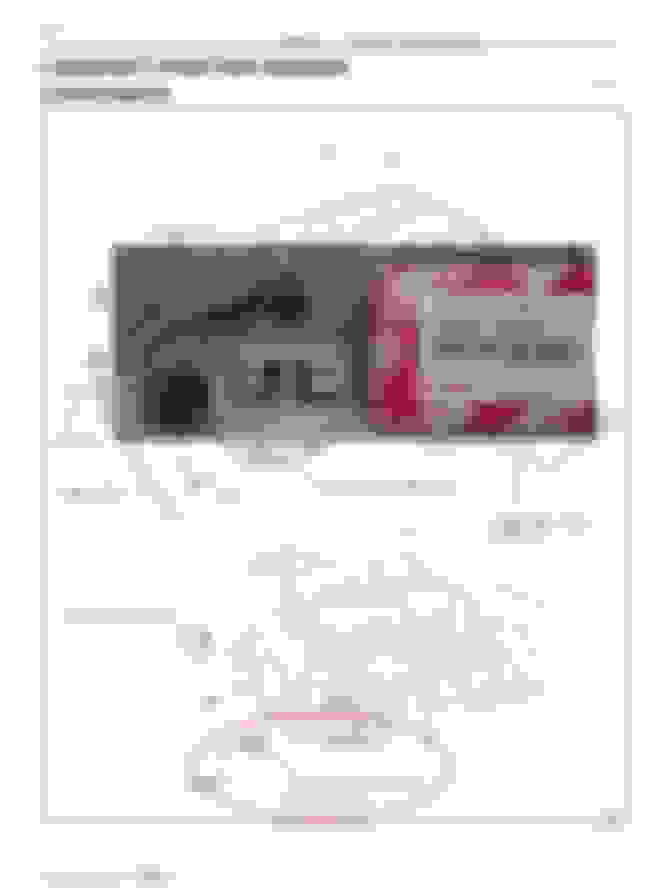
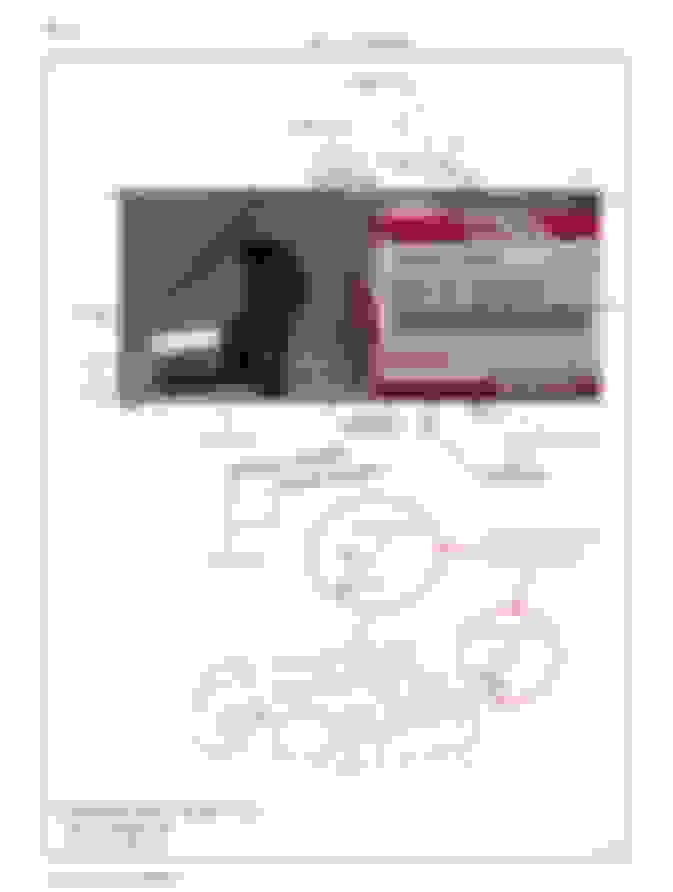
See harness inspection procedures below...
"V5" is the connector to the driver-side VVT sensor, and it goes to "E5" plug into the ECM; "V6" is the one on the passenger-side which goes to the "E4" plug to the ECM.
Last edited by rkw77080; Aug 10, 2015 at 07:02 PM.
"V5" is the connector to the driver-side VVT sensor, and it goes to "E5" plug into the ECM; "V6" is the one on the passenger-side which goes to the "E4" plug to the ECM.
It seems that the P0340 code on this vehicle actually refers to the VVT sensor on the left bank as seen from sitting in the vehicle (Bank 1). Therefore he will want to examine the wiring on E5 and V5 on the attached diagram.
Last edited by Arcturus; Aug 10, 2015 at 09:50 PM.
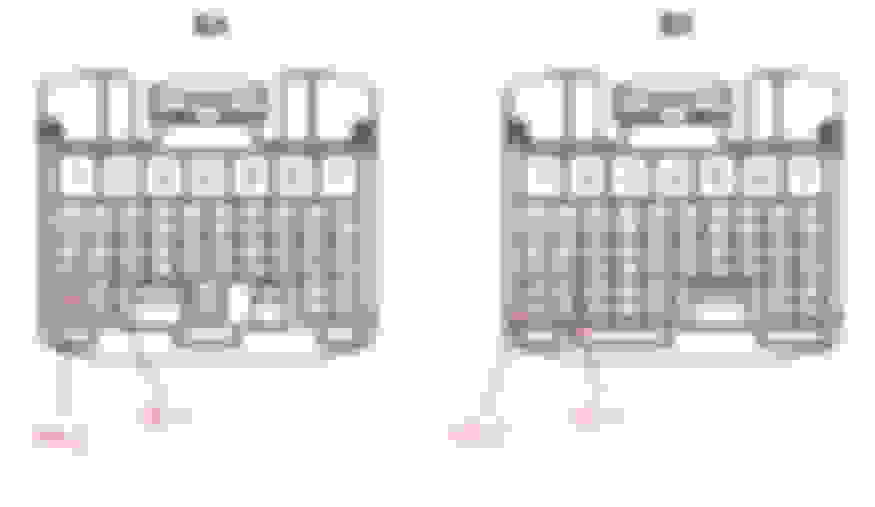
Here are the close-up of connectors "E4" and "E5" (view from the socket-side). Test for continuity:
From E4-18 to V6-2
From E4-19 to V6-1
From E5-18 to V5-2
From E5-19 to V5-1
Here's the layout of your ECM's connectors:
Last edited by rkw77080; Aug 13, 2015 at 03:52 AM.
I found service manual pages somewhere online (printed them out, now cannot find them again). P0340 refers to the camshaft position sensor in the front of the cylinder head, near the oil dipstick and fill.
I thought the cam position sensors were already replaced and this is a new code afterward? Sounds like you need the VVT sensor - Bank 1 (driver's side) ...
I think we need to start with a same set of terms. The VVT Sensors and Camshaft Position Sensor both monitor camshaft position. The so called "Camshaft Position Sensor" at the timing belt measures the true position of the camshaft as related to the crankshaft. These is only one of these and it's located on the driver-side camshaft pulley.
The ECM on your VVT-i engine varies the timing of the intake valves by adjusting the relationship between the camshaft drive (timing belt) and intake camshaft. Engine oil pressure is applied to an actuator to adjust the camshaft position, which adjusts the overlap time between the exhaust valve closing and intake valve opening result in improved engine efficiency. The VVT sensor monitors this "manipulated" camshaft position. There are 2 of these VVT sensors (Bank 1 is on the driver-side, Bank 2 is on the passenger-side).
You mentioned in one of your previous posts that you have replaced the 90919-A5002 (which is the same part as 90919-05036). These are your VVT sensors. But since new VVT sensors did not clear the DTC, you stated that the next step is to check the harness - and I believe that is what we are doing now. You will need a multimeter to 1) Check for continuity between the ECM connector and the sensor connector, and 2) Check for short to ground. per procedures posted above (Post #20).
For your reference, here's a copy of P0340 troubleshooting procedures.
Last edited by rkw77080; Aug 12, 2015 at 03:03 PM.
I think we need to start with a same set of terms. The VVT Sensors and Camshaft Position Sensor both monitor camshaft position. The so called "Camshaft Position Sensor" at the timing belt measures the true position of the camshaft as related to the crankshaft. These is only one of these and it's located on the driver-side camshaft pulley.
The ECM on your VVT-i engine varies the timing of the intake valves by adjusting the relationship between the camshaft drive (timing belt) and intake camshaft. Engine oil pressure is applied to an actuator to adjust the camshaft position, which adjusts the overlap time between the exhaust valve closing and intake valve opening result in improved engine efficiency. The VVT sensor monitors this "manipulated" camshaft position. There are 2 of these VVT sensors (Bank 1 is on the driver-side, Bank 2 is on the passenger-side).
You mentioned in one of your previous posts that you have replaced the 90919-A5002 (which is the same part as 90919-05036). These are your VVT sensors. But since new VVT sensors did not clear the DTC, you stated that the next step is to check the harness - and I believe that is what we are doing now. You will need a multimeter to 1) Check for continuity between the ECM connector and the sensor connector, and 2) Check for short to ground. per procedures posted above (Post #20).
For your reference, here's a copy of P0340 troubleshooting procedures.
It may be worth mentioning that the P0340 code is a generic OBD II code for a camshaft position sensor fault. This code may be used across several makes and models. However in this specific vehicle, according to the service manual that rkw77080 has kindly posted, this code indicates a fault with the VVT sensor on bank 1. Since it appears that these sensors were recently changed, it would make sense that something in the wiring or connection could have been disturbed during the install.
I thought the cam position sensors were already replaced and this is a new code afterward? Sounds like you need the VVT sensor - Bank 1 (driver's side) ...
The code P0340 came when the VVT for ACIS parts were replaced.
It has not gone away despite replacing both cam sensors.
It may be worth mentioning that the P0340 code is a generic OBD II code for a camshaft position sensor fault. This code may be used across several makes and models. However in this specific vehicle, according to the service manual that rkw77080 has kindly posted, this code indicates a fault with the VVT sensor on bank 1.
Thanks a lot! Now I got it.
(I found some service manual pages on line, purportedly for the LS430, that showed a completely different procedure for a P0340, and which included the part that is referred to as the cam shaft position sensor on most automobiles, not the VVT sensor)
Originally Posted by Arcturus
Since it appears that these sensors were recently changed, it would make sense that something in the wiring or connection could have been disturbed during the install.
Or rather, disturbed when the VSV for ACIS parts were replaced.
Still, though, the car behaves just as if the part that is referred to as the cam sensor on most automobiles is faulty, i.e. often it takes a few attempts to start...
I believe the same applies to 2001-2003 LS430. Likewise, 2004-2006 are largely identical.
The one I posted previously were taken out of the 2003 repair manual (I also have the 2006 repair manual). For comparison, here are the 2 versions of the same DTC...









 Sounds like you need the VVT sensor - Bank 1 (driver's side) ...