


Considering a 2015-2017 Lexus ES 350, need advice please


Thread Starter
9th Gear

Joined: Aug 2020
Posts: 9
Likes: 1
From: IL
 Considering a 2015-2017 Lexus ES 350, need advice please
Greetings! I am considering shopping for a Lexus ES 350 (2015-2017 year models). I will start with saying that if I buy one, this will be the first Toyota/Lexus that I or anyone in my family has ever owned. In the past, my family has owned pretty much GM, Ford, or Chryslers and have had mostly good luck with the later 2 and not so good with the former but I don't want to brand bash. I'm thinking about giving a Lexus ES 350 a due to the reputation and amazing interior but there are some things I have concerns about that I was hoping current owners could explain to me.
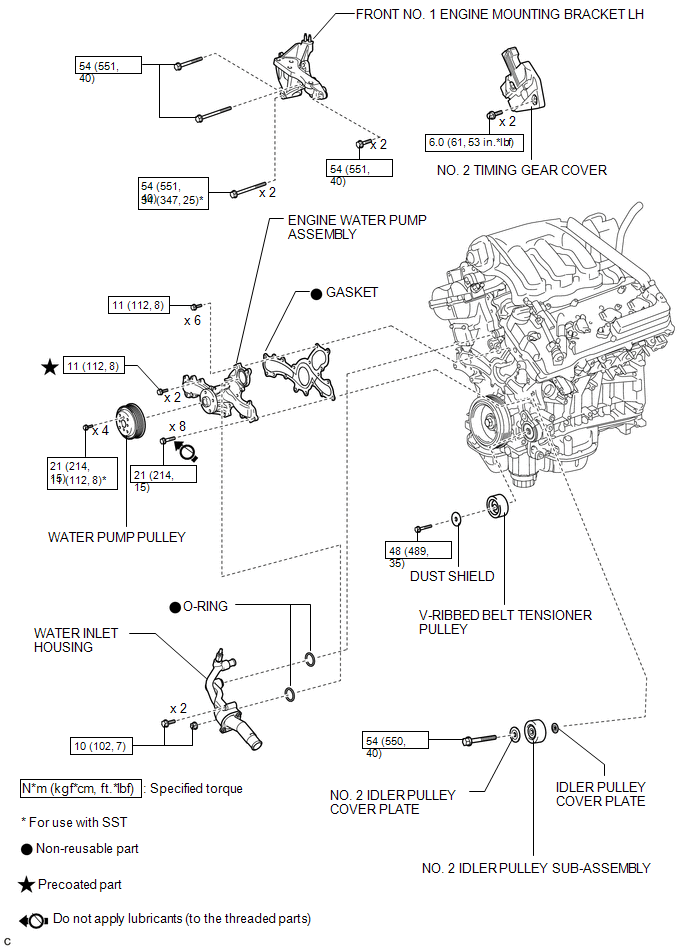
Internal water pump: From my understanding the Lexus ES 350 uses a timing chain driven water pump. Having read many videos and read many forums, many are criticizing Ford's FWD version of their 3.5L V6 for having their water pump being run by a timing chain as it can cost north of $2,000 to repair. Although it has a weep hole for the coolant to pour out of when it is failing, in some cases the gasket has failed causing the coolant to leak into the crankcase and mix with oil which can lead to more severe damage or failure of the engine. From what I have read about the Toyota/Lexus 3.5L V6 it costs significantly less to replace its internal water pump ($700-800), also does the Toyota/Lexus 3.5L V6 have to potential for the coolant to leak into the crankcase and mix with the oil or did Toyota/Lexus do something different to prevent this from even being a possible problem?
Transmission maintenance: Having owned many Chryslers, I have become accustomed to flushing the transmission fluid every 30K miles to keep them reliable (which has worked successfully for me). How frequently does the transmission in the ES 350 need to be maintained to keep it reliable and what fluid needs to be used in it?
Push Button starters: I am used to using traditional keys and want to make sure there haven't been any noteworthy problems with using these in Lexus.
Steering systems: I haven't had much time to research this; however, I know on the "Big Three" electric steering systems seem to be problematic and expensive. Have Lexus's been trouble free on this?
Any problems I should look out for (electric gremlins), any areas of preventative maintenance that needs to be done, etc.
Any other advice /tips on how to have a hundreds of thousands of trouble free miles with a 2015-2017 Lexus ES 350?
Internal water pump: From my understanding the Lexus ES 350 uses a timing chain driven water pump. Having read many videos and read many forums, many are criticizing Ford's FWD version of their 3.5L V6 for having their water pump being run by a timing chain as it can cost north of $2,000 to repair. Although it has a weep hole for the coolant to pour out of when it is failing, in some cases the gasket has failed causing the coolant to leak into the crankcase and mix with oil which can lead to more severe damage or failure of the engine. From what I have read about the Toyota/Lexus 3.5L V6 it costs significantly less to replace its internal water pump ($700-800), also does the Toyota/Lexus 3.5L V6 have to potential for the coolant to leak into the crankcase and mix with the oil or did Toyota/Lexus do something different to prevent this from even being a possible problem?
Transmission maintenance: Having owned many Chryslers, I have become accustomed to flushing the transmission fluid every 30K miles to keep them reliable (which has worked successfully for me). How frequently does the transmission in the ES 350 need to be maintained to keep it reliable and what fluid needs to be used in it?
Push Button starters: I am used to using traditional keys and want to make sure there haven't been any noteworthy problems with using these in Lexus.
Steering systems: I haven't had much time to research this; however, I know on the "Big Three" electric steering systems seem to be problematic and expensive. Have Lexus's been trouble free on this?
Any problems I should look out for (electric gremlins), any areas of preventative maintenance that needs to be done, etc.
Any other advice /tips on how to have a hundreds of thousands of trouble free miles with a 2015-2017 Lexus ES 350?

Thread Starter
9th Gear
Joined: Aug 2020
Posts: 9
Likes: 1
From: IL
I appreciate the response; however, I'm looking for more technical information if anyone can explain. My results with CR is in an inverse relationship with their results (if they recommend it, I have bad luck with it, if they are not fond of it, I have good results).

Advanced


Joined: Aug 2019
Posts: 516
Likes: 203
From: Georgia
Water pump is external. See youtube or parts diagram.
I change my fluid (drain and fill) every 30k. Some say not to do it at all, some say 60k, some say 100k. It does have a replaceable paper element filter. You will need either techstream or scangage II for transmission fluid temps. It does not have a dipstick and relies heavily on trans temperature. YouTube is your friend and plenty of threads here on it.
Once you have the keyless ignition you will love it. Just keep a spare battery in your console.
No troubles with Lexus steering. I have been a mechanic for over 40 years and have restored many vehicles. Driving and maintaining this Lexus is the reason I bought it.
Minor issues may vary, but in a nutshell the ES 350 is probably one of the most, or is the most trouble free car on the road.
I change my fluid (drain and fill) every 30k. Some say not to do it at all, some say 60k, some say 100k. It does have a replaceable paper element filter. You will need either techstream or scangage II for transmission fluid temps. It does not have a dipstick and relies heavily on trans temperature. YouTube is your friend and plenty of threads here on it.
Once you have the keyless ignition you will love it. Just keep a spare battery in your console.
No troubles with Lexus steering. I have been a mechanic for over 40 years and have restored many vehicles. Driving and maintaining this Lexus is the reason I bought it.
Minor issues may vary, but in a nutshell the ES 350 is probably one of the most, or is the most trouble free car on the road.
Thread Starter
9th Gear
Joined: Aug 2020
Posts: 9
Likes: 1
From: IL
rmak, thank you very much for responding. Just trying to make sure I understand correctly as I am not mechanically inclined (though I like to understand technical details that I can verify via videos and photos). You are saying that while the water pump is run off the timing chain instead of the Drive belt, the pump is external and as a result, if it starts leaking, it will not leak on the inside of the crankcase like Ford's Cyclone V6 will and it would be impossible for a oil and coolant mixture problem like the Ford engine has been known for concerning the water pump. Correct? Is there an interval that is a good idea to change the water pump to avoid a breakdown? (I tend to be a "ounce of prevention is worth a pound of cure" mindset person). Also what transmission fluid should I use to keep the transmission happy over the long term?
Advanced
Joined: Aug 2019
Posts: 516
Likes: 203
From: Georgia
The water pump is run off the belt, not timing chain. The only way for oil and coolant to mix is like any other car, either cracked block or blown head gasket. I use the factory Toyota WS fluid or Valvoline synthetic (red bottle) that is WS compatible. The drain and fill uses 2 quarts and I use 1 of each. Keeps the factory fluid properties and synthetic properties of the Valvoline.
see https://parts.longolexus.com/v-2016-...em--water-pump
see https://parts.longolexus.com/v-2016-...em--water-pump
Trending Topics

Driver
Joined: Oct 2019
Posts: 132
Likes: 68
From: MN
I agree with @rmak on the fluid changes. I know it's supposed to be lifetime fluid, but I also know that the definition of "lifetime" can easily be "until the transmission fails because you didn't change the fluid, dummy." 
On the electric steering, Toyota's been doing it a long time. The electric power steering on my 1993 MR2 is one of the seemingly few things that isn't breaking on the old beast these days. I'm not worried about the system on the ES.
As for hundreds of thousands of *trouble free* miles? If you find a car from any manufacturer anywhere that can do that, let me know. I'll buy one.
On the electric steering, Toyota's been doing it a long time. The electric power steering on my 1993 MR2 is one of the seemingly few things that isn't breaking on the old beast these days. I'm not worried about the system on the ES.
As for hundreds of thousands of *trouble free* miles? If you find a car from any manufacturer anywhere that can do that, let me know. I'll buy one.

Driver
Joined: Dec 2018
Posts: 73
Likes: 22
From: California
Try an ES300h
First let me say that these products are more reliable than any other vehicle made. We bought a toyota certified 2016 ES 300H with the Nav, Luxury and Safety packages with 27K miles in Jan 2018. At the time we test drived an ES 350 as well. I have also driven ES 350 loaners when we did our free routine services. We preferred the ES 300h for drivability and comfort, not to mention mileage. The only surprise we had was changing a broken windshield is expensive because of the need to re-calibrate the forward looking safety sensors that are behind the rear view mirror, This, however, is common to all cars with these types of sensors. The only other gripe is that the Nav system is clunky to do data entry.
We love the key fob. You just walk up to the door and touch the handle to unlock it. Push button start is great. Teh fob never leaves the pocket until I get home. We had this system on our 2007 Nissan Altima Hybrid and had no problems.
BTW, the 2007 Altima used the Toyota Camry hybrid battery and electric motors.
The hybrid system was trouble-free for 134,000 miles with no discernable reduction in mpg over the years.
We have put 23,300 miles on the Lexus with a measured mpg (all fill-ups recorded in Fuelly) of 34.8 mpg. Most of that driving is local The best mileage on a tank of gas has been 41.7 mpg driving between San Diego to Arizona in the winter.
We love love our 300H and higly recommend it.
We love the key fob. You just walk up to the door and touch the handle to unlock it. Push button start is great. Teh fob never leaves the pocket until I get home. We had this system on our 2007 Nissan Altima Hybrid and had no problems.
BTW, the 2007 Altima used the Toyota Camry hybrid battery and electric motors.
The hybrid system was trouble-free for 134,000 miles with no discernable reduction in mpg over the years.
We have put 23,300 miles on the Lexus with a measured mpg (all fill-ups recorded in Fuelly) of 34.8 mpg. Most of that driving is local The best mileage on a tank of gas has been 41.7 mpg driving between San Diego to Arizona in the winter.
We love love our 300H and higly recommend it.


Pole Position

Joined: Jun 2010
Posts: 3,164
Likes: 1,711
From: NC
Consumer Reports ranks Lexus #1 in reliability. J D Power has ranked Lexus in dependability over the last ten years #1 eight times and #2 twice. They also rank Lexus with the lowest depreciation and highest brand loyalty. Lexus is ranked the third least expensive to maintain over seven years but by far the least expensive in the luxury division. On out second ES and have never it either back except for routine maintenance.
Thread Starter
9th Gear
Joined: Aug 2020
Posts: 9
Likes: 1
From: IL
Thank you to rmak and mcomer for clearing up my misunderstanding on the waterpumps. I must have either read somewhere that they were internal or misunderstood what I had read.
Eslader, yeah if there was truly a zero maintenance car I'd be in line for that too in a heart beat. What I mean it outside of normal maintenance (water pumps, struts, tie rod ends, regular fluid changes, belts, hoses, tires, and occasional minor things (under $1K hopefully) that have to be replaced vs. severe problems like blown transmissions, engines, etc.). I'm not one to be stingy on maintenance. What I am looking for is a car I can trust to get me to 200K without a major replacements. On list of cars that I have witnessed beyond 300K, Ford Panther platform cars (though the transmissions tend to die around 250K),
The next question is concerning the emergency brake and the transmission controls (forgive me if these are stupid questions). While I can see clearly there are a traditional foot pedal and a traditional console shifter in the photos, does this mean theses are traditional mechanically operated emergency brakes and traditionally directly connected and controlled transmission shifter OR are these E-brake by wire and transmission shifter by wire that are rely on computers to operate?
If they are both by wire and reliant on a computer, did the previous generation ES have either a mechanically operated emergency brake and/or a traditional diredctly connected and controlled transmission shifter instead of shift by wire or e brake by wire?
Also, is there any reason why I need to maintain this car exclusively at either a Toyota or Lexus dealer (outside of major service like transmission fluid changes in which I want the dealer to do it to ensure the factory fluid is used) instead of a normal reputable ASE certified shop that I have been bringing my Chrysler and Fords to for years successfully?
Eslader, yeah if there was truly a zero maintenance car I'd be in line for that too in a heart beat
. What I mean it outside of normal maintenance (water pumps, struts, tie rod ends, regular fluid changes, belts, hoses, tires, and occasional minor things (under $1K hopefully) that have to be replaced vs. severe problems like blown transmissions, engines, etc.). I'm not one to be stingy on maintenance. What I am looking for is a car I can trust to get me to 200K without a major replacements. On list of cars that I have witnessed beyond 300K, Ford Panther platform cars (though the transmissions tend to die around 250K),The next question is concerning the emergency brake and the transmission controls (forgive me if these are stupid questions). While I can see clearly there are a traditional foot pedal and a traditional console shifter in the photos, does this mean theses are traditional mechanically operated emergency brakes and traditionally directly connected and controlled transmission shifter OR are these E-brake by wire and transmission shifter by wire that are rely on computers to operate?
If they are both by wire and reliant on a computer, did the previous generation ES have either a mechanically operated emergency brake and/or a traditional diredctly connected and controlled transmission shifter instead of shift by wire or e brake by wire?
Also, is there any reason why I need to maintain this car exclusively at either a Toyota or Lexus dealer (outside of major service like transmission fluid changes in which I want the dealer to do it to ensure the factory fluid is used) instead of a normal reputable ASE certified shop that I have been bringing my Chrysler and Fords to for years successfully?
Last edited by New2TL; Aug 20, 2020 at 08:31 PM.

Lead Lap


Joined: Nov 2013
Posts: 4,306
Likes: 1,230
From: IL
The Parking Brake (nee: emergency brake) is operated by cable applied by the driver's foot
on ES's up to 2018. The current generation joins others that apply the conventional cable
mechanism with an electric motor. No computers were harmed in this new approach. When
you move the traditional cable connected Transmission Selector to and from the "Park" position
it triggers the PB motor to tighten or release the traditional "Drum in Hat" rear wheel parking brake.
The advantages are both long and short term. Recall the last time you parked on an incline?
Tossed her into Park and popped your foot off the brake? Car rolled downhill and bound up the
parking pawl in the Transmission right? By automatically applying the PB (that most folks never
apply) you take the vehicle weight onto the brake and not the Trans. The long term benefit is that
the cables involved actually get used and do not tend to rust up.
on ES's up to 2018. The current generation joins others that apply the conventional cable
mechanism with an electric motor. No computers were harmed in this new approach. When
you move the traditional cable connected Transmission Selector to and from the "Park" position
it triggers the PB motor to tighten or release the traditional "Drum in Hat" rear wheel parking brake.
The advantages are both long and short term. Recall the last time you parked on an incline?
Tossed her into Park and popped your foot off the brake? Car rolled downhill and bound up the
parking pawl in the Transmission right? By automatically applying the PB (that most folks never
apply) you take the vehicle weight onto the brake and not the Trans. The long term benefit is that
the cables involved actually get used and do not tend to rust up.
Thread Starter
9th Gear
Joined: Aug 2020
Posts: 9
Likes: 1
From: IL
Thank you for answering, mcomer. So if I understand correctly the 2013-2017 Lexus ES 350, the parking brake operates independently of the computer and the computer cannot override it and the same is true for the transmission shifter. The reason for my concern is I have read several cases with the NHTSA about unintended acceleration with 2013-2017 Lexus models (and pretty much EVERY manufacturer out there that uses throttle by wire) where they hit the brake and the car accelerates faster and I want to make sure that in the very, very unlikely event that this should happen, that the parking brake and/or the gear shifter can be used to override a computer malfunction and that the computer cannot veto or ignore my putting on the parking brake or putting it in neutral.
Driver
Joined: Oct 2019
Posts: 132
Likes: 68
From: MN
Thank you for answering, mcomer. So if I understand correctly the 2013-2017 Lexus ES 350, the parking brake operates independently of the computer and the computer cannot override it and the same is true for the transmission shifter. The reason for my concern is I have read several cases with the NHTSA about unintended acceleration with 2013-2017 Lexus models (and pretty much EVERY manufacturer out there that uses throttle by wire) where they hit the brake and the car accelerates faster and I want to make sure that in the very, very unlikely event that this should happen, that the parking brake and/or the gear shifter can be used to override a computer malfunction and that the computer cannot veto or ignore my putting on the parking brake or putting it in neutral.
So, if you end up being in one of the very small percentage of cars that really does accelerate uncontrollably, the parking brake is not going to help you. It's a tiny little drum brake inside the rear disc. This is not anything like a normal service brake. It's very small, and has very weak braking capabilities compared to the regular brakes. It also has no heat dissipation capabilities, and the shoe is very thin because it isn't meant to be used like a normal brake. It's meant to hold an already stopped car. It is not meant to slow an accelerating car all by itself. If you try to use it to stop a car - even one that isn't accelerating - you will wear through the shoe very quickly and then the brake will lose what little effectiveness it had.
If you're ever in a vehicle that is accelerating out of control, the first step is to put the transmission in neutral. The second step is to turn the engine off by holding down the stop/start button until the engine stops (mainly to avoid over-revving the engine). If you do this right away, the car won't get up to dangerous speeds before you remove its ability to accelerate, and then you can stop it normally.
The reason service brakes fail in unintended acceleration scenarios is that the throttle is jammed, the car is accelerating, and the brakes are being worked so hard trying to stop a car that is actively resisting being stopped that they end up fading and losing effectiveness due to heat. They are not being overridden by the computer -they are being overwhelmed by hundreds of horsepower fighting them. If the service brakes can't keep up, the parking brake has absolutely no chance.

Instructor
Joined: Mar 2019
Posts: 1,247
Likes: 422
From: Alberta
Agree 100%...I had two instances of "uncontrolled acceleration" with a Camry...in both situations I discovered that my braking foot was also depressing the accelerator. Take the foot off the "brake" and reposition on the brake pedal properly and voila, the car comes to a stop. Fortunately nothing hit, no damage, lesson learned.