When you click on links to various merchants on this site and make a purchase, this can result in this site earning a commission. Affiliate programs and affiliations include, but are not limited to, the eBay Partner Network.
The article does say that because it's a 90-degree, this could be the first step towards a 4.0L V8. If they didn't care about leaving themselves that option, they almost certainly would have gone with a 60-degree.
Would love to see/hear a small(ish) rev-happy V8 again someday...
The article does say that because it's a 90-degree, this could be the first step towards a 4.0L V8. If they didn't care about leaving themselves that option, they almost certainly would have gone with a 60-degree.
That's why I brought it up, because it would have been nice for the source to try to figure out that information rather than just provide some wild speculation.
Originally Posted by Allen K
For those less mechanically inclined, what's the level of effort needed to bolt on another 2 cylinders? Is it fairly straightforward or would it require a significant amount of rework?
Modular with respect to automotive engines doesn't typically refer to the ability to add/remove cylinders in some modular fashion, but instead refers to the manufacturing process and specifically the machines/tools used on the production line. Almost certainly a different block will be used for a V6 versus a V8 (although Jaguar [in]famously has used the same block for a V6 and V8), but with everything else being the same (bore/stroke, spacing, bank angle, etc.) then the reconfiguration needed to change a production line between V6 and V8 is minimal. This flexibility, as well as being able to produce both under the same roof, saves huge capital costs.
Of course, given a 90-degree bank angle, you'd certainly want to design the V8 first and be sure that you're going to actually produce one, because if you don't, then there's no cost saving.
At the same time, with Maserati we are talking about a car company that IIRC in the 70s created a 90-degree V8 from a 90-degree V6 by splitting V6 engines and welding them together (splicing 2 V6s at 5/6 and one V6 at 1/2 to make 2 V8s). For a production engine. Used in production cars. No, I'm not kidding.
Modular with respect to automotive engines doesn't typically refer to the ability to add/remove cylinders in some modular fashion, but instead refers to the manufacturing process and specifically the machines/tools used on the production line. Almost certainly a different block will be used for a V6 versus a V8 (although Jaguar [in]famously has used the same block for a V6 and V8), but with everything else being the same (bore/stroke, spacing, bank angle, etc.) then the reconfiguration needed to change a production line between V6 and V8 is minimal. This flexibility, as well as being able to produce both under the same roof, saves huge capital costs.
Of course, given a 90-degree bank angle, you'd certainly want to design the V8 first and be sure that you're going to actually produce one, because if you don't, then there's no cost saving.
At the same time, with Maserati we are talking about a car company that IIRC in the 70s created a 90-degree V8 from a 90-degree V6 by splitting V6 engines and welding them together (splicing 2 V6s at 5/6 and one V6 at 1/2 to make 2 V8s). For a production engine. Used in production cars. No, I'm not kidding.
For those less mechanically inclined, what's the level of effort needed to bolt on another 2 cylinders? Is it fairly straightforward or would it require a significant amount of rework?
I don't think you can just bolt 2 extra cylinders on a engine because it would be so prone to leaking where you added the two cylinders and would have other issues, pretty sure you have to cast the entire block to fit 2 extra cylinders so the block would be larger on a V8 then a V6. It would be much easier to cut two cylinders off on a V8 or V6 but you still have to seal them or basically cast the block for a smaller engine.
I don't know why they came out with this new V6, people who buy Maserati's generally want V8's, not another V6, they should have gone with a inline 6 if they were doing a 6 cylinder. I would be much more nervous owning a 3.0l 6 cylinder turbo making 640hp by Masserati then a 4.0 V8 making 640hp by Masserati, I don't think this is going to be a very reliable engine pushing so much power from such little displacement.
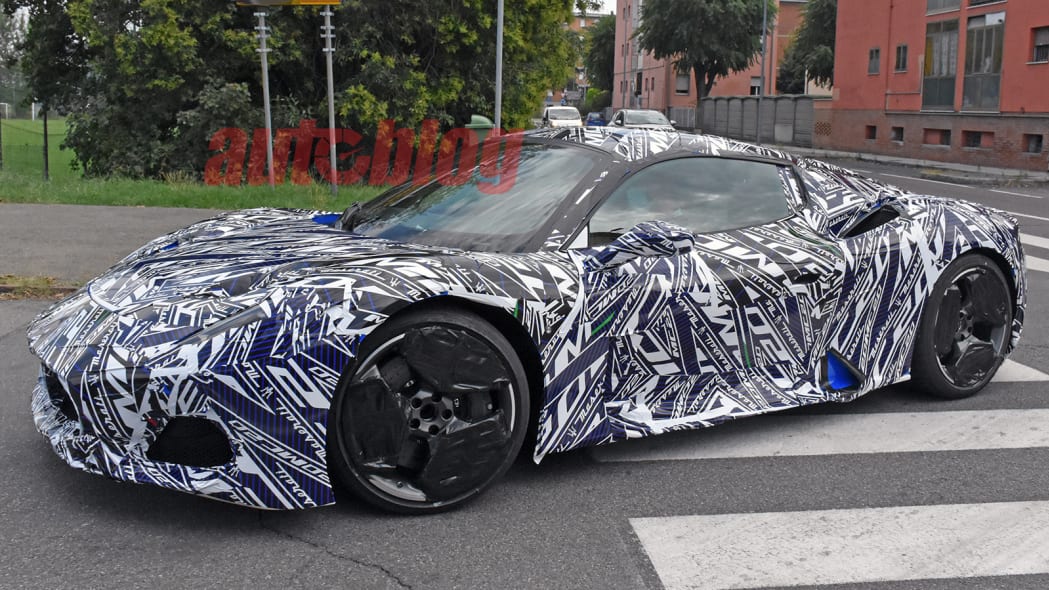
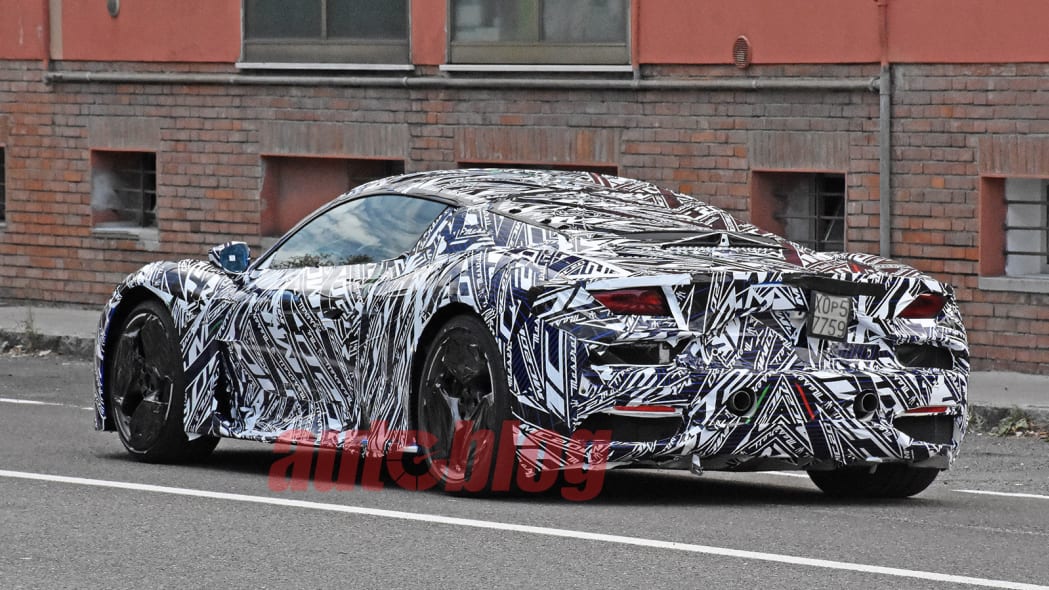
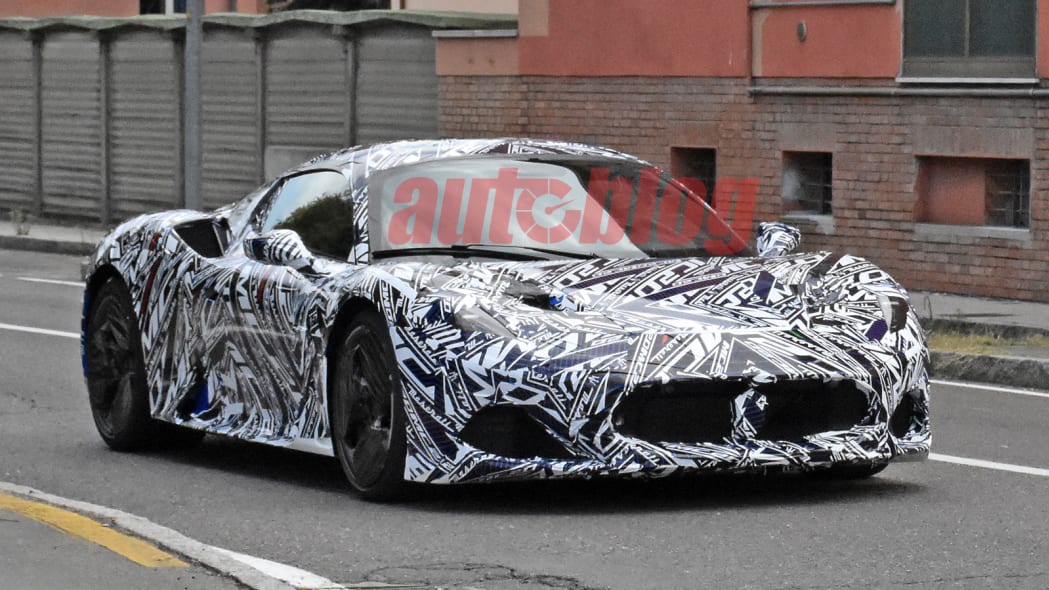
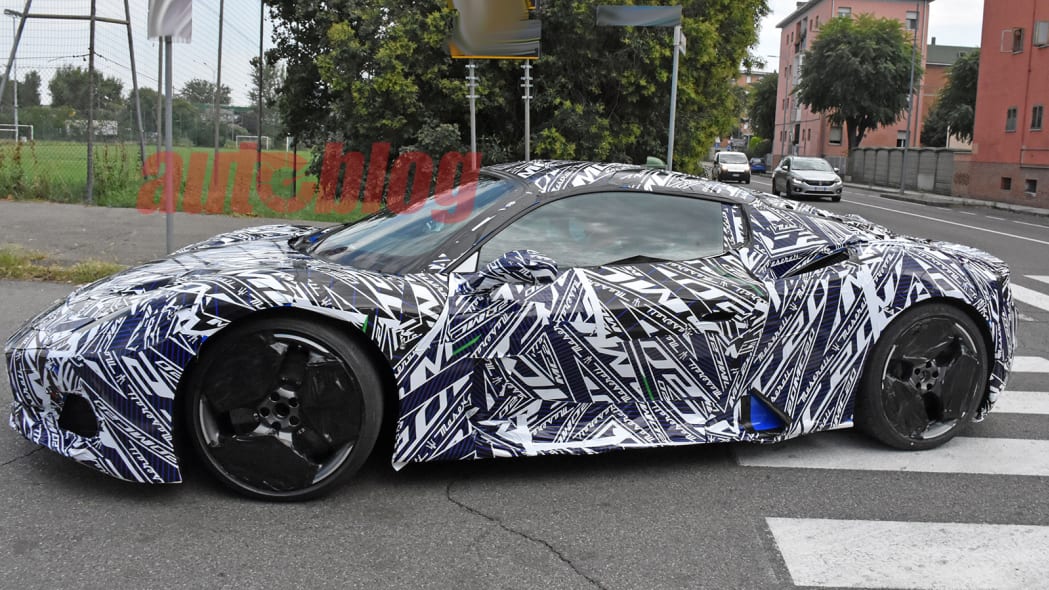
Ahead of its official public debut on Wednesday, presumed official photographs of Maserati’s new MC20 supercar have leaked out onto the internet, as near as we can tell sourced from autotimesnews.com. This new mid-engine flagship is said to be constructed of a combination of aluminum and composites. The V6-engined coupe is said to weigh in the neighborhood of 3240 pounds.
With butterfly doors, a 630 horsepower three-liter turbocharged V6, and a “push-button controlled” 8-speed transmission, this thing has all of the trappings of a supercar. It certainly looks the part. Allegedly acceleration is quite capable with a 0-60 in the 2.9 second range, and a 0-120 sprint happening in 8.0 seconds. It’ll top out just across the legendary 200 mile per hour mark.
According to the leaked information, which has not yet been confirmed to be true though we have suspected for quite a while, the MC20 will also be available with an electric drivetrain that cuts the 0-60 time down to 2.8 seconds, and will be able to travel around 240 miles on a single charge of the batteries.