


2021 Ford F-150


Lead Lap


Joined: Apr 2002
Posts: 4,892
Likes: 14
From: Virginia


Looks terrible, almost no different than the current one, maybe the hood is even higher just because that's the (ridiculous) styling trend (the top of the bed appears to be lower than the hood!)
ford is now ripe to be crushed in the market.
edit: i will say the interior is very good.
mmarshall, check out the STOWABLE SHIFT LEVER
ford is now ripe to be crushed in the market.
edit: i will say the interior is very good.
mmarshall, check out the STOWABLE SHIFT LEVER
Last edited by bitkahuna; Sep 24, 2020 at 07:54 AM.

Lexus Fanatic


Joined: Oct 2003
Posts: 94,511
Likes: 261
From: Virginia/D.C. suburbs
Interesting concept, although I don't see a whole lot of difference between that and the Jaguar system of the rotary k-n-o-b folding down into the console, except that the rotary k-n-o-b takes up less space when it is raised.
https://gmauthority.com/blog/2020/04...y-shift-lever/
And, BTW, I spelled the word "k-n-o-b" the way I did because there seems to be a quirk in the CL word-censoring system that sometimes (but not always) bleeps out that word with a row of asterisks. Something that the CL staff might want to look into.
https://gmauthority.com/blog/2020/04...y-shift-lever/
And, BTW, I spelled the word "k-n-o-b" the way I did because there seems to be a quirk in the CL word-censoring system that sometimes (but not always) bleeps out that word with a row of asterisks. Something that the CL staff might want to look into.

CL Community Team

Joined: Feb 2007
Posts: 9,383
Likes: 620
From: IL


Thread Starter
Joined: Oct 2008
Posts: 42,476
Likes: 321
From: California
2021 Ford F-150 specs revealed
The V8 and 3.5-liter V6 pick up extra power, too
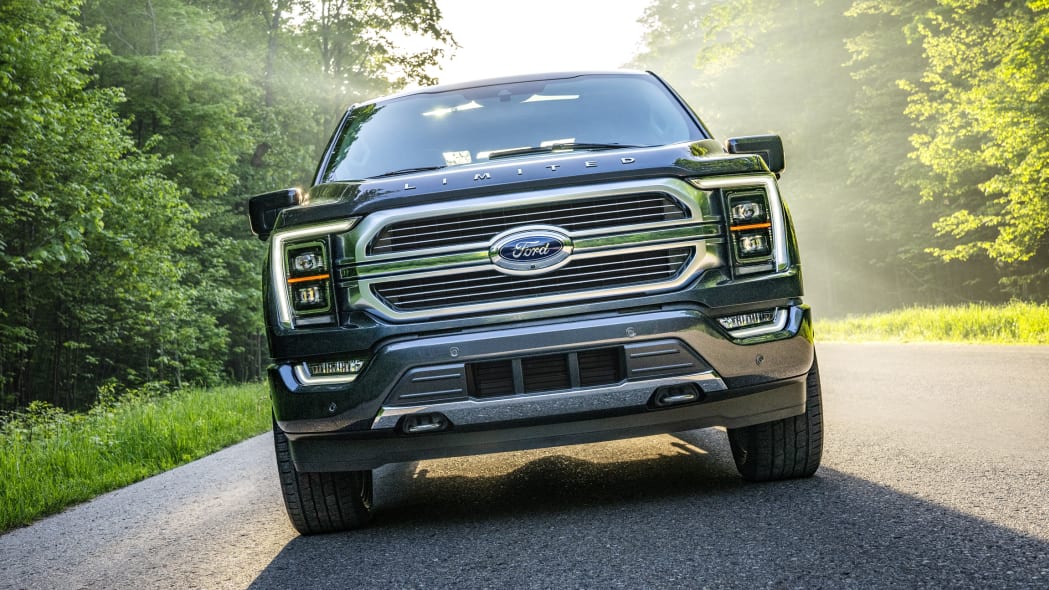
We got a truckload of information on the 2021 Ford F-150 when it was unveiled a few months ago. But Ford left out a few key details that it's only revealing now: specifically, well, the specifications. And they're impressive specifications, showing that the F-150 has best-in-class towing and payload capacities. Its hybrid engine is pretty darn impressive, too.
We'll kick off with those hauling numbers. The new F-150 has a maximum towing capacity of 14,000 pounds, an increase of 800 over last year's truck. It also leads the Silverado 1500 at 13,300 pounds and the Ram 1500 at 12,750. As for payload, the new F-150 can carry 3,325 pounds, 55 more than previously. The Ram 1500 has the next best rating at 2,300, and the Silverado 1500 is close behind with 2,280 pounds.
Moving on to engines, the F-150 Hybrid has the most torque of any F-150 engine that we know of, with 570 pound-feet. Horsepower is no slouch either at 430 ponies, which tops the 5.0-liter V8 and the base 3.5-liter EcoBoost V6. That's despite the fact both of those engines are more powerful for 2021. The V8 now makes 400 horsepower and 410 pound-feet of torque, increases of 5 horsepower and 10 pound-feet. The 3.5-liter EcoBoost engine picks up 25 horsepower and 30 pound-feet of torque for totals of 400 and 500 respectively. The rest of the F-150's engines – the 3.3-liter naturally aspirated V6, 2.7-liter turbo V6 and 3.0-liter turbodiesel – are unchanged.
With these details, most of our questions about the new F-150 have been answered. But most doesn't mean all. We're still left wondering about the details on the next F-150 Raptor, and whether the high-output 3.5-liter V6 – previously rated at 450 horsepower and 510 pound-feet of torque – will make a return in the Raptor and the Limited. And we don't know the Hybrid's fuel economy. It might be a little, maybe even a year, before we get Raptor details, but info on the high-output V6 and Hybrid fuel economy might come sooner.
We'll kick off with those hauling numbers. The new F-150 has a maximum towing capacity of 14,000 pounds, an increase of 800 over last year's truck. It also leads the Silverado 1500 at 13,300 pounds and the Ram 1500 at 12,750. As for payload, the new F-150 can carry 3,325 pounds, 55 more than previously. The Ram 1500 has the next best rating at 2,300, and the Silverado 1500 is close behind with 2,280 pounds.
Moving on to engines, the F-150 Hybrid has the most torque of any F-150 engine that we know of, with 570 pound-feet. Horsepower is no slouch either at 430 ponies, which tops the 5.0-liter V8 and the base 3.5-liter EcoBoost V6. That's despite the fact both of those engines are more powerful for 2021. The V8 now makes 400 horsepower and 410 pound-feet of torque, increases of 5 horsepower and 10 pound-feet. The 3.5-liter EcoBoost engine picks up 25 horsepower and 30 pound-feet of torque for totals of 400 and 500 respectively. The rest of the F-150's engines – the 3.3-liter naturally aspirated V6, 2.7-liter turbo V6 and 3.0-liter turbodiesel – are unchanged.
With these details, most of our questions about the new F-150 have been answered. But most doesn't mean all. We're still left wondering about the details on the next F-150 Raptor, and whether the high-output 3.5-liter V6 – previously rated at 450 horsepower and 510 pound-feet of torque – will make a return in the Raptor and the Limited. And we don't know the Hybrid's fuel economy. It might be a little, maybe even a year, before we get Raptor details, but info on the high-output V6 and Hybrid fuel economy might come sooner.
Lead Lap
Joined: Apr 2002
Posts: 4,892
Likes: 14
From: Virginia
Ford has been pretty successful with showing that turbo V6's can challenge V8's, can they do the same with a hybrid and shake the image that Toyota has implanted in so many heads that hybrids are "weak" or "economy minded" only type powertrains?

Lexus Champion
Joined: Sep 2010
Posts: 2,218
Likes: 300
From: NA
Thread Starter
Joined: Oct 2008
Posts: 42,476
Likes: 321
From: California

Thread Starter
Joined: Oct 2008
Posts: 42,476
Likes: 321
From: California
Will the electric Ford F-150 receive a clever, toolbox-shaped range extender?
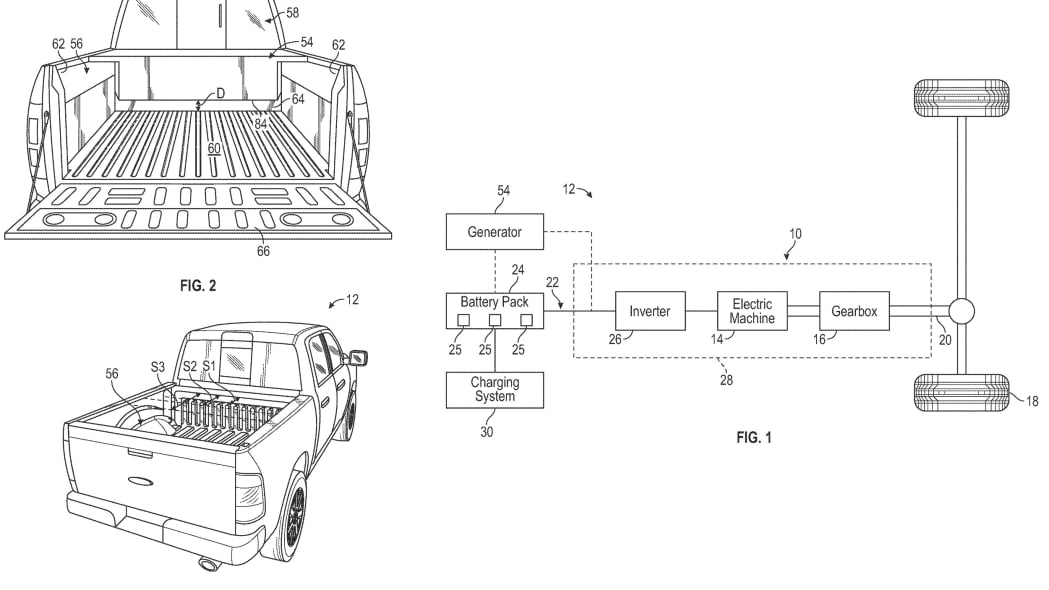
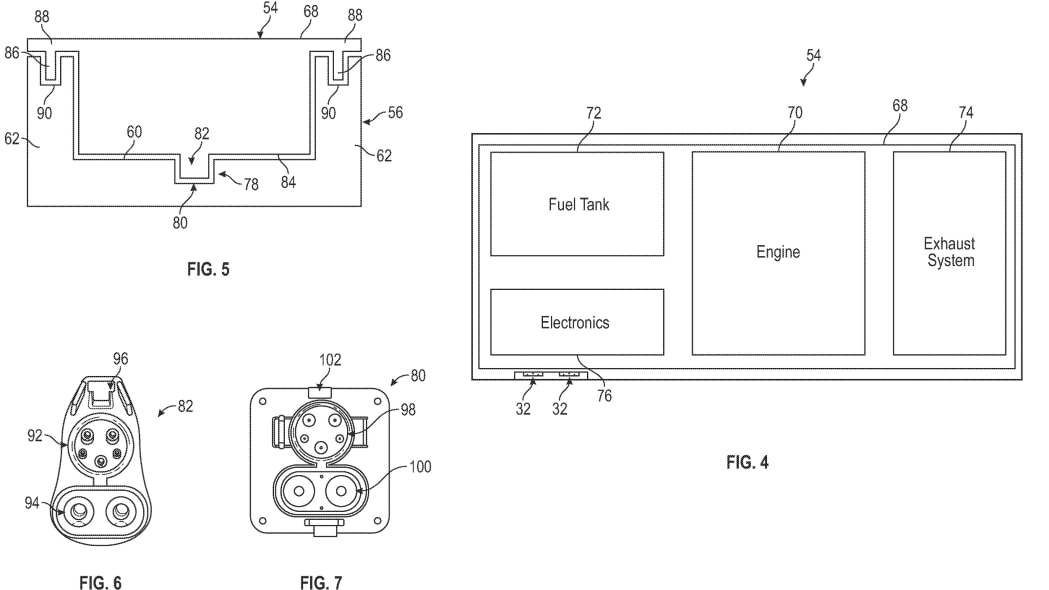
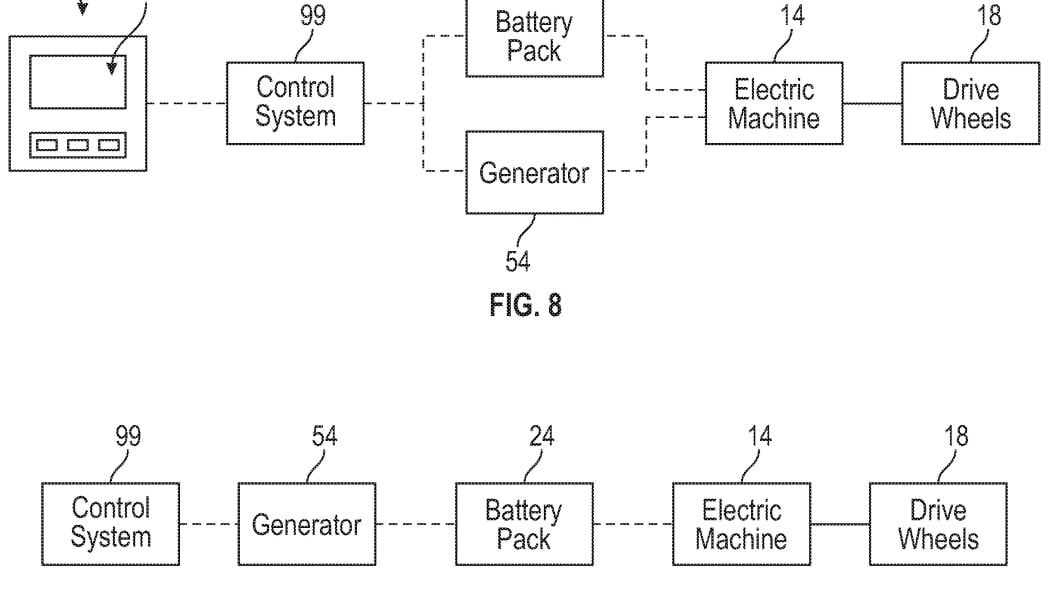
Ford is keeping technical details about the upcoming electric version of the 14th-generation F-150 under wraps, but patent drawings shed light on the kind of technology it's experimenting with. Its engineers have seemingly developed a removable, gasoline-burning range extender that fits neatly in the truck's bed like a tool box.
Patent documents sent to the United States Trademark and Patent Office in 2018 and finally published in September 2020 detail how the technology works. Uncovered by The Drive, they show a box-shaped range extender that consists of an engine, a fuel tank, and exhaust system, and an array of electronics. Ford calls the setup a removable generator, and it explained the system can be used to increase the electric range of a vehicle.
ADVERTISEMENTOn paper, this setup is relatively simple. It can be configured to send the electricity it generates to the lithium-ion battery, which then uses it to zap the wheels into motion. Alternatively, the generator can bypass the battery and propel the truck on its own. Ford didn't specify what kind of engine it plans to use as a generator, but it's certainly not going to be the 7.3-liter Godzilla V8 it puts in its Super Duty trucks. It would have to be small and light.
Gasoline-powered range extenders aren't exactly cutting-edge; it's a technology that carmakers have toyed around with for decades, but making it removable is a smart move. Users will be able to drop it in the bed when they need more range, like when they're towing or going on a long trip, and they'll have the option of removing it when they prefer to have cargo space. Of course, putting it and taking it out will require a sturdy hoist — it's an engine, after all. Motorists may need to take their truck to a dealer in order to get it fitted, which suggests Ford may not sell it; it's not too far-fetched to imagine range extenders offered through stores on a pay-per-use basis.
Of course, nothing is official, and a patent filing doesn't guarantee a technology will reach production. Ford won't begin building the electric F-150 until halfway through 2022, it's scheduled to go on sale as a 2023 model, so we'll need to be patient to find out precisely what's lurking under its futuristic-looking sheet metal. All we know at this point is that it will offer dual-motor all-wheel drive, and it will be the fastest variant of the 14th-generation truck.
Patent documents sent to the United States Trademark and Patent Office in 2018 and finally published in September 2020 detail how the technology works. Uncovered by The Drive, they show a box-shaped range extender that consists of an engine, a fuel tank, and exhaust system, and an array of electronics. Ford calls the setup a removable generator, and it explained the system can be used to increase the electric range of a vehicle.
ADVERTISEMENTOn paper, this setup is relatively simple. It can be configured to send the electricity it generates to the lithium-ion battery, which then uses it to zap the wheels into motion. Alternatively, the generator can bypass the battery and propel the truck on its own. Ford didn't specify what kind of engine it plans to use as a generator, but it's certainly not going to be the 7.3-liter Godzilla V8 it puts in its Super Duty trucks. It would have to be small and light.
Gasoline-powered range extenders aren't exactly cutting-edge; it's a technology that carmakers have toyed around with for decades, but making it removable is a smart move. Users will be able to drop it in the bed when they need more range, like when they're towing or going on a long trip, and they'll have the option of removing it when they prefer to have cargo space. Of course, putting it and taking it out will require a sturdy hoist — it's an engine, after all. Motorists may need to take their truck to a dealer in order to get it fitted, which suggests Ford may not sell it; it's not too far-fetched to imagine range extenders offered through stores on a pay-per-use basis.
Of course, nothing is official, and a patent filing doesn't guarantee a technology will reach production. Ford won't begin building the electric F-150 until halfway through 2022, it's scheduled to go on sale as a 2023 model, so we'll need to be patient to find out precisely what's lurking under its futuristic-looking sheet metal. All we know at this point is that it will offer dual-motor all-wheel drive, and it will be the fastest variant of the 14th-generation truck.
Lexus Fanatic
Joined: Oct 2003
Posts: 94,511
Likes: 261
From: Virginia/D.C. suburbs
A lot of engines, today, are having premature oil-consumption issues, partly because manufacturers are using looser-fitting piston rings, with looser tolerances, to lessen the amount of friction on brand-new new engines. This helps with the CAFE numbers when the engines are new (and under EPA testing)..but also means that they wear sooner, increasing the tolerances around the rings and allowing oil to be sucked past them into the combustion chamber.
Thread Starter
Joined: Oct 2008
Posts: 42,476
Likes: 321
From: California
2021 Ford F-150 PowerBoost hybrid ties the diesel for overall fuel economy
Of all the interesting features of the 2021 Ford F-150 PowerBoost hybrid, such as its impressive 430 horsepower and 570 pound-feet of torque, and its power tool capabilities, Ford has been coy about fuel economy numbers. But thanks to the EPA, and the folks at F150Gen14.com for tipping us off, we have those numbers, and it ties the diesel model for best overall fuel economy.Overall, the hybrid F-150 gets 24 mpg. And it gets 24 in the city. And on the highway. It's a mighty consistent truck. It shares the top fuel economy spot with the diesel, though, which does worse in town with 21 mpg (based on the 2020 model, since the 2021 diesel hasn't been rated yet), but better on the highway with 29 mpg. The diesel isn't as powerful, though, making 250 horsepower and 440 pound-feet of torque. And diesel fuel tends to be more expensive than gasoline.
The hybrid is available on all trim levels, but only with a four-door SuperCrew cab. It costs $4,495 on the XL, $3,300 on the XLT and Lariat, $2,500 on the King Ranch and Platinum, and $1,900 on Limited.
The hybrid is available on all trim levels, but only with a four-door SuperCrew cab. It costs $4,495 on the XL, $3,300 on the XLT and Lariat, $2,500 on the King Ranch and Platinum, and $1,900 on Limited.
10char