


How a Car Starter Works


Thread Starter
Lexus Champion
Joined: Aug 2012
Posts: 1,729
Likes: 132
From: Toronto, Canada
 How a Car Starter Works
I wanted to share a little video I made, taking apart a Toyota starter and explaining how it works:
The starter sits between the engine and transmission and is responsible for turning the engine over to start the combustion process. Here's what it looks like, removed from the car:

There's two parts to the starter, the solenoid and the electric motor:

The plunger inside the solenoid moves when its activated, causing the pinion gear to push out:

To get a better idea of the starter system, refer to this diagram:

I then cracked the starter in half and to my surprise, found a transmission of gears. This increases the motor's torque:

Here you can see where the plunger attaches to the pinion gear:

Next I took off the motor cover, and found brushes and the armature:


And here is the armature:

Finally, a system schematic illustrating how the starter works. Power flows through the solenoid's contacts to the starter motor. This means if the pinion gear isn't already engaged with the flywheel, the electric motor cannot turn.

Enjoy!
The starter sits between the engine and transmission and is responsible for turning the engine over to start the combustion process. Here's what it looks like, removed from the car:

There's two parts to the starter, the solenoid and the electric motor:

The plunger inside the solenoid moves when its activated, causing the pinion gear to push out:

To get a better idea of the starter system, refer to this diagram:

I then cracked the starter in half and to my surprise, found a transmission of gears. This increases the motor's torque:

Here you can see where the plunger attaches to the pinion gear:
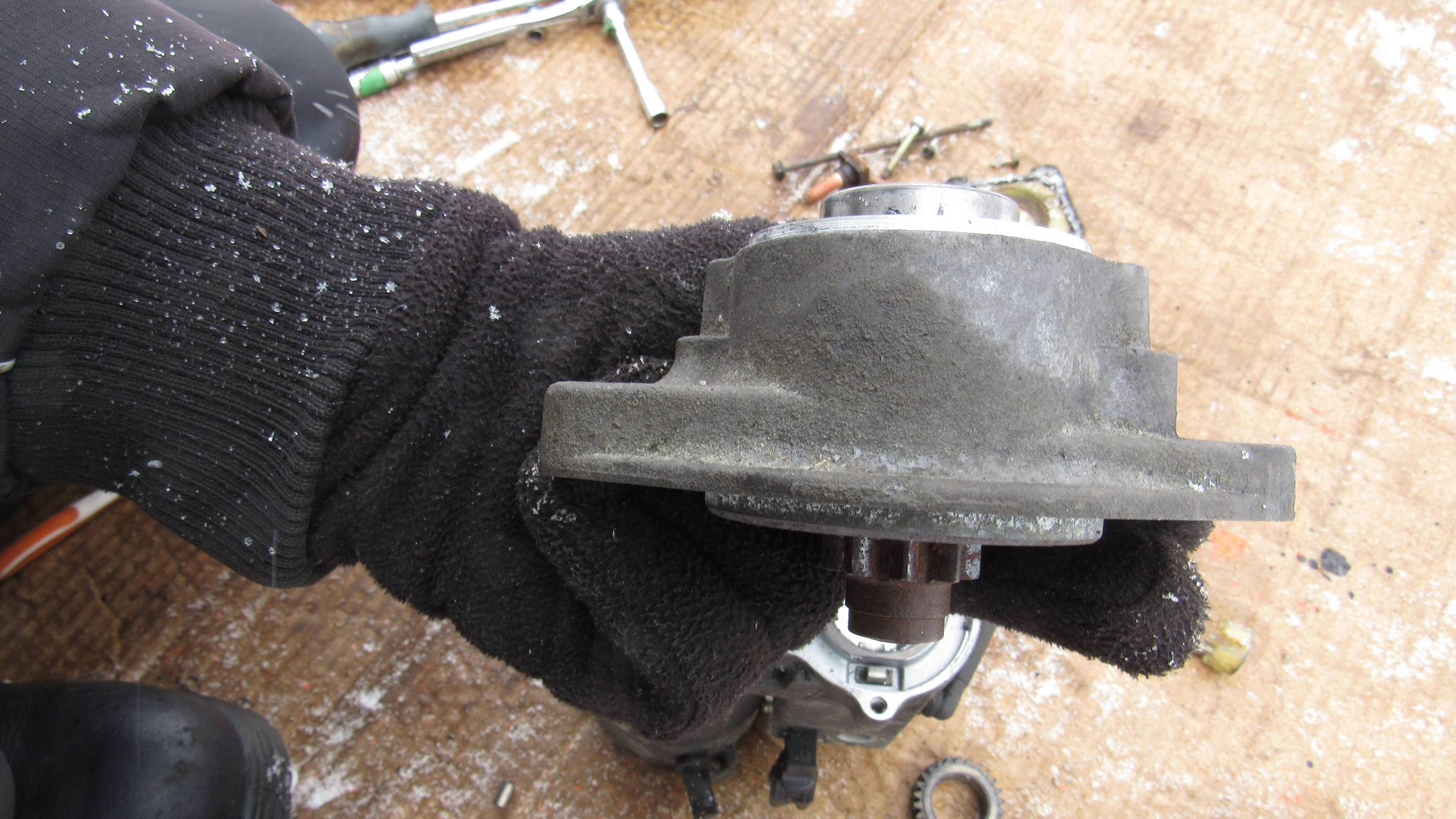
Next I took off the motor cover, and found brushes and the armature:


And here is the armature:

Finally, a system schematic illustrating how the starter works. Power flows through the solenoid's contacts to the starter motor. This means if the pinion gear isn't already engaged with the flywheel, the electric motor cannot turn.

Enjoy!
Last edited by speedkar9; Feb 12, 2018 at 03:53 PM.

Lexus Test Driver


Joined: Sep 2016
Posts: 8,575
Likes: 391
From: PA
A curious question might be, why does one that comes with the car potentially last 12-15 years (on my Maxima it started to make a noise at 12, and failed at 15), but a remanufactured or "new" can last 0-3 months? I ate the labor DIY on jobs 2, 3, 4, but I could live with it. Many cars it is far more difficult to do, where intakes and cooling components come off, etc.
A Lexus tech told me don't ever core your original, rebuild it. Or, save it, even if you go aftermarket. You can't get the same quality remanuf. or aftermarket...wonder what tearing apart an original, vs. a "new" aftermarket or remanuf looks like. Maybe it's like an oil filter teardown where it's obvious the latter has lesser components? Same deal with brake calipers, Maxima has original fronts that are 20 y.o. The rears are on #4 or so, lousy rebuilds...
A Lexus tech told me don't ever core your original, rebuild it. Or, save it, even if you go aftermarket. You can't get the same quality remanuf. or aftermarket...wonder what tearing apart an original, vs. a "new" aftermarket or remanuf looks like. Maybe it's like an oil filter teardown where it's obvious the latter has lesser components? Same deal with brake calipers, Maxima has original fronts that are 20 y.o. The rears are on #4 or so, lousy rebuilds...
Thread Starter
Lexus Champion
Joined: Aug 2012
Posts: 1,729
Likes: 132
From: Toronto, Canada
A curious question might be, why does one that comes with the car potentially last 12-15 years (on my Maxima it started to make a noise at 12, and failed at 15), but a remanufactured or "new" can last 0-3 months? I ate the labor DIY on jobs 2, 3, 4, but I could live with it.

Thread
Thread Starter
Forum
Replies
Last Post
GSXRMack
SC - 1st Gen (1992-2000)
56
Jun 29, 2017 02:21 AM
lexusben
2Gen GS430 / 400/ 300 Classifieds (98-05)
6
Dec 11, 2013 05:16 PM
