



reliability - how do you define it, and how important?

Reliability would be normal maintenance, and the ability to still run even if neglected and beat the hell out of such as the ls430, or the ford crown vics. An unreliable car would be something that is being fixed at least 1 or more times every 4 months, like a 2000 mitsubishi eclipse(my first car). The squeaks and rattles issue is poor engineering and build quality, which is a completely seperate issue.
Funny thing is most of the time its just user error. They write how horrible these systems are, and while they're not perfect, a few hours doesn't tell the whole story always. Sometimes there are adjustments in the settings menu, sometimes its just how the person is using the controller etc..

Lexus Fanatic
Joined: Feb 2005
Posts: 12,269
Likes: 296
From: ------
Reliability is extremely important. I can't deal with unreliable cars and won't buy them even if I really like them.
I define it as a car that needs almost no repairs or things that go bad before 120K miles, just regular maintenance.
A car that can go at least 200K miles with no major issues and still holds up.
I don't mind some squeaks and rattles, every car has them and they are generally not too hard to fix or stop.
I define it as a car that needs almost no repairs or things that go bad before 120K miles, just regular maintenance.
A car that can go at least 200K miles with no major issues and still holds up.
I don't mind some squeaks and rattles, every car has them and they are generally not too hard to fix or stop.
Reliability would be normal maintenance, and the ability to still run even if neglected and beat the hell out of such as the ls430, or the ford crown vics. An unreliable car would be something that is being fixed at least 1 or more times every 4 months, like a 2000 mitsubishi eclipse(my first car). The squeaks and rattles issue is poor engineering and build quality, which is a completely seperate issue.
A car that can go at least 200K miles with no major issues and still holds up.

Lead Lap


Joined: Mar 2015
Posts: 4,611
Likes: 371
From: In your head
Paying for a car that has a poorly built set of fog-lights that impair nighttime visibility is as bad as paying for an infotainment that is soo hard to operate that your focus is distracted while driving.....
Lead Lap
Joined: Mar 2015
Posts: 4,611
Likes: 371
From: In your head
Funny thing is most of the time its just user error. They write how horrible these systems are, and while they're not perfect, a few hours doesn't tell the whole story always. Sometimes there are adjustments in the settings menu, sometimes its just how the person is using the controller etc..

Lexus Champion
Joined: Jul 2013
Posts: 2,300
Likes: 4
From: RightHere
The term "reliability" is very subjective because of course, we know there is an intangible called brand loyalty. So if you ask a BMW or Benz owner if their vehicle is reliable - they'll tell you, absolutely reliable or it's just how things work with German cars, Italian cars or American cars.
A better measure would problably be how long do owners of various brands hang on to their vehicles and what do they spend until they find it's too much. There are some people who will complain relentlessly because their Toyota was the one with an oil sludge issue which might have even been due to a number of factors. There are German luxury car owners who lucked out and will tell you their car is fantastic.
A reliability index will usually be: do you spend more than the average on yearly fixes, repairs and maintenance vs other brands or do you spend less. That's usually a good indicator. Even the most reliable used Camry is still going to run about $600 - $900 a year to keep in top shape when it's older. But a German car owner will tell you that a couple of thousand a year to keep a 5 series is worth it because it's a great driving experience and it goes with the territory.
A better measure would problably be how long do owners of various brands hang on to their vehicles and what do they spend until they find it's too much. There are some people who will complain relentlessly because their Toyota was the one with an oil sludge issue which might have even been due to a number of factors. There are German luxury car owners who lucked out and will tell you their car is fantastic.
A reliability index will usually be: do you spend more than the average on yearly fixes, repairs and maintenance vs other brands or do you spend less. That's usually a good indicator. Even the most reliable used Camry is still going to run about $600 - $900 a year to keep in top shape when it's older. But a German car owner will tell you that a couple of thousand a year to keep a 5 series is worth it because it's a great driving experience and it goes with the territory.
ClubLexus Stories
Celebrating Lexus & Toyota from Around the Globe

10 Lexus Bargains That are Cheaper Than a New Toyota RAV4
Joe Kucinski
8 Weirdest Things Lexus Has Ever Built
Verdad Gallardo
10 Lexus Designs That Have Aged Like Fine Wine
Verdad Gallardo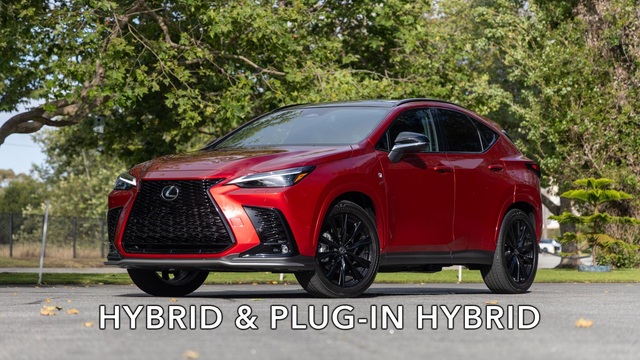
8 Tips for Improving Your Hybrid or Plug-in Hybrid's Efficiency!
Michael S. Palmer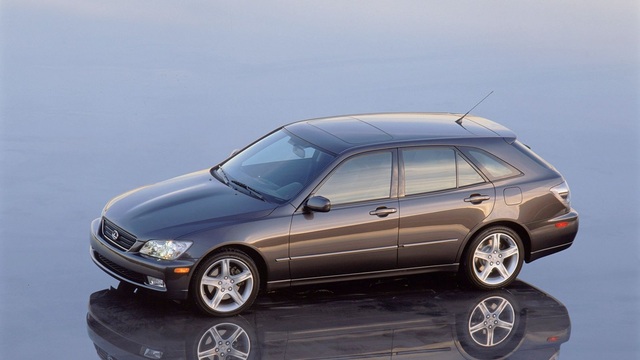
10 Best Lexus Models No One Remembers
Joe Kucinski
TRD Off-Road Premium: Best 2026 4Runner, Except This One Thing
Michael S. Palmer
Top 10 Lexus & Toyotas to Drive Before You Die!
Joe Kucinski
Top 10 Lexus/Toyotas With The LEAST 5-Year Depreciation
Joe Kucinski
Lexus LC500 Convertible Auction: A Preview of Rising Values?
Brett Foote
Lexus Fanatic


Joined: Oct 2003
Posts: 94,521
Likes: 261
From: Virginia/D.C. suburbs
Funny thing is most of the time its just user error. They write how horrible these systems are, and while they're not perfect, a few hours doesn't tell the whole story always. Sometimes there are adjustments in the settings menu, sometimes its just how the person is using the controller etc..


not to derail the topic of reliability, just want to respond since you asked a question.
I didn't single out any specific system. Just saying when I see reviews lambasting a cars infotainment, part of the problem is sometimes the review operator doesn't understand certain functions, inputs, or know how to adjust the settings that could improve the experience etc.. I won't blame the consumer 100%, but I don't see why the company should shoulder ALL the blame if the system works, just takes some getting use to, which brings me to my point that an hour test drive doesn't always tell the whole story.
if this was the standard across the board, then I get it, writing how poor a system is one thing, but when a lot of other systems do things well...do you really want to blame consumer error? Thats similar to when Steve Jobs said it was consumer error in regards to the antenna gate issue that plagued iPhone 4 owners...Almost everyone Non-Apple had no issues with antennas....?
Lead Lap
Joined: Mar 2015
Posts: 4,611
Likes: 371
From: In your head
not to derail the topic of reliability, just want to respond since you asked a question.
I didn't single out any specific system. Just saying when I see reviews lambasting a cars infotainment, part of the problem is sometimes the review operator doesn't understand certain functions, inputs, or know how to adjust the settings that could improve the experience etc.. I won't blame the consumer 100%, but I don't see why the company should shoulder ALL the blame if the system works, just takes some getting use to, which brings me to my point that an hour test drive doesn't always tell the whole story.
I didn't single out any specific system. Just saying when I see reviews lambasting a cars infotainment, part of the problem is sometimes the review operator doesn't understand certain functions, inputs, or know how to adjust the settings that could improve the experience etc.. I won't blame the consumer 100%, but I don't see why the company should shoulder ALL the blame if the system works, just takes some getting use to, which brings me to my point that an hour test drive doesn't always tell the whole story.
Common complaints that I see and read (list from cars.com)
- Touch-screens that are slow to respond or have indistinct touch points (not really something a consumer can fix with RTFM)
- Screens that freeze or go blank (not really something a consumer can fix with RTFM)
- Voice commands that fall on deaf ears (not really something a consumer can fix with RTFM)
- Poor sound quality using Bluetooth streaming (not really something a consumer can fix with RTFM)
- Unintuitive controls that flummox even tech-savvy users (not really something a consumer can fix with RTFM)
Lead Lap
Joined: Mar 2015
Posts: 4,611
Likes: 371
From: In your head
That's generally true, but there are indeed occasional cases of design or quality problems with the software......can't blame everything on people having butterfingers. According to Consumer Reports (and I don't know just exactly how much truth there is to it), much of it stems from the automakers sub-contracting with makers of what are essentially household computer systems and software, designed to be used mostly indoors, stationary, at room temperature, and not necessarily up to the rigors of typical automotive use.
The constructs of the auto industry will always have a setup which is extremely good, user friendly, or a system which is designed to be basically deemed to complex.

Lexus Fanatic
Joined: Nov 2011
Posts: 35,491
Likes: 386
From: ON/NY
The best way forward is to standardize infotainment system interfaces across the board, but how can the Rolls Royce Navigation System be operated and graphically the same as a BMW 1 series unit...
The constructs of the auto industry will always have a setup which is extremely good, user friendly, or a system which is designed to be basically deemed to complex.
The constructs of the auto industry will always have a setup which is extremely good, user friendly, or a system which is designed to be basically deemed to complex.
Lexus Fanatic
Joined: Oct 2003
Posts: 94,521
Likes: 261
From: Virginia/D.C. suburbs
It probably doesn't need to be the same. BMW 1-series, unlike RRs, aren't (usually) driven by professional chauffeurs.
Lead Lap
Joined: Mar 2015
Posts: 4,611
Likes: 371
From: In your head
There used to be an expression, "five 9's." That's reliability.
Having purchased a 1998 Nissan Maxima brand new in March 1998, I consider it reliable. Since March of 1998, there were only three times that it didn't start, when the original starter failed. Then, when the replacements failed, twice. I would expect that many Lexus models would do the same. Perhaps there is someone with a 1990, purchased in Sept. 1989, who can say their car has never failed since new. Would not be a surprise.
edit: agreed, being reliable means never being placed on a flatbed
p.s. amazing on Doug's review of a brand new Range Rover Velar, the screens froze on him, and turning off and on 3X did not fix it. I guess even though that's not a flatbed, that would imply unreliable
Having purchased a 1998 Nissan Maxima brand new in March 1998, I consider it reliable. Since March of 1998, there were only three times that it didn't start, when the original starter failed. Then, when the replacements failed, twice. I would expect that many Lexus models would do the same. Perhaps there is someone with a 1990, purchased in Sept. 1989, who can say their car has never failed since new. Would not be a surprise.
edit: agreed, being reliable means never being placed on a flatbed
p.s. amazing on Doug's review of a brand new Range Rover Velar, the screens froze on him, and turning off and on 3X did not fix it. I guess even though that's not a flatbed, that would imply unreliable