



2016 Nissan Maxima Unveiled

Lexus Champion
Joined: Feb 2011
Posts: 3,309
Likes: 31
From: Canada

Let's just call it a hybrid transmission. Calling it a eCVT or Power-Split Device (PSD) just confuses things.

Lexus Test Driver
Joined: Apr 2015
Posts: 1,085
Likes: 15
From: Texas
Hoovey is right. But let's go further... Let's stop calling it a CVT or eCVT altogether. It is NOT a CVT and not even a transmission in the regular sense -- there are no variable gear ratios in the Toyota / Lexus hybrid system.
Let's just call it a hybrid transmission. Calling it a eCVT or Power-Split Device (PSD) just confuses things.
Let's just call it a hybrid transmission. Calling it a eCVT or Power-Split Device (PSD) just confuses things.
Lexus Champion
Joined: Feb 2011
Posts: 3,309
Likes: 31
From: Canada
In Toyota and Lexus hybrids, the ICE is never mechanically connected to the drive wheels; the vehicle is always driven by the electric motor and the ICE provides power to assist the electric motor when needed. The Toyota / Lexus hybrid vehicles are best described as electric vehicles with ICE assist.

Lead Lap


Joined: Apr 2002
Posts: 4,892
Likes: 14
From: Virginia
That's right. The Toyota / Lexus hybrid transmission is NOT continuously variable: you cannot change the gear ratios between the engine and the drive wheels and the transmission does NOT transmit power mechanically from the ICE to the wheels.
In Toyota and Lexus hybrids, the ICE is never mechanically connected to the drive wheels; the vehicle is always driven by the electric motor and the ICE provides power to assist the electric motor when needed. The Toyota / Lexus hybrid vehicles are best described as electric vehicles with ICE assist.
In Toyota and Lexus hybrids, the ICE is never mechanically connected to the drive wheels; the vehicle is always driven by the electric motor and the ICE provides power to assist the electric motor when needed. The Toyota / Lexus hybrid vehicles are best described as electric vehicles with ICE assist.
From Toyota's own description of Hybrid Synergy Drive:
Most of the time when the Prius comes to a stop, the gasoline engine is shut
down. This means no unnecessary idling or wasted fuel while stuck in traffic or at stop
signs. During start-up and low speeds, the Prius is powered only by the electric motor,
which is fed by the battery. As the battery charge is depleted, the gasoline engine
responds by powering the electric generator, which recharges the battery. Once up to
speed and driving under normal conditions, the engine runs with its power split: part of
this power goes to the generator, which in turn supplies the electric motor, and part
drives the wheels.
down. This means no unnecessary idling or wasted fuel while stuck in traffic or at stop
signs. During start-up and low speeds, the Prius is powered only by the electric motor,
which is fed by the battery. As the battery charge is depleted, the gasoline engine
responds by powering the electric generator, which recharges the battery. Once up to
speed and driving under normal conditions, the engine runs with its power split: part of
this power goes to the generator, which in turn supplies the electric motor, and part
drives the wheels.
i don't think many people going to buy this new Maxima:
1. it's too expensive, for a couple grand more you can get a base Inifiniti Q50 rwd, japan build and with a real transmission
2. style (especially side profile) is very similar to Kia Optima, and that's not a compliment
3. stupid marketing strategy to market it as a "sport" sedan, CVT and sport sedan just don't mix. Nissan should learn from Toyota, just make it a limited production like Avalon and market it as a niche model
1. it's too expensive, for a couple grand more you can get a base Inifiniti Q50 rwd, japan build and with a real transmission
2. style (especially side profile) is very similar to Kia Optima, and that's not a compliment
3. stupid marketing strategy to market it as a "sport" sedan, CVT and sport sedan just don't mix. Nissan should learn from Toyota, just make it a limited production like Avalon and market it as a niche model
Lexus Champion
Joined: Feb 2011
Posts: 3,309
Likes: 31
From: Canada
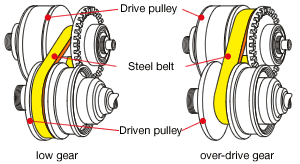
Toyota's hybrid system is simple in concept, complex in implementation and near impossible to explain to the layman. I consider myself relatively familiar with the concept and am still struggling with how best to explain it. Toyota itself has problems explaining how it works; Toyota has tried to call it an eCVT, which, IMO, just confuses things because people instantly think of the belt-and-pulley (that Nissan uses) when you say "CVT". It is NOT a belt-and-pulley transmission; it is an electric drive transmission with an ICE assist.
Consider this... If the ICE in the Hybrid Synergy Drive was mechanically connected to the drive wheels, it could no longer be described as a Continuously Variable Transmission. In a CVT, the engine rpm remains constant even as the wheels speed up or slow down. If the ICE were mechanically connected to the wheels through the planetary gearset of the hybrid transmission, the engine rpm would change as the speed of vehicle changes; since engine rpm does not change with vehicle speed, the ICE must not be mechanically connected to the drive wheels.
In the Hybrid Synergy Drive, vehicle speed is regulated by the electric drive motor, and when the drive motor cannot provide enough power for acceleration or higher speeds, it is assisted by the ICE. This assistance by the ICE (but no direct mechanical connection) allows the engine rpm to remain constant even as vehicle speed changes.
But... this is getting far off topic.

Thread Starter
Lexus Champion
Joined: Apr 2005
Posts: 2,545
Likes: 0
From: MO
i don't think many people going to buy this new Maxima:
1. it's too expensive, for a couple grand more you can get a base Inifiniti Q50 rwd, japan build and with a real transmission
2. style (especially side profile) is very similar to Kia Optima, and that's not a compliment
3. stupid marketing strategy to market it as a "sport" sedan, CVT and sport sedan just don't mix. Nissan should learn from Toyota, just make it a limited production like Avalon and market it as a niche model
1. it's too expensive, for a couple grand more you can get a base Inifiniti Q50 rwd, japan build and with a real transmission
2. style (especially side profile) is very similar to Kia Optima, and that's not a compliment
3. stupid marketing strategy to market it as a "sport" sedan, CVT and sport sedan just don't mix. Nissan should learn from Toyota, just make it a limited production like Avalon and market it as a niche model
ClubLexus Stories
Celebrating Lexus & Toyota from Around the Globe
Top 10 Most Confusing Things Lexus Has Ever Done!
Joe Kucinski
2026 Lexus ES Review: Lexus Re-Embraces Founding Principles
Michael S. Palmer
10 Lexus Bargains That are Cheaper Than a New Toyota RAV4
Joe Kucinski
8 Weirdest Things Lexus Has Ever Built
Verdad Gallardo
10 Lexus Designs That Have Aged Like Fine Wine
Verdad Gallardo
8 Tips for Improving Your Hybrid or Plug-in Hybrid's Efficiency!
Michael S. Palmer
10 Best Lexus Models No One Remembers
Joe Kucinski
TRD Off-Road Premium: Best 2026 4Runner, Except This One Thing
Michael S. Palmer
Top 10 Lexus & Toyotas to Drive Before You Die!
Joe Kucinski
Lexus Fanatic


Joined: Jan 2005
Posts: 20,244
Likes: 275
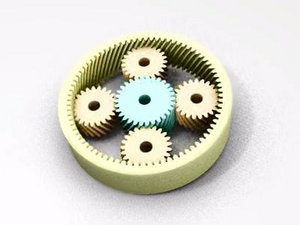
Toyota HSD has PSD - power split device... it has FIXED gear ratio, so by the definition it is not a CVT which is continuously VARIABLE transmission... it feels similar in practice because it is programmed to hold specific rpm as thats most efficient... to do that, it uses 2 electric motors which are built into PSD.
This page has really great info here:
http://eahart.com/prius/psd/
And here is the difference:
This page has really great info here:
http://eahart.com/prius/psd/
And here is the difference:


Lead Lap
Joined: Oct 2002
Posts: 4,664
Likes: 18
From: TX

CL Community Team


Joined: Feb 2007
Posts: 9,399
Likes: 622
From: IL
That's right. The Toyota / Lexus hybrid transmission is NOT continuously variable: you cannot change the gear ratios between the engine and the drive wheels and the transmission does NOT transmit power mechanically from the ICE to the wheels.
In Toyota and Lexus hybrids, the ICE is never mechanically connected to the drive wheels; the vehicle is always driven by the electric motor and the ICE provides power to assist the electric motor when needed. The Toyota / Lexus hybrid vehicles are best described as electric vehicles with ICE assist.
In Toyota and Lexus hybrids, the ICE is never mechanically connected to the drive wheels; the vehicle is always driven by the electric motor and the ICE provides power to assist the electric motor when needed. The Toyota / Lexus hybrid vehicles are best described as electric vehicles with ICE assist.
At speeds under 42mph, the computer can decide to have MG1 "absorb" all the motive power of the engine, and thus no power is being delivered from the engine to the wheels. Above 42, doing so would cause MG1 to exceed its maximum speed of 10,000 rpm, so therefore the engine MUST drive the wheels to prevent this.
Conceptually, this is no different than the differential in every other car--it's just connected to different things. If you input rotation on one of the three shafts (traditionally: drive/output shaft, left axle, and right axle; in HSD: ICE, MG1, and MG2/transmission input shaft), the other two will tend to spin. Add resistance on one of the remaining two, and the other will spin faster. Make the second go faster, and the third will go slower. Stop the second, and all the drive power goes to the third.
This is why Toyota refers to it as an eCVT. It achieves the same result as a belt- or chain-driven CVT (engine speed not in a fixed relationship with vehicle speed), through different means.
Lexus Champion
Joined: Feb 2011
Posts: 3,309
Likes: 31
From: Canada
This is completely incorrect. The engine has a direct mechanical link to the wheels, though it does not always drive them at low speeds. At speeds above 42 mph, the engine is ALWAYS providing power directly to the wheels. This is accomplished through the use of the Power Split Device, which is basically a differential. When running, the engine drives BOTH the wheels AND the smaller motor, called MG1. How fast the output to the drive axle turns depends on how fast the computer allows MG1 to spin.
At speeds under 42mph, the computer can decide to have MG1 "absorb" all the motive power of the engine, and thus no power is being delivered from the engine to the wheels. Above 42, doing so would cause MG1 to exceed its maximum speed of 10,000 rpm, so therefore the engine MUST drive the wheels to prevent this.
Conceptually, this is no different than the differential in every other car--it's just connected to different things. If you input rotation on one of the three shafts (traditionally: drive/output shaft, left axle, and right axle; in HSD: ICE, MG1, and MG2/transmission input shaft), the other two will tend to spin. Add resistance on one of the remaining two, and the other will spin faster. Make the second go faster, and the third will go slower. Stop the second, and all the drive power goes to the third.
This is why Toyota refers to it as an eCVT. It achieves the same result as a belt- or chain-driven CVT (engine speed not in a fixed relationship with vehicle speed), through different means.
At speeds under 42mph, the computer can decide to have MG1 "absorb" all the motive power of the engine, and thus no power is being delivered from the engine to the wheels. Above 42, doing so would cause MG1 to exceed its maximum speed of 10,000 rpm, so therefore the engine MUST drive the wheels to prevent this.
Conceptually, this is no different than the differential in every other car--it's just connected to different things. If you input rotation on one of the three shafts (traditionally: drive/output shaft, left axle, and right axle; in HSD: ICE, MG1, and MG2/transmission input shaft), the other two will tend to spin. Add resistance on one of the remaining two, and the other will spin faster. Make the second go faster, and the third will go slower. Stop the second, and all the drive power goes to the third.
This is why Toyota refers to it as an eCVT. It achieves the same result as a belt- or chain-driven CVT (engine speed not in a fixed relationship with vehicle speed), through different means.
Thanks. It looks like I have more reading to do.


