


New CAFE Standard: 35mpg by 2016

Guest
Posts: n/a

people keep thinking hybrids are all good for the environment. The bodies of hybrids contain magnesium. First, who knows how much carbon footprint and energy it took to mine the magnesium needed for a hybrid body. There's other fun tidbits like if a hybrid catches on fire the fire burns really hot you cannot put it out with a regular fire extinguisher because of the magnesium. Toyota even has emergency manuals for rescue crews how to deal with a hybrid because you can electrocute rescue crews if they use the jaws of life on a crashed hybrid and nick the power cable. There's only specific points where you can cut the car. Battery packs are extremely dangerous if they have to cut or hose down a car.
Yea good for the environment What a joke.
https://techinfo.toyota.com/techInfo...erg&_nfpb=true
Yea good for the environment What a joke.
https://techinfo.toyota.com/techInfo...erg&_nfpb=true
Sigh.........

old accords/camrys didn't have 8+ airbags. didn't have larger rims. weren't as roomy to accomodate our fat asses. didn't have as many speakers or as big amps. didn't have as many motorized seat adjustments and other gizmos. didn't has as much sound proofing. didn't have as many reinforcement beams or as thick glass.

Let's see, smaller and more cramped cars, less power, less safe, oh and more expensive, how the hell does this help the domestic auto industry sell more cars? I'm amazed at the people here who preach free market and capitalism and b**** when the govt hands money to GM and Chrysler but are all for them telling us what we can and can't drive, guess you all only want less govt when it suits your issues.

Lexus Champion
Joined: Jan 2004
Posts: 2,068
Likes: 1
From: California
I believe that the government does need to take action in improving gas mileage for new cars and the car companies need to start making more fuel efficient cars. Everone here on this forum will agree that we need to consume less fuel as a country. Mandating cars that have an average of 35 mpg is a bit extreme in 7 years and I doubt most companies will be able to meet that standard.
I am a believer that less government is better government. That said, the policies I've agreed with are giving Americans an INCENTIVE to buy fuel efficient cars. Tax credits for hybrids and diesels GOOD. Carpool lane stickers GOOD. Public service announcements GOOD. These are little things our government can do immediately to get people to change their habits.
Think about how well the carpool stickers for hybrids worked in California. I believe the success of the Prius has a lot to do with this initiative. Our government just needs to give people reasons to choose fuel efficient, not force them to. God Bless America!
I am a believer that less government is better government. That said, the policies I've agreed with are giving Americans an INCENTIVE to buy fuel efficient cars. Tax credits for hybrids and diesels GOOD. Carpool lane stickers GOOD. Public service announcements GOOD. These are little things our government can do immediately to get people to change their habits.
Think about how well the carpool stickers for hybrids worked in California. I believe the success of the Prius has a lot to do with this initiative. Our government just needs to give people reasons to choose fuel efficient, not force them to. God Bless America!

Lead Lap
Joined: Jun 2006
Posts: 4,534
Likes: 0
From: MD
Hybrid argument aside there are some simply changes that automakers could make.
Many small cars like the Focus, Corolla, Impreza still have 4 speed autos and 5 speed manuals. Upgrading to 6 speeds or CVTs would make the difference. It certainly is working for the Fusion and Malibu. This is just one change that could be made. Will these transmissions cost more initially? Yes! Will the extra cost save you money in the long run? Yes!
What really boggles my mind is that people on these forums are so eager to spend money on the fastest car or the one with the greatest technological features. But when it comes to fuel efficiency people say: "how will this pay for itself?" Does lane departure warning pay for itself? Probably not, we've been getting along just fine without it. Do autopark systems pay for themselves? Well, you still have to parallel park to pass a driver's test.
Many small cars like the Focus, Corolla, Impreza still have 4 speed autos and 5 speed manuals. Upgrading to 6 speeds or CVTs would make the difference. It certainly is working for the Fusion and Malibu. This is just one change that could be made. Will these transmissions cost more initially? Yes! Will the extra cost save you money in the long run? Yes!
What really boggles my mind is that people on these forums are so eager to spend money on the fastest car or the one with the greatest technological features. But when it comes to fuel efficiency people say: "how will this pay for itself?" Does lane departure warning pay for itself? Probably not, we've been getting along just fine without it. Do autopark systems pay for themselves? Well, you still have to parallel park to pass a driver's test.


Thread Starter
Rookie
Joined: Jan 2009
Posts: 63
Likes: 1
From: TX
crazy. you make it seem like hybrids have no trade-offs. how about tiny trunks? how about HEAVY cars? and 'economies of scale'? there's always going to be several hundred dollars of price premium due to complexity, batteries, etc. i checked out a friend's 08 prius and while a hatch back, the 'floor' is so high you still can't fit much of anything bulky in the vehicle. and the electric to ICE transition is far from seamless.
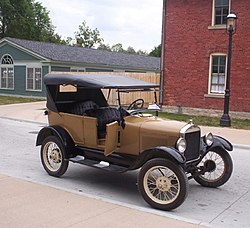
It's too bad that economies of scale and R&D never managed to improve these cars over the years.
People need to get a sense of perspective. Europe has an average fuel efficiency of over 40 mpg. Our target standards are not very aggressive compared to other countries:

35mpg luxury sedans that drive better than anything we are used to today is a very obtainable goal in seven years.

A lot of conversation in here about changing American habits and consumption, and quite a few comments about how "there is only so much we can do with the internal combustion engine".
To that last comment, I will have to disagree. Look at the advances that engines have made in the last ten years...specifically V8s and V6s. 4 cylinders have always been the "30mpg+" trusty workhorse, and not to discredit them either because like JLSC4 is noting, some are capable of 40+mpg now. That is a significant improvement.
Anyway...historically V8s were the performance engines with 260-300hp that got low to mid teens in most driving, while V6s were 190-230hp and returned high to mid teens for most drivers.
This day in age we have 380hp V8s that can snap off 0-60 in less than 5 or 6 seconds, return over 30MPG on the highway, and mid to low twenties in combined driving. Modern V6s typically pack 260-310hp and return similar mileage and performance. These advances were all made mostly just in the last 6-7 years thanks in part to technologies like VVTi, VTEC, direct injection, VANOS, and better transmissions. Looking back historically, this has almost been a revolution in terms of engine building when you consider power, output, and fuel efficiency. No longer have numbers been going up 5 or 10 hp at each redesign, they went up nearly a hundred horsepower and gained 3, 4, or 5mpg in the process! This again, is significant improvement.
Because of these accomplishments I know that it will be possible to meet the demands that are now being implemented by the government- maybe not in 7 years, but definitely within 10. Toyota alone will need to implement direct injection on ALL of their engines, not just Lexus, to improve efficiency. I would imagine that a 3.0 or 3.2L GR V6 with direct injection could make the same 270hp the non-D.I. engine does in the Camry while returning even better mileage. Toyota has also drug their feet in implementing Valvematic, another efficient and gas-saving techonolgy, so I would expect them to ramp up the inclusion of that feature on all next generation powerplants. I think that many companies will follow suit with better transmissions, more technology, and hopefully lighter curb weights.
I just don't think that these regulations will be the end of the world. The last few years have been THE most innovative since the internal combustion was created, and it has opened a whole new can of worms for efficiency and power. Yes, it will cost automakers some extra $$ in R&D and yes, the prices of vehicles might inch upwards slightly in some cases, but more importantly...YES they will meet these standards.
This is only considering ICE's as well. Consider strapping a lithium ion hybrid system to a direct injected, valvematic-equipped 3.XL V6. You could theoretically be looking at a 340-370ish HP hybrid that returned 40MPG.
The best is yet to come!
To that last comment, I will have to disagree. Look at the advances that engines have made in the last ten years...specifically V8s and V6s. 4 cylinders have always been the "30mpg+" trusty workhorse, and not to discredit them either because like JLSC4 is noting, some are capable of 40+mpg now. That is a significant improvement.
Anyway...historically V8s were the performance engines with 260-300hp that got low to mid teens in most driving, while V6s were 190-230hp and returned high to mid teens for most drivers.
This day in age we have 380hp V8s that can snap off 0-60 in less than 5 or 6 seconds, return over 30MPG on the highway, and mid to low twenties in combined driving. Modern V6s typically pack 260-310hp and return similar mileage and performance. These advances were all made mostly just in the last 6-7 years thanks in part to technologies like VVTi, VTEC, direct injection, VANOS, and better transmissions. Looking back historically, this has almost been a revolution in terms of engine building when you consider power, output, and fuel efficiency. No longer have numbers been going up 5 or 10 hp at each redesign, they went up nearly a hundred horsepower and gained 3, 4, or 5mpg in the process! This again, is significant improvement.
Because of these accomplishments I know that it will be possible to meet the demands that are now being implemented by the government- maybe not in 7 years, but definitely within 10. Toyota alone will need to implement direct injection on ALL of their engines, not just Lexus, to improve efficiency. I would imagine that a 3.0 or 3.2L GR V6 with direct injection could make the same 270hp the non-D.I. engine does in the Camry while returning even better mileage. Toyota has also drug their feet in implementing Valvematic, another efficient and gas-saving techonolgy, so I would expect them to ramp up the inclusion of that feature on all next generation powerplants. I think that many companies will follow suit with better transmissions, more technology, and hopefully lighter curb weights.
I just don't think that these regulations will be the end of the world. The last few years have been THE most innovative since the internal combustion was created, and it has opened a whole new can of worms for efficiency and power. Yes, it will cost automakers some extra $$ in R&D and yes, the prices of vehicles might inch upwards slightly in some cases, but more importantly...YES they will meet these standards.
This is only considering ICE's as well. Consider strapping a lithium ion hybrid system to a direct injected, valvematic-equipped 3.XL V6. You could theoretically be looking at a 340-370ish HP hybrid that returned 40MPG.
The best is yet to come!
Guest
Posts: n/a
Hybrid argument aside there are some simply changes that automakers could make.
Many small cars like the Focus, Corolla, Impreza still have 4 speed autos and 5 speed manuals. Upgrading to 6 speeds or CVTs would make the difference. It certainly is working for the Fusion and Malibu. This is just one change that could be made. Will these transmissions cost more initially? Yes! Will the extra cost save you money in the long run? Yes!
What really boggles my mind is that people on these forums are so eager to spend money on the fastest car or the one with the greatest technological features. But when it comes to fuel efficiency people say: "how will this pay for itself?" Does lane departure warning pay for itself? Probably not, we've been getting along just fine without it. Do autopark systems pay for themselves? Well, you still have to parallel park to pass a driver's test.
Many small cars like the Focus, Corolla, Impreza still have 4 speed autos and 5 speed manuals. Upgrading to 6 speeds or CVTs would make the difference. It certainly is working for the Fusion and Malibu. This is just one change that could be made. Will these transmissions cost more initially? Yes! Will the extra cost save you money in the long run? Yes!
What really boggles my mind is that people on these forums are so eager to spend money on the fastest car or the one with the greatest technological features. But when it comes to fuel efficiency people say: "how will this pay for itself?" Does lane departure warning pay for itself? Probably not, we've been getting along just fine without it. Do autopark systems pay for themselves? Well, you still have to parallel park to pass a driver's test.
I love your last point. Its amazing how people start saying things like "what the total cost of the car" and "well they kill trees to build the factory to build the batteries" etc etc to downplay hybrids or fuel economy.
Recently I am just as enthusiast as the all out sports car/sedan as I am getting more and more MPG. You can be an enthusiast for both!

Yes, well you know what are even worse? Gas-powered autos. They have a top speed of 45 mph and no windows.
It's too bad that economies of scale and R&D never managed to improve these cars over the years.
People need to get a sense of perspective. Europe has an average fuel efficiency of over 40 mpg. Our target standards are not very aggressive compared to other countries:
35mpg luxury sedans that drive better than anything we are used to today is a very obtainable goal in seven years.
It's too bad that economies of scale and R&D never managed to improve these cars over the years.
People need to get a sense of perspective. Europe has an average fuel efficiency of over 40 mpg. Our target standards are not very aggressive compared to other countries:
35mpg luxury sedans that drive better than anything we are used to today is a very obtainable goal in seven years.
Lead Lap
Joined: Jun 2006
Posts: 4,534
Likes: 0
From: MD
I think that this legislation could produce some really great cars.
Yep. It works. The Altima with CVT is only 1 Hwy MPG behind the MT variants of both the 2.5 and 3.5L models.
I also wouldn't be surprised to see some manufacturers battle against the EPA for more "fair" window ratings. I know that just a few years ago they reevaluated and changed their testing procedures which resulted in a handy dip, for every auto maker, in mileage figures.
I remember hearing that the new rating method involves hard braking, running the car to 80MPH and some other maneuvers that were supposed to be more indicative of "real world driving". I can respect that but truth be told I don't think that most people slam on their brakes 8 times a day or travel at 80+mph on the highway day in and day out. I think the new regulations may be a tad aggressive on the EPA's part.
When IS-F owners can do 31MPG on the freeway and LS 460Ls can do 25mpg in combined driving, sticker numbers of 16/23 really don't seem very fair or indicative of "the real world". This is not exclusive to only Lexus as I have seen plenty of MB S550 owners match the LS's numbers, and the 335i can do nearly 30MPG just like the IS350. In the different forums that I browse it seems to me that nearly all new engines exceed their window sticker ratings by a significant amount when driven reasonably by average drivers. I know a woman who averages 28MPG in her IS 250 and she does nearly all city driving! Come on!
I remember hearing that the new rating method involves hard braking, running the car to 80MPH and some other maneuvers that were supposed to be more indicative of "real world driving". I can respect that but truth be told I don't think that most people slam on their brakes 8 times a day or travel at 80+mph on the highway day in and day out. I think the new regulations may be a tad aggressive on the EPA's part.
When IS-F owners can do 31MPG on the freeway and LS 460Ls can do 25mpg in combined driving, sticker numbers of 16/23 really don't seem very fair or indicative of "the real world". This is not exclusive to only Lexus as I have seen plenty of MB S550 owners match the LS's numbers, and the 335i can do nearly 30MPG just like the IS350. In the different forums that I browse it seems to me that nearly all new engines exceed their window sticker ratings by a significant amount when driven reasonably by average drivers. I know a woman who averages 28MPG in her IS 250 and she does nearly all city driving! Come on!

Lexus Test Driver

Joined: Jan 2002
Posts: 8,764
Likes: 1
From: Treasury
After reading much of this I see a lot of comparison to the Europe and the rest of the world and how we should be on par with them.
I believe we should keep moving forward and keep increasing MPG as much as we can, do not get me wrong.
But the flaw with the comparisons to me is, we do not live like the rest of the world nor should we. We should live as Americans do, but with common sense. We should not have to turn into what many parts of Europe have become.
This country is so locked into fads and knee jerk reactions it makes me laugh. In 5 years everyone will be on some other band wagon.
Just driving from my home this morning to the furnace dealer I seen a dozen lawn cutting and landscaping trucks, people towing trailers and boats and someone with a 8ft bed pickup full of stuff. Have you ever had someone over here from another country for the first time and taken them for a drive, you watch as they as wide eyed and mouth open.
Our homes, our land, the things we do ourselves to the lawn cutting services we hire, MANY of the things we do here on a grand scale is nothing like many of those countries overseas.
Now when I say common sense, I mean lets use an all of the above approach. Technology, hybrids, ethanol, gas, diesel and any other form of energy we can use and development. Hybrids is not an end all solution but they are effective, will we ever have a one solution fits all, I doubt it.
Yes, we do need to change a bit. We can be smarter about what cars we use to commute with as a start, is commuting with a 12mpg suv 45 miles one way smart? No….
At some point we have to say this is the best we can do, you’re not going to get 500 mpg with no emissions and have a functional car, so where exactly is that point that we say we are within reason?
Can we trim the waste and be smarter yes, we should stop living like American’s, absolutely not.
I believe we should keep moving forward and keep increasing MPG as much as we can, do not get me wrong.
But the flaw with the comparisons to me is, we do not live like the rest of the world nor should we. We should live as Americans do, but with common sense. We should not have to turn into what many parts of Europe have become.
This country is so locked into fads and knee jerk reactions it makes me laugh. In 5 years everyone will be on some other band wagon.
Just driving from my home this morning to the furnace dealer I seen a dozen lawn cutting and landscaping trucks, people towing trailers and boats and someone with a 8ft bed pickup full of stuff. Have you ever had someone over here from another country for the first time and taken them for a drive, you watch as they as wide eyed and mouth open.
Our homes, our land, the things we do ourselves to the lawn cutting services we hire, MANY of the things we do here on a grand scale is nothing like many of those countries overseas.
Now when I say common sense, I mean lets use an all of the above approach. Technology, hybrids, ethanol, gas, diesel and any other form of energy we can use and development. Hybrids is not an end all solution but they are effective, will we ever have a one solution fits all, I doubt it.
Yes, we do need to change a bit. We can be smarter about what cars we use to commute with as a start, is commuting with a 12mpg suv 45 miles one way smart? No….
At some point we have to say this is the best we can do, you’re not going to get 500 mpg with no emissions and have a functional car, so where exactly is that point that we say we are within reason?
Can we trim the waste and be smarter yes, we should stop living like American’s, absolutely not.

Lexus Fanatic


Joined: May 2003
Posts: 7,864
Likes: 0
From: Massachusetts
I think many people aren't keeping open minds about what is possible.
Time always proves to us things that were never thought possible or even thought of at all.
Who here can say with certainty that in 15 years there can't be a Hummer-like vehicle that emits zero emissions? Actually, they can do it today (hydrogen) and that's just one avenue. If anyone can claim with certainty what is not possible then he is a time traveler.
Was the zero-emission Honda FCX Clarity "possible" 20 years ago? Hmm.
Was traveling to the moon "possible" in 1950?
Have we learned nothing from history?
Large, powerful vehicles aren't going anywhere. Let's stop fooling ourselves into thinking we'll all be forced into Tata Nano's in 20 years. Come on now.
By now, we should be amazed at how we have progressed technologically as humans. Why does the automobile have to stop here?
Time always proves to us things that were never thought possible or even thought of at all.
Who here can say with certainty that in 15 years there can't be a Hummer-like vehicle that emits zero emissions? Actually, they can do it today (hydrogen) and that's just one avenue. If anyone can claim with certainty what is not possible then he is a time traveler.
Was the zero-emission Honda FCX Clarity "possible" 20 years ago? Hmm.
Was traveling to the moon "possible" in 1950?
Have we learned nothing from history?
Large, powerful vehicles aren't going anywhere. Let's stop fooling ourselves into thinking we'll all be forced into Tata Nano's in 20 years. Come on now.
By now, we should be amazed at how we have progressed technologically as humans. Why does the automobile have to stop here?