When you click on links to various merchants on this site and make a purchase, this can result in this site earning a commission. Affiliate programs and affiliations include, but are not limited to, the eBay Partner Network.
If you're electricity rates are low, it's probably not worth spending the money, but here rates are high, and being stuck with PG&E they charge you for the electricity itself as well as "transmission" fees, so you end up paying .38 cents on the low end (off peak) and almost .60 cents on the high end, between 4pm and 9pm. Solar off-sets that, and with two Tesla Power walls I store excess energy in the day and my house switches to batteries after 4pm. It saves me money and I don't give those bastards any of my excess power so they can resell it at a higher rate
All in I am paying $0.23 per kWh. For electric only it’s $0.166 per kWh but there are a bunch of other fees like distribution fees that are a little over $0.05 per kWh.
In IL I was paying 11 cents/kWh all day every day. I'm currently paying 0 cents per kWh at an Airbnb in FL.
Which service area are you in? ComEd (Chicagoland) was 13.9 cents/kWh through May of last year (6.6 cents for supply, 6.1 for delivery, 1.2 taxes/fees), then in June 2025 was increased to 17.4 cents/kWh. Current breakdown is 10 cents supply, 6.2 delivery, 1.2 taxes/fees.
That said, in the past year I only actually paid those rates in January and February. YTD I've produced more than I've used, and hoping to roll over enough credits this summer/fall to carry us through next winter:
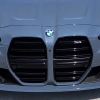
That's 614 Miles of driving, if you convert this to gasoline, it would equal 5.1 gallons. Not as efficient as my Model 3, but it's roughly 122 MPGe, which is still amazing for 384 HP car. Actual cost due to solar is around $31
aside from that. What about the infrastructure? Is there renewable energy in California ?
Renewable and zero-carbon resources supply roughly 52% to 67% of California's electricity, depending on how large hydroelectric and nuclear power are classified. Under the state's Renewables Portfolio Standard (RPS) program—which excludes large hydro—certified renewables make up about 41% of the total power mix. [1, 2]
The approximate breakdown of in-state and imported renewable and zero-carbon generation includes the following:
Renewable & Zero-Carbon Energy Breakdown
Solar (utility-scale and rooftop): ~32% of total generation (largest renewable source)
Large Hydroelectric: ~10% to 12% of total generation (varies by snow/rainfall)
Wind: ~7% to 9% of total generation
Geothermal: ~4% to 6% of total generation
Nuclear (Zero-Carbon): ~7% to 12% of total generation
Biomass & Biogas: ~2% to 3% of total generation [1, 2, 3, 4, 5]
The Remainder of the Grid
Non-renewable sources—primarily natural gas—make up the remaining 35% to 37% of the state's energy mix, while coal accounts for only a negligible fraction (less than 1%). [1, 2]
Renewable and zero-carbon resources supply roughly 52% to 67% of California's electricity, depending on how large hydroelectric and nuclear power are classified. Under the state's Renewables Portfolio Standard (RPS) program—which excludes large hydro—certified renewables make up about 41% of the total power mix. [[url=https://www.gov.ca.gov/2025/07/14/in-historic-first-california-powered-by-two-thirds-clean-energy-becoming-largest-economy-in-the-world-to-achieve-milestone/]1, 2]
The approximate breakdown of in-state and imported renewable and zero-carbon generation includes the following:
Renewable & Zero-Carbon Energy Breakdown
Solar (utility-scale and rooftop): ~32% of total generation (largest renewable source)
Large Hydroelectric: ~10% to 12% of total generation (varies by snow/rainfall)
Wind: ~7% to 9% of total generation
Geothermal: ~4% to 6% of total generation
Nuclear (Zero-Carbon): ~7% to 12% of total generation
Biomass & Biogas: ~2% to 3% of total generation [[url=https://www.eia.gov/states/CA/analysis]1, 2, 3, 4, 5]
The Remainder of the Grid
Non-renewable sources—primarily natural gas—make up the remaining 35% to 37% of the state's energy mix, while coal accounts for only a negligible fraction (less than 1%). [[url=https://www.eia.gov/states/CA/analysis]1, 2]
very interesting. Does California have excess electricity generation? up here we have very cheap electricity. We pay on average $.10 USD per kWh. Quebec is $.5c USD. we also export electricity to the United States. We have very few coal power plants , but we exported a lot of coal to China for steel and power generation