


Lexus Reliability Rating Slipping? Or just some rock throwing.


Lexus Champion


Joined: Nov 2013
Posts: 13,260
Likes: 1,883
From: WA

The issue, at least to me, isn't that the RX uses a Camry drivetrain. It always has.
The issue is, at least in the 350h, that it's just not that great of a drivetrain.
I actually really, really like the new RX and would be happy to get one for my wife, but I'd want the 500h (my wife would want the 450h+).
The issue is, at least in the 350h, that it's just not that great of a drivetrain.
I actually really, really like the new RX and would be happy to get one for my wife, but I'd want the 500h (my wife would want the 450h+).


Lead Lap


Joined: Aug 2001
Posts: 4,533
Likes: 935
Lexus Champion
Joined: Nov 2013
Posts: 13,260
Likes: 1,883
From: WA

Pit Crew
Joined: Oct 2025
Posts: 229
Likes: 67
From: Florida
Unfortunately you have come to Lexus after their great days. The Lexus vehicles I had were all excellent with great quality materials. My 03 ES with 225k miles is still in the family and is tight and rattle free. Now that I have gone German I don't see myself ever going back.


Lexus Fanatic

Joined: May 2012
Posts: 68,624
Likes: 4,044
From: Maryland

Pit Crew

Joined: Dec 2022
Posts: 173
Likes: 51
From: Arizona
The two reasons why reliability ratings have dropped are:
1) CR ratings are based on consumer feedback. A lot of the reported "problems" are not really failures, but issues with "normal" operation of the vehicle. Many owners struggle with understanding how to use advanced features of their cars. Cars have become more complicated and very few owners have the patience (and interest) to read an 800 pages long owners manual (plus a 300 pages long manual just for the infotainment system). If you learned to drive in a 1980s or 1990s car, facing 2026 technology is daunting task. For example, if you don't understand how ADAS work, many of normal car behaviors will look like a problem. People simply can't comprehend why their cars behave in a certain way, and report it as "problems".
2) The gap between reliable and unreliable cars has deceased. People expect more from their vehicles. For example, 20 years ago, Hyundais were truly terrible cars that didn't last long, had cheap and ugly interiors with minimal features, were noisy and uncomfortable. These days, a Hyundai or KIA is almost as reliable as Toyota, and most come with nicer interior and more features for a lower price. If you compare a 2000 Lexus vs. a 2026 model, the new Lexus isn't any more reliable or unreliable - it's just that people expect more because the bar has risen.
1) CR ratings are based on consumer feedback. A lot of the reported "problems" are not really failures, but issues with "normal" operation of the vehicle. Many owners struggle with understanding how to use advanced features of their cars. Cars have become more complicated and very few owners have the patience (and interest) to read an 800 pages long owners manual (plus a 300 pages long manual just for the infotainment system). If you learned to drive in a 1980s or 1990s car, facing 2026 technology is daunting task. For example, if you don't understand how ADAS work, many of normal car behaviors will look like a problem. People simply can't comprehend why their cars behave in a certain way, and report it as "problems".
2) The gap between reliable and unreliable cars has deceased. People expect more from their vehicles. For example, 20 years ago, Hyundais were truly terrible cars that didn't last long, had cheap and ugly interiors with minimal features, were noisy and uncomfortable. These days, a Hyundai or KIA is almost as reliable as Toyota, and most come with nicer interior and more features for a lower price. If you compare a 2000 Lexus vs. a 2026 model, the new Lexus isn't any more reliable or unreliable - it's just that people expect more because the bar has risen.



Thread Starter
Advanced
Joined: Apr 2025
Posts: 586
Likes: 355
From: TN
The two reasons why reliability ratings have dropped are:
1) CR ratings are based on consumer feedback. A lot of the reported "problems" are not really failures, but issues with "normal" operation of the vehicle. Many owners struggle with understanding how to use advanced features of their cars. Cars have become more complicated and very few owners have the patience (and interest) to read an 800 pages long owners manual (plus a 300 pages long manual just for the infotainment system). If you learned to drive in a 1980s or 1990s car, facing 2026 technology is daunting task. For example, if you don't understand how ADAS work, many of normal car behaviors will look like a problem. People simply can't comprehend why their cars behave in a certain way, and report it as "problems".
2) The gap between reliable and unreliable cars has deceased. People expect more from their vehicles. For example, 20 years ago, Hyundais were truly terrible cars that didn't last long, had cheap and ugly interiors with minimal features, were noisy and uncomfortable. These days, a Hyundai or KIA is almost as reliable as Toyota, and most come with nicer interior and more features for a lower price. If you compare a 2000 Lexus vs. a 2026 model, the new Lexus isn't any more reliable or unreliable - it's just that people expect more because the bar has risen.
1) CR ratings are based on consumer feedback. A lot of the reported "problems" are not really failures, but issues with "normal" operation of the vehicle. Many owners struggle with understanding how to use advanced features of their cars. Cars have become more complicated and very few owners have the patience (and interest) to read an 800 pages long owners manual (plus a 300 pages long manual just for the infotainment system). If you learned to drive in a 1980s or 1990s car, facing 2026 technology is daunting task. For example, if you don't understand how ADAS work, many of normal car behaviors will look like a problem. People simply can't comprehend why their cars behave in a certain way, and report it as "problems".
2) The gap between reliable and unreliable cars has deceased. People expect more from their vehicles. For example, 20 years ago, Hyundais were truly terrible cars that didn't last long, had cheap and ugly interiors with minimal features, were noisy and uncomfortable. These days, a Hyundai or KIA is almost as reliable as Toyota, and most come with nicer interior and more features for a lower price. If you compare a 2000 Lexus vs. a 2026 model, the new Lexus isn't any more reliable or unreliable - it's just that people expect more because the bar has risen.

Lexus Fanatic

Joined: Oct 2003
Posts: 94,410
Likes: 249
From: Virginia/D.C. suburbs
For example, 20 years ago, Hyundais were truly terrible cars that didn't last long, had cheap and ugly interiors with minimal features, were noisy and uncomfortable. These days, a Hyundai or KIA is almost as reliable as Toyota, and most come with nicer interior and more features for a lower price.
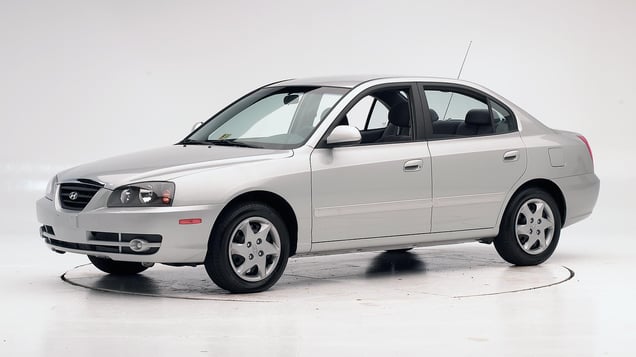
20 years ago, in the mid-2000s, Hyundai was producing excellent vehicles....and some of the best values on the road for the money. Now, in contrast, 30 years ago, in the 1990s, yes, for the most part, Hyundai and Kia WERE building junkback then. That started to change with the 1997 Hyundai Tiburon, when the first signs of improvement were manifest, and accelerated through the rest of the American-market lineup until about 2005 or so. By then, Hyundai was as good as any other mainstream brand in the U.S., and better than many. Lately, unfortunately, the bean-counters seem to be taking over again, and (most) recent-generation Hyundais and Kias seem to be slipping again in the quality of materials used.....doors don't have the solid feel opening and closing any more than they did for some two decades, and interior materials seem to be of lighter and thinner weight.
Last edited by mmarshall; Jan 23, 2026 at 11:21 AM.

CL Community Team
Joined: Oct 2011
Posts: 3,422
Likes: 200
From: US
My '25 TX350 is my first and most probably last Lexus. Doors sound bad upon closing. Hood shakes and shimmys at speed, I can't stand all of the nammys and how they detract from driving the damn car. Quality of materials are cheap. I have two Audis and the Lexus doesn't compare.
 Damn it was a hot SUV but the drive was so not for me. But I got used to it and started to enjoy it but definitely not a good move on my part. Fast forward... I was stuck with Lexus for a long time. I got to enjoy a lot of Lexus quality and had a small share with reliability. But overall it was good for me. Like others said TX is an overpriced grand highlander. But IMO, even when Toy and Lexus share certain things, Lexus vehicles are still a step above Toyota. What is it about Audis that you like? I've sat in/seen some latest ones. I don't think their designs are that great compared to other German cars.
Pit Crew
Joined: Oct 2025
Posts: 229
Likes: 67
From: Florida
No.
20 years ago, in the mid-2000s, Hyundai was producing excellent vehicles....and some of the best values on the road for the money. Now, in contrast, 30 years ago, in the 1990s, yes, for the most part, Hyundai and Kia WERE building junkback then. That started to change with the 1997 Hyundai Tiburon, when the first signs of improvement were manifest, and accelerated through the rest of the American-market lineup until about 2005 or so. By then, Hyundai was as good as any other mainstream brand in the U.S., and better than many. Lately, unfortunately, the bean-counters seem to be taking over again, and (most) recent-generation Hyundais and Kias seem to be slipping again in the quality of materials used.....doors don't have the solid feel opening and closing any more than they did for some two decades, and interior materials seem to be of lighter and thinner weight.
20 years ago, in the mid-2000s, Hyundai was producing excellent vehicles....and some of the best values on the road for the money. Now, in contrast, 30 years ago, in the 1990s, yes, for the most part, Hyundai and Kia WERE building junkback then. That started to change with the 1997 Hyundai Tiburon, when the first signs of improvement were manifest, and accelerated through the rest of the American-market lineup until about 2005 or so. By then, Hyundai was as good as any other mainstream brand in the U.S., and better than many. Lately, unfortunately, the bean-counters seem to be taking over again, and (most) recent-generation Hyundais and Kias seem to be slipping again in the quality of materials used.....doors don't have the solid feel opening and closing any more than they did for some two decades, and interior materials seem to be of lighter and thinner weight.