
This Toyota Tacoma SEMA Concept Combines Overlanding With Sustainability
The Tacoma H2-Overlander concept combines fuel-cell technology, dual electric motors, and off-grid capability, demonstrating Toyota’s continued belief in hydrogen power.


Hydrogen Meets the Trail
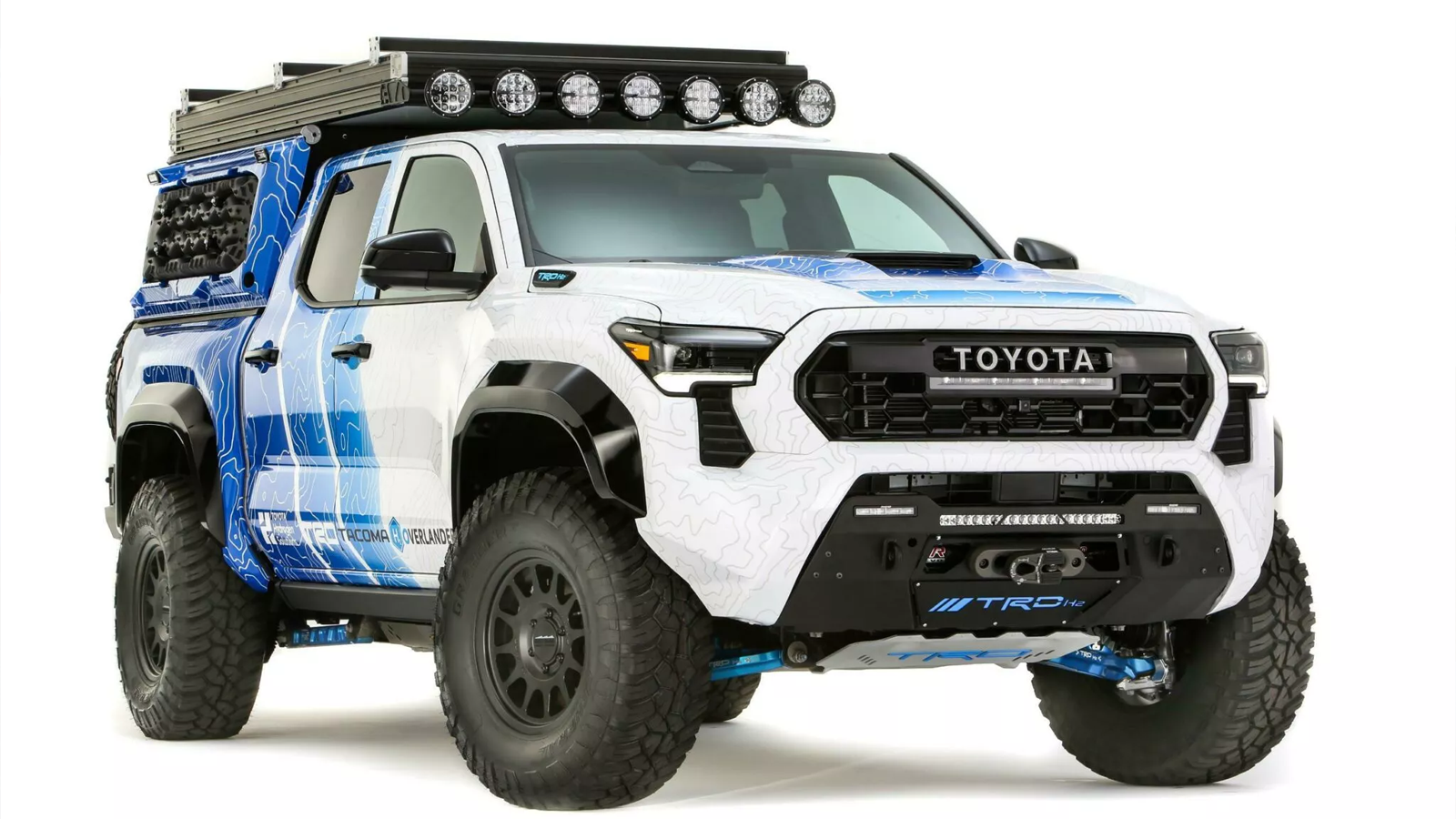
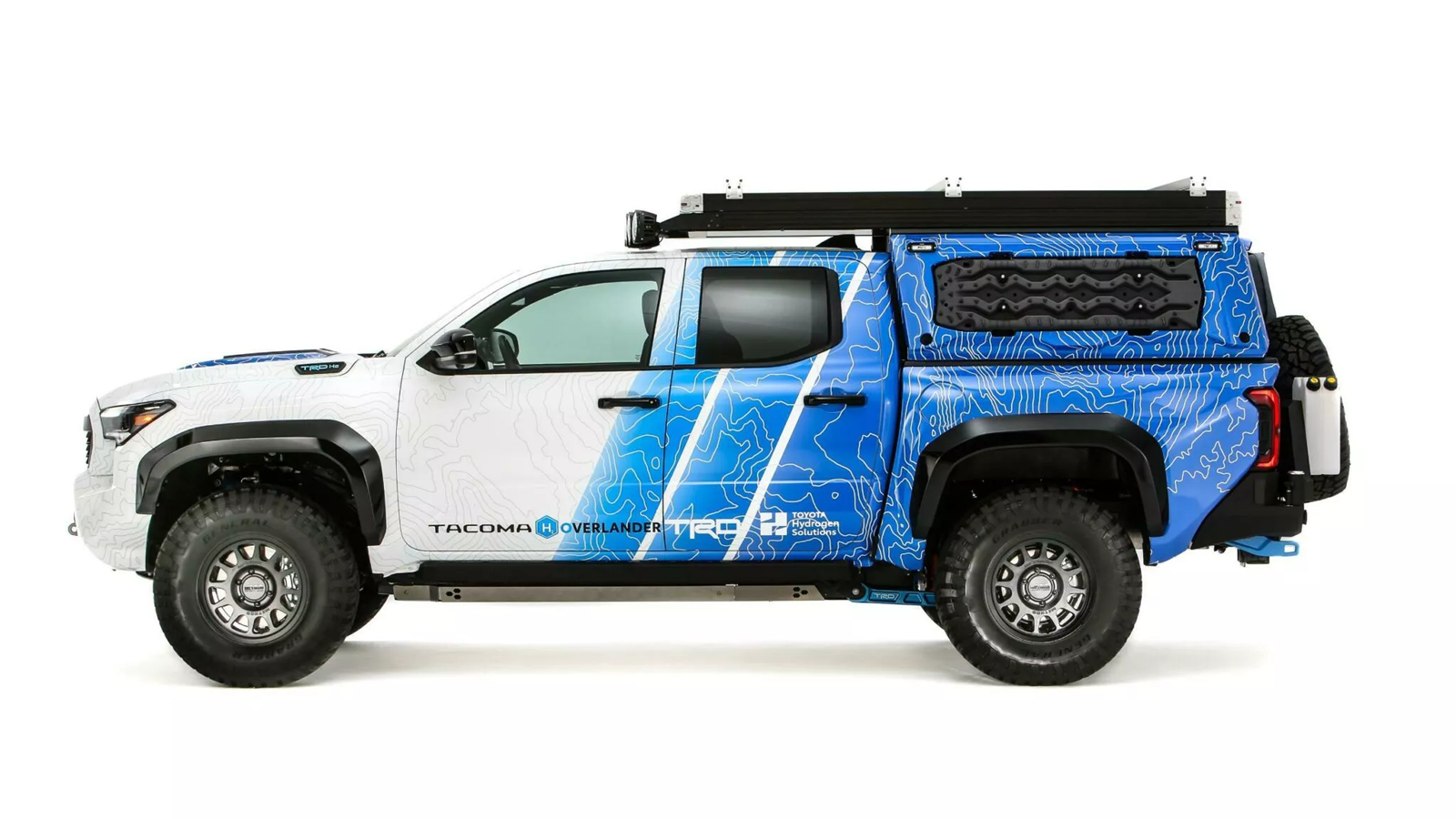
Toyota’s latest SEMA concept may look like an ordinary Tacoma, but the truck underneath is anything but conventional. The Tacoma H2-Overlander is a hydrogen fuel-cell electric vehicle that ditches gasoline entirely, replacing it with a powertrain derived from Toyota’s Mirai sedan. Built in collaboration between Toyota Racing Development (TRD) teams in California and North Carolina and Toyota Motor North America’s R&D division, the one-off project came together in just a few months, an impressive feat considering the amount of reengineering involved.
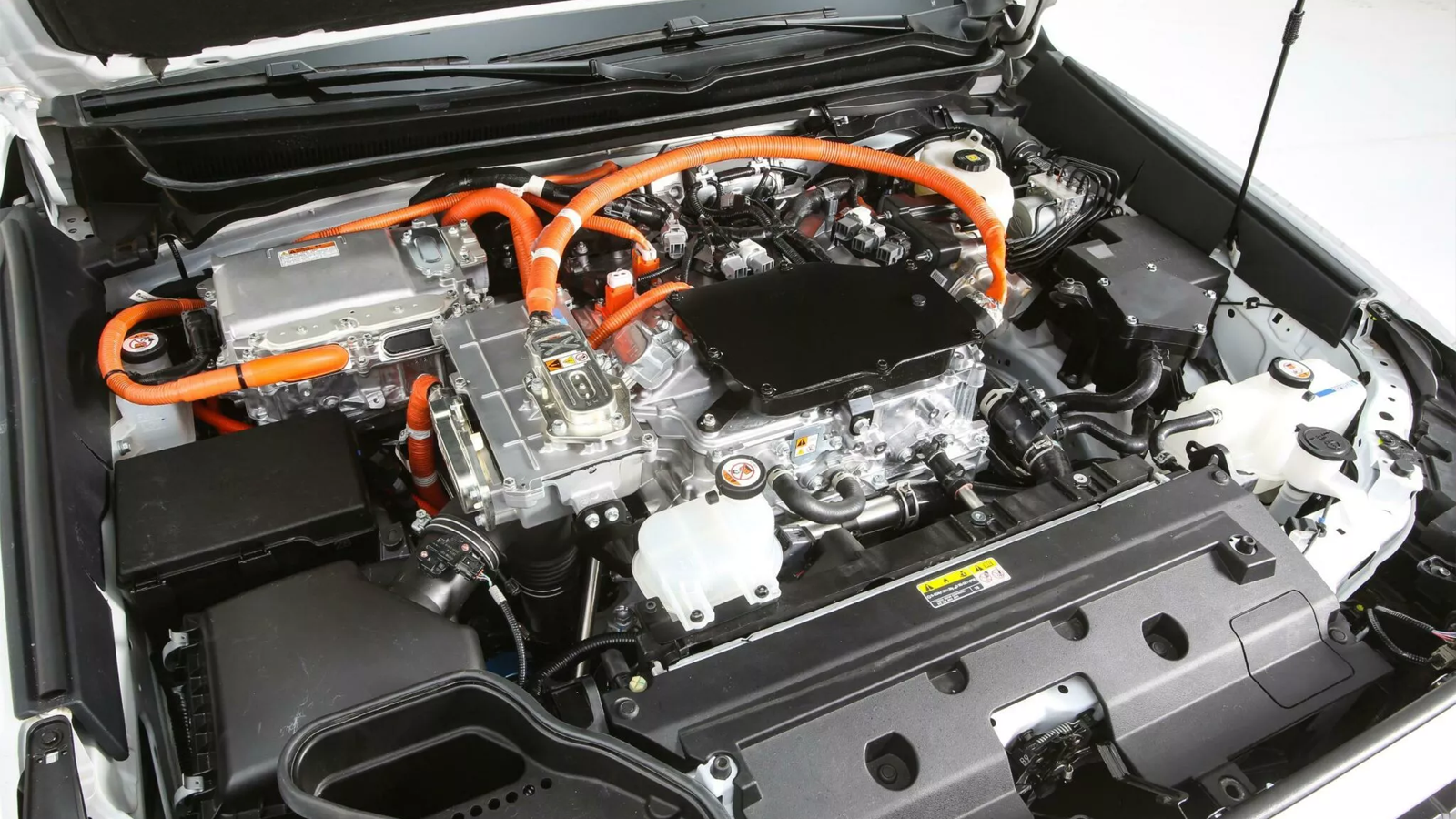
At the heart of the truck lies a 547-horsepower dual-motor setup, fed by a 24.9 kWh lithium-ion battery and a hydrogen fuel stack borrowed from the Mirai. Three hydrogen tanks are packaged within the ladder-frame chassis of the Tacoma’s TNGA-F platform, along with a custom cooling system adapted from both the gas-powered Tacoma TRD Pro and the electric Lexus RZ.
Power, Water, and a Shower
Like other fuel-cell vehicles, the Tacoma H2-Overlander is an EV in operation but relies on hydrogen instead of a large battery pack. When hydrogen passes through the fuel stack, it creates electricity to drive the motors, releasing only water as a byproduct. But rather than letting that water go to waste, Toyota equipped the concept with a patent-pending exhaust water recovery system developed by TRD.
Do-it-all Machine
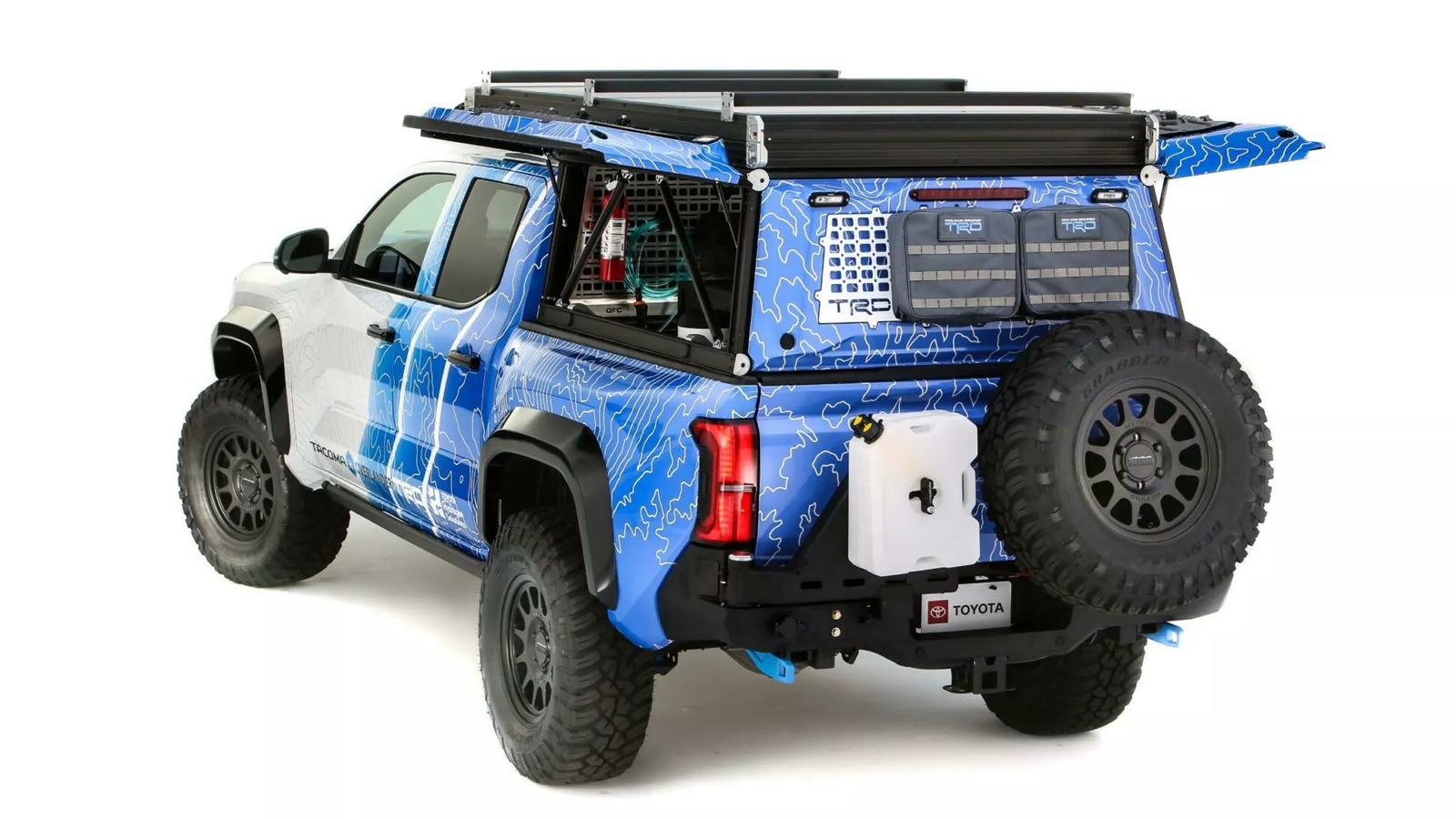
The setup captures and filters the water vapor expelled from the tailpipe, storing it in a separate tank. Though Toyota cautions against drinking it, the collected water can be reused for washing or showering, an invaluable feature for long off-grid expeditions. The system embodies a level of self-sufficiency rarely seen in modern off-road vehicles.
Additionally, the truck can output enough electricity to recharge two EVs at once or power an off-grid cabin, thanks to dual NEMA 14-50 outlets providing up to 15 kilowatts of exportable energy.
Built to Tackle Real Terrain
Toyota’s hydrogen experiment didn’t compromise the Tacoma’s rugged credentials. The truck features a TRD billet long-travel suspension kit with FOX 2.5 Performance Elite Series shocks, Tundra-sourced brakes, and custom 17-inch wheels wrapped in 35-inch all-terrain tires. It’s also equipped with front and rear differentials, limited-slip up front and electronic locking in the rear, to maintain traction on rough trails.
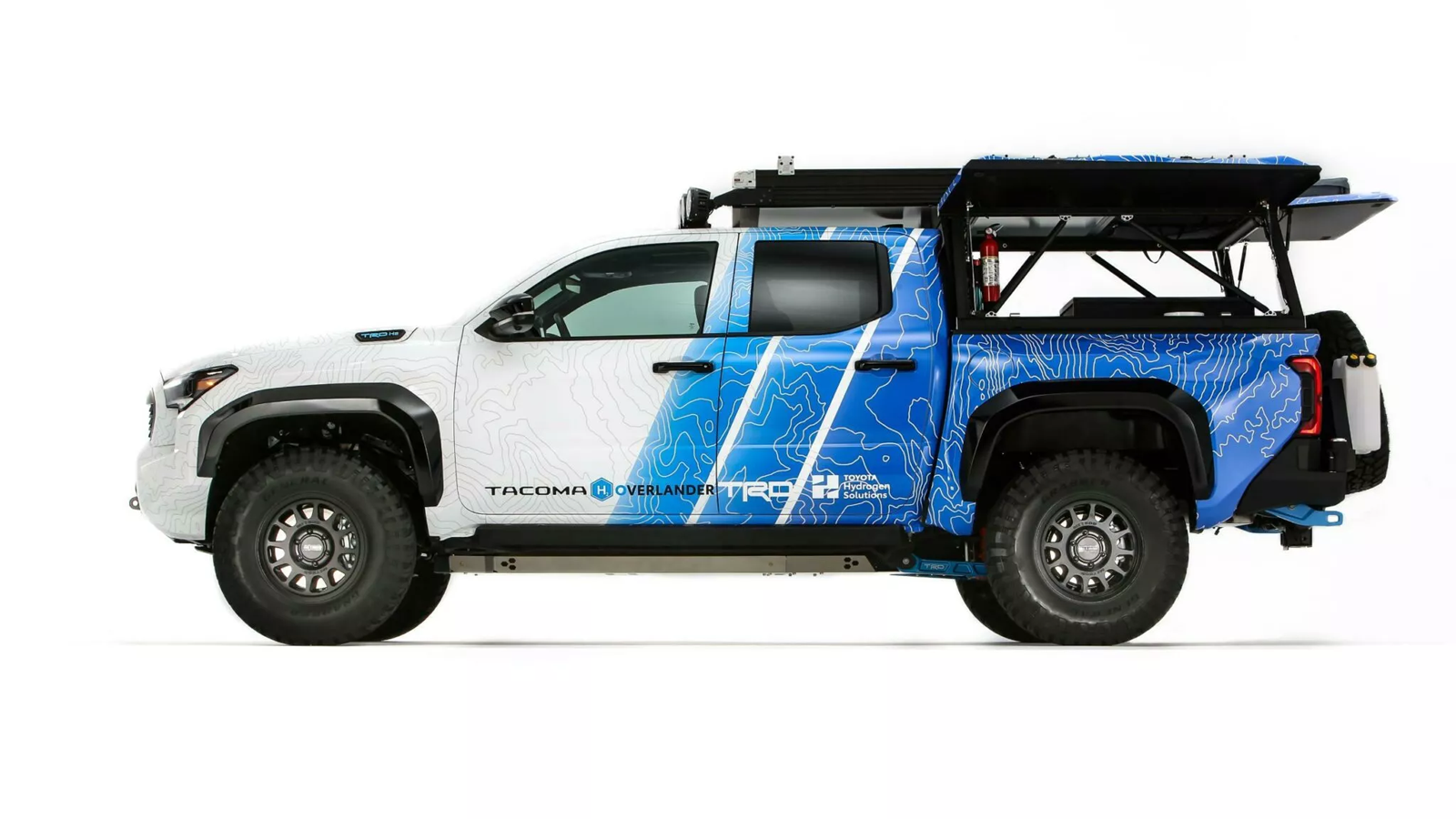
Exterior modifications include a skid plate, off-road bumper with recovery points, LED lighting, and a winch for serious overlanding tasks. The truck’s white-and-blue livery echoes earlier Toyota hydrogen prototypes, emphasizing its experimental nature.
A Self-Sustaining Overlander
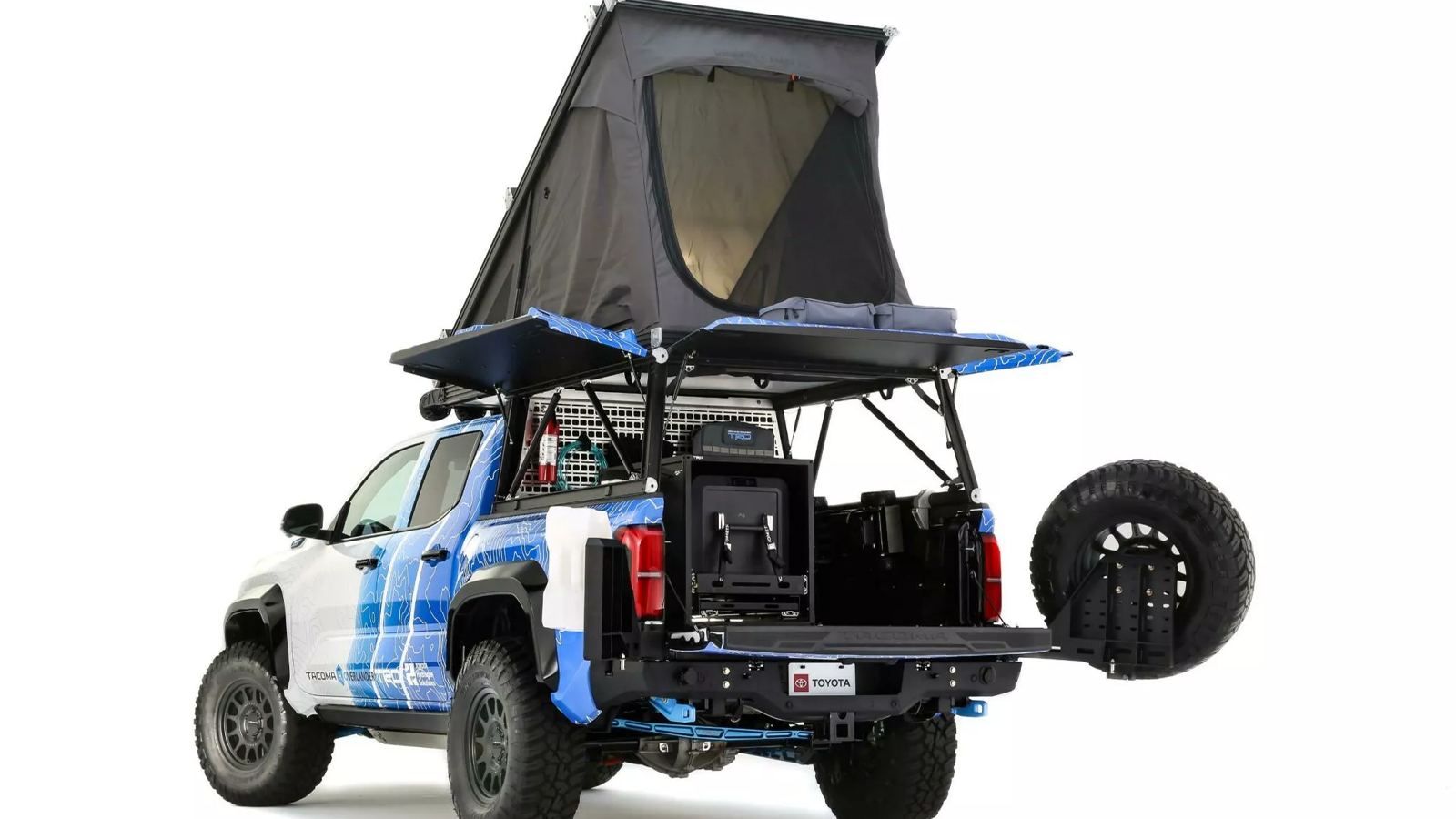
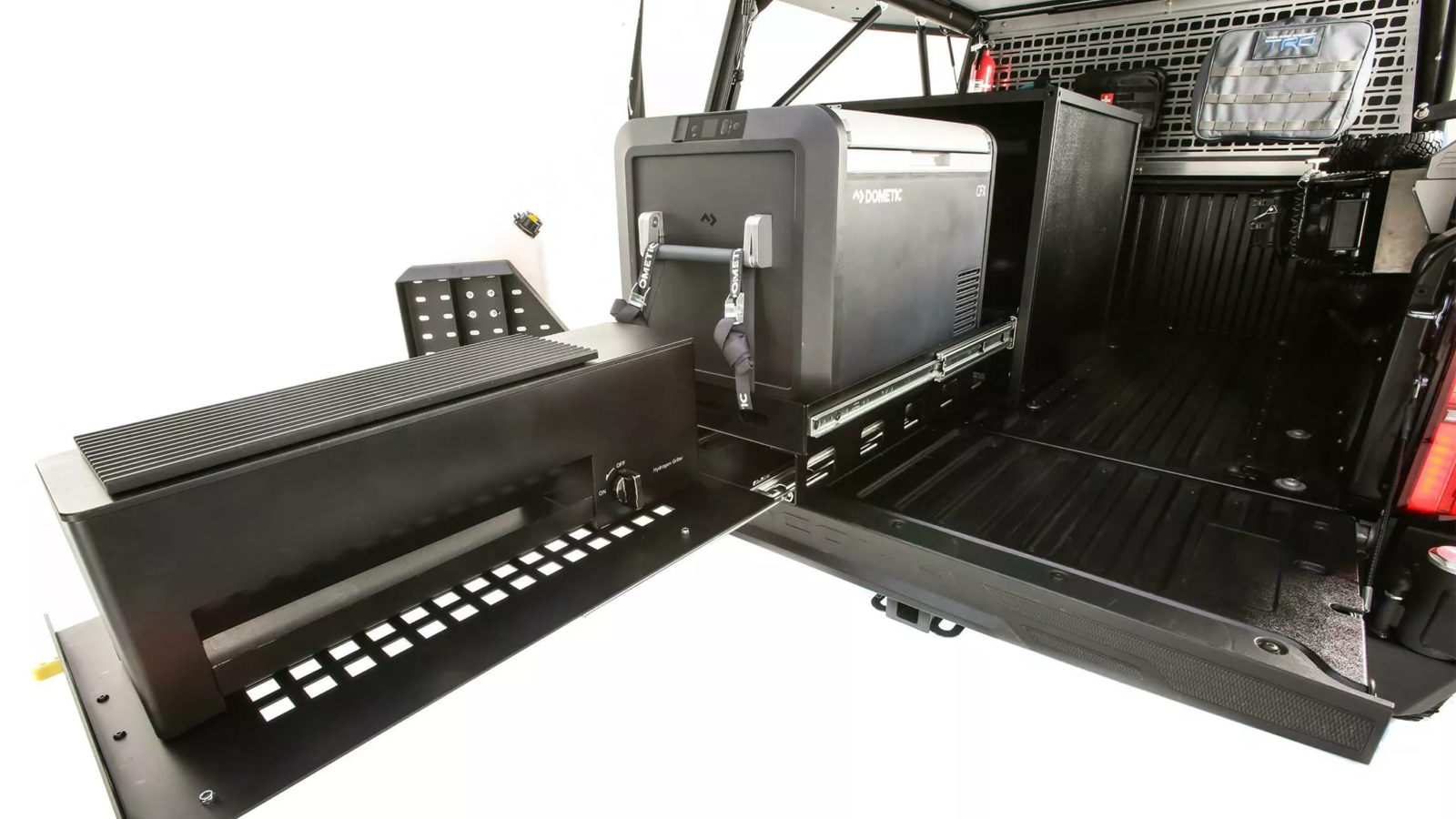
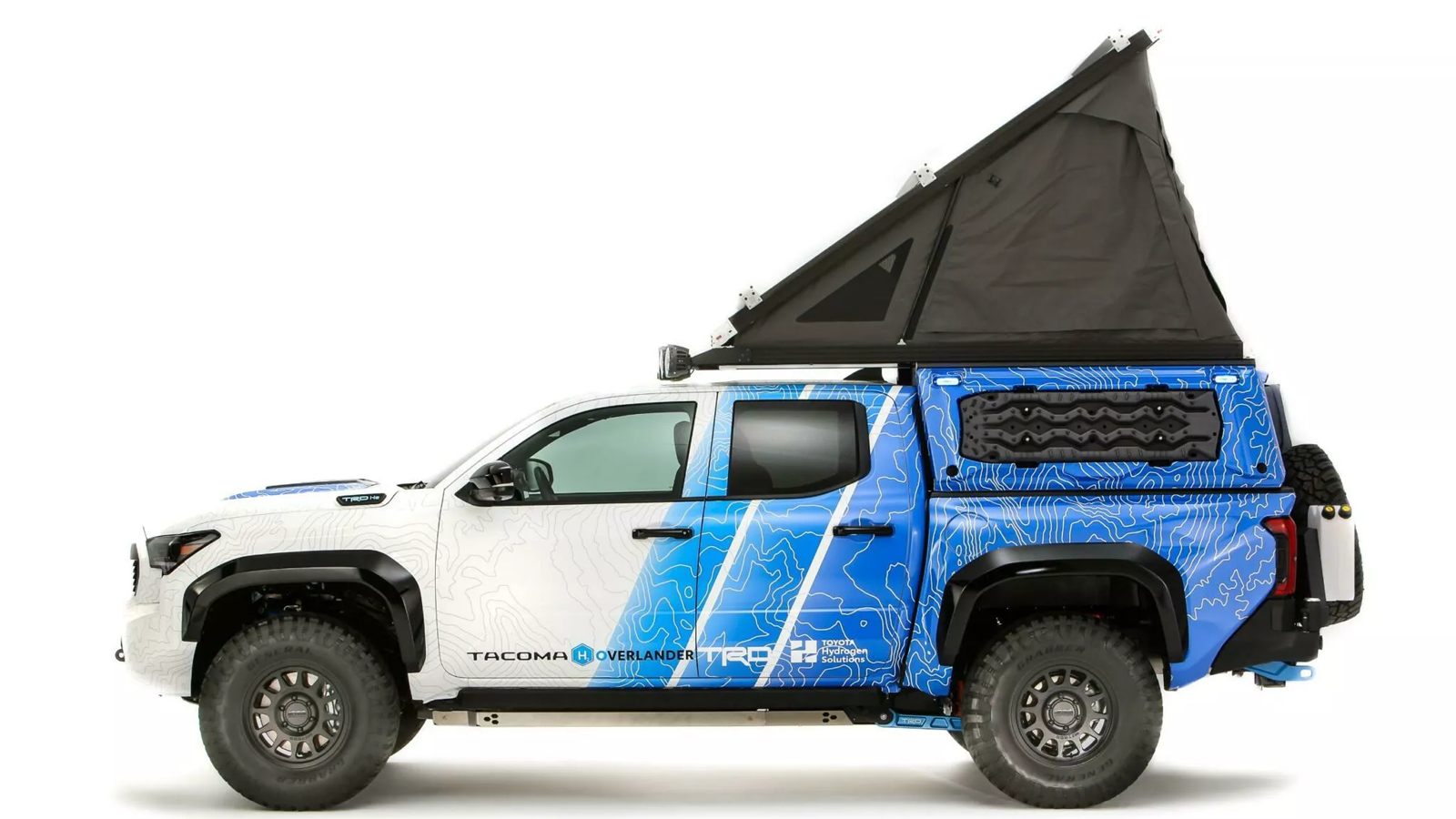
The Tacoma H2’s off-grid readiness extends beyond the powertrain. A pop-up roof tent and a rear canopy that opens on three sides turn the pickup into a compact, mobile shelter. The roboformed tailgate carries a full-size spare tire, while the rear bed layout maximizes utility for long-distance travel.
In essence, the concept envisions a vehicle that generates its own electricity, reuses its own exhaust, and serves as a temporary home, all while producing zero carbon emissions.
Hydrogen’s Long Road Ahead
Hydrogen fuel-cell technology isn’t new, but it remains a complex and expensive endeavor. Producing and storing liquid hydrogen requires substantial energy input, often outweighing its efficiency benefits. The materials used in fuel-cell stacks, particularly precious metals, add further cost barriers.
Still, Toyota remains one of the few major automakers continuing to develop the technology. The company began experimenting with hydrogen vehicles in the early 2000s, notably with the FCHV (based on the first-generation Highlander) and later with the Mirai sedan, which remains in production today.
Overcoming EV limits
As pure battery-electric vehicles face their own limitations, charging times, infrastructure, and battery weight, Toyota sees hydrogen as a viable alternative worth pursuing. “The Tacoma H2-Overlander Concept proves the technology still offers some promise,” the company noted, highlighting that it “just needs more time and resources.”
A Glimpse of a Different Future
Unveiled at the 2025 SEMA Show in Las Vegas, the Tacoma H2-Overlander stands among more than a dozen Toyota concept builds, including the Camry GT-S and the Turbo Trail Cruiser. Yet none capture the company’s experimental spirit quite like this one.
While the hydrogen-powered Tacoma remains a one-off prototype, it demonstrates that clean energy can coexist with real capability. A truck that powers your campsite, recharges another EV, and lets you shower using its exhaust water may sound futuristic—but Toyota’s making it tangible, one concept at a time.