


MM Retro Write-Up: 2006-2011 Chevy HHR


Thread Starter
Lexus Fanatic


Joined: Oct 2003
Posts: 94,422
Likes: 249
From: Virginia/D.C. suburbs
 MM Retro Write-Up: 2006-2011 Chevy HHR




IN A NUTSHELL: GM denied it, but it was really an response to Chrysler’s PT Cruiser.
Retro-styled vehicles, in modern times (particularly after the mid-1990s), became popular as the enormous Baby-Boom generation, one of the largest in history, reached the age of mid-life crises, started to become Empty-Nesters, and/or started retiring if they could afford it. Many of them had pensions and/or a lot of money saved up from years of work, or, for whatever reason, decided that they wanted something that looked reasonably close to vehicles that they or their World-War II-Generation parents had owned and driven decades earlier. Witness the rise (or re-rise) of the retro Ford Mustang, Pontiac GTO, 2-seat Ford Thunderbird, VW New Beetle, retro Chevy Camaro, Dodge Challenger, Chrysler PT Cruiser, Plymouth Prowler street-rod, and several others. Some of them, particularly the Prowler, were admitted sales-flops, but, for most of these retro-vehicles, they were clearly more than just niche products In fact, strong demand and short supply for some of them led to significant dealer price-gouging. When human emotions get attached to something, it can be a tough thing to resist, particularly in vehicle-appetites.
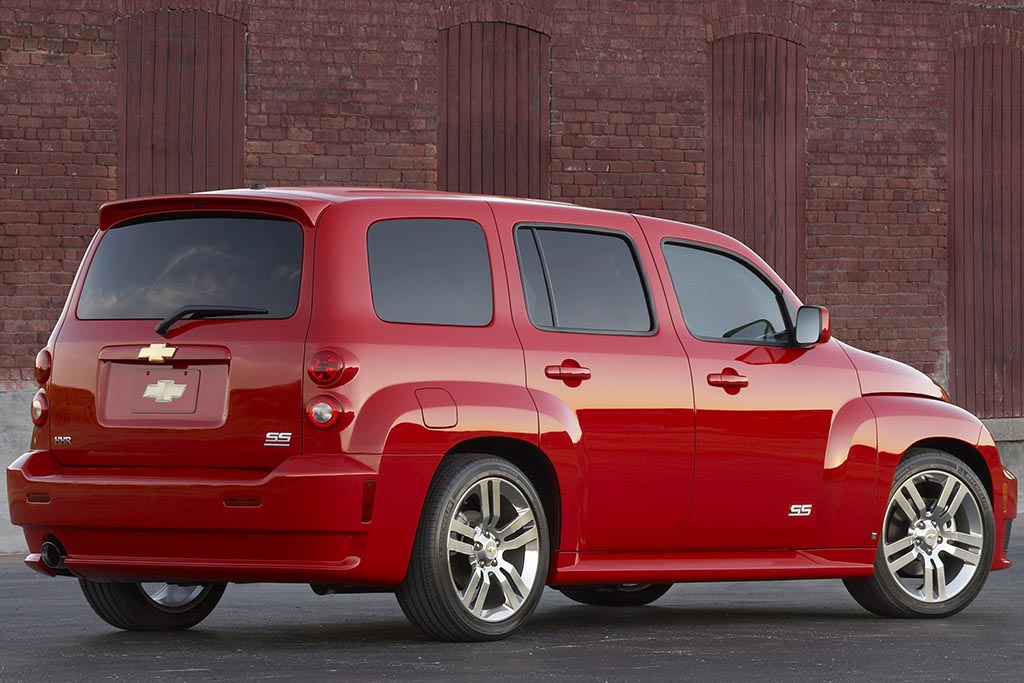
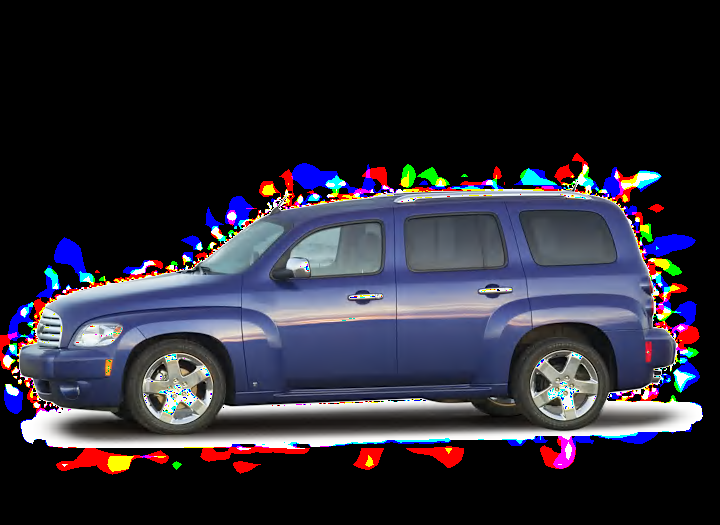
One of these interesting vehicles with retro-styling, introduced in the early-mid 2000s by GM, was the Chevrolet HHR…..its initials stood for Heritage, High Roof. Though somewhat more streamlined as a bow to the needs of today, its basic look was instantly recognizable as linked to the late 1940’s/early-1950s Chevy Suburban people-movers. New Suburbans, of course, are still in protection today, and have been continuously since 1936…..America’s oldest vehicle-nameplate still in production. Of course, the Suburban itself was an enclosed, passenger-carrying version of the full-size/full-frame RWD Chevy CK/Silverado trucks, while the HHR, though similar in looks and outline, was done on GM’s much smaller Delta platform, which was a compact, unibody, FWD platform for compact cars, shared with the Chevrolet Cobalt, Saturn Ion, and Pontiac G5. Though compromised a little for aerodynamics, the generally square styling and separate-fenders of the HHR gave both retro looks and, of course, better space-efficiency inside than those small sedans/coupes. Depending on model-year and trim-version, three different engines and three different transmissions were offered….a 2.0 Turbo in-line 4, a 2.4L Ecotec non turbo in-line four, and a 2.5L Ecotec non-turbo in-line 4, mated to two different 5-speed manual transmissions and a four-speed automatic.
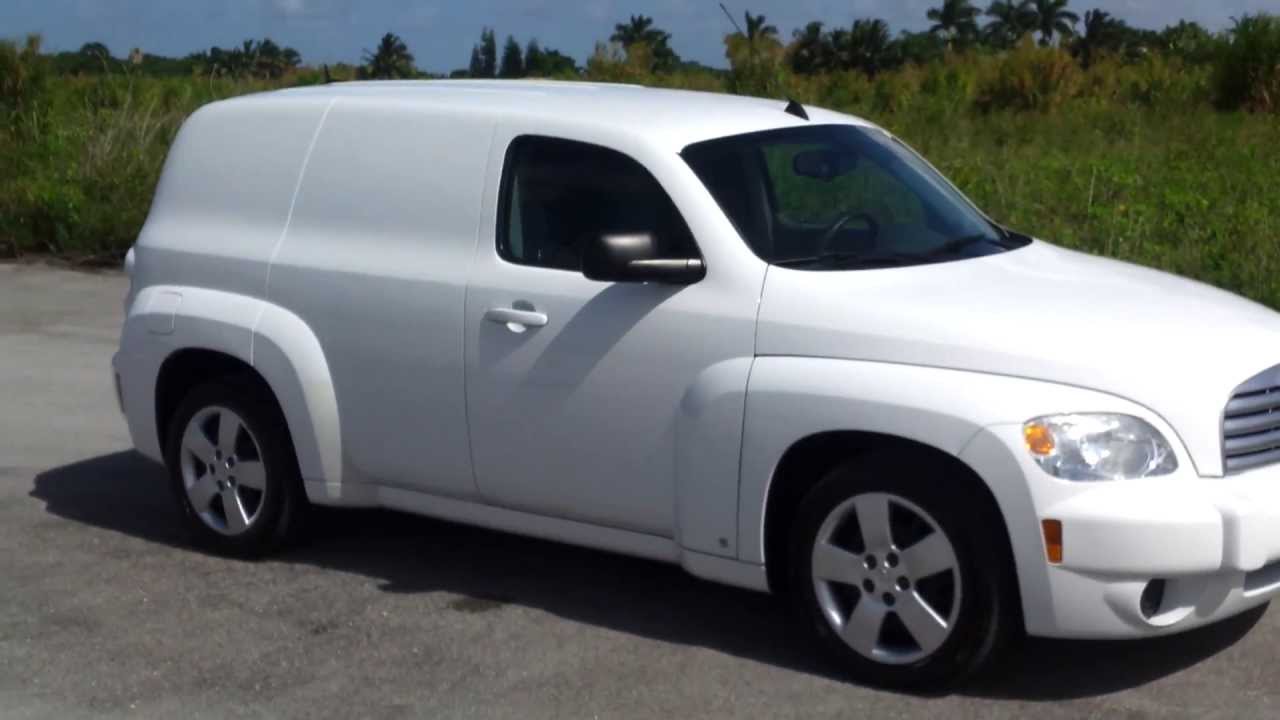
Though not a huge seller per se, the HHR went out the door in numbers good enough to keep it in production for five full model years, from 2006 to 2011. The auto-press had a field day with the HHR when it was first unveiled in 2005, and their reaction was more or less the same as mine…..GM’s obvious response to Chrysler’s extremely popular late-1930s-retro PT Cruiser. GM’s representatives strongly denied the PT Cruiser-influence, and were visibly irked when reporters kept questioning them about the styling connections. But it was rather difficult to hide it…….particularly when the same Head-Designer (Bryan Nesbitt, who had worked at several companies) was responsible for designing both vehicles. But, underneath the sheet-metal, though, they were indeed two different vehicles altogether The PT Cruiser was much more sport-oriented, had more retro-touches inside such as the body-color-dash, had a convertible version with a T-Bar roof, and had powerplants with more spunk. The HHR was far more conservative, somewhat more appliance-like to drive, and, unlike the Cruiser, also came a closed-panel-van version, without seats or trim in back, which was useful for plumbers, painters, electricians, etc…..who needed a smaller work-vehicle and didn’t carry a lot of really big bulky stuff.
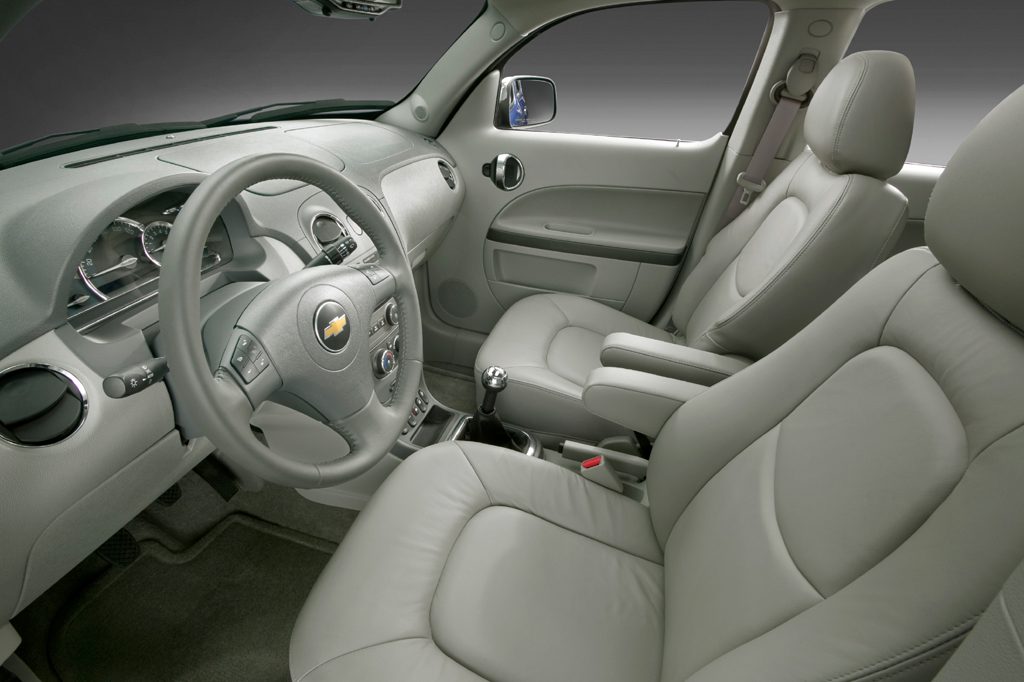
But there was another side to the coin. I liked the looks of the HHR (I’ve also been a retro-fan in general), but, like with some other GM products of this time-period, I was definitely not impressed with the materials, workmanship, or overall quality of this vehicle. Some interesting paint-colors were offered, but the paint itself was thin, poorly-applied, and had significant orange-peel in the texture. Exterior sheet metal and trim pieces had a thin, loosely-screwed-together feeling to it. Even the running-boards, which were supposedly designed to be stepped on, had a loose feel to them. Inside, the dash, hardware, and controls were the usual (for the period) cheap, loosely-fitted GM parts-bin stuff, with some exceptions made for the unique styling. You sat up rather high in the driver’s seat, with a high window-cowl/belt-line reminiscent of the 40s/50s, and had a rather awkward reach to the automatic shift-lever…(I remember test-driving an automatic version, but not a manual).
It was not terribly impressive on the road, either. The non-turbo 4 didn’t have much spunk to start with, and the inefficient 4-speed automatic made it even more of a slug. The nose-heavy front end, relatively light rear end (particularly in the empty panel-van version, with little back there), flabby suspension, relatively high center of gravity, and budget-grade shock-absorbers made for Ho-Hum steering and Roly-Poly handling. Of course, this vehicle was not designed to be a sports car (and I did not expect it as such)…but Chevy’s own Cobalt SS model (which I also reviewed and test-drove) showed that this basic Delta platform was capable of far better driving dynamics. A limited-production HHR SS model was done in 2009 and 2010, with a turbo 2.0L in-line four, performance-5-speed manual, and reworked suspension, which no doubt took away some of the standard version's sluggishness, but I did not get a chance to sample one.
The HHR still appealed to a fair number of people, though, especially at first, although I suspect that the iffy quality and workmanship probably also turned off some potential buyers as well. I remember seeing a number of the panel-van versions on local D.C.-area roads, so some tradepersons / self-contractors (and some companies) in the area must have also been sold on the small, easy-to-park efficient nature of the cargo space. It remained in production for some five years, built in Mexico, and was phased put after the 2011 model year. By, that time, interest and demand for this type of retro was starting to fade, and replaced by extremely powerful retro American ponycars….Mustang, Camaro, and Challenger, which, in top-versions, had massively-boosted V8 engines that would eventually reach absurd power-levels.
And, as Always, Happy Vehicle-Memories.

MM
Last edited by mmarshall; May 9, 2021 at 06:01 AM.

Moderator


Joined: Nov 2016
Posts: 9,606
Likes: 4,788
From: GA
Those cargo-van versions are intriguing! I think Chevy really had a good concept with this car. It sold reasonably well, like you said, but not crazy. I still see these on the road pretty much every day.
A coworker had a red 2010 HHR as his family runabout, and it seemed like a solid car. Nothing was excessively rattling or creaking, and really the plethora of kids' toys and occasional stain were the real indicators that this had been very lived-in by some rugrats! I think as an affordable family vehicle this makes total sense.
A coworker had a red 2010 HHR as his family runabout, and it seemed like a solid car. Nothing was excessively rattling or creaking, and really the plethora of kids' toys and occasional stain were the real indicators that this had been very lived-in by some rugrats! I think as an affordable family vehicle this makes total sense.


Pole Position
Joined: Dec 2019
Posts: 2,993
Likes: 608
From: The Jet City
One of my brother's wife has one.....I did a quick search for the 2L turbo one a couple yrs ago, very hard to find & spendy....I did drive a '09 Cobalt ss w/ the no lift shift when they were new.....
Thread Starter
Lexus Fanatic
Joined: Oct 2003
Posts: 94,422
Likes: 249
From: Virginia/D.C. suburbs
The Cobalt SS, in general, was a nice small pocket-rocket. The only things I weren't impressed with, on the manual transmission, was the somewhat awkward clutch-pedal that was difficult to get a smooth start with, particularly uphill, and the typical-for-the-period GM cheapness of interior materials.
GM FWD manual transmissions with an awkward clutch were nothing new. It was a problem as far back as 1980, with my Chevy Citation. The X-body cars also had extremely wide gear ratios, which meant, particularly on the 4-speed manual, there was a huge gap between the third gear and the overdrive fourth....the engine revved way up in third and then lugged in fourth. GM finally converted to 5 and 6-speed manuals......years later than they should have.

Driver School Candidate
Joined: Dec 2018
Posts: 2
Likes: 0
From: ca
Almost kicked out of focus group…for calling it a PT Suburban. Life size mock-up was
IN A NUTSHELL: GM denied it, but it was really an response to Chrysler’s PT Cruiser.
Retro-styled vehicles, in modern times (particularly after the mid-1990s), became popular as the enormous Baby-Boom generation, one of the largest in history, reached the age of mid-life crises, started to become Empty-Nesters, and/or started retiring if they could afford it. Many of them had pensions and/or a lot of money saved up from years of work, or, for whatever reason, decided that they wanted something that looked reasonably close to vehicles that they or their World-War II-Generation parents had owned and driven decades earlier. Witness the rise (or re-rise) of the retro Ford Mustang, Pontiac GTO, 2-seat Ford Thunderbird, VW New Beetle, retro Chevy Camaro, Dodge Challenger, Chrysler PT Cruiser, Plymouth Prowler street-rod, and several others. Some of them, particularly the Prowler, were admitted sales-flops, but, for most of these retro-vehicles, they were clearly more than just niche products In fact, strong demand and short supply for some of them led to significant dealer price-gouging. When human emotions get attached to something, it can be a tough thing to resist, particularly in vehicle-appetites.
One of these interesting vehicles with retro-styling, introduced in the early-mid 2000s by GM, was the Chevrolet HHR…..its initials stood for Heritage, High Roof. Though somewhat more streamlined as a bow to the needs of today, its basic look was instantly recognizable as linked to the late 1940’s/early-1950s Chevy Suburban people-movers. New Suburbans, of course, are still in protection today, and have been continuously since 1936…..America’s oldest vehicle-nameplate still in production. Of course, the Suburban itself was an enclosed, passenger-carrying version of the full-size/full-frame RWD Chevy CK/Silverado trucks, while the HHR, though similar in looks and outline, was done on GM’s much smaller Delta platform, which was a compact, unibody, FWD platform for compact cars, shared with the Chevrolet Cobalt, Saturn Ion, and Pontiac G5. Though compromised a little for aerodynamics, the generally square styling and separate-fenders of the HHR gave both retro looks and, of course, better space-efficiency inside than those small sedans/coupes. Depending on model-year and trim-version, three different engines and three different transmissions were offered….a 2.0 Turbo in-line 4, a 2.4L Ecotec non turbo in-line four, and a 2.5L Ecotec non-turbo in-line 4, mated to two different 5-speed manual transmissions and a four-speed automatic.
Though not a huge seller per se, the HHR went out the door in numbers good enough to keep it in production for five full model years, from 2006 to 2011. The auto-press had a field day with the HHR when it was first unveiled in 2005, and their reaction was more or less the same as mine…..GM’s obvious response to Chrysler’s extremely popular late-1930s-retro PT Cruiser. GM’s representatives strongly denied the PT Cruiser-influence, and were visibly irked when reporters kept questioning them about the styling connections. But it was rather difficult to hide it…….particularly when the same Head-Designer (Bryan Nesbitt, who had worked at several companies) was responsible for designing both vehicles. But, underneath the sheet-metal, though, they were indeed two different vehicles altogether The PT Cruiser was much more sport-oriented, had more retro-touches inside such as the body-color-dash, had a convertible version with a T-Bar roof, and had powerplants with more spunk. The HHR was far more conservative, somewhat more appliance-like to drive, and, unlike the Cruiser, also came a closed-panel-van version, without seats or trim in back, which was useful for plumbers, painters, electricians, etc…..who needed a smaller work-vehicle and didn’t carry a lot of really big bulky stuff.
But there was another side to the coin. I liked the looks of the HHR (I’ve also been a retro-fan in general), but, like with some other GM products of this time-period, I was definitely not impressed with the materials, workmanship, or overall quality of this vehicle. Some interesting paint-colors were offered, but the paint itself was thin, poorly-applied, and had significant orange-peel in the texture. Exterior sheet metal and trim pieces had a thin, loosely-screwed-together feeling to it. Even the running-boards, which were supposedly designed to be stepped on, had a loose feel to them. Inside, the dash, hardware, and controls were the usual (for the period) cheap, loosely-fitted GM parts-bin stuff, with some exceptions made for the unique styling. You sat up rather high in the driver’s seat, with a high window-cowl/belt-line reminiscent of the 40s/50s, and had a rather awkward reach to the automatic shift-lever…(I remember test-driving an automatic version, but not a manual).
It was not terribly impressive on the road, either. The non-turbo 4 didn’t have much spunk to start with, and the inefficient 4-speed automatic made it even more of a slug. The nose-heavy front end, relatively light rear end (particularly in the empty panel-van version, with little back there), flabby suspension, relatively high center of gravity, and budget-grade shock-absorbers made for Ho-Hum steering and Roly-Poly handling. Of course, this vehicle was not designed to be a sports car (and I did not expect it as such)…but Chevy’s own Cobalt SS model (which I also reviewed and test-drove) showed that this basic Delta platform was capable of far better driving dynamics. A limited-production HHR SS model was done in 2009 and 2010, with a turbo 2.0L in-line four, performance-5-speed manual, and reworked suspension, which no doubt took away some of the standard version's sluggishness, but I did not get a chance to sample one.
The HHR still appealed to a fair number of people, though, especially at first, although I suspect that the iffy quality and workmanship probably also turned off some potential buyers as well. I remember seeing a number of the panel-van versions on local D.C.-area roads, so some tradepersons / self-contractors (and some companies) in the area must have also been sold on the small, easy-to-park efficient nature of the cargo space. It remained in production for some five years, built in Mexico, and was phased put after the 2011 model year. By, that time, interest and demand for this type of retro was starting to fade, and replaced by extremely powerful retro American ponycars….Mustang, Camaro, and Challenger, which, in top-versions, had massively-boosted V8 engines that would eventually reach absurd power-levels.
And, as Always, Happy Vehicle-Memories.
MM
Went to a focus group meeting (paid me) and when it was my turn to give opinion I said it looked like a PT had unprotected sex with a Suburban and this was the “love child” result. Last thing they let me say. Just because you can doesn’t mean you should.
Trending Topics
Thread Starter
Lexus Fanatic
Joined: Oct 2003
Posts: 94,422
Likes: 249
From: Virginia/D.C. suburbs
....I see you are a brand-new poster.Yes, although GM wouldn't admit it at the time, the association with the PT Cruiser was unmistakable. The HHR was also far closer to the PT Cruiser in size than to the enormous, extra-large Suburban. It was, in fact, as I mentioned above, done on the compact Delta platform, which was also shared by several GM compact unibody FWD cars, as opposed to the large truck-based, body-on-frame Suburban, which came from the Silverado pickup.
Just because you can doesn’t mean you should.
Driver School Candidate
Joined: Dec 2018
Posts: 2
Likes: 0
From: ca
Welcome to CL ....I see you are a brand-new poster.
Yes, although GM wouldn't admit it at the time, the association with the PT Cruiser was unmistakable. The HHR was also far closer to the PT Cruiser in size than to the enormous, extra-large Suburban. It was, in fact, as I mentioned above, done on the compact Delta platform, which was also shared by several GM compact unibody FWD cars, as opposed to the large truck-based, body-on-frame Suburban, which came from the Silverado pickup.
In this case, GM probably should. A number of handy-persons/contractors and tradespeople, especially, liked the panel-van version as a relatively efficient and economical vehicle for their businesses.
....I see you are a brand-new poster.Yes, although GM wouldn't admit it at the time, the association with the PT Cruiser was unmistakable. The HHR was also far closer to the PT Cruiser in size than to the enormous, extra-large Suburban. It was, in fact, as I mentioned above, done on the compact Delta platform, which was also shared by several GM compact unibody FWD cars, as opposed to the large truck-based, body-on-frame Suburban, which came from the Silverado pickup.
In this case, GM probably should. A number of handy-persons/contractors and tradespeople, especially, liked the panel-van version as a relatively efficient and economical vehicle for their businesses.

Driver School Candidate
Joined: Jun 2018
Posts: 20
Likes: 1
From: Michigan
It was an acceptable rental car
If true, that's actually really interesting that they had made a truck-size version of it to test with. I remember our family having one as a rental car back when the HHR was first released, (I was just a fifth grader at the time) and there was just enough room for a family of four and some luggage. I don't remember much about the interior quality, but dad seemed to note that its powertrain was fairly gutless (can't remember which one it had; it was presumably the weaker one since the car was the rental-class LS trim). I did (and still do, to some extent) like the styling though.
Last edited by Stumper; May 15, 2021 at 06:30 AM. Reason: notes on styling

Thread
Thread Starter
Forum
Replies
Last Post