



General EV Conversation

Just as long as they don't follow the Mercedes route. Good lord those are some ugly *** EV's.
sharing a platform across ev and ice is a very difficult compromise. yes it is done, but as consumers see the big loss of space vs a full ev, they're going to say why would i want to get one of those? and yes i know you have your polestar which is very nice, but you have a fleet of cars for when you need something with more space.


CL Community Team


Joined: Feb 2007
Posts: 9,403
Likes: 623
From: IL
If this is a true statement, then the only automakers that may be considered huge companies are VW and Toyota, as those are the only two auto manufacturers that are significantly larger. BMW has a much higher market cap than either Ford or GM, and at $163B in annual revenue, is only about $10B behind them. It has 155k employees, about 10k less than GM, and 20k less than Ford.
If this is a true statement, then the only automakers that may be considered huge companies are VW and Toyota, as those are the only two auto manufacturers that are significantly larger. BMW has a much higher market cap than either Ford or GM, and at $163B in annual revenue, is only about $10B behind them. It has 155k employees, about 10k less than GM, and 20k less than Ford.
 i'd guess my view was outdated, and probably the suv/sav/cuv's have made bmw's volume/sales skyrocket in recent years.
Racer


Joined: Jan 2019
Posts: 1,349
Likes: 264
From: Sofia
Plus, Teslas don't look a whole lot different on the outside - no visible exhaust (like, say, the e38 7-series), no front radiator openings (which might change in the future for certain more performance-oriented vehicles).
As for the weight - compare the i5' weight to the Genesis G80 EV version, which isn't a dedicated EV platform either. There's just something wrong with the i5, and it's not (imo :P ) just the interior. Perhaps they need a die shrink to stay competitive with AMD's offerings?

6th Gear
Joined: Mar 2024
Posts: 6
Likes: 0
From: Texas
What kind of vehicle do you drive? I've owned 2021 Hyundai Kona EV and CarPlay there was the same as in my 2017 Ford Fusion. If I planned long trip I had to use built-in navi in order to see state of charge and estimated range, my CarPlay didn't offer such a possibility.

Lead Lap
Joined: May 2010
Posts: 4,006
Likes: 1,639
From: San Diego, CA
What kind of vehicle do you drive? I've owned 2021 Hyundai Kona EV and CarPlay there was the same as in my 2017 Ford Fusion. If I planned long trip I had to use built-in navi in order to see state of charge and estimated range, my CarPlay didn't offer such a possibility.

Lexus Fanatic

Joined: Jan 2005
Posts: 20,244
Likes: 275
EV routing for CarPlay is a relatively recent feature, and it unfortunately doesn't work on all EVs. I have an F150 Lightning and an OTA update from Ford enabled the EV routing for CarPlay in late 2023. I don't know if Hyundai supports it yet, some BMW and Porsche vehicles do, as does the Mustang Mach E.
ClubLexus Stories
Celebrating Lexus & Toyota from Around the Globe
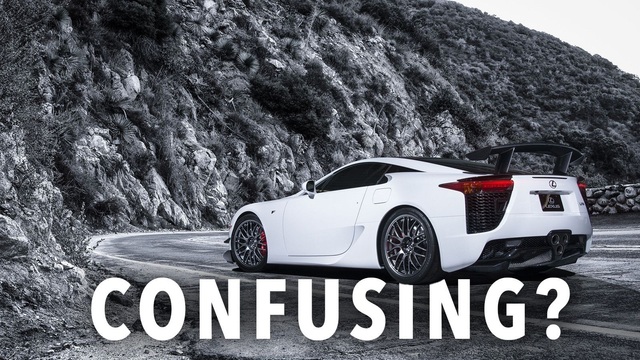
Top 10 Most Confusing Things Lexus Has Ever Done!
Joe Kucinski
2026 Lexus ES Review: Lexus Re-Embraces Founding Principles
Michael S. Palmer
10 Lexus Bargains That are Cheaper Than a New Toyota RAV4
Joe Kucinski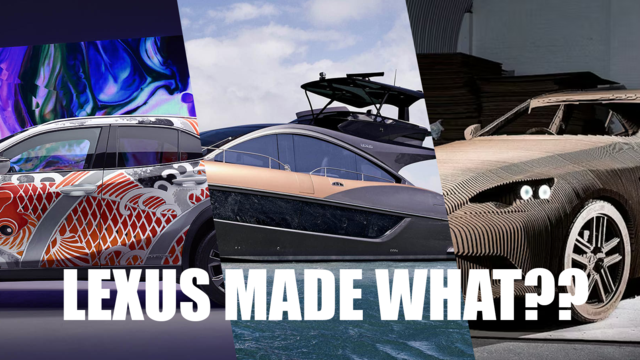
8 Weirdest Things Lexus Has Ever Built
Verdad Gallardo
10 Lexus Designs That Have Aged Like Fine Wine
Verdad Gallardo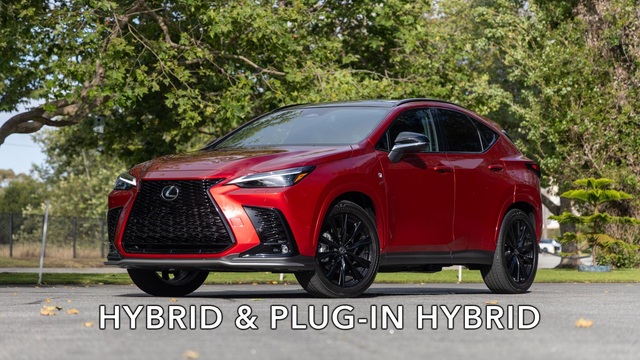
8 Tips for Improving Your Hybrid or Plug-in Hybrid's Efficiency!
Michael S. Palmer
10 Best Lexus Models No One Remembers
Joe Kucinski
TRD Off-Road Premium: Best 2026 4Runner, Except This One Thing
Michael S. Palmer
Top 10 Lexus & Toyotas to Drive Before You Die!
Joe Kucinski
Lead Lap
Joined: May 2010
Posts: 4,006
Likes: 1,639
From: San Diego, CA

Lexus Champion

Joined: Oct 2019
Posts: 19,796
Likes: 3,790
From: California
BEV adoption reaches ‘tipping point’ in 31 countries: Bloomberg
Tesla and other electric vehicle (EV) brands are becoming more popular around the world, and a recent report shows that several countries have surpassed a crucial EV adoption tipping point.Battery-electric vehicles (BEVs) have surpassed a tipping point of making up 5 percent of overall automotive sales in 31 countries, up from just 19 in 2022, according to data shared by Bloomberg last week. The report looks at 2023 BEV adoption across countries, as well as BEV sales trends from countries that surpassed the 5 percent mark just a few years ago.
Notably, the report points out that some of the BEV markets that have grown most quickly were in Southeast Asia and Eastern Europe, for the first time ever. Countries that surpassed this tipping point a few years earlier are now showing trends of BEV adoption trajectory between 5 and 25 percent, with some seeing this surge in less than four years.

The data runs through the fourth quarter of 2023, and Bloomberg says that the 5 percent milestone is significant because it means BEV adoption is transitioning from an “early-adopter” phase to hooking into a wave of mainstream acceptance. Early barriers, including general consumer ambivalence, lacking infrastructure, and cost, play a major role in this transitional period, and reaching 5 percent indicates that these barriers are flattening.
“Once enough sales occur, you kind of have a virtuous cycle,” said Corey Cantor, an EV analyst at BloombergNEF. “More EVs popping up means more people seeing them as mainstream, automakers more willing to invest in the market, and the charging infrastructure expanding on a good trajectory.”
Norway, Iceland and Denmark led the BEV market share charts in Q4, with Sweden and Finland following behind. While each of these countries reached the 5 percent tipping point several years ago, others like Turkey, Thailand, Estonia and Bulgaria did so at some point last year. By comparison, BEVs surpassed this milestone in the U.S. in 2021, in Canada in 2022, and in China in 2020.
Globally, BEVs were at a 14.5 percent adoption rate in Q4, after surpassing the 5 percent tipping point about halfway through 2021.
Check out Bloomberg’s full list of BEV adoption rates by country below.


The U.S. could become one of the first countries to take over three years to go from 5 percent to 25 percent this year, along with South Korea. However, if BEV adoption trends accelerate and follow some of the other countries included in the data, the country could at least reach the milestone by 2026—about five years after it surpassed the 5 percent mark.
https://www.teslarati.com/bevs-tipping-point-bloomberg/


Lead Lap
Joined: Jul 2007
Posts: 4,550
Likes: 668
From: SC
Looks like Ford is following through huge reductions at the Lightning plant.
https://www.freep.com/story/money/ca...s/73117641007/
https://www.freep.com/story/money/ca...s/73117641007/

Lexus Champion

Joined: Jan 2012
Posts: 17,237
Likes: 538
From: Knoxville, TN
Even Tesla is struggling to sell cars right now, Q1 at least.
https://www.caranddriver.com/news/a6...KRHQQWi3qjTySD
https://www.caranddriver.com/news/a6...KRHQQWi3qjTySD
Last edited by AJT123; Apr 2, 2024 at 12:18 PM.
Lexus Champion
Joined: Oct 2019
Posts: 19,796
Likes: 3,790
From: California
Even Tesla is struggling to sell cars right now, Q1 at least.
https://www.caranddriver.com/news/a6...KRHQQWi3qjTySD
https://www.caranddriver.com/news/a6...KRHQQWi3qjTySD
"Year-over-year price declines accelerated in January according to the report, as dealers and automakers pulled the discount lever in an effort to maintain the new-vehicle sales pace. Despite lower prices, the seasonally adjusted annual rate (SAAR), or sales pace, was 15.0 million in January 2024, down from 16.1 million in December 2023 and below the 15.1 million recorded one year ago in January 2023"
https://www.coxautoinc.com/market-in...January%202023.
Lets not be selective LOL 🤣
